Dynamic Shear Stresses in Polyolefin Film Converting
High converting speeds induce surface stress that depletes slip additives and degrades polyolefin film structures.
Melt
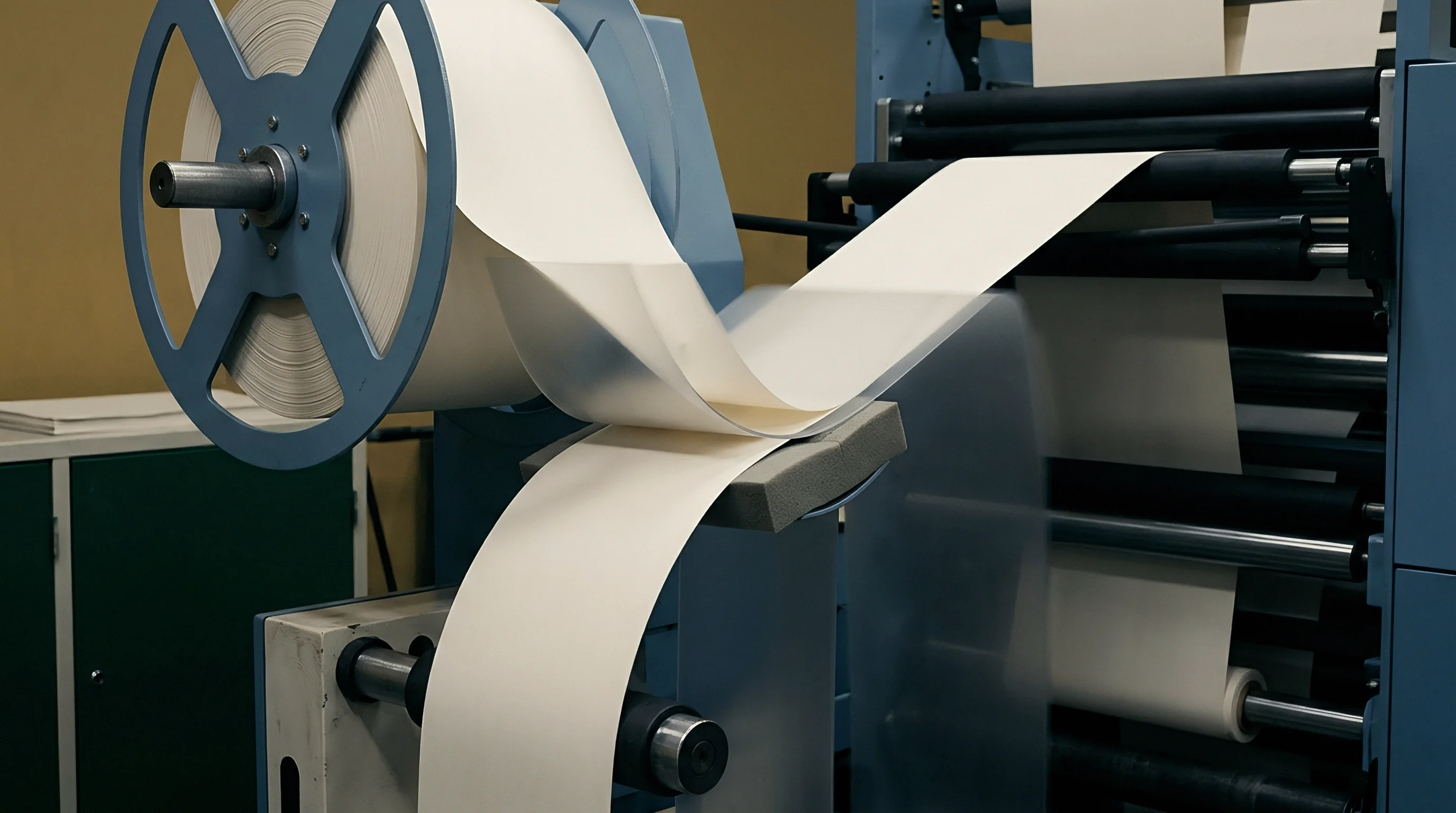
High molecular weight polymers undergo intense physical deformation when forced through narrow die slits at production speeds. Polyethylene and polypropylene resins respond non-linearly to velocity gradients established between the center of the flow channel and the stationary metal walls of the extruder head. Linear low-density polyethylene exhibits strong strain-hardening behavior in extension while demonstrating pronounced shear-thinning in high-shear extrusion passes.
Polymer chains untangle, align along the primary orientation axis, and slide past adjacent molecular bundles. High shear rates at the die land generate severe normal stresses that act perpendicular to the flow velocity. These elastic stresses cause exit swell, wall slip transitions, and localized surface irregularities once the web exits the die gap.

Rheological Shear Distributions within the Die
Polymer flows experience maximum velocity along the central axis while experiencing structural restriction at metal boundary surfaces. The local deformation rate reaches its peak directly at the boundary wall. Polymer chains near the steel contact surface deform rapidly, creating a steep velocity gradient across the half-gap thickness.
Dies require clean geometry. When the mechanical shear stress at the die boundary surpasses thirty kilopascals, linear polyethylenes transition from stable stick-slip flow into unattached wall slip. This instability breaks the smooth outer skin of the film.
Extruders maintain tight thermal bands. Thermal energy generated by viscous dissipation within high-shear zones lowers local viscosity, accelerating velocity differentials across the melt stream.
Viscous dissipation within narrow die lands alters local polymer viscosity faster than barrel heating zones can compensate.
Extrusion processes for thin polyolefin packaging substrates operate across distinct velocity regimes. The mechanical resistance generated within the fluid phase depends directly on molecular weight distribution, long-chain branching, and processing temperature. Higher shear rates reduce apparent viscosity, enabling higher throughput until physical instability boundaries are reached.
Surface defects arise directly from excessive stress gradients operating at the exit boundary where the molten polymer meets ambient atmosphere.
| Processing Stage | Apparent Shear Rate Range (s⁻¹) | Dominant Polymer Mechanism | Primary Physical Manifestation |
|---|---|---|---|
| Main Extruder Die Gap | 100 to 1,200 | Chain disentanglement and wall slip initiation | Sharkskin melt fracture and thickness variation |
| Cast Film Chill Roll Contact | 1,500 to 4,000 | Rapid extensional thinning and thermal quenching | Density gradient formation and micro-voiding |
| Corona Treatment Pass | 10 to 50 | Surface dielectric breakdown and chain scission | Increased polar functional group concentration |
| Solventless Lamination Nip | 5,000 to 15,000 | Fluid squeeze flow and adhesive displacement | Interfacial bubble entrapment and coating streak formation |
| High-Speed Slitting Knife | 20,000 to 80,000 | Localized solid-state shear fracture | Edge burrs and particulate dust generation |
Skin-core structural differentials become permanent as the molten web contacts the primary cooling roll or air ring. Rapid thermal quenching fixes oriented molecular chains on the outer surfaces while the insulated core cools slowly, allowing partial polymer relaxation. The outer layers retain high residual internal stress values, setting up a permanent tension gradient through the sheet thickness.
Subsequent high-speed converting passes apply secondary mechanical forces that interact directly with these frozen internal stresses. Linear speed alters strain rates.
Unresolved structural changes occurring during high-shear extrusion steps raise questions about whether post-extrusion annealing can restore uniform surface energy without triggering thermal degradation of slip additives.

Slip
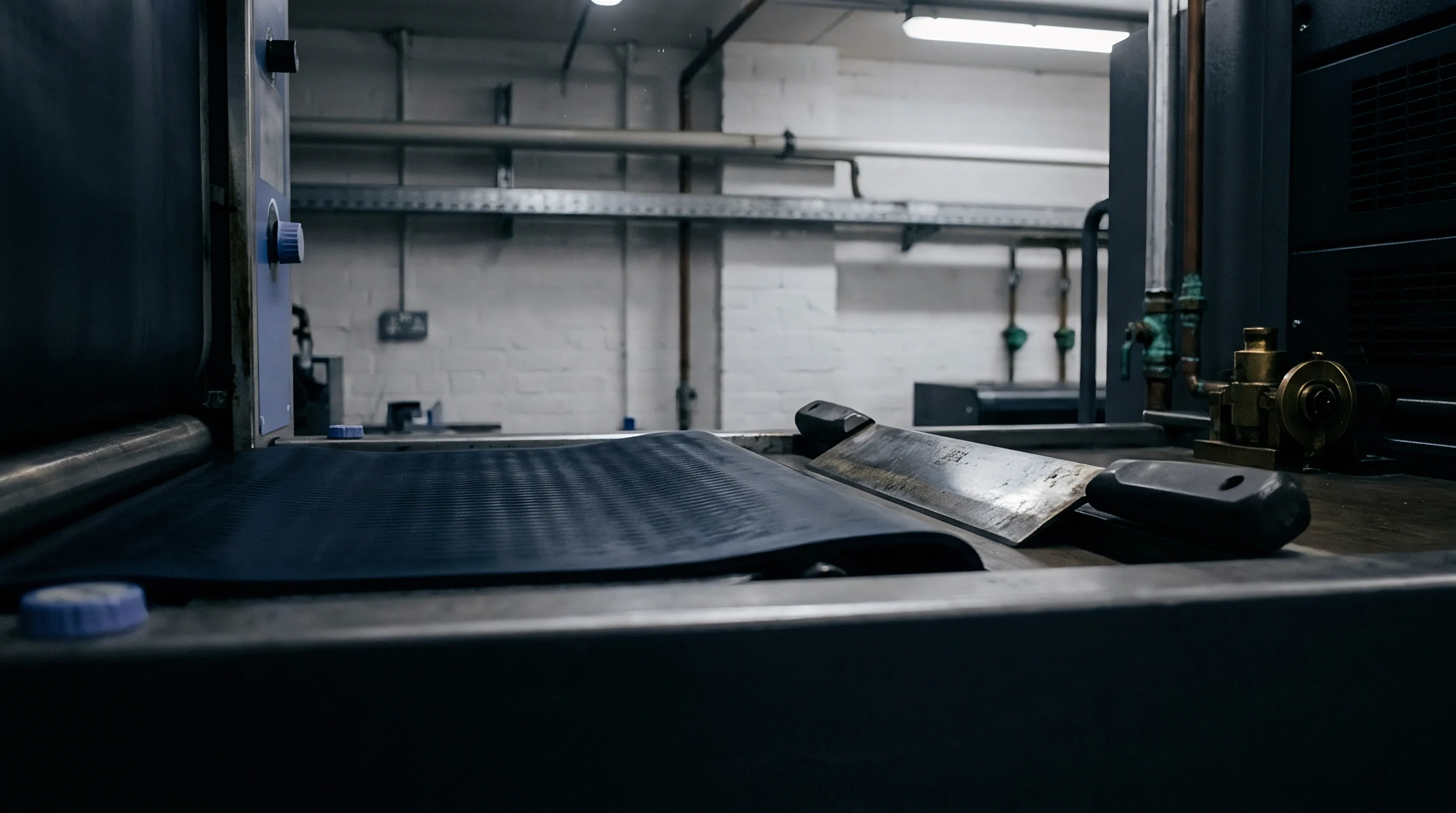
Fatty acid amides migrate toward low density regions on blown or cast polyethylene surfaces over forty-eight hours post-extrusion. Erucamide and oleamide additives collect at the outer film interface to form a sacrificial boundary lubricant layer. High line speeds create tangential frictional forces that strip this additive layer away during high-speed web transport.
Driven steel guide rollers, stationary turn bars, and nip assemblies impose transient mechanical stresses that force surface amides back into the amorphous polymer matrix or scrape them off entirely. The friction coefficient escalates rapidly during long conversion runs as surface additive reserves become exhausted.

Additive Migration Mechanics under Boundary Pressure
Continuous surface contact compresses micro-crystalline boundaries, forcing mobile lubricants into active lamination interfaces. Standard converting passes drag film across multiple idler rolls at speeds exceeding three hundred meters per minute. Shear stress developed at the contact interface mobilizes the soft amide molecules, causing lateral migration into localized pools.
Pressure alters surface energy. High roller pressures combined with tight web wrap angles elevate local interface temperatures, accelerating additive solubility within the outer polyolefin skin. The film surface loses its protective coating, causing direct polyolefin-to-metal contact that increases web drag.
A surface friction coefficient tested below zero point two under static laboratory conditions routinely triples after three high-speed nip passes.
Converting lines expose polyolefin webs to repeated physical contact events that alter surface morphology and additive distribution. The following operational failure modes stem directly from shear-induced surface breakdown:
- Interfacial slip depletion occurs when web contact forces strip fatty amides faster than bulk diffusion replaces them, causing rapid drag escalation across guide rollers.
- Corona oxidation decay develops when frictional heating breaks oxidized polyolefin chains, dropping dyne levels below thirty-eight mN/m within hours of treatment.
- Adhesive plate-out occurs when squeezed slip additives contaminate solventless polyurethane adhesive systems, preventing full chemical cross-linking.
- Haze band formation develops when shear-induced micro-crazing alters light scattering angles across heavily stressed web margins.
Metallocene-catalyzed linear low-density polyethylenes display narrow molecular weight distributions that reduce bulk additive solubility. Amides push to the surface rapidly, forming thick, weakly bonded boundary sheets. Excess slip additive shears away under light contact pressure, depositing sticky white residue on slitter blades and nip rollers.
Blown film demands balanced air. Frictional heat generated at high line speeds melts these loose amide deposits, forming abrasive gels that score printed web surfaces during subsequent rewind passes.
Frictional drag rises predictable amounts for every ten-meter-per-minute increase in line speed once surface additive layers deplete.

Tension
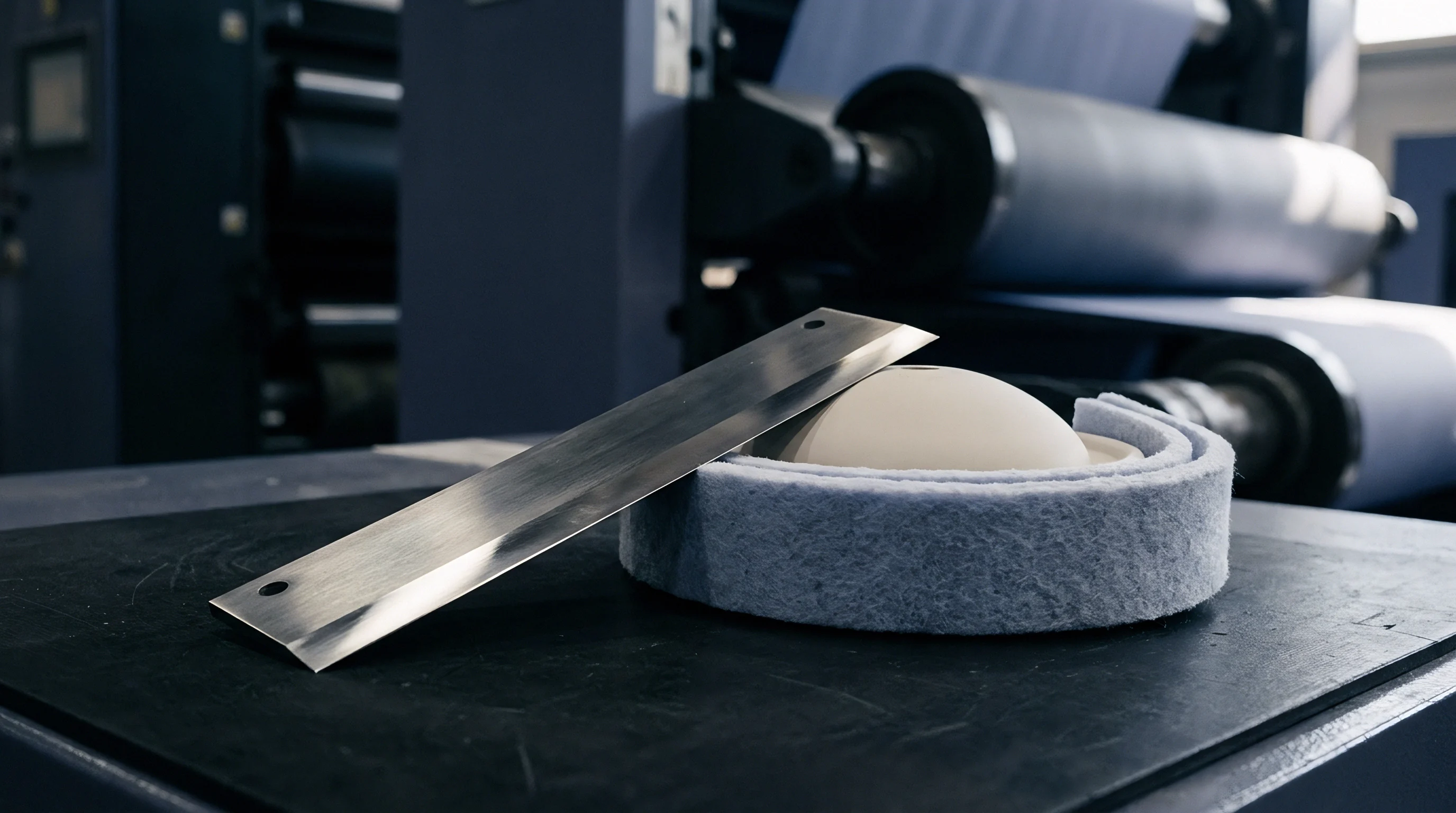
Web transport systems exert continuous directional force across thin polyolefin structures as line velocities exceed four hundred meters per minute. Mechanical pull creates axial shear stresses within the unsupported web span between driven rolls. Gauge variations across the film width cause uneven tension distribution, concentrating forces into narrow high-stress lanes.
Polyolefin film yields elastically under low tensile loads and deforms plastically when localized stress exceeds the polymer yield point. Over-stretched film lanes lengthen permanently, creating bagginess, web flutter, and tracking errors through flexographic printing presses and laminators.

Which Rewind Parameters Prevent Shear Deformation?
Differential air shafts manage circumferential torque variations across multi-lane slitting setups. Rewinding narrow ribbon lanes on a single solid core shaft produces uneven internal roll stresses due to subtle material caliper differences. Thicker lanes absorb higher winding forces, building dense, hard bands that squeeze underlying film layers.
Film tension dictates rewind density. Thin lanes receive insufficient torque, remaining soft and prone to inter-layer slipping. Core displacement occurs when lateral shear forces overcome inter-film friction, pushing internal web turns sideways into a telescoping profile.
Preventing physical defect formation during web slitting and rewinding requires systematic tension control protocols executed in logical order:
- Measure cross-web thickness profiles using non-contact capacitive sensors to establish accurate baseline caliper variation limits.
- Calibrate load cell roll feedback loops to compensate for mechanical friction losses inside web guide assemblies.
- Set taper tension profiles to reduce winding torque linearly as roll diameter increases, maintaining uniform internal radial pressure.
- Adjust lay-on roll contact pressure to squeeze trapped boundary air out from between rotating film layers without inducing surface marks.
- Inspect cut reel edges for edge-curl and web deformation before releasing completed rolls to downstream packaging passes.
Excessive web tension combined with high lay-on nip pressure causes micro-slip between adjacent roll wraps. Friction generates static charges. Trapped air sheets act as fluid cushions until squeezed out by radial winding pressure.
As air escapes, adjacent film layers snap together under high frictional contact. Radial stress transforms into lateral shear stress across high-gauge bands, distorting the polyolefin matrix. Roll cores absorb radial forces.
Severe lateral deformation manifests as tin-canning, reel burst, or permanent film neck-in that reduces usable web width.
| Polyolefin Grade Code | Film Caliper (µm) | Yield Strength (MPa) | Maximum Operating Web Tension (N/m) | Recommended Taper Tension Profile (%) |
|---|---|---|---|---|
| LDPE General Packaging | 50 | 11.5 | 15 to 22 | 35 |
| LLDPE Metallocene Blown | 30 | 16.0 | 20 to 28 | 40 |
| HDPE Co-Extruded High-Modulus | 20 | 28.0 | 35 to 45 | 25 |
| BOPP Stretched Matte Finish | 18 | 130.0 | 60 to 85 | 15 |
| CPP Cast Unoriented Retort | 70 | 22.0 | 30 to 40 | 30 |
Under EN 13430 material specification standards, film webs stretched beyond two percent elongation during conversion forfeit structural width tolerances and generate non-conforming reel profiles.
Setting web tension above the elastic limit of thin polyolefin packaging substrates permanent deforms the film structure, causing registration loss in printing steps and irreversible reel disalignment at slitting stations.

Proof
Analytical bench measurements quantify surface friction coefficients and interlayer adhesion retention following web conversion passes. Standardized laboratory testing separates material extrusion flaws from stress-induced converting defects. Oscillatory shear rheometry provides precise viscoelastic modulus values, indicating polymer response across a spectrum of deformation rates.
Testing polyolefin film under high strain rates reveals boundary slip transitions, phase separation events, and structural relaxation windows. Accurate verification requires exact replication of conversion line speeds, contact temperatures, and mechanical nip forces.

Laboratory Verification Protocol for Surface Stability
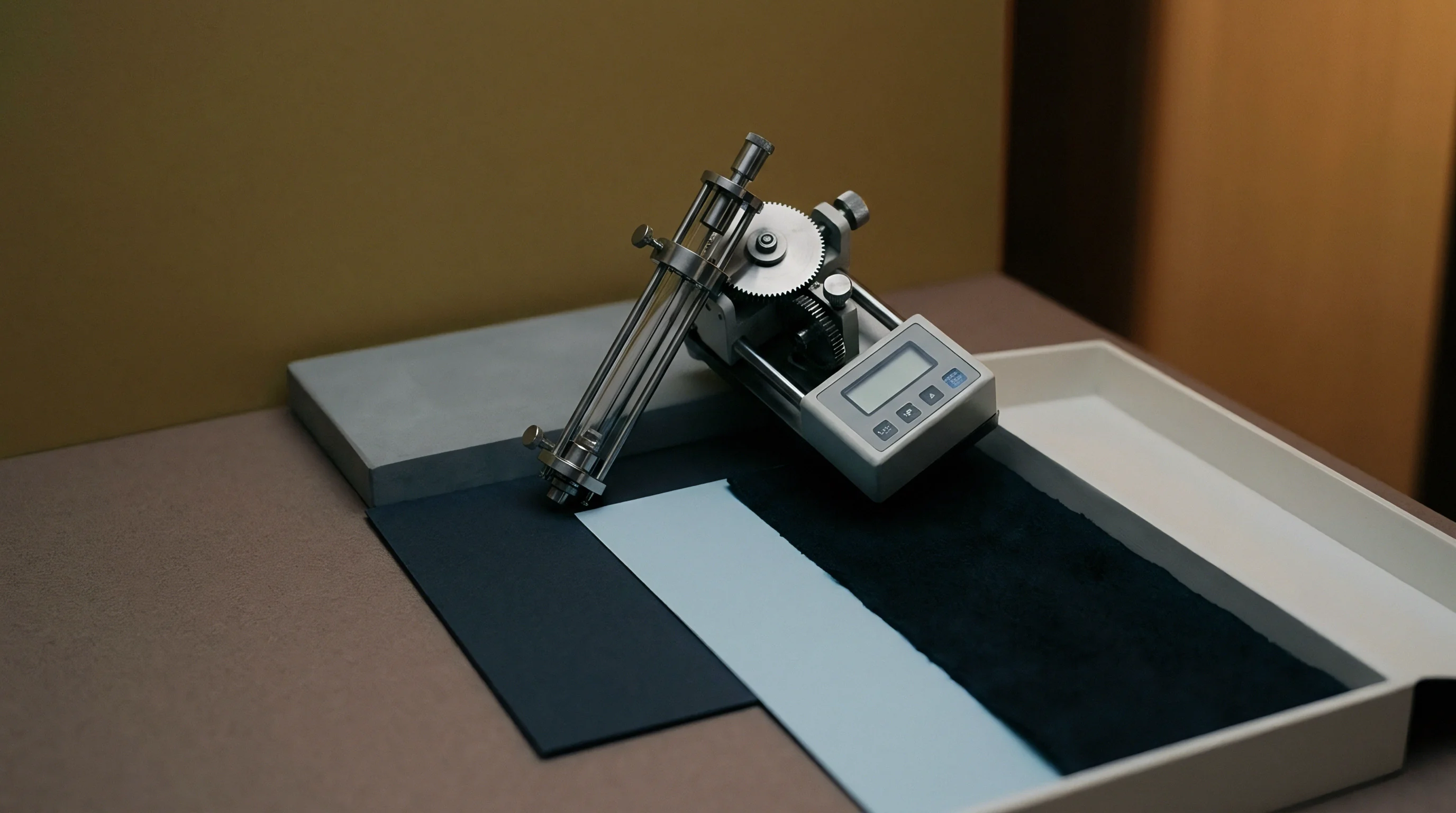
Test specimens require twenty-four hours of thermal conditioning at twenty-three degrees Celsius and fifty percent relative humidity. Mechanical testing conducted outside controlled atmospheric conditions yields unreliable friction values due to humidity impacts on polar surface groups. Frictional force testing according to ASTM D1894 records both initial kinetic resistance and steady-state dynamic slip behavior.
Sled speed variations identify velocity-dependent friction spikes that signal slip additive degradation. Sled drag distance measures additive wiping tendencies under continuous contact.
Converting practices rely on standardized verification checks to confirm film durability prior to full scale production runs:
- Dynamic coefficient of friction analysis measures surface resistance trends across varying velocity steps using a heated testing bed.
- 180-degree peel strength verification determines bond retention of laminated polyolefin films following exposure to high-shear nip rollers.
- Dyne surface energy tracking measures polar contact angles using ISO 8295 compliant wetting liquids to detect corona treatment decay.
- Gel permeation chromatography quantifies polymer chain scission caused by excessive shear stress inside high-output extruders.
Standard test methods using low sled velocities fail to capture dynamic friction spikes occurring at actual converting speeds above three hundred meters per minute.
Converter technical departments often defend material failures by asserting that film reels met published static COF specifications prior to shipment. This excuse ignores the reality that static laboratory testing does not reflect the dynamic shear conditions imposed by high-speed converting machinery.

Docket
Commercial contracts allocate material spoilage financial allowances based on quantified physical property deviations across converted rolls. High speed converting passes impose mechanical stresses that can destroy film utility without altering bulk resin composition. When shear-induced defects force line stoppages, financial liabilities shift based on agreed technical specifications, inspection protocols, and material delivery tolerances.
Defining clear boundaries for acceptable friction variation, gauge uniformity, and surface treatment stability prevents costly legal disputes between film extruders, converters, and brand owners.
Commercial Claims for Shear-Induced Roll Failures
Quality agreements penalize material suppliers when web displacement exceeds five millimeters across a standard pallet shipment. Converting facilities track job-lot performance through detailed roll docket tracking systems. Heat softens polymer chains.
Stress spikes near slit margins. When material failure rates exceed contract thresholds, financial adjustments cover lost machine hours, scrap material tonnage, and downstream delivery penalties.
Consider a commercial converting run involving forty metric tons of co-extruded LLDPE film purchased at two thousand four hundred Euros per ton. The job ticket specifies a high-speed solventless lamination pass running at four hundred fifty meters per minute. Frictional heating inside the laminator nip strips surface slip additives, driving the friction coefficient from zero point two two up to zero point5five.
Web drag causes severe elongation, necking the film by twelve millimeters and throwing printing registration out of specification across eighteen tons of processed material. Machine downtime billing accrues at three hundred fifty Euros per hour over an eight-hour trouble-shooting window. Direct material scrap equals forty-three thousand two hundred Euros, while wasted machine time adds two thousand eight hundred Euros.
Total job docket loss reaches forty-six thousand Euros. The material supplier absorbs these costs when certified drawdowns confirm slip additive exudation failure under target line shears.
Supply contracts containing strict ISO 1133 melt flow rate compliance clauses protect buyers by establishing that delivered resin lots must maintain uniform rheological properties across defined shear rate bands.