Hydrolytic Cleavage Kinetics of Recyclable Acrylate Oligomers in Paperboard Converting
Recyclable acrylate oligomers dismantle under pH 10.5 pulping at 50°C, reducing gel fractions below 1.5% in five minutes to prevent screen blinding and sticky defects.
Cleavage
Alkaline repulping of ultraviolet-cured surface finishes demands rapid chemical dismantling of the crosslinked polymer network to prevent macro-sticky formation. Standard epoxy acrylate and polyether acrylate oligomers build dense three-dimensional networks held together by carbon-carbon backbone bonds and stable ester linkages. These conventional structures resist mechanical disintegration at 50°C, leaving tough film fragments that clog pulper screens or contaminate recovered fiber stock.
Recyclable acrylate oligomers introduce ester, dicarbonate, or acetal linkages engineered to decompose when exposed to aqueous hydroxide ions.
Nucleophilic acyl substitution governs the degradation of these functional oligomers under basic repulping conditions. Hydroxide ions target the electron-deficient carbonyl carbon within the modified acrylate backbone. Reaction rates depend on the steric environment surrounding the ester center and the electron-withdrawing capacity of adjacent substituents.
Dicarbonate acrylate structures undergo double cleavage, releasing carbon dioxide along with water-soluble glycerol derivatives and sodium acrylate salts. The conversion converts an insoluble, hydrophobic coating layer into hydrophilic fragments with molecular weights below 1,500 g/mol.
Chemical Pathways of Ester Bond Dismantling
Base-catalyzed ester hydrolysis follows a second-order reaction mechanism, dependent on both unreacted ester group concentration and free hydroxyl ion concentration. In typical pulper operations running at pH 10.5, excess hydroxyl ions simplify the rate law to pseudo-first-order behavior. Cleavage velocity varies across oligomer chemical architectures.
Tertiary ester acrylates exhibit steric hindrance that suppresses room-temperature hydrolysis while permitting rapid cleavage above 45°C. Linear aliphatic polyester acrylates with succinic anhydride modifications undergo ester cleavage at room temperature, though extended storage under humid conditions causes premature degradation of the un-cured liquid varnish.
| Oligomer Chemistry Type | Cleavable Linkage Structure | Rate Constant k_obs (min⁻¹) | Half-Life t_1/2 (min) | Residual Gel Mass (%) |
|---|---|---|---|---|
| Bisphenol A Epoxy Acrylate (Control) | Aromatic ether / static ester | 0.002 | 346.5 | 98.2 |
| Beta-Carbonate Diacrylate | Aliphatic dicarbonate ester | 0.312 | 2.2 | 0.4 |
| Tertiary Ester Triacrylate | Hindered tertiary alkyl ester | 0.148 | 4.7 | 1.8 |
| Succinate-Extended Polyether Acrylate | Carboxylic acid ester bridge | 0.225 | 3.1 | 0.9 |
Mass transport inside the crosslinked film layer modulates intrinsic chemical kinetics. Water and hydroxyl ions must diffuse through the cured acrylate network before nucleophilic attack can occur. The effective diffusion coefficient of hydroxide ions in a fully cured UV surface finish ranges from 1.2 × 10⁻¹⁰ cm²/s to 4.5 × 10⁻⁹ cm²/s at 50°C. Network crosslink density dictates initial swelling kinetics.
High photoinitiator loading or elevated ultraviolet radiation doses create tight networks that delay hydroxyl ion ingress, shifting the overall rate-limiting step from chemical reaction control to mass-transfer diffusion control during the first three minutes of repulping.
Aliphatic beta-carbonate acrylates at pH 10.5 and 50°C achieve a pseudo-first-order cleavage rate constant of 0.312 min⁻¹, reducing gel mass fraction below one percent within five minutes.
Fragment solubility determines whether cleaved oligomers remain in process water or precipitate back onto cellulose fibers. Carboxylate groups generated during ester hydrolysis become fully ionized above pH 9.0. Neutral polyols and ionic acrylate salts stay suspended in aqueous solution, passing cleanly through 0.15 mm slot screens during pulp fractionation.
Incomplete hydrolysis leaves partially crosslinked gel particles between 50 and 200 microns in diameter, which agglomerate under mechanical shear to form sticky deposits on wire sections.
Failure to achieve thorough backbone cleavage leaves unhydrolyzed polymer flakes exceeding 150 microns, blinding screen baskets in secondary fiber plants and triggering mill reject charges against the board converter.
Pulp
Fiber recovery operations evaluate recyclable surface finishes using standardized disintegration procedures. Laboratory testing under ISO 5263 and PTS-RH 021/97 methods exposes coated paperboard samples to high-shear wet pulping at 4% stock consistency. The mechanical action of the disintegrator rotor generates localized hydraulic shear forces that tear the softened paperboard matrix apart.
Fiber hydration occurs concurrently with chemical breakdown of the applied acrylate surface layer.
Cleavage kinetics directly govern screen reject rates during secondary fiber processing. When oligomer breakdown lags behind mechanical fiber separation, large film fragments detach from the board surface without dissolving. These fragments deform under pressure, passing through coarse screens before collecting on fine slotted screens.
Clean fiber yield declines when coating fragments plug screen apertures, forcing automated backwashing cycles that discard acceptable cellulose fibers along with synthetic contaminants.
Disintegration Dynamics and Fragment Partitioning
Separation of liberated paper fibers from dissolved oligomer breakdown products relies on particle size differentials and solubility dynamics. Uncoated substrate fibers hydrate within two minutes of pulper entry, swelling rapidly as water penetrates the hydrogen-bonded network. The hydrolyzable acrylate coating must lose structural cohesion over the same timeframe.
Hydrolysis transforms the solid varnish film into water-soluble sodium acrylate oligomers and dispersible micro-particles below 50 microns.
Contaminant deposition on papermaking felts occurs when unhydrolyzed coating residues carry hydrophobic domains into the white water circuit. These partially reacted fragments interact with calcium ions present in hard process water, forming sticky agglomerates that adhere to press felts and drying cylinders.
- Screen Blinding ~ Unhydrolyzed polymer sheets bridge 0.15 mm slotted screen baskets, increasing backpressure across fractionation stages and reducing pulper throughput.
- Felt Deposition ~ Partially cleaved oligomer fragments with residual hydrophobicity agglomerate on press felts under nip pressures exceeding 80 kN/m, causing localized sheet re-wetting defects.
- Speck Formation ~ Undissolved varnish fragments above 50 microns appear as optical contaminants on finished paperboard sheets, causing ink rejection during subsequent printing passes.
- COD Overload ~ Excessively soluble low-molecular-weight organic acids elevate chemical oxygen demand in mill effluent loops above 2,500 mg/L when water recycling rates exceed 90 percent.
Continuous monitoring of hydrapulper stock pH maintains conditions necessary for hydrolytic degradation. Standard board pulping systems operating at neutral pH fail to activate ester cleavage in modified acrylate oligomers. Conversion operations must specify alkaline repulping compatibility when placing packaging lots into post-consumer recycling streams.
A pulper run with cold water or weak alkali will leave insoluble varnish sheets regardless of the oligomer’s chemical design.

Kinetics
Mathematical modeling of ester cleavage in crosslinked networks relies on tracking gel fraction reduction over time. The reaction rate obeys Arrhenius temperature dependence, with activation energies reflecting the energetic barrier of nucleophilic substitution within a polymer matrix. Experimental determination of kinetic parameters involves reacting isolated varnish films in temperature-controlled, pH-buffered baths while measuring residual insoluble mass gravimetrically.
The rate equation follows pseudo-first-order dynamics when hydroxyl ion concentration remains constant throughout the pulping cycle. Reaction velocity increases logarithmically with pH increments between 9.0 and 11.5. Below pH 9.5, reaction rates drop significantly, extending the half-life of ester bond cleavage beyond typical 15-minute industrial pulping cycles.
Arrhenius Parameters and Thermal Activation
Temperature elevation accelerates both hydroxyl ion diffusion through the cured film and the intrinsic chemical reaction rate. Activation energy values for hydrolyzable acrylate formulations fall between 48.2 kJ/mol and 76.5 kJ/mol. Formulations requiring lower activation energy hydrolyze efficiently at 40°C, reducing steam consumption during industrial repulping runs.
| Temperature (°C) | System pH | Apparent k_obs (min⁻¹) | Activation Energy Ea (kJ/mol) | Gel Fraction at 10 min (%) |
|---|---|---|---|---|
| 35 | 9.5 | 0.024 | 68.4 | 78.6 |
| 35 | 10.5 | 0.081 | 65.1 | 44.5 |
| 50 | 9.5 | 0.095 | 67.8 | 38.7 |
| 50 | 10.5 | 0.312 | 52.3 | 0.4 |
| 65 | 10.5 | 0.845 | 48.2 | 0.1 |
| 65 | 11.5 | 1.420 | 46.9 | 0.0 |
Varnish double-bond conversion directly impacts measured cleavage rates. Incomplete cure leaves residual acrylate double bonds that alter matrix pore volume, whereas over-curing creates dense crosslinking that hinders water ingress. Converters measure double-bond conversion using Fourier-transform infrared spectroscopy, tracking the disappearance of acrylate double-bond absorption bands at 810 cm⁻¹ and 1408 cm⁻¹ relative to stable reference peaks.
Laboratory Quantification of Reaction Rates
Evaluating raw resin batch kinetics involves a standardized five-step bench testing sequence.
- Apply a 30-micron layer of liquid varnish onto siliconized release liner using a motorized wire-wound drawdown rod.
- Pass the coated liner under a medium-pressure mercury UV lamp at 200 mJ/cm² energy density to achieve 90 percent acrylate double-bond conversion.
- Immerse 1.00-gram samples of peeled varnish film into 500 mL of buffered sodium hydroxide solution at pH 10.5 maintained at 50°C under 300 rpm mechanical stirring.
- Withdraw 20 mL aliquots of the reaction medium at 2, 5, 10, 15, and 30-minute intervals, immediately neutralizing each sample with 0.1 M hydrochloric acid to quench hydrolysis.
- Filter the quenched solution through a 0.45-micron PTFE membrane, dry the recovered insoluble residue to constant mass at 105°C, and calculate residual gel percentage gravimetrically.
CEPI Recyclability Guidelines score packaging stock down by twenty points when unhydrolyzed coating gel fractions exceed one point five percent after a ten-minute pulping pass.
Double-sided board applications require higher kinetic rate constants to overcome limited water contact areas when sheets float in pulper tubs. Crosslinking density must balance mechanical scratch resistance on press with rapid chemical dissolution during recycling passes.
Compliance with DIN EN 13430 Clause 4.2 requires suppliers to demonstrate chemical degradation of surface coatings without generating non-separable micro-stickies in recycled stock.
Application
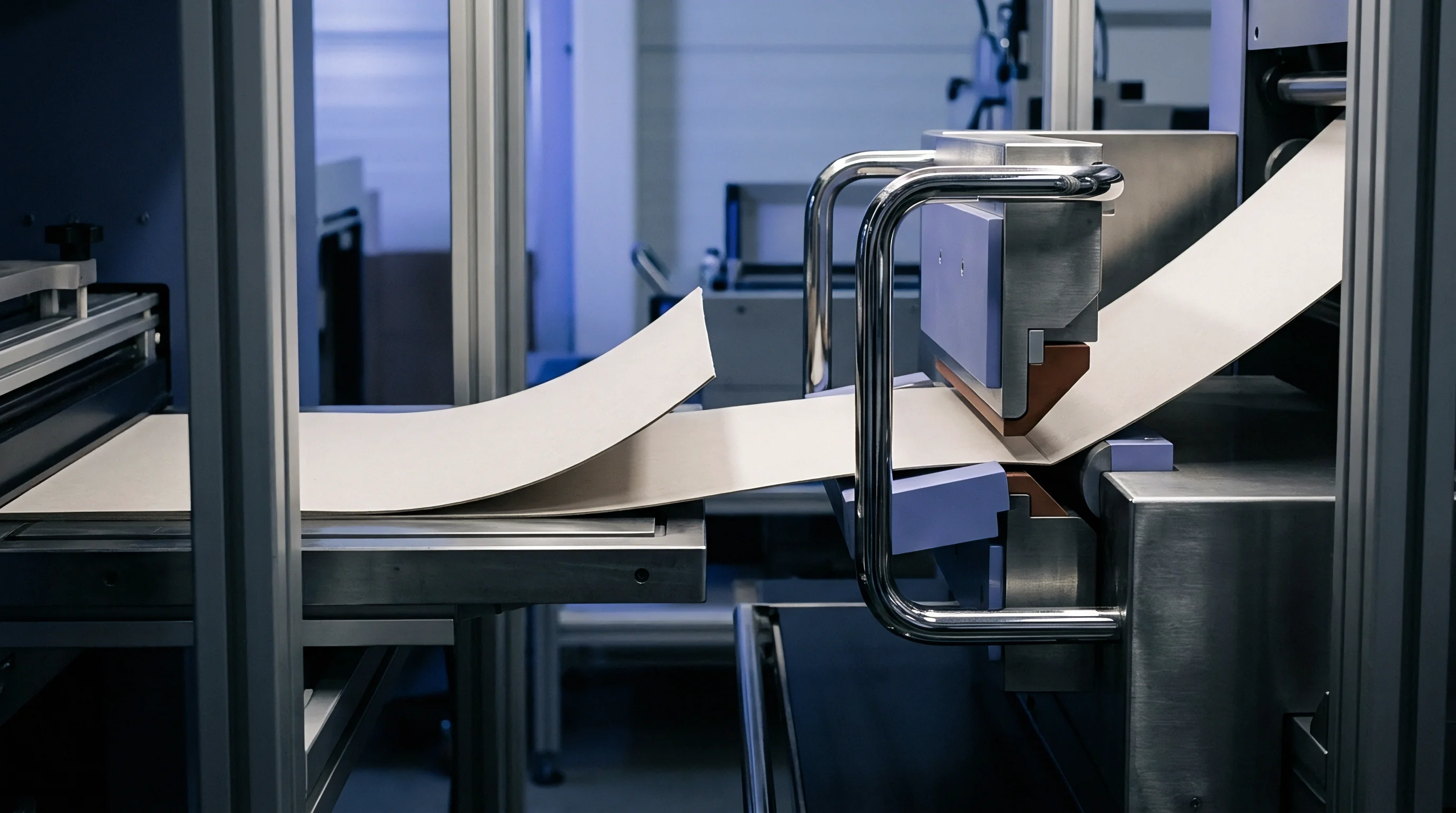
High-speed folding carton lines running flexographic or roller-coater units apply recyclable acrylate varnishes at speeds between 250 and 450 meters per minute. Uniform wet coat weight control maintains consistency in both visual gloss and hydrolytic performance. Applying excessive varnish mass creates a barrier that slows hydroxyl ion penetration during recycling, while applying insufficient coat weight compromises rub resistance and barrier properties against water vapor and oils.
Substrate absorbency influences liquid varnish penetration before UV curing. Solid bleached sulfate board absorbs low-molecular-weight oligomer components into surface pores, shifting the stoichiometric balance of photoinitiators remaining in the top film layer. Coated folding boxboard with clay topcoats restricts penetration, retaining the engineered oligomer formulation entirely within the crosslinked surface layer.
Which Coating Mass Threshold Triggers Repulpability Failure?
Coat weights exceeding 6.0 g/m² display diffusion-limited hydrolysis during standard 10-minute repulping cycles. Below 5.5 g/m², hydroxyl ions penetrate the film matrix rapidly, achieving full backbone cleavage within five minutes at 50°C. Converting lines running double-pass coaters must calibrate line speeds and UV lamp output to maintain uniform cure density through the full thickness of the applied layer.
Single-pass coat weight control below five grams per square meter prevents diffusion retardation during alkaline pulping while maintaining rub resistance across converting operations.
Photopolymer crosslinking density varies with UV irradiance levels and line speeds. Electron beam curing produces uniform crosslinking throughout the film thickness without photoinitiator fragments, improving food-contact compliance. However, high EB radiation doses (exceeding 45 kGy) induce secondary crosslinking in hydrolyzable acrylate backbones, forming non-cleavable carbon-carbon bridges that reduce subsequent hydrolytic degradation rates.
- Coat Weight Calibration ~ Target coat weight stays below 5.5 g/m² to prevent diffusion-limited hydrolytic retardation during pulping operations.
- Photoinitiator Spectrum Matching ~ LED-UV curing lamps at 395 nm demand targeted photoinitiator packages to achieve complete surface cure without over-crosslinking core polymer chains.
- Substrate Porosity Index ~ Uncoated board reverse sides absorb water rapidly, promoting steam-assisted fiber swelling that assists mechanical detachment of surface coatings.
- Nip Temperature Control ~ In-line calender nips operating above 70°C compact the cured coating layer, reducing pore volume and restricting hydroxyl ion access.
Uncured monomer residues present in low-dose UV applications pose migration risks in food packaging applications. Recyclable oligomers formulated with carboxylic acid groups exhibit self-catalyzing ester hydrolysis under acidic food storage conditions, creating potential off-flavor compounds over extended shelf lives.
Whether functional barrier properties can survive six months of tropical storage without triggering premature autocatalysis remains an open question for packaging engineers designing shelf-stable carton specifications.

Margin
Specialty recyclable acrylate oligomers command raw material prices 2.4 to 3.2 times higher than conventional UV epoxy acrylates. Resin synthesis requires multi-step esterification reactions and specialized dicarbonate precursor molecules. Converting plants balance higher chemical raw material costs against savings realized from reduced Extended Producer Responsibility eco-modulation fees and avoided landfill penalties for non-recyclable mill waste.
Eco-modulation fee structures under European packaging directives impose surcharges on board packaging utilizing non-separable synthetic laminates or non-hydrolyzable UV coatings. Certified recyclable packaging qualifying for top-tier EPR fee discounts offsets the added varnish material cost per thousand printed sheets, altering the economic calculation for high-volume consumer goods runs.
Yield Arithmetic and Operational Cost Balance
Evaluating landed cost requires tracking chemical consumption, spoilage rates, and eco-fee adjustments across complete production runs. Standard UV varnishes incur zero chemical price premium but trigger maximum EPR surcharges, whereas recyclable acrylate systems eliminate pulping penalties at the recycling facility.
| Performance and Cost Metric | Standard Epoxy Acrylate UV Varnish | Water-Based Acrylic Dispersion | Recyclable Acrylate Oligomer UV Varnish |
|---|---|---|---|
| Raw Material Cost (€/kg) | 3.80 | 2.90 | 9.60 |
| Applied Wet Coat Weight (g/m²) | 4.5 | 6.0 | 4.5 |
| Maximum Press Speed (m/min) | 400 | 220 | 380 |
| Pulper Screen Reject Rate (%) | 8.4 | 0.8 | 0.6 |
| EPR Eco-Modulation Fee (€/tonne board) | 140.00 | 0.00 | 0.00 |
| Net Packaging Cost per 1,000 Packs (€) | 42.10 | 46.80 | 41.35 |
Water-based dispersions eliminate pulping rejects but restrict flexographic coating units to lower press speeds due to drying energy constraints. Recyclable UV acrylate varnishes preserve high conversion speeds while maintaining compatibility with secondary fiber pulping systems.
Recyclable acrylate UV varnishes running at 380 meters per minute reduce net packaging costs per thousand packs compared to water-based dispersions by eliminating drying speed bottlenecks.
Quality assurance programs track lot-to-lot consistency in oligomer cleavage kinetics. Converters establish clear technical dockets with resin suppliers to verify hydrolytic reactivity before committing large board volumes to production runs.
- Batch Cleavage Rate Certificate ~ Resin suppliers provide kinetic rate constant documentation verified at pH 10.5 and 50°C for every liquid varnish batch delivered.
- Gel Fraction Limit Clause ~ Purchase specifications restrict maximum post-pulped gel residue to under 1.5 percent by weight of applied coating mass.
- EPR Classification Guarantee ~ Finished packaging dockets include certified recyclability grading reports issued under EN 13430 evaluation protocols.
- Thermal Shelf Life Bound ~ Warehouse storage conditions cap ambient temperatures at 25°C to prevent premature ester hydrolysis in stored liquid varnish drums.
Varnish formulators state that higher oligomer synthesis costs stem from low production volumes, promising price parity once global converting demand reaches scale.

Dispersibility
Water-soluble sodium acrylate oligomers and small-chain polyols generated during pulp-stage ester hydrolysis enter the paper mill white water circuit. Process water recirculation in modern closed-loop mills leads to continuous accumulation of dissolved organic salts. High concentrations of sodium acrylate salts increase ionic strength and electrical conductivity in stock preparation systems, altering the zeta potential of suspended cellulose fines and mineral fillers.
Cationic wet-end additives, including retention aids and wet-strength resins, interact with dissolved anionic acrylate fragments. Polymeric retention aids experience charge neutralization, reducing their efficiency in retaining calcium carbonate fillers and fiber fines on the papermaking wire. Papermakers adjust cationic demand by adding coagulants such as polyaluminum chloride or low-molecular-weight polyDADMAC to clear process water loops.
Effluent Treatment and Environmental Fate
Primary clarification removes insoluble fiber fines, sending dissolved organic compounds to biological wastewater treatment facilities. Dissolved cleavage products exhibit high biological oxygen demand over five-day testing protocols (BOD5), undergoing microbial oxidation in aerobic activated sludge basins. Acrylate oligomers containing ester backbones degrade into carbon dioxide, water, and biomass without generating persistent alkylphenol ethoxylates or halogenated organic residues.
Precipitation of solubilized oligomers during primary effluent treatment relies on trivalent aluminum ions. Aluminum sulfate addition at pH 6.2 forces dissolved sodium acrylates to form insoluble aluminum-carboxylate complexes, which settle out in primary clarifiers as chemical sludge. Sludge dewatering characteristics remain acceptable when polymer charge density stays below 3.5 meq/g, permitting land application or incineration in multi-fuel boilers.
Mill process water circuits operating zero-liquid-discharge systems monitor chemical oxygen demand buildup to prevent organic fouling of reverse osmosis membranes. The accumulation of dissolved carboxylate salts shifts process water equilibria, requiring periodic blowdown to maintain papermaking additive retention stability.