Establishing Commercial Gloss Retention Thresholds for Recyclable Barrier Coatings Subjected to High Load Surface Abrasion
Establishing a 70% gloss retention threshold under calibrated abrasion prevents transit scuffing while maintaining certified recyclability and low EPR fees.
Specular
Specular gloss retention on aqueous barrier-coated paperboard establishes whether an unlaminated folding carton survives the mechanical contact of distribution without scuffing to raw fiber. The converting industry evaluates these surfaces at a sixty-degree geometry under ISO 2813. A typical virgin solid bleached sulfate (SBS) board base carries a baseline gloss value between 75 and 85 gloss units (GU) after receiving an inline dispersion coating.
A transit cycle subjecting that surface to high contact pressure strips this reading down rapidly. A target threshold of 70 percent gloss retention after mechanical stress preserves brand equity on retail shelving.
Retaining Surface Sheen under Load
High load surface abrasion operates differently from standard dry scuffing. When palletized cartons experience vibration during intermodal transport, interfacial pressures exceed 14 kilopascals (kPa). Standard ink rub testing under ASTM D5264 utilizes a 1.8-kilogram or 0.9-kilogram sled, exerting pressures near 3.5 to 7.0 kPa.
These lower pressures evaluate dry pigment rub-off. They fail to predict micro-fracture along high-solids polymeric barrier layers. At 14 kPa, the abrasive counter-surface indents the micro-peaks of the coating.
The frictional shear ruptures polymer domains, transforming specular reflection into diffuse scatter.
The transition from film lamination to water-based barrier coatings introduces clear physical constraints. Biaxially oriented polypropylene (BOPP) films provide high ultimate elongation, often exceeding 120 percent before yield, absorbing abrasive energy through plastic deformation without loss of surface continuity. Aqueous coatings rely on acrylic, styrene-butadiene, or bio-based polymer dispersions whose crosslink density and filler loading restrict strain at break to between 5 and 25 percent.
Micro-grooves form immediately upon shear loading.
A seventy percent retention floor under fourteen kilopascals separates stable dispersion layers from brittle formulations.
Specular reflectance declines along a decay curve dictated by coating hardness and pigment-to-binder ratios. Pigmented functional coatings formulated with high aspect ratio clays achieve oil and grease resistance (OGR) by creating a tortuous path for permeants. These inorganic platelets act as micro-abrasives once dislodged under contact friction.
The initial two hundred cycles of mechanical displacement determine whether the polymer matrix retains these particles or releases them as loose debris, accelerating downstream wear.

Contact
Evaluating surface wear requires matching the bench protocol to the physical geometry of transit. Standard Sutherland rub methods provide directional back-and-forth passes along an arc, creating uneven dwell times at stroke reversal points. The Rotary Platform Abraser specified under ASTM D4060 applies continuous cross-rotational shear, generating dual tangential vectors across the sample disc.
For aqueous dispersion barriers applied at coat weights between 6 and 14 grams per square meter (gsm), the abrasive wheel formulation governs test validity.
Wear Profiles across Mechanical Interfaces
Calibrating mechanical contact involves balancing normal force against wheel topography. A CS-10 Calibrase wheel operated under a 500-gram load delivers sufficient tangential stress to abrade the coating without punching directly into the raw cellulose substrate within the first fifty revolutions. Operating the same wheel under a 1000-gram load crushes the underlying paperboard fluting or fiber matrix, rendering the test an evaluation of board compressibility rather than barrier shear endurance.
The contact interface generates localized thermal energy via dry friction, elevating interface temperatures toward the glass transition point (Tg) of the polymer binders.
The table below summarizes surface degradation metrics under calibrated abrasion cycles, documenting the shift from specular reflection to diffuse scatter alongside barrier breakdown.
| Cycles at 500g Load | Mean 60-Degree Gloss (GU) | Gloss Retention (%) | Water Cobb 1800s (g/m²) | Kit Test Number |
|---|---|---|---|---|
| 0 | 78.4 | 100.0 | 1.2 | 12 |
| 50 | 68.2 | 87.0 | 1.5 | 12 |
| 100 | 58.8 | 75.0 | 2.8 | 11 |
| 200 | 45.5 | 58.0 | 6.4 | 9 |
| 300 | 31.2 | 39.8 | 14.2 | 6 |
| 500 | 18.5 | 23.6 | 32.0 | 3 |
| Test executed using rotary abrasion with CS-10 wheels, vacuum cycle at 50 percent capacity, re-surfaced every 250 cycles. | ||||
The data reveals that functional protection collapses along with optical performance. The Cobb value remains flat while gloss retention stays above 75 percent. Once gloss retention drops below 60 percent, pinholes breach the coating film.
This structural breakdown allows aqueous penetrating liquids to contact the hydrophilic pulp fibers below.
A supplier often excuses this breakdown by claiming transit scuffing does not impair barrier integrity under real conditions.

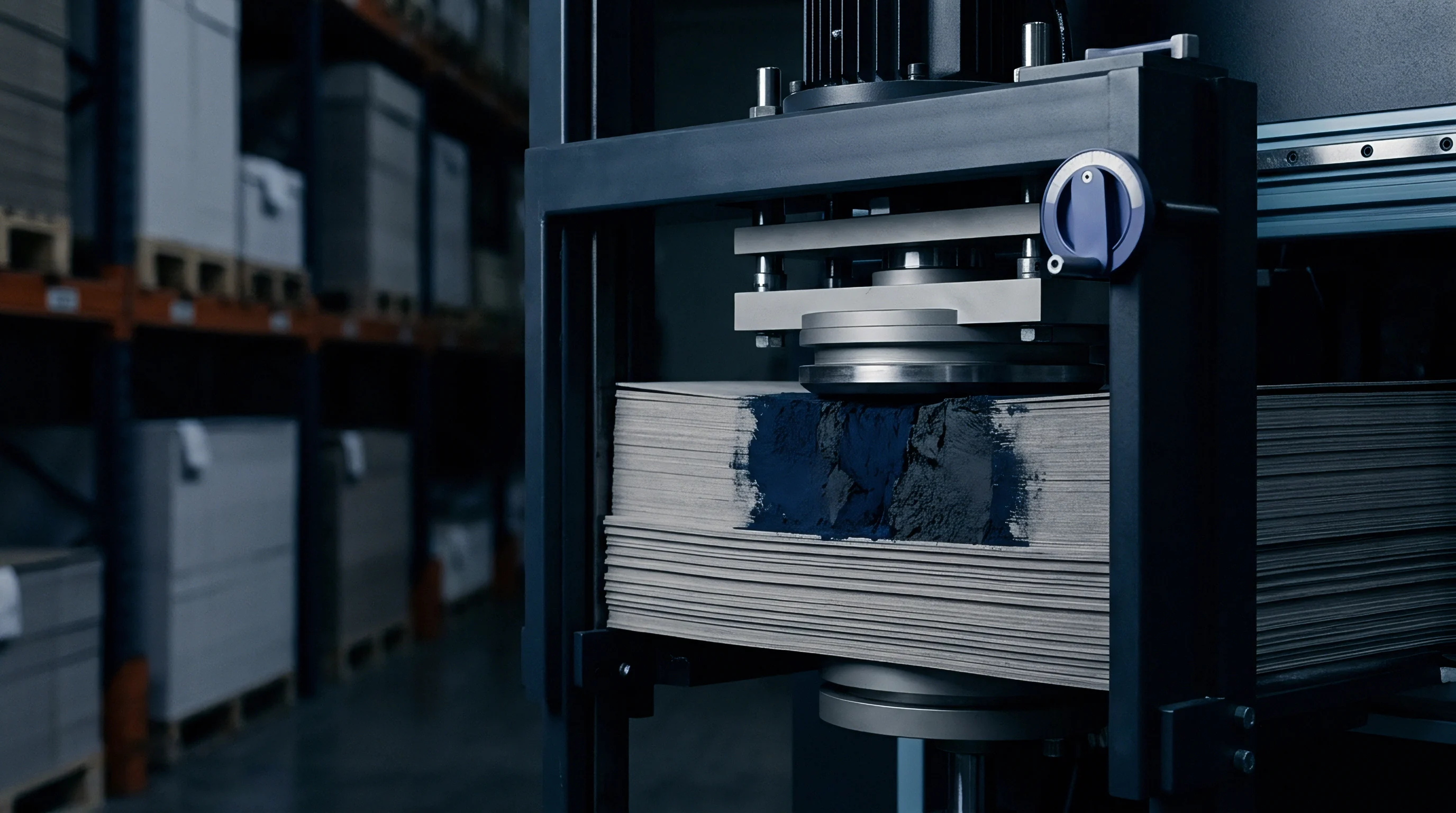
Matrix
Formulating a coating that combines optical retention with repulpability forces hard chemical compromises. The polymer matrix must resist shear deformation without forming an impermeable film that resists standard hydrapulping operations. Water-based barrier coatings utilize acrylic copolymers, styrene-butadiene emulsions (SBR), or polyvinyl alcohol (PVOH) blends.
Modifying these matrices with ethylene acrylic acid (EAA) improves wet adhesion, preventing the film from separating from the cellulosic surface during mechanical displacement.
Modifying Formulations for Mechanical Resilience
Hardness resists micro-scratching. Brittleness provokes micro-fracture. Balancing these two properties requires precise management of the glass transition temperature.
Binders with a Tg below 0 degrees Celsius demonstrate high elasticity, self-healing under light contact, yet they exhibit elevated friction coefficients that generate high heat under transit vibration. Polymers with a Tg above 25 degrees Celsius present slick, hard surfaces with low friction coefficients, though they tend to crack under point loads. Incorporating high-density polyethylene (HDPE) or carnauba wax emulsions reduces the kinetic coefficient of friction below 0.25, protecting the surface against shear damage.
The mineral component introduces further formulation challenges. Hexagonal platy talc and delaminated kaolin clay enhance barrier properties against water vapor transmission (WVTR) and mineral oil saturated hydrocarbons (MOSH). These platelets orient parallel to the sheet surface.
Under normal abrasive loads, the top layer of polymer strips off, catching the edges of these mineral particles. A higher pigment volume concentration (PVC) accelerates this loss of gloss by creating void spaces at the polymer-mineral boundaries.
- High Density Polyethylene Wax drops surface friction coefficients down to 0.18 while protecting the top layer from scuffing, but loadings beyond four dry weight percent impede the repulping disintegration step.
- Modified Styrene Acrylic Emulsion yields a balanced glass transition profile near 15 degrees Celsius, maintaining optical clarity after mechanical shear without flaking off fiber crowns.
- Delaminated High Aspect Ratio Kaolin provides a dense barrier layer against oil ingress, though exposed particles create micro-abrasions across neighboring sheets when subjected to stacking weight.
- Ammonium Zirconium Carbonate Crosslinker enhances wet rub resistance and internal cohesion through covalent bonding with carboxyl groups, maintaining film structure under humid abrasion cycles.
A buyer reviews the chemical constituents against European EN 13430 or American PTS recycling standards before approving additive packages. Wax fractions over five percent aggregate into sticky deposits during paper recycling screening. This fouls forming fabrics and drops the finished furnish out of recyclable specification grades.
Standard recycling protocols penalize high wax concentrations that resist repulping screening.
Failing to balance matrix elasticity against mineral hardness leaves the converter with flaking cartons that foul the gluer belts during subsequent folder-gluer conversion passes.

Yield
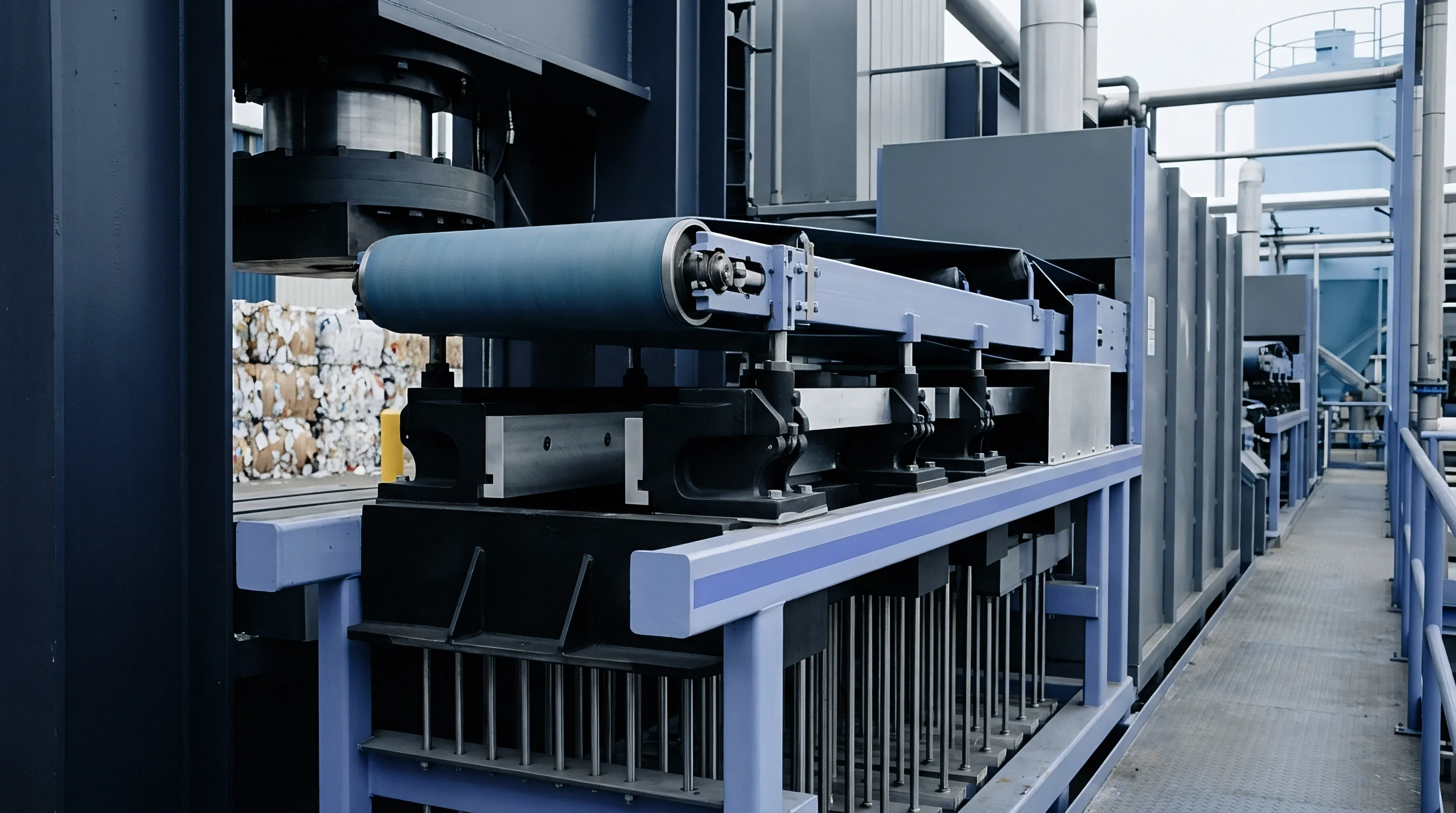
Every functional pass across the coater alters run economics and plant capacity. Replacing a standard polyethylene extrusion layer with an aqueous dispersion barrier changes machine speeds, drying requirements, and waste rates. Dispersion barrier formulations typically run at 45 to 55 percent solids content.
Drying these water-based layers requires high thermal inputs from air flotation ovens and infrared banks, capping machine velocity at 350 meters per minute compared to standard clay coater speeds above 800 meters per minute.
Converting Economics and Operational Waste
The coat weight dictates material efficiency and operational cost. Achieving a 70 percent gloss retention threshold under high abrasive loads requires a minimum deposition of 8 gsm of dry polymer over a double-coated base sheet. Applying this on an uncoated bleached kraft base demands up to 14 gsm to bridge porous fiber voids.
Each additional gram of high-performance polymer adds direct material cost to the master roll.
Consider an operational model evaluating a 50-tonne conversion lot of 280 gsm solid bleached sulfate cartonboard. The converter balances a single heavy-pass coating process against a dual-pass application.
Assume a baseline paperboard substrate cost of 1,150 dollars per tonne. The high-durability aqueous barrier formulation costs 3.80 dollars per dry kilogram. Application A utilizes a single coater station depositing 12 gsm in one pass, running at 250 meters per minute due to drying limits, generating a 4.5 percent make-ready and start-up waste factor.
Application B applies two tandem passes of 5 gsm each (10 gsm total), running at 400 meters per minute with a 3.0 percent waste factor.
Under Application A, 50 tonnes of finished board consumes 2.14 tonnes of dry coating material, adding 8,132 dollars in chemical expense, while production waste totals 2.25 tonnes of board worth 2,587 dollars. Under Application B, the 10 gsm total coat weight consumes 1.78 tonnes of chemical, costing 6,764 dollars. Waste drops to 1.5 tonnes worth 1,725 dollars.
The dual-pass structure saves 1,368 dollars in raw chemistry and 862 dollars in scrap board, yielding an operational saving of 2,230 dollars across the lot. The split application improves film leveling, raising baseline gloss from 72 to 81 GU and lifting post-abrasion gloss retention from 61 percent to 76 percent.
Tandem coating passes reduce pinholing by allowing the initial base coat to seal board porosity before the top functional coat cures. The resulting surface resists high-load abrasive breakdown because shear stresses transfer into a stable polymer foundation rather than compressing uneven fiber peaks.
The plant foreman monitors web tension continuously. Dispersion coaters pull web moisture down to three percent during drying, causing sheet embrittlement and curl if remoisturizing passes do not rebalance water content before the winding reel.

Proof
Verifying gloss stability before shipping requires strict qualification sequences on production runs. Laboratory drawdowns pulled on wire-wound Meyer rods never replicate the shear thinning and dynamic drying of an industrial blade or curtain coater. A commercial validation dossier matches bench testing to verified pallet performance under certified shipping distributions.
What Informs the Abrasion Qualification Step?
Field failures originate when lab testing misaligns with transport realities. A carton tested only at ambient laboratory conditions of 23 degrees Celsius and 50 percent relative humidity behaves differently when exposed to cold chain logistics or humid tropical maritime freight. Moisture absorption weakens the hydrogen bonding within paperboard, lowering its compressive modulus.
When the substrate yields underneath the barrier, contact areas widen, multiplying abrasive wear rates.
The inspection procedure follows an exact operational path:
- Condition sample sheets under ISO 187 parameters at 23 degrees Celsius and 50 percent relative humidity for 24 hours prior to converting.
- Measure baseline sixty-degree specular gloss across five points per sheet using a calibrated reflectometer under ISO 2813.
- Mount the sample securely to an abrasion tester platen, verifying that no air bubbles or surface distortions distort the planar interface.
- Execute two hundred cycles of rotary shear under a 500-gram load using reconditioned CS-10 abrasive wheels.
- Clear abraded debris from the contact zone using dry compressed air at 0.2 megapascals without wiping the surface mechanically.
- Re-measure sixty-degree specular gloss at the four quadrant wear locations and calculate mean percentage retention against baseline figures.
- Perform a two-minute Cobb test and a pinhole dye penetration test across the abraded path to verify functional barrier survival.
A failure during this verification loop results in immediate quarantine of the master roll stock. If mean gloss retention drops below 68 percent, micro-fissuring has breached the barrier layer.
A specification clause requiring seventy percent retention after two hundred cycles protects against pallet rejection at delivery.
Disputes frequently center on testing variability. Inter-laboratory round-robin trials reveal that abrasive wheel age introduces up to 12 percent variation in gloss metrics if wheel dressing intervals deviate from the strict fifty-cycle resurfacing rule. Standardizing the diamond-tool dressing process stabilizes measurement lines between mills and brand converting auditors.
Margin
Commercial margins depend on navigating regional regulatory rules and producer responsibility structures without sacrificing pack aesthetics. In the European Union, the Packaging and Packaging Waste Regulation sets stringent recyclability performance grades. A barrier pack must achieve recyclability grade A or B to avoid punitive modulated eco-contribution fees.
Grade A requires paper fiber recovery rates exceeding 95 percent in standard recycling systems without specialized chemical treatments.

Modulated Fees and Material Compliance
Laminating a clear polypropylene or polyester film over paperboard yields near-total gloss retention during freight. That laminated film also turns the package into composite packaging waste in several major markets, carrying recycling surcharges of 180 to 350 euros per tonne above monomaterial paper rates. An aqueous dispersion barrier maintains monomaterial classification under recyclability protocols, qualifying the carton for standard paper streams.
If that aqueous layer abrades during distribution, the brand faces unsaleable retail stock.
The table below models the total cost balance for three barrier systems across a run of one million units of standard folding cartons, weighing 40 grams each (40 tonnes total board weight).
| Barrier System | Added Finishing Cost ($) | Gloss Retention at 200 Cycles (%) | Modulated EPR Fee (€/Tonne) | Repulpability Pulp Yield (%) |
|---|---|---|---|---|
| BOPP Film Lamination (15 micron) | 9,600 | 96.5 | 380 | 78.2 |
| High-Wax Dispersion Barrier (10 gsm) | 6,200 | 82.4 | 210 | 88.5 |
| Engineered Acrylic Dispersion (8 gsm) | 7,400 | 71.8 | 45 | 96.1 |
The engineered acrylic dispersion system delivers the lowest total landed cost once extended producer responsibility (EPR) fee modulations take effect. The 7,400-dollar converting addition combined with the 45-euro per tonne compliance fee yields substantial savings over film lamination. The BOPP lamination attracts 15,200 euros in EPR fees across 40 tonnes, eliminating the initial process cost advantages of film over specialized aqueous chemistry.
The standard contract line states that all supplied board must maintain functional barrier properties and minimum 70 percent gloss retention after specified transit abrasion cycles without violating PTS recyclability criteria. That line shifts responsibility for substrate selection directly onto the converter, forcing precise process control from the coating deck through to final folder-gluer delivery.