Quantifying Dynamic Registration Drift in Multi Pass Hot Foil Stamped Folding Boxboard
Dynamic registration drift in multi pass stamping stems from hygrothermal sheet contraction under die heat, requiring artwork scaling or climate controlled staging.

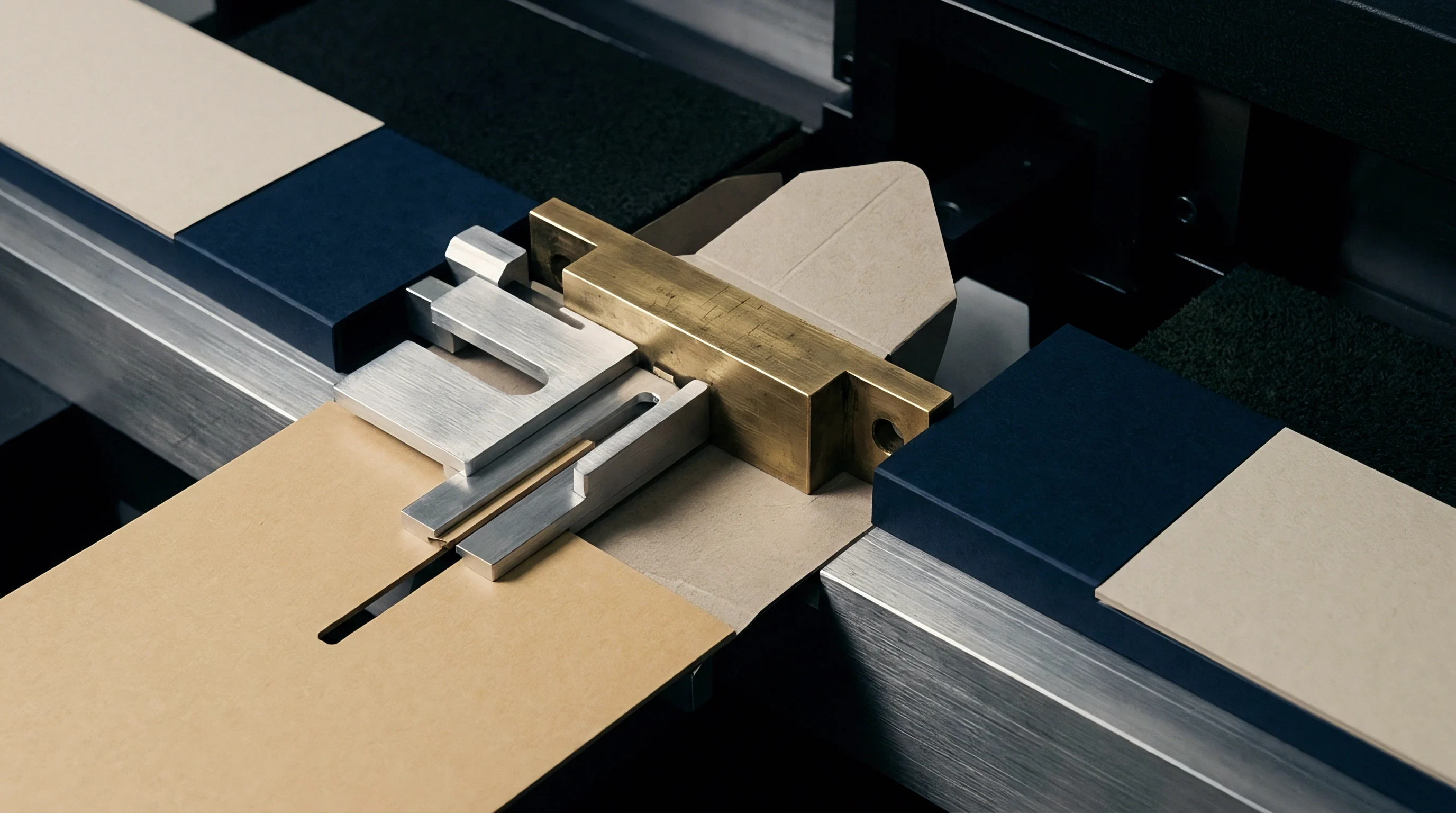
Deformation
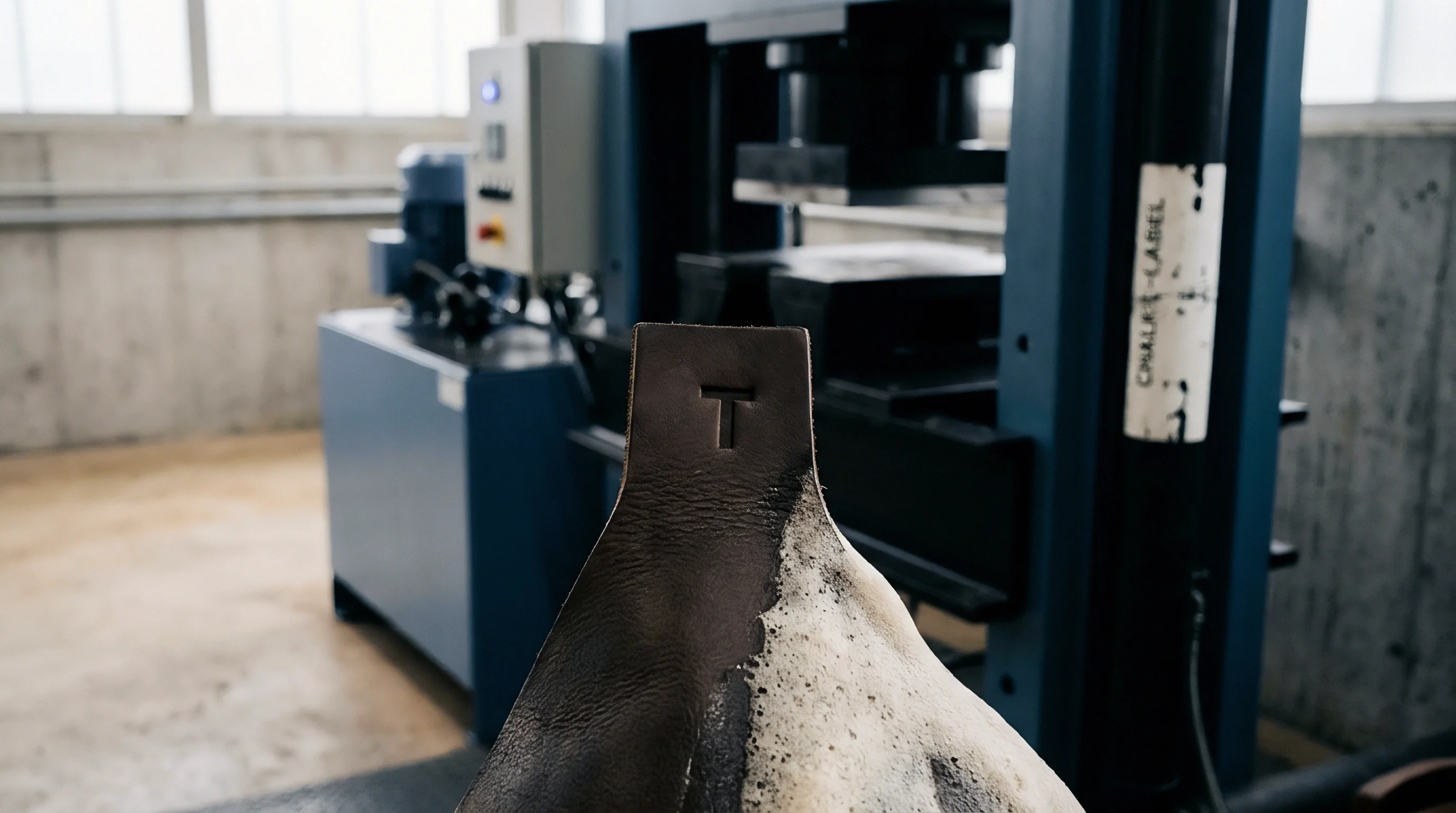
Thermal loading during flatbed hot foil stamping subjects folding boxboard to simultaneous heat transfer and high compressive mechanical stress. A heated brass or copper die plate operating between 115°C and 140°C contacts the coated top liner under clamping forces ranging from 25 to 45 MPa. Dwell times lasting between 35 and 80 milliseconds transfer thermal energy directly into the cellulose structure, initiating rapid moisture phase changes within the sheet matrix.
Water retained within the chemical and mechanical pulp layers vaporizes instantly at the interface and migrates outward toward lower-pressure zones.
Heat alters board width. Moisture escapes under pressure. The structural composition of folding boxboard combines a fully bleached chemical pulp top layer, a high-yield mechanical pulp middle layer, and an unbleached or bleached chemical pulp back layer.
Mechanical pulp layers exhibit high bulk and springback performance, making them sensitive to Z-direction compression. Under the hot stamping nip, the mechanical core compresses elastically and viscoelastically, while elevated temperature softens the lignin and hemicellulose binders. Permanent caliper reduction occurs directly beneath the image areas, creating localized density variations across the sheet grid.
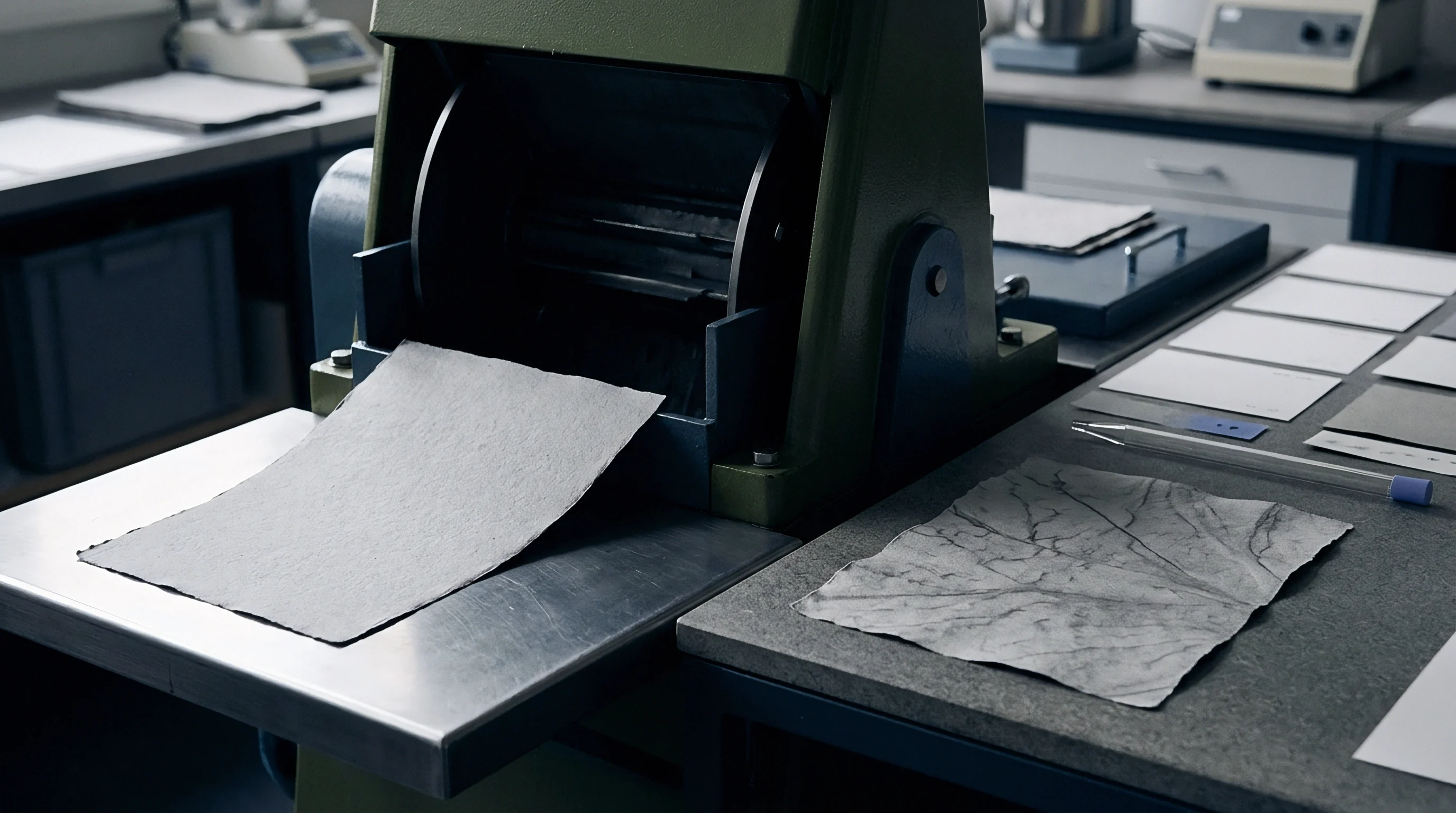
Thermomechanical Stress Profile during Foil Application
Direct contact with a heated die surface creates a sharp thermal gradient through the thickness of the board stock. Surface temperature at the clay coating reaches 110°C within 30 milliseconds of nip engagement, while the reverse side of a 450-micrometer sheet remains near ambient shop temperature. This unequal expansion across the thickness profile forces transient micro-curling toward the heated die.
As the press opens and nip pressure releases, the compressed cellulose fibers expand along the Z-axis, but thermal energy trapped in the core continues driving moisture out through the edges of the sheet.
At 130°C platen contact and 45 ms dwell, folding boxboard moisture content in the nip zone drops from 7.0 percent to 4.2 percent in a single pass.
Dynamic compression alters the mechanical planar dimension of the substrate beyond simple thickness reduction. Elastic recovery occurs instantly upon die release, yet viscoelastic deformation recovers over several hours. When sheets pass through a secondary stamping station, the substrate occupies a different physical state than it did during the initial pass.
Unequal core compaction creates localized strain fields, turning uniform graphic layouts into distorted coordinate grids.

Moisture Desorption under Transient High Heat
Fiber bonds within the paperboard matrix loosen when moisture content drops below five percent by weight. Rapid desorption shrinks individual cellulose microfibrils, pulling adjacent fibers closer together along both cross-direction and machine-direction axes. Cross-direction dimensions shrink significantly more than machine-direction dimensions because fibers align predominantly along the machine axis during sheet formation on the board machine.
This dimensional instability manifests immediately as the sheet leaves the heating zone.
Sheet width contracts in seconds. Stiff top coatings resist lateral shrinkage, establishing internal shear stresses between the mineral coat and the underlying fibrous core. High local shear forces generate fine surface micro-cracking across dense foil solid areas during secondary passes.
Uncontrolled thermomechanical stress during the initial stamping pass shifts image location coordinates by up to 0.40 millimeters across a 720-millimeter sheet width, rendering tight secondary overlay registration unachievable.
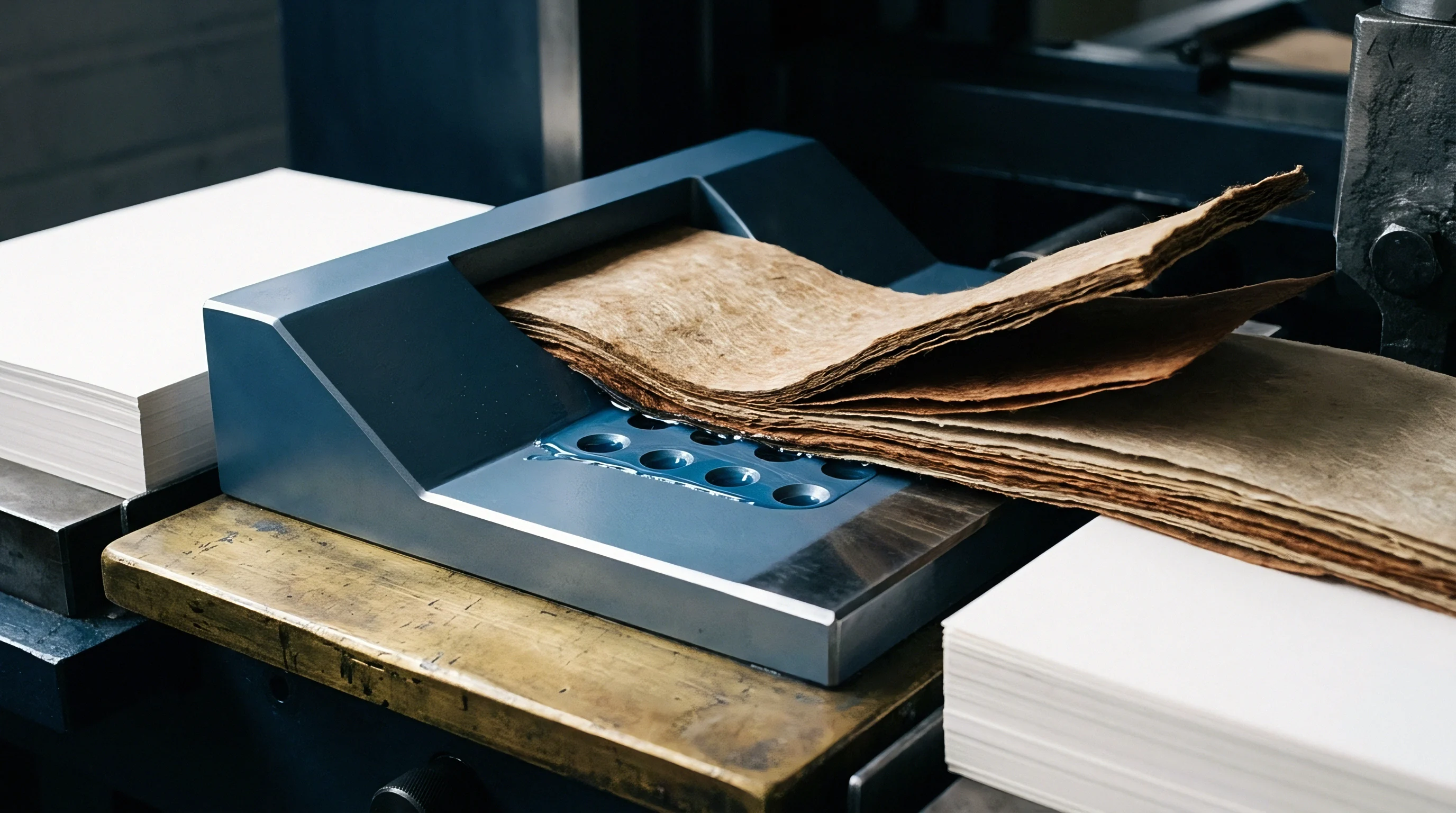

Platen
Mechanical registration systems in heavy flatbed stamping presses rely on precise physical contact between sheet edges and mechanical alignment lays. Front lays align the leading gripper edge, while side lays push or pull the sheet to fix its lateral location prior to impression. Machine mechanical tolerances maintain repeat positioning accuracy within ±0.03 millimeters under cold operating conditions.
Once the thermal impression cycle begins, heat radiates continuously from the upper beam chase into the press frame, expanding metal components and altering structural clearances across the bed.
Dies expand when heated. Brass stamping plates possess a coefficient of thermal expansion of approximately 18.5 × 10⁻⁶ per Kelvin, whereas steel chasing plates expand at roughly 12.0 × 10⁻⁶ per Kelvin. A 600-millimeter brass die block heated from a ambient shop temperature of 20°C to an operating temperature of 130°C expands by 1.22 millimeters along its long axis.
Tooling designers compensate for this thermal growth by scaling vector artwork prior to CNC die engraving, assuming a constant operating temperature throughout the production run.

Tooling Expansion Rates across Long Stamping Shifts
Thermal stability across a die plate demands uniform temperature distribution across all heating zones. Variations in electrical heating element performance create localized temperature differentials of up to 15°C across the chase surface. A localized temperature spike expands individual die sections independently, altering relative distance between separate foil elements on the same plate.
Cold stock feeding into a hot die cools the metal surface temporarily, inducing cyclical thermal contraction and expansion during long continuous runs.
| Die Material | Expansion Coefficient (10⁻⁶/K) | Linear Expansion per 500mm at ΔT 100°K (mm) | Thermal Conductivity (W/m·K) | Registration Drift Risk Profile |
|---|---|---|---|---|
| Magnesium | 26.0 | 1.30 | 156 | High dynamic growth rate; prone to edge distortion |
| Brass | 18.5 | 0.92 | 115 | Predictable linear growth; standard baseline reference |
| Copper | 16.5 | 0.82 | 390 | Superior thermal recovery; minimal localized drift |
| Hardened Steel | 12.0 | 0.60 | 50 | Lowest thermal growth; slow initial heat bring-up |
| Values calculated at standard operating temperature differentials from 20°C ambient baseline to 120°C active die face temperature under steady-state platen pressure. | ||||
Brass expands faster than steel. Continuous press operation elevates side-frame temperature, driving structural metal growth that alters mechanical lay zero-points relative to the center line of the platen beam. Mechanical wear in toggle drive mechanisms introduces microscopic slop, allowing die beds to shift laterally by ±0.05 millimeters under full tonnage load.
Thermal equilibrium across the press assembly requires up to two hours of continuous operation, during which registration drift moves dynamically away from the initial make-ready position.

Mechanical Lay Alignment versus Dynamic Sheet Position
Sheet registration accuracy depends on structural integrity at the leading edge. High-speed mechanical feeder grippers pull individual boxboard sheets against physical stops at speeds exceeding 7,000 sheets per hour. Impact forces at the front lay margin can deform the edge of low-density folding boxboard grades, creating variable registration datum points across the job lot.
Variable edge crush changes how subsequent press stations index the identical sheet.
Cold stock shifts registration. When cold substrate enters a hot press zone, ambient moisture condenses transiently on the cool sheet surface before rapid evaporation begins. This brief thermal shock induces localized wave formation along the gripper margin.
Side lays contacting a wavy sheet edge record an inaccurate lateral position, misaligning the second foil pass relative to printed targets. Converters often blame substrate variation when tooling expansion and mechanical lay wear interact to pull second-pass foil elements beyond design specifications.


Hygroexpansion
Fiber alignment during papermaking imbues folding boxboard with distinct physical properties along orthogonal axes. Cellulose fibers expand and contract primarily in diameter rather than length when absorbing or desorbing atmospheric water vapor. Consequently, cross-direction hygroexpansion coefficients for cartonboard range from 0.028% to 0.045% per one percent change in sheet moisture content, while machine-direction coefficients remain between 0.008% and 0.015%.
This structural anisotropy dictates how sheets change shape after undergoing thermal processing.
Fiber orientation dictates shrinkage. When hot foil stamping strips moisture from a localized zone, cross-direction sheet dimensions contract at triple the rate of machine-direction dimensions. A 700 mm × 1000 mm sheet losing 2.0% moisture content across its surface shrinks up to 0.63 millimeters in width, but only 0.18 millimeters in length.
Secondary foil overlays positioned near sheet margins reveal severe lateral misregistration while center-sheet elements remain acceptable.

Anisotropic Dimensional Movement in Multilayer Boxboard
Multilayer board structures amplify internal stresses during moisture loss due to mismatched expansion rates between furnish layers. Mechanical pulp cores absorb and release water faster than dense chemical pulp top liners. Rapid drying during pass one creates moisture imbalances between top and bottom surfaces, causing structural bow and twist curl across the pile.
Stacking warm, moisture-depleted sheets on pallets traps thermal energy within the pile, prolonging moisture loss across the perimeter while core areas remain wet.
- Cross-direction shrinkage creates cumulative lateral image mismatch on multi-up imposition layouts during pass two.
- Machine-direction elongation occurs under feeding tension, altering die-to-board repeat distance across the impression cylinder.
- Diagonal shear distortion develops when localized moisture loss interacts with asymmetrical internal stress across the sheet width.
- Edge curl amplification shifts optical mark read positions relative to mechanical gripper bars during secondary feeder intake.
Dynamic contraction ruins overlay accuracy. Moisture loss causes lateral shift. Ambient storage conditions between press passes govern the rate of moisture recovery.
Unconditioned staging halls with low relative humidity extract further moisture from exposed pallet edges, exaggerating dimensional variations across single sheets. Conversely, high-humidity staging areas induce rapid edge swelling, creating tight edges and wavy centers that buckle under second-pass platen entry.
Standard packaging procurement contracts specifying ISO 187 conditioning allow up to 0.15 millimeter registration variance between consecutive passes without triggering batch rejection clauses.
Equilibrium moisture recovery requires controlled atmospheric conditions matching 23°C and 50% relative humidity per ISO 187 parameters. Substrates allowed to acclimatize for 24 hours between pass one and pass two recover dimensional stability as water molecules re-enter the microfibrillar network. Shortening inter-pass dwell times to force production schedules leaves sheets in a transient state of dimensional contraction, guaranteeing registration drift across the press run.
Allowing piles to rest until core temperatures match ambient room conditions remains essential for predictable dimensional control.
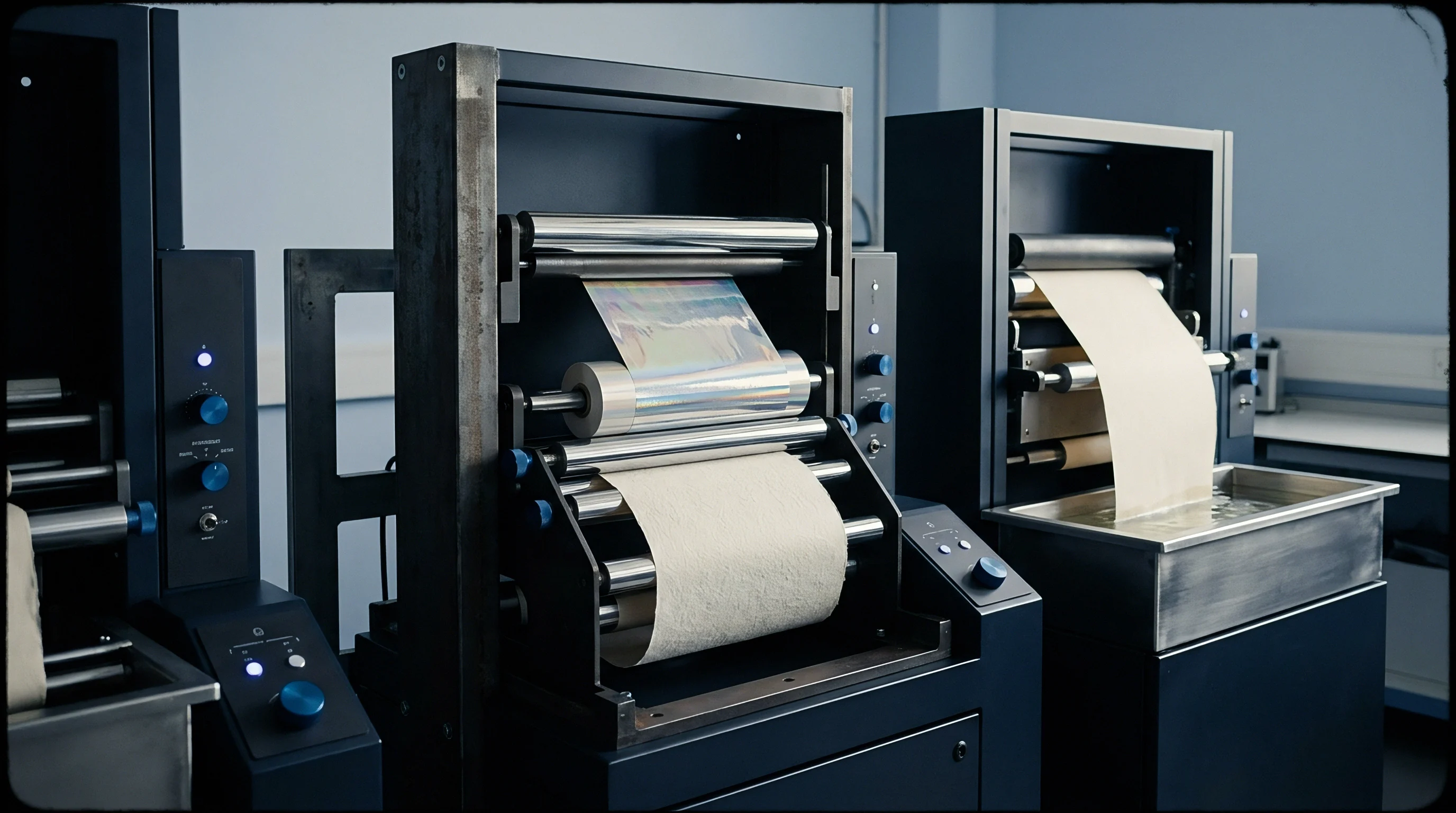

Tolerance
Quantifying total registration drift across multiple finishing passes requires compiling an error budget that combines mechanical press variance, tooling expansion, and substrate dimensional movement. Each variance component acts as an independent statistical variable. Adding variance values in quadrature establishes the root mean square error, defining the realistic tolerance band achievable on commercial production runs.
Staging bays stabilize board moisture. Inter pass delays alter dimensions. Precision optical registration devices measure registration offsets relative to baseline crosshairs printed on the sheet margin.
Evaluating pass-to-pass accuracy purely through visual inspection under loupes introduces operator bias, masking systemic press drift behind localized material fluctuations.

What Drives Dynamic Sheet Contraction across Hot Passes?
Substrate contraction drives the largest fraction of dynamic drift during multi-pass stamping runs. As heat strips bound water from cellulose fibers, the dimensional grid of the sheet contracts non-linearly toward the center of mass. The distance between artwork elements located near outer edges shrinks significantly, while central elements maintain relative position.
Dynamic press speed changes alter dwell time, causing variable thermal exposure and uneven shrinkage from sheet to sheet.
| Error Budget Component | Nominal Variance Range (mm) | RMS Contribution (mm) | Primary Physical Driver | Mitigation Protocol |
|---|---|---|---|---|
| Mechanical Feeder Repeatability | ±0.03 to ±0.06 | 0.045 | Gripper wear and lay stop impact | Precision lay adjustment and maintenance |
| Thermal Tooling Expansion | ±0.05 to ±0.12 | 0.085 | Chase temperature fluctuations | PID zonal heat control and brass pre-scaling |
| Substrate Hygrothermal Shrinkage | ±0.15 to ±0.35 | 0.250 | Dwell heat moisture desorption | Humidity-controlled staging inter-pass bays |
| Platen Beam Mechanical Deflection | ±0.02 to ±0.05 | 0.035 | Tonnage load frame flexing | Hydraulic leveling and balanced die layout |
| Secondary Pass Feeder Registration | ±0.04 to ±0.08 | 0.060 | Sheet edge curl and wave deformation | Optical sensor alignment systems |
Calculated total variance across two consecutive hot foil passes under standard factory conditions routinely reaches ±0.28 millimeters. If a design incorporates fine micro-embossing registered directly over a metallic foil base, a combined variance of 0.28 millimeters produces visible misregistration, exposing raw unfoiled board along graphic margins. Designers specifying tight trap tolerances below 0.20 millimeters force converting lines to operate beyond standard statistical process capabilities.

Stacking the Inter Pass Error Budget
Managing multi-pass alignment requires systematic shop-floor measurements before committing expensive board inventory to full production runs. Implementing an audit sequence allows press operators to measure physical sheet movement and adjust secondary tooling positions prior to starting high-speed runs.
- Measure ambient relative humidity and temperature at the feeder inlet before mounting dies.
- Record baseline moisture content across ten representative sheets using a non-destructive dielectric moisture meter.
- Pre-heat die chase to operating temperature for ninety minutes to achieve thermal equilibrium.
- Run fifty make-ready sheets through pass one and measure distance between corner alignment crosshairs.
- Stage stamped sheets in climate-controlled staging bays for four hours to permit partial hygro-thermal recovery.
- Measure dimensional change across CD and MD reference lines prior to initiating pass two.
- Adjust second-pass die section offsets to match the measured post-pass-one mean dimensional shift.
Pre-heating die chases until thermal equilibrium is established prevents mid-shift image movement.
Standard packaging purchasing specifications referencing ISO 12647-2 tolerance methodologies specify that non-target image elements must fall within a 0.30 millimeter tolerance sphere relative to primary print marks. Incorporating this clause into converter supply agreements shifts monetary liability for registration failure back to the buyer if artwork lacks required design traps. Enforcing this technical benchmark requires documented press-side measurement dossiers generated during job bring-up.


Budget
Financial yield loss accelerates rapidly when multi-pass finishing operations generate high spoilage rates late in the production process. A carton board layout carrying primary print, spot UV varnish, pass-one metallic foil, and pass-two detail embossing accumulates value with every manufacturing step. Scrapping a sheet after pass-two foil application destroys not only the raw substrate investment, but also all previously consumed machine time, ink, varnish, and foil roll stock.
Waste scales with added passes. Consider a commercial packaging run requiring 50,000 finished cartons manufactured on 350 gsm virgin folding boxboard. The job utilizes a 6-up imposition layout on 720 mm × 1020 mm sheet sizes, requiring 8,333 gross sheets plus make-ready allowances.
Raw board stock costs 1,450 USD per metric tonne. The complete finishing sequence includes offset printing (pass 1), hot foil stamping of background metallic shapes (pass 2), and registered hot foil embossing of fine detail text (pass 3).
Cumulative Spoilage Arithmetic for Multi Pass Runs
Calculating the true cost of registration drift requires tracking spoilage rates across each sequential conversion stage. Make-ready allowances for single-pass jobs typically run between 2.0% and 3.0% of total sheet count. On a three-pass job where pass-two heat induces uncompensated cross-direction shrinkage of 0.32 millimeters, second-pass registration yields drop sharply as operators attempt to find an acceptable compromise alignment across all die positions.
Optical sensors re-align sheet position. Assume initial offset printing operates at a standard scrap rate of 1.5%, discarding 125 sheets. Pass-two hot stamping consumes 250 make-ready sheets and operates at a 2.0% running spoilage rate, discarding an additional 163 sheets due to foil breaks and tension flaws.
The cumulative value of each remaining sheet now includes substrate cost, printing ink, coating, foil roll consumption, and two machine pass hourly rates.

Worked Construction of a Two Pass Registration Drift Costing
Evaluating financial impact under unmitigated registration drift highlights the steep economic penalty of late-stage rejects. In this worked scenario, 7,945 sheets enter pass-three hot embossing carrying 0.32 millimeters of uncompensated cross-direction thermal shrinkage from pass two. The secondary die artwork assumes nominal sheet dimensions.
Because shrinkage is concentrated in the cross-direction, outer columns on the 6-up layout exhibit 0.32 millimeters of lateral misregistration, while center columns register correctly.
- Target net carton yield requires 50,000 acceptable units from 8,333 initial gross sheets.
- Substrate unit cost equals 0.40 USD per sheet based on 1,450 USD per metric tonne market pricing.
- Pass one printing cost adds 0.18 USD per sheet in machine time, plates, and ink consumption.
- Pass two foil stamping cost adds 0.45 USD per sheet including brass tooling amortisation and foil stock.
- Pass three embossing cost adds 0.22 USD per sheet in machine running time and setup.
Total accumulated unit cost per sheet arriving at pass-three embossing equals 1.25 USD. If uncompensated registration drift forces the rejection of outer-column cartons, two out of every six cartons on the sheet fail visual quality inspection. This misregistration converts 33.3% of pass-three production into scrap, destroying 2,648 sheets worth 3,310 USD in accumulated direct material and machine costs.
Adding machine downtime while operators attempt manual lay adjustments pushes total financial loss past 4,500 USD for a single 50,000-carton production order.
Second-pass registration failure wastes both substrate investment and previous finishing operations simultaneously.
How far can optical camera tracking press systems reduce this financial loss before custom multi-pass tooling dies become the cheaper engineering option?


Yield
Mitigating registration drift in high-volume carton conversion demands choosing between inline press technology investments and offline substrate conditioning protocols. Advanced flatbed stamping presses incorporate dynamic camera-guided registration systems that read optical crosshairs on individual sheets micro-seconds before platen engagement. Servo-driven side lays and front grippers adjust sheet orientation independently for every impression, shifting the sheet to match actual post-pass-one dimensional distortion.
Camera systems correct sheet offset. Dynamic optical compensation handles uniform translation shifts and minor rotational skew, but cannot compensate for non-linear scale changes within a rigid die block. If heat drying shrinks the cross-direction sheet width by 0.30 millimeters while the brass die plate remains at nominal artwork scale, an optical lay system merely splits the error equally between left and right outer columns.
Eliminating scale mismatch entirely requires modifying secondary die artwork scale or deploying segmented dies with adjustable mounting bases.
Optical Press Compensation Technology versus Tooling Redesign
Tooling engineers combat predictable thermal shrinkage by applying negative scaling factors during secondary die engraving. If historical process data confirms that a specific folding boxboard grade shrinks 0.04% in the cross-direction after pass-one stamping at 130°C, the vector CAD file for pass-two tooling is compressed laterally by 0.04% prior to CNC milling. When the scaled brass die contacts the shrunken sheet, image dimensions match precisely across all imposition columns, restoring job yield to nominal targets without requiring slower press operating speeds.
Segmented dies allow independent adjustment. Mounting separate brass die blocks on adjustable chases enables press operators to alter inter-element spacing directly on press, compensating for dynamic sheet movement across long production runs. Combining pre-scaled tooling with humidity-controlled inter-pass staging bays creates a robust manufacturing process capable of holding inter-pass tolerances within ±0.10 millimeters across 100,000-sheet orders.

Environmental Compliance and Modulated Recyclability Fees
Extended Producer Responsibility regulations across European markets impose modulated fee structures based on packaging recyclability grades. Heavy metallic foil coverage applied across multiple stamping passes impacts structural re-pulpability during standard paper recycling operations. Under Cepi recyclability guidelines, aluminum foil coatings exceeding five percent of total pack weight penalize the final recyclability score, triggering elevated waste management fees for brand owners.
Minimizing total foil surface area while achieving high visual impact requires precise micro-embossing registered over lean foil coverage. Dropping secondary foil passes in favor of single-pass combination dies—which apply foil and structural embossing simultaneously in one thermal impression—completely eliminates inter-pass registration drift while reducing energy consumption and foil scrap. Converting multi-pass hot stamping jobs into single-pass combination workflows cuts make-ready waste by half, eliminates hygrothermal drift risk, and ensures compliance with international packaging sustainability frameworks.