Paperboard Furnish Profiling Methods for Goods in Inspection
Goods-in paperboard profiling combines rapid chemical staining, split-temperature ashing, and layer delamination to expose deceptive furnish substitution.
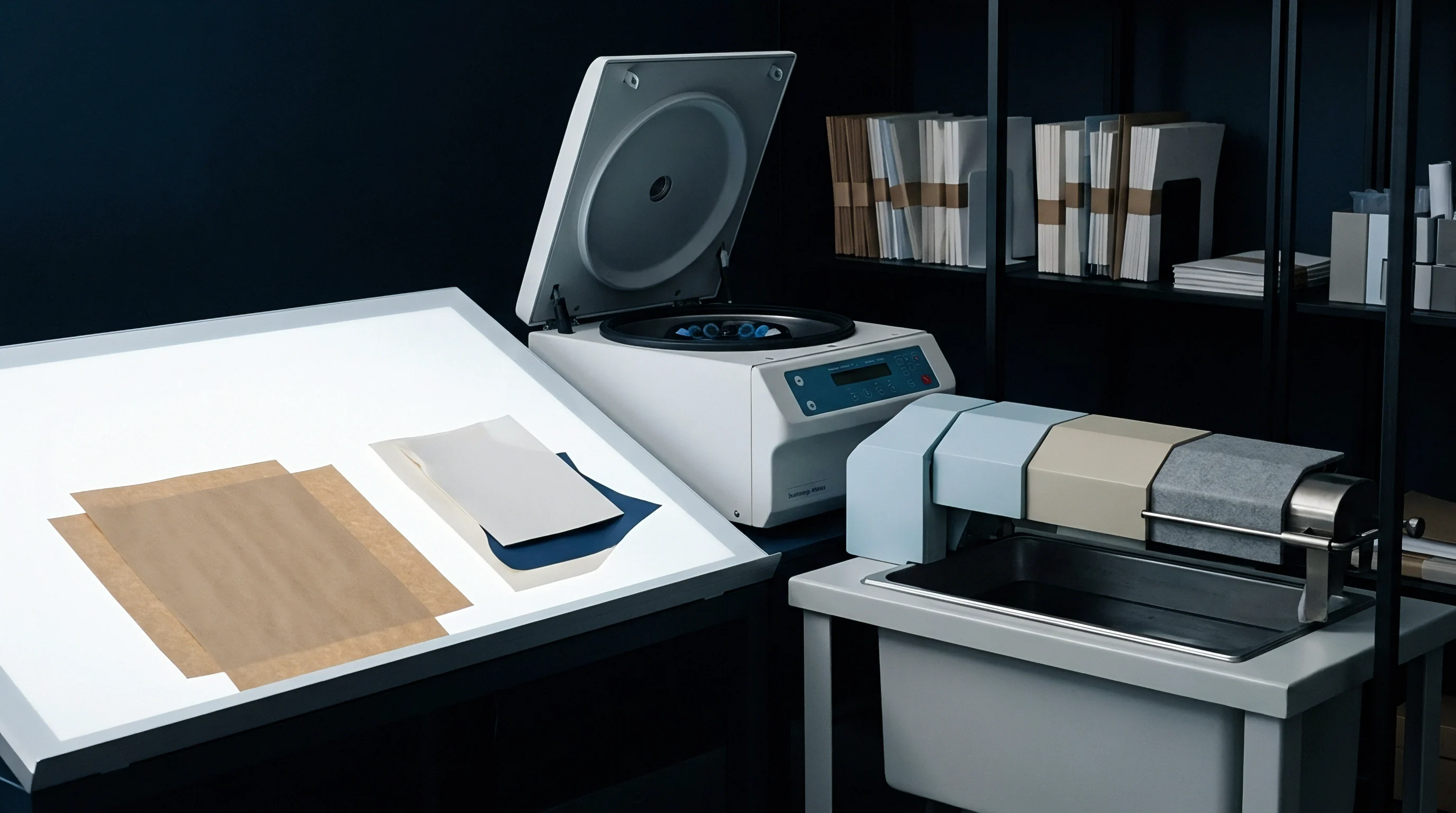

Ingress
Receiving inspection begins the second a pallet unloads onto the intake bay. Paperboard arrives wrapped in stretch film with mill roll tags, ream markers, and certified test reports declaring specified furnish grades. Grammage alone conceals furnish fraud.
A consignment invoiced as solid bleached sulfate or folding boxboard can easily conceal mechanical groundwood or unsorted post-consumer deinked pulp deep within inner plies. Laboratory verification of the fibre matrix protects converting lines against sudden tear failures, visual dusting, and erratic creasing behaviour.
Intake testing operates under tight time constraints. A production facility cannot quarantine four hundred tonnes of board stock indefinitely while waiting for exhaustive wet-chemical delignification trials. Receiving personnel draw representative samples across skid peripheries and roll cores in compliance with ISO 186 sampling standards.
Immediate inspection establishes whether the physical deliveries match the raw material declarations printed on accompanying delivery dossiers.
Conditioning raw board sheets at 23 degrees Celsius and 50 percent relative humidity for twenty-four hours remains mandatory before recording referee physical metrics under ISO 187.
Basis weight testing following ISO 536 and caliper assessment under ISO 534 provide initial physical sanity checks. When a virgin chemical board displays unexpected caliper fluctuations alongside elevated density, inner plies often contain dense recycled broke or low-bulk recycled furnish instead of resilient thermo-mechanical pulp. Variations exceeding five percent of contract thickness warrant immediate furnish interrogation.
Spot tests confirm initial doubts.
Visual and chemical screening procedures isolate anomalies before skids enter active conversion pathways:
- Phloroglucinol spot testing identifies unbleached groundwood or mechanical pulps instantly through a deep magenta reaction with exposed lignin structures.
- Direct iodine staining flags unexpected surface starches, synthetic sizing agents, and recycled corrugating medium fragments embedded within the sheet.
- Cross-sectional edge dissection exposes multi-ply stratification, adhesive boundary anomalies, and grey recycled filler plies under low-power stereomicroscopy.
- Surface picking evaluation via dry wax pick tests reveals poor surface sizing and excessive short-fibre shedding across printing surfaces.
Skipping intake furnish verification transfers the financial exposure downstream, where undetected furnish shortfalls cause catastrophic carton delamination on high-speed gluer lines and trigger sweeping batch rejections.

Stain
Microscopic fibre analysis establishes the botanical origin, pulping process, and chemical cooking history of raw lignocellulosic components. Standard procedures outlined in ISO 9184 and TAPPI T 401 govern fibre suspension, dispersion, staining, and counting under compound optical transmission instruments. Technicians disintegrate test pieces in boiling demineralized water, disperse individual fibres uniformly across glass slides, and treat dried specimens with diagnostic chemical reagents.
Which Staining Reagents Separate Bleached Kraft from Mechanical Pulp?
Selective dyestuffs produce distinct colorimetric signatures across divergent wood species and pulping processes. Graff “C” stain remains the primary chemical reagent for comprehensive furnish profiling, prepared through precise formulations of zinc chloride, iodine, potassium iodide, and metallic aluminum. The reagent produces bright turquoise and blue shades on bleached chemical softwood, deep burgundy on bleached hardwood kraft, and intense yellow-orange coloration across high-lignin mechanical pulps.
| Fibre Classification | Pulping Method | Graff “C” Staining Reaction | Herzberg Staining Reaction | Cell Morphology Markers |
|---|---|---|---|---|
| Bleached Softwood | Kraft (Sulfate) | Light blue to turquoise | Deep blue-violet | Prominent bordered pits, long tapered ends |
| Bleached Hardwood | Kraft (Sulfate) | Dark purple to red-violet | Blue to purple-brown | Wide vessel elements, short libriform fibres |
| Unbleached Softwood | Sulfite | Light olive green | Dull yellow-green | Intact tracheids, visible ray cross-fields |
| Mechanical Pulp | Groundwood / TMP | Intense lemon yellow | Golden yellow | Fibre bundles, broken fragments, high debris |
| Deinked Recycled | Secondary mixed furnish | Variable motley patches | Dispersed multicolor hues | Fibrillated split ends, carbon black specks |
| Microscopic evaluations performed under 100x magnification in accordance with TAPPI T 401 om-15 guidelines. | ||||
Herzberg stain offers secondary verification when distinguishing raw groundwood from semi-chemical pulps. Formulated with saturated zinc chloride and iodine solutions, Herzberg reagent reacts strongly with cellulose and hemicellulose, leaving bleached chemical fibres stained deep indigo while lignified mechanical fragments turn distinct yellow. Selleger stain substitutes calcium chloride for zinc chloride, providing superior differentiation between coniferous softwood and deciduous hardwood fibres in heavily beaten stocks.
Fibre Counting and Weight Factors
Quantifying individual pulp constituents requires systematic point counting across the microscope stage. Technicians trace horizontal lines across the prepared slide, enumerating every single fibre passing beneath the eyepiece reticle. Because hardwood fibres weigh substantially less per unit length than thick-walled softwood tracheids, raw numerical counts do not equal commercial furnish mass percentages.
Weight factors convert numerical counts into mass proportions. Bleached softwood kraft carries a baseline weight factor of 1.00, while bleached birch or eucalyptus hardwood kraft typically registers at 0.50 to 0.60. Unbleached mechanical groundwood carries a factor near 1.30 due to coarse fibre bundles.
The lab technician multiplies raw counts by designated weight factors, summing the products to derive accurate furnish percentages by air-dry mass. Recycled fibres show blunt ends. Mechanical pulp degrades faster.
Unbleached kraft darkens under stain. Secondary fibres subjected to multiple recycling loops reveal characteristic fibrillation damage, shortened lengths, and split lumen walls under polarising filters. Mill suppliers defending questionable deliveries often maintain that trace mechanical fragments represent standard ambient broke recovery rather than intentional furnish adulteration.
Ash
Inorganic materials serve specific roles across paperboard structures, operating as internal bulk enhancers, opacity contributors, or surface coating pigments. Furnish profiling determines the precise quantity and chemical identity of these non-fibrous mineral constituents. Excess ash displaces load-bearing cellulose fibres, depressing internal bond strength and reducing box compression performance.

Where Do Rapid Ash Methods Yield Decisive Screening Data?
Thermogravimetric methods deliver rapid approximations of mineral content during receiving inspections. Benchtop instruments incinerate small board specimens within controlled nitrogen and oxygen atmospheres, recording continuous weight loss profiles as thermal thresholds advance. High ash levels detected within supposedly unlined solid bleached boards indicate filler additions designed to reduce costly virgin chemical pulp consumption.
| Standard Designation | Combustion Temperature | Atmospheric Conditions | Target Mineral Residues | Analytical Limitation |
|---|---|---|---|---|
| ISO 1762 | 525 °C ± 25 °C | Ambient air | Total ash, retains carbonates | Organic carbon burn-off slow |
| ISO 2144 | 900 °C ± 25 °C | Ambient air | Decomposed oxides, silicates | Calcium carbonate converts to CaO |
| TAPPI T 211 | 525 °C ± 25 °C | Muffle furnace air | Precipitated and ground calcium carbonate | Incomplete oxidation of resistant char |
| TAPPI T 413 | 900 °C ± 25 °C | Muffle furnace air | Calcined clays, titanium dioxide, talc | Volatilizes structural water from kaolin |
Combustion testing follows distinct temperature regimes to separate mineral types. Testing at 525 degrees Celsius removes organic cellulosic material without decomposing volatile inorganic carbonates. Heating samples to 900 degrees Celsius drives off structural hydroxyl groups from kaolin clay and converts calcium carbonate into calcium oxide and gaseous carbon dioxide.
Incineration at 525 degrees Celsius according to ISO 1762 preserves calcium carbonate mass while 900 degree ignition under ISO 2144 induces total decarbonation.
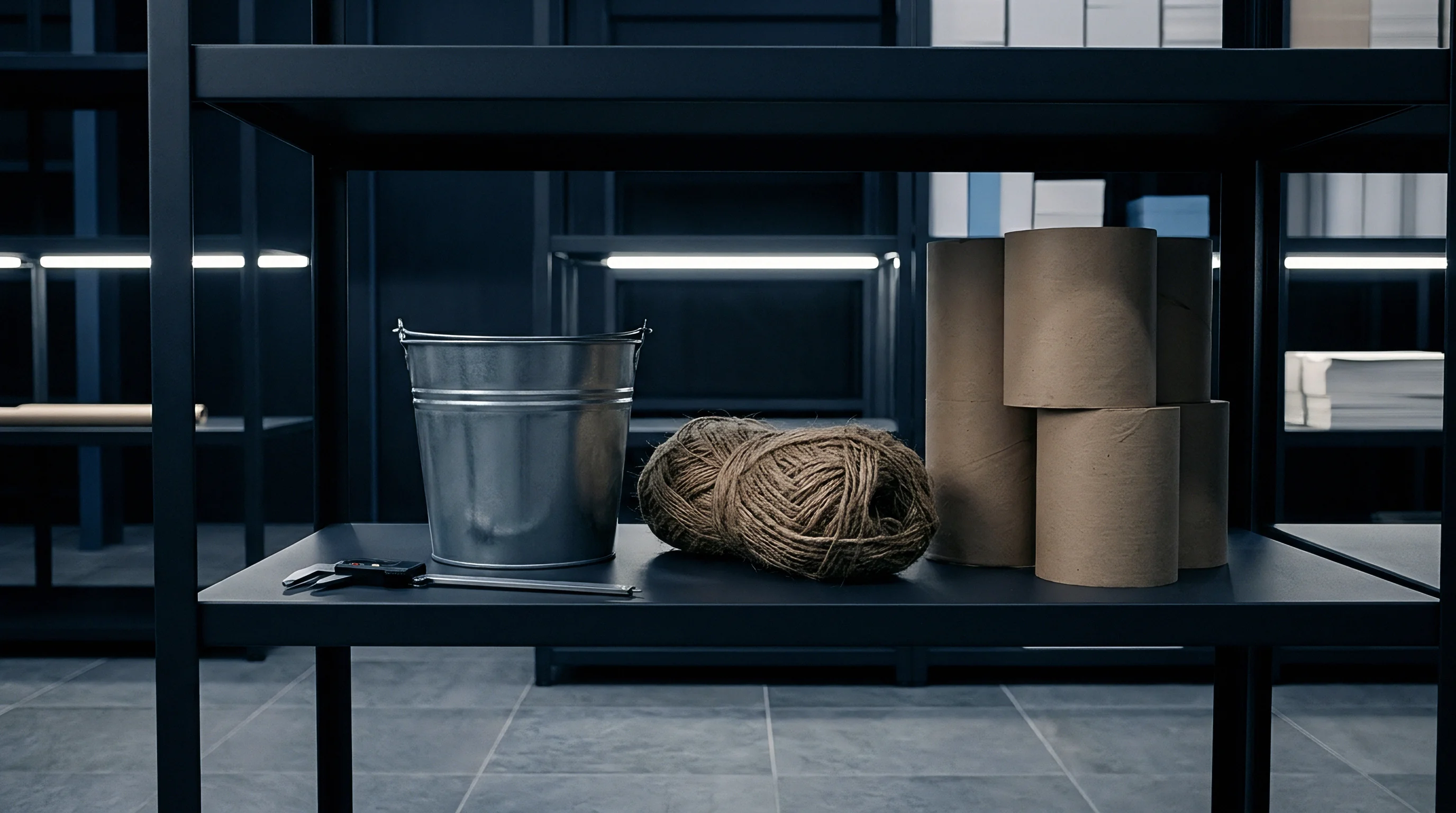
Muffle Furnace Combustion Stages
Differential weight assessment between combustion plateaus isolates specific pigment types. Weighing a clean porcelain crucible containing dry board flakes yields the starting dry mass. The sample combusts in a muffle furnace at 525 degrees Celsius until carbonaceous residues vanish entirely.
Calcium carbonate calcines at elevated temperatures. Clay remains inert at moderate heat.
Comparing the 525 degree ash value with the 900 degree ash residue provides a direct stoichiometric calculation of carbonate content. Calcium carbonate loses exactly 44 percent of its molecular mass during decarbonation as carbon dioxide escapes the crucible. Multiplying the mass loss between temperature plateaus by 2.274 reconstructs the exact original calcium carbonate loading.
Attenuated total reflectance infrared spectroscopy and handheld X-ray fluorescence spectrometers cross-examine the ash residue, verifying whether suppliers introduced inexpensive talc or calcium sulfate into the coating formulation.
Purchase contracts stipulating maximum permissible ash contents above specified nominal grammages establish enforceable grounds for shipment rejection whenever verified furnace residues exceed contractual ceilings.
Ply
Folding boxboards, white-lined chipboards, and multi-ply containerboards employ layered architectures to balance bending stiffness against raw material expenditures. Furnish profiling demands physical separation of each constituent lamina to evaluate surface, under-liner, middle, and back plies independently. A board displaying excellent top-liner brightness may hide contaminated secondary furnish or unrefined mechanical pulp directly beneath the coated print plane.
Delamination Techniques for Layer Profiling
Physical separation of multi-ply paperboard requires careful mechanical shear along internal z-directional planes. The following procedure isolates individual layers for independent microscopic and gravimetric furnish verification:
- Adhesive film application anchors aggressive double-sided polyester tape across both outer faces of the conditioned board test specimen.
- Uniform platen compression applies controlled pressure across the laminated sandwich to establish full interfacial adhesion without crushing porous middle plies.
- Tensile separation shear forces the test sandwich apart within a universal testing frame, splitting the sheet along its weakest internal boundary.
- Secondary tape peeling repeats adhesive splitting across remaining multi-ply layers until the middle core separates cleanly from linerboard plies.
- Solvent immersion extraction dissolves adhesive residues in ethyl acetate or acetone baths, releasing clean, unadulterated fibrous mats for laboratory profiling.
Metallurgical sheet rolling faces an identical challenge during cold reduction, where non-metallic inclusions generate laminar decohesion along the neutral axis under cyclic bending. Multi-ply paperboard exhibits identical mechanical sensitivity along fibre-to-fibre interface planes. Virgin kraft resists delamination.
Tape split reveals hidden fillers.
| Paperboard Grade | Top Liner Furnish | Under Liner Furnish | Middle Core Furnish | Back Liner Furnish |
|---|---|---|---|---|
| Solid Bleached Board (SBB / SBS) | 100% Bleached Chemical Virgin Pulp | 100% Bleached Chemical Virgin Pulp | 100% Bleached Chemical Virgin Pulp | 100% Bleached Chemical Virgin Pulp |
| Folding Boxboard (FBB GC1) | Bleached Chemical Kraft (Coated) | Bleached Chemical Pulp | Thermo-Mechanical / Chemi-TMP | Bleached Chemical Kraft (White Back) |
| Folding Boxboard (FBB GC2) | Bleached Chemical Kraft (Coated) | Bleached Chemical Pulp | Mechanical Groundwood / TMP | Unbleached / Mechanical (Manila Back) |
| White Lined Chipboard (WLC GD2) | Bleached Recycled Deinked Pulp | Mechanical / Recycled Pulp | Unsorted Mixed Waste Paper (Grey) | Selected Secondary Furnish (Grey Back) |
Layer separation proves critical when verifying solid bleached board consignments. In authentic solid bleached board, every lamina consists exclusively of bleached virgin chemical pulp. When delamination testing reveals mechanical pulp fragments or deinked flecks in the central core, the material represents an uncertified folding boxboard or white lined chipboard variant passed off as premium chemical stock.
Clean delamination reveals whether middle plies provide specified structural bulk or concealed post-consumer contamination.
Thick middle plies containing mechanical pulp maintain carton stiffness, while chemical surface plies ensure clean scoring without surface rupture.
Settlement
Documented discrepancies between delivered furnish profiles and contracted specifications trigger immediate commercial negotiations. Sourcing teams rely on calibrated analytical dossiers when disputing mill invoices or rejecting substandard tonnage at the receiving dock. Furnish adulteration compromises finished packaging performance, degrading score-bend resistance, compromising sensory neutrality, and risking structural box failure inside automated distribution chains.
Commercial Recourse for Furnish Discrepancies
Financial recovery options depend on the magnitude of the material deviation and the stage of discovery. When goods-in inspection catches non-compliant board stocks before converting commences, the buyer maintains clear contractual leverage to reject the entire batch, forcing the supplier to cover return freight and provide immediate replacement stock. Pulp substitutions erode crease stiffness.
Moisture shifts corrupt basis weight.
The lab results dictate invoice credits. When schedule pressures force a plant to convert non-conforming board with minor furnish deviations, buyers negotiate immediate debit notes reflecting the market price differential between specified virgin furnish and substituted secondary grades. Secondary white lined chipboard trades at substantial discounts compared to virgin solid bleached sulfate.
Accepting lower-tier furnish without price adjustments penalizes converter profit margins while shielding delinquent mills from financial accountability.
A worked example demonstrates the commercial arithmetic of furnish downgrade adjustments. Assume a manufacturing plant receives a fifty-tonne consignment of board invoiced as 300 g/m² Folding Boxboard GC1 at 1,450 dollars per dry tonne. Goods-in furnish profiling reveals that the middle core contains deinked secondary fibre rather than virgin thermo-mechanical pulp, classifying the stock physically as White Lined Chipboard GD2, which trades at 980 dollars per dry tonne.
The material price difference totals 470 dollars per tonne. Across the fifty-tonne lot, the direct furnish downgrade value equals 23,500 dollars. Furthermore, the higher density of recycled furnish reduces yield, providing fewer parent sheets per metric tonne.
A 300 g/m² recycled board provides 3,333 parent sheets per tonne at a 1,000 mm by 1,000 mm sheet size, compared to 3,850 sheets from high-bulk mechanical core GC1 board. The loss of 517 usable carton blanks per tonne compounds the direct material overcharge.
Formal commercial claims require complete documentation packets. An airtight claim dossier includes certified sampling chain-of-custody logs, calibrated microphotographs displaying diagnostic stain reactions, stoichiometric ash calcination curves, and verified cross-sectional delamination profiles. Standard mill supply contracts establish strict notification windows, often requiring formal defect notices within ten working days of pallet arrival.
How the market will resolve the balance between automated optical fibre scanners and traditional wet-chemical staining remains an ongoing dispute among testing laboratories and paperboard converters worldwide.