Polymer Elongation Behavior in High Speed Rotary Scoring Dies
High strain rates and hysteresis heat induce polymer elongation in rotary scoring dies, altering gap geometry and causing linerboard score cracking.
Rate
High-speed rotary scoring operations running between 300 and 500 metres per minute submit polymer anvil covers and scoring matrix inserts to contact dwell times below two milliseconds. Under these deformation velocities, localized tensile strain rates within the polymer body exceed 3,000 reciprocal seconds. Polymer elongation under dynamic rotary engagement deviates sharply from standard quasi-static laboratory stress-strain curves recorded under ASTM D412 at 500 millimetres per minute.
Strain rates dictate polymer response. At operational velocity, the elastomeric network cannot undergo full segmental chain motion within the available millisecond window, elevating the effective high-frequency storage modulus while suppressing ultimate elongation limits.
Viscoelastic hysteresis converts mechanical deformation work directly into thermal energy during each rotation. Dynamic Mechanical Analysis per ASTM D4065 demonstrates that polyurethane formulations with a high loss tangent experience rapid internal heat generation under continuous cyclic stress. Internal temperatures within rotary scoring rings escalate from ambient room conditions of 23 degrees Celsius to equilibrium operating states exceeding 85 degrees Celsius during extended production runs.
Viscoelastic friction generates severe internal heat. As temperature rises, the storage modulus drops, initiating localized material softening and irreversible plastic deformation along the primary scoring track.
At strain rates of 3,500 s⁻¹, polyurethane anvil covers exhibiting a loss tangent above 0.15 undergo internal thermal degradation within four hours of continuous high-speed rotary operation.
The relationship between strain rate sensitivity and glass transition temperature governs the physical longevity of rotary matrix channels. Polymeric materials operating near their glass transition zone exhibit maximum energy dissipation, which magnifies dynamic elongation drift. When the scoring anvil deforms unevenly under impact, the clearance between the male steel creasing rule and the polymer female groove shrinks.
Soft elastomers yield under load. The loss of dimensional stability across the scoring profile reduces crease definition on heavy containerboard substrates, leading to unaligned panel folding on high-speed folder-gluers.
Ignoring high-strain-rate modulus attenuation results in premature sleeve relaxation, shallow creasing profiles, and unrecoverable score line cracking during box folding.

Polymer
Formulation chemistry determines how an elastomeric scoring die cover responds to high-frequency impact and elevated thermal loads. Cast polyurethanes based on polyether polyols and methylene diphenyl diisocyanate prepolymers demonstrate superior mechanical recovery under high-speed cyclic shear compared to polyester-based alternatives. Polyether backbones resist hydrolytic degradation caused by ambient moisture pickup in non-conditioned box plants while maintaining steady durometer values across wide operating temperature bands.
Polyester systems offer high tear strength under static laboratory testing, yet they exhibit elevated hysteresis loss that accelerates thermal softening under continuous rotary friction.
Is Polyether Preferred over Polyester for High Strain Scoring?
Polyether polyurethanes present distinct physical advantages in rotary converting applications running above 350 metres per minute. The ether linkage provides low intermolecular friction during rapid chain displacement, limiting heat buildup inside the matrix body. Thermal expansion alters sleeve diameter.
Polyester formulations, despite displaying nominal tensile strength advantages on mill specification sheets, suffer from cumulative heat retention. Heat retention lowers the effective durometer rating from 90 Shore A down to 78 Shore A within two hours of line startup. This modulus loss allows the male creasing profile to sink too deeply into the soft cover, distorting the intended crease geometry.
| Formulation System | Hardness (Shore) | Storage Modulus (MPa at 23°C) | Loss Tangent (100 Hz) | Permanent Set (% after 10⁶ cycles) |
|---|---|---|---|---|
| Polyether / MDI Cast Urethane | 92 A | 48.5 | 0.065 | 1.8 |
| Polyester / MDI Cast Urethane | 90 A | 52.1 | 0.142 | 5.4 |
| Polyether / TDI Prepolymer | 88 A | 41.2 | 0.088 | 2.9 |
| Polycaprolactone / MDI System | 95 A | 64.0 | 0.110 | 3.8 |
Polymer hardness selection requires balance between linerboard protection and creasing definition. Elastomers rated below 85 Shore A absorb scoring energy efficiently, preventing outer liner rupture on low-cost recycled paperboard. Soft rings spread the creasing force over an excessively wide footprint.
This distribution creates wide, shallow scores with poor bending resistance. Hardness levels above 95 Shore A or extending into the Shore D scale provide precise score definition but increase cutting risk on brittle, short-fiber liners. The following list details key polymer selection criteria for rotary scoring applications:
- Polyether prepolymer formulations maintain stable durometer readings across thermal shifts up to 85 degrees Celsius.
- Polyester-based elastomers exhibit higher tear strength under static load testing yet suffer accelerated hydrolytic degradation under humid plant conditions.
- MDI-cured casting systems lower toxic monomer emissions during sleeve refurbishment while delivering tight dimensional tolerances under cyclic shear.
- High-durometer polyurethanes exceeding 95 Shore A generate precise crease depth but increase linerboard face-cracking risks on recycled furnish.
Tooling vendors frequently attribute dimensional growth in scoring rings to improper storage humidity rather than acknowledging strain-induced polymer creep under continuous roll nip pressures.
Gap
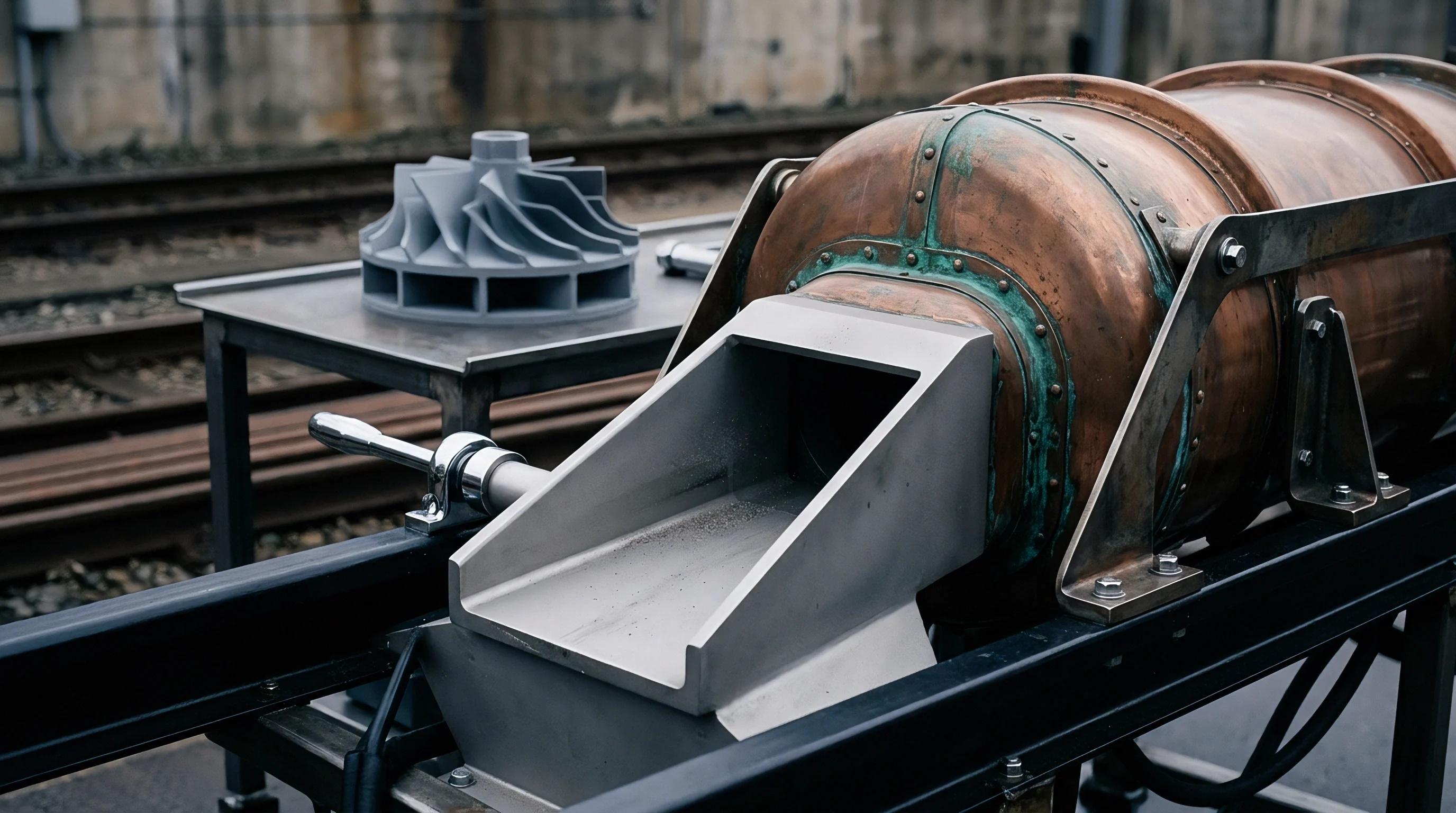
Clearance geometry between the rotary male scoring disc and the female polymer counter-die dictates score formation and substrate integrity. When the male rule penetrates the paperboard sheet, it forces paper fibers into the compliant polymer channel. If the polymer anvil surface undergoes circumferential elongation, the effective groove width widens dynamically during web passage.
Surface speed shifts during production. A wider groove reduces the localized shear stress required to fracture internal fiber-to-fiber bonds cleanly along the score axis, forcing the sheet to deform through tensile stretching instead of controlled ply delamination.
Paperboard cracking during 180-degree folding operations links directly to incorrect scoring gap geometry. ISO 2493 stiffness measurements and TAPPI T 829 score quality evaluation methods quantify the force ratio between scored and unscored board folding. Cross-direction strain limits for commercial kraft linerboard range from 2.5 to 4.0 percent before structural fiber rupture occurs per ISO 1924-3 test protocols.
When polymer elongation deforms the female channel profile, outer liner fibers exceed their ultimate elongation threshold before the internal plies yield. Tear resistance declines at temperature.
A score line quality index below 0.75 measured under TAPPI T 829 forces immediate rejection of delivered corrugated packaging lots due to automatic folder-gluer jam risks.
Rotary score failure modes originate from distinct mechanical interactions between the metal tooling, the polymer matrix, and the paperboard substrate. Identifying the root cause of score failure demands analyzing the physical appearance of the damaged fold line. Linerboard fibers snap under strain.
The list below outlines primary failure mechanisms observed on high-speed rotary die-cutting lines:
- Linerboard tensile rupture occurs when excessive female channel distortion forces paperboard fibers beyond their cross-direction elongation limit during male rule engagement.
- Rolling shear delamination splits the internal plies of recycled medium when soft polymer covers extend circumferential contact length beyond specified nip widths.
- Asymmetrical score bead geometry emerges from non-uniform polymer ring expansion across the face width of high-speed converting cylinders.
- Crushing of fluted medium happens when thermal sleeve growth reduces the effective vertical gap between upper and lower scoring heads below specified caliper tolerances.
Micro-cracks ruin outer score appearance. Converting contracts routinely state that score line width variations exceeding plus or minus 0.08 millimetres across a single web width constitute grounds for full lot rejection.
Sleeve
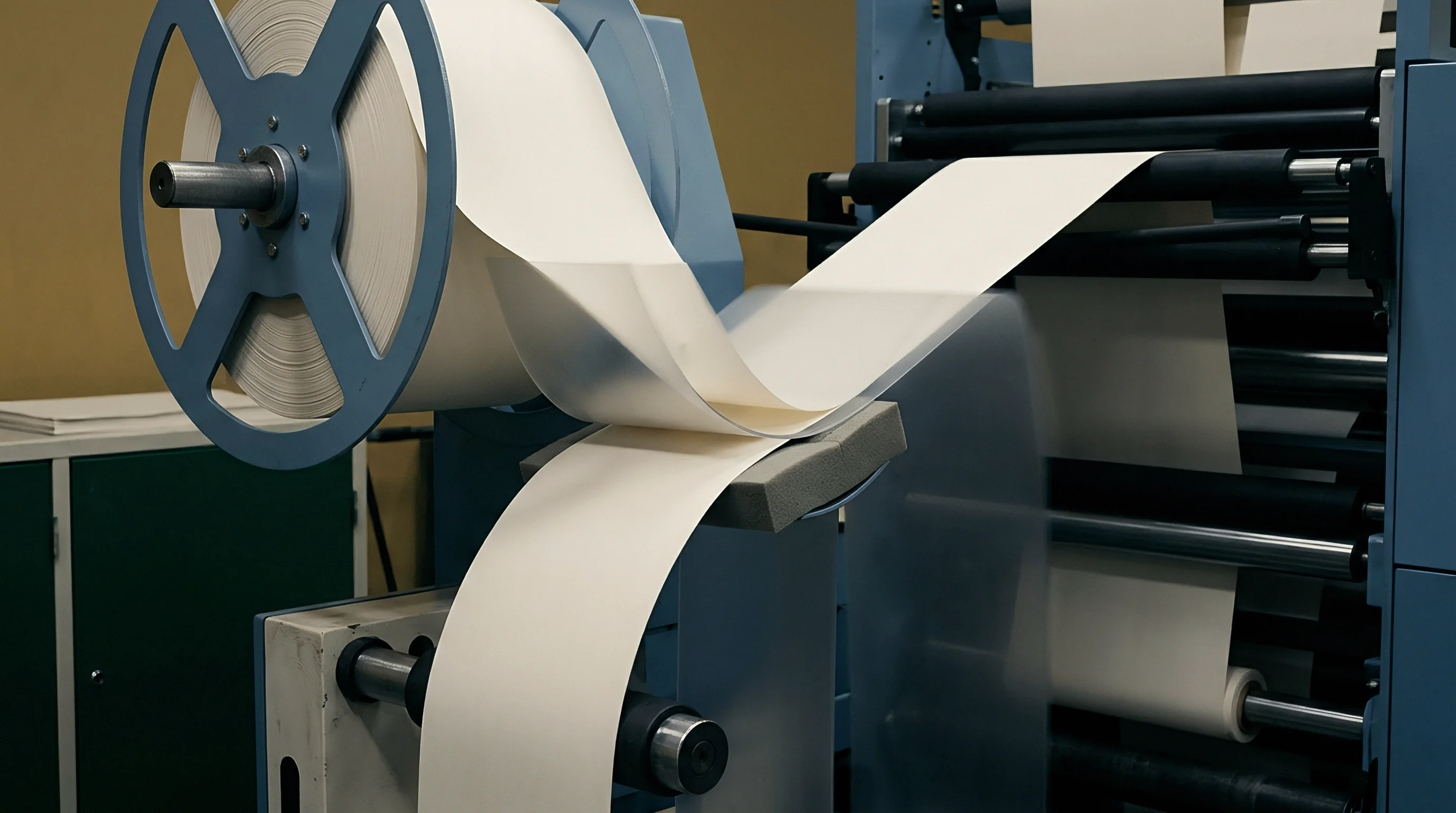
Elastomeric anvil covers mounted on expanding air shafts rely on precise interference fits to maintain position under dynamic rotation. Continuous rotary shear and centrifugal forces encourage circumferential creep, causing the polymer sleeve to walk axially or slip rotationally against the steel mandrel. Mismatched speeds generate substrate drag.
Differential surface speeds between the score wheel and the polymer anvil create abrasive friction that removes fine polyurethane particles, altering the outer diameter of the sleeve over time.
Thermal expansion calculations highlight the dimensional instability of un-equalized polyurethane sleeves running at high line speeds. A cast urethane sleeve with an internal diameter of 150 millimetres operating under a 50-degree Celsius temperature rise expands radially by up to 1.15 millimetres, assuming a linear thermal expansion coefficient of 1.5 × 10⁻⁴ K⁻¹. This radial growth increases outer circumference, accelerating the surface speed of the anvil cover relative to the paperboard web.
The velocity mismatch scuffs printed linerboard surfaces and destabilizes score alignment across multi-out die configurations.
- Inspect the rotary anvil shaft surface for scoring marks, debris, or dimensional wear before mounting elastomeric sleeves.
- Clean shaft surfaces with isopropyl alcohol to maintain nominal surface friction values required to prevent internal sleeve slippage.
- Slide polyurethane scoring rings onto the expanding air shaft using regulated low-pressure pneumatic assistance to prevent localized material over-stretching.
- Verify circumferential ring runout using a digital dial indicator positioned perpendicular to the anvil cover outer face.
- Execute five dry calibration rotations at minimum operating velocity to seat internal sleeve stresses prior to introducing board substrate.
Thermal equilibrium across elastomeric scoring sleeves precedes accurate gap adjustment on high-speed converting lines.
Precision fitting prevents premature failure. Modern high-speed die-cutters utilize micro-metric anvil directional drives to balance speed differentials between upper metal rules and lower polymer covers. Automatic speed compensation systems adjust shaft rotational velocity dynamically as polymer sleeve diameter shrinks due to mechanical grinding or expands due to thermal growth.
Maintaining synchronized anvil cylinder surface speeds eliminates frictional drag and extends polymer cover operational life.
Amortization
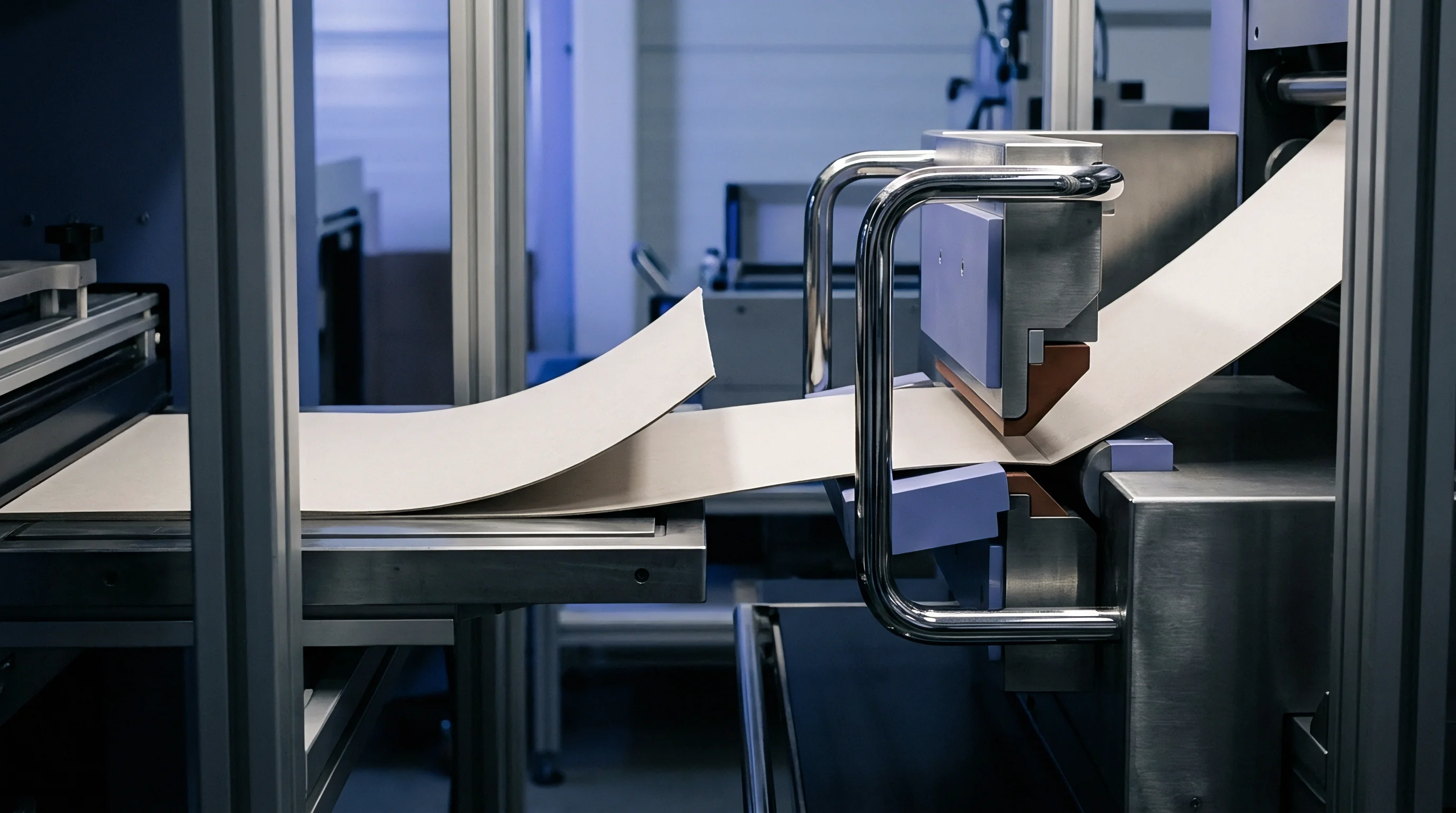
Tooling economics in high-volume box plants depend on balancing initial polymer cover investment against scrap generation rates and line downtime. Low-cost un-bonded polyurethane scoring rings display high initial creep rates, forcing press operators to perform frequent gap adjustments to maintain acceptable TAPPI T 829 score ratios. Tooling wear drives converting waste.
Premium polyether-based anvil covers cost 35 to 50 percent more initially, but they yield consistent score profiles across tens of millions of linear metres without requiring mid-run gap interventions.
Converting waste from score cracking elevates total pack cost far beyond the purchase price of die tooling. When recycled containerboard folds along degraded score lines, outer liner cracking damages printed graphics, forcing box rejection during final packing line inspection. Polymer selection dictates score stability.
The financial model in the table below illustrates unit tooling amortization alongside scrap losses across different elastomer durometers on a flexo folder-gluer running 400 metres per minute.
| Elastomer Grade | Unit Cost (USD) | Useful Life (Linear Metres) | Average Board Scrap Rate (%) | Tooling Cost per 100k Sheets (USD) | Scrap Cost per 100k Sheets (USD) |
|---|---|---|---|---|---|
| Standard 85A Polyester Urethane | 180.00 | 2,500,000 | 1.85 | 7.20 | 370.00 |
| Premium 92A Polyether Urethane | 265.00 | 7,000,000 | 0.32 | 3.79 | 64.00 |
| High-Density 95A MDI Prepolymer | 310.00 | 9,500,000 | 0.25 | 3.26 | 50.00 |
| Soft 80A Cast Rubber Compound | 120.00 | 1,200,000 | 3.10 | 10.00 | 620.00 |
| Calculated based on 200 GSM recycled testliner over B-flute corrugated board; board cost baseline set at 800 USD per metric tonne. | |||||
Polymer sleeve degradation directly elevates converting waste rates through increased edge-flaking and un-creased score failures.
Long-term cost optimization requires accounting for energy consumption, operator setup time, and substrate variability alongside raw tooling expenditure. Upgrading to dimensionally stable polyether scoring sleeves lowers total converting expense by reducing scrap generation at high line speeds. The unresolved operational question remains whether continuous inline infrared surface monitoring can dynamically adjust scoring die gap clearance before polymer thermal expansion degrades board score quality.