Mechanical Consolidation
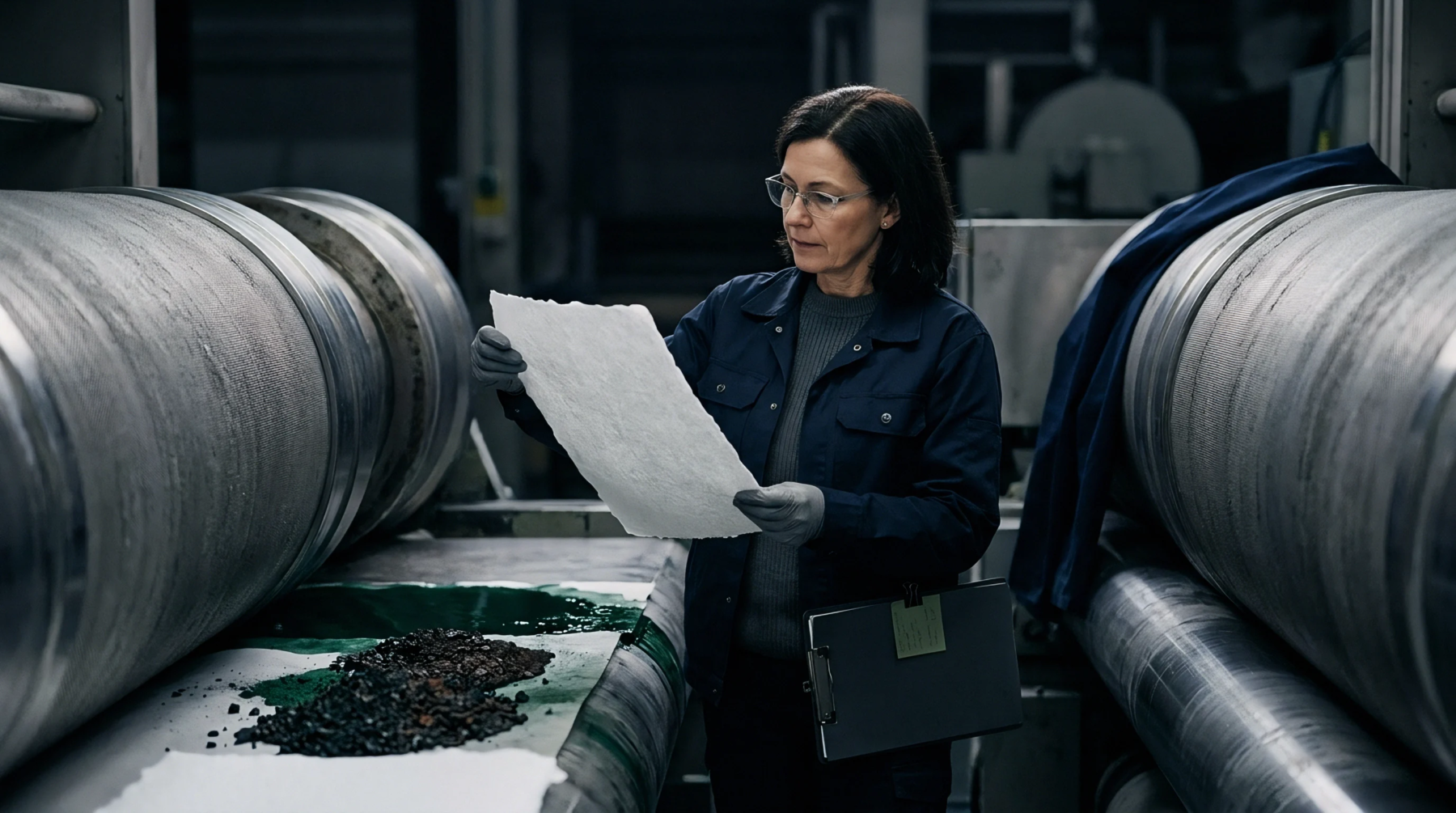
Hydraulic force applies to a wet paper web as the sheet passes between the rolls of a heavy press assembly to reduce bulk and water content. Couch pressing functions to align individual cellulose fibres while forcing moisture from the structure before the web enters the heat exchange sections. Designers calibrate this force to avoid sheet crushing or the formation of pinholes in lighter weight stocks.
Excessive pressure during this stage weakens the internal bonds of the paper matrix.
Operating Parameter
Load settings define the density profile of the output by restricting the available void space within the fibre network. Operators modulate the nip width to control how much water departs the sheet at the wet end of the machine. Changes in the rubber hardness of the roll covers adjust the contact surface to match the specific moisture holding capacity of the pulp furnish.
High intensity settings increase the final smoothness of the sheet surface at the cost of tensile strength. Precise control of the vacuum assist prevents the web from reabsorbing water immediately after the exit point.
Process Consequence
Uniformity across the width of the machine prevents cockling and uneven shrinkage during the drying cycle. Consistent roll pressure prevents the development of localized weak spots that snap under the tension of the winding drums. Proper management of the moisture extraction curve determines the energy requirement for the subsequent thermal drying phase.
Fibre alignment resulting from the compaction process governs the final dimensional stability of the paper product.