Tooling Function
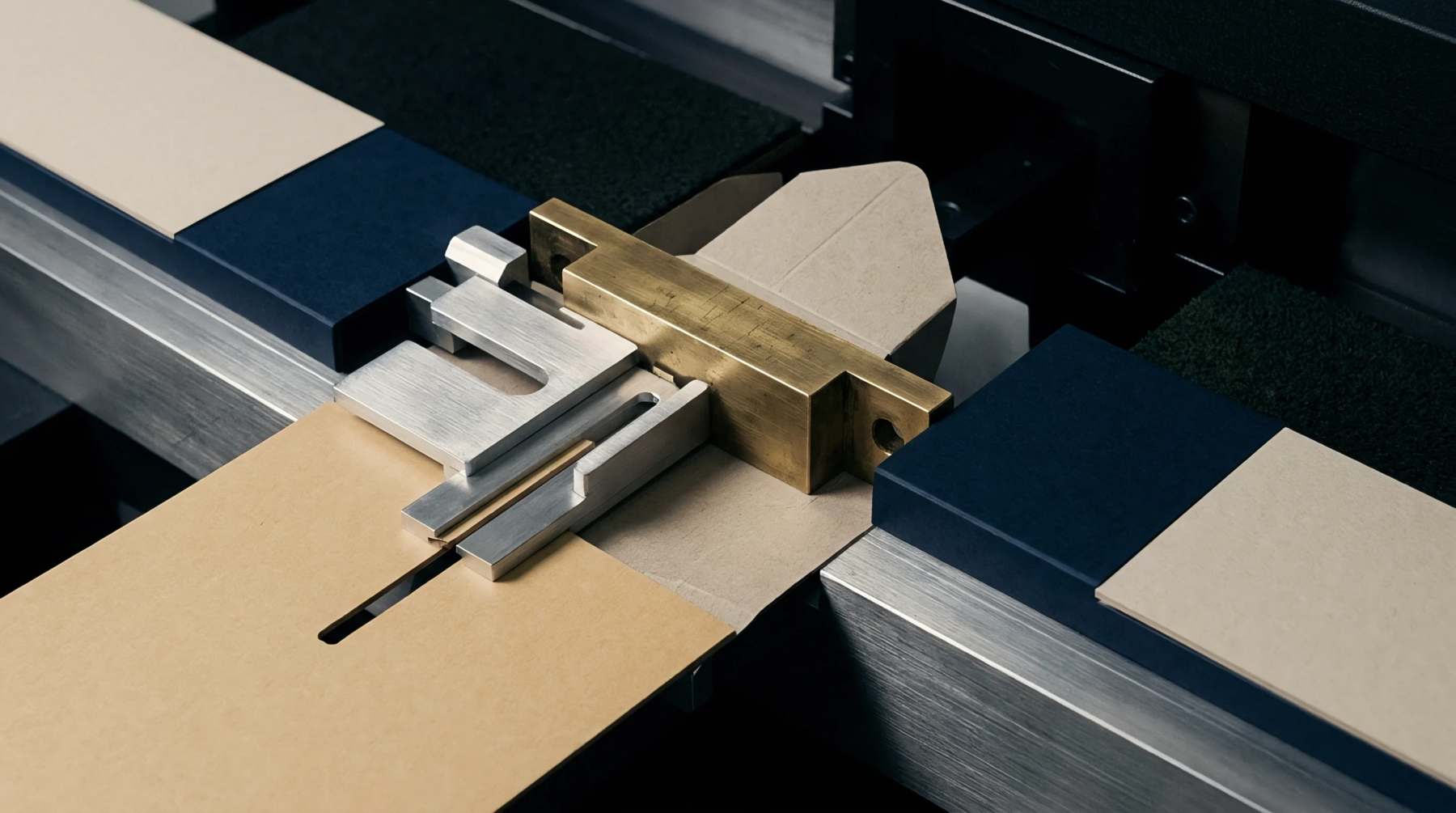
Hardened metal plate alloys provide the rigid female creasing foundation required for high volume carton die-cutting operations. Mounted opposite the cutting plate on a flatbed or rotary platen, counter die steel contains engraved grooves that receive creasing rules to form defined cartonboard scores. The material governs channel depth and edge retention over prolonged production runs.
Polymer perturbation strips and pertinex counters operate under distinct metallurgical thresholds.
Milling Precision
High-speed computer numerical control milling machines engrave channel profiles directly into flat steel blanks with tolerances held within hundredths of a millimetre. Fabricators select counter die steel for its combination of machinability during engraving and dimensional rigidity under repeating hydraulic pressure cycles. Grooves cut into the steel plate must maintain exact widths and vertical sidewalls to guide paperboard delamination without bursting top liners during high tonnage platen strikes.
Solid counter die steel preserves exact groove geometry across millions of carton impressions without succumbing to abrasive board dust. Positional registration pins align the steel counter directly to the male die, preventing diagonal creasing skew on folding carton blanks.
Operational Longevity
Surface hardness grades between thirty-five and fifty-five Rockwell C resist deformation caused by repeated rule impact and abrasive virgin fibreboard dust. Premium counter die steel prevents channel rounding, which otherwise produces irregular bead profiles and carton folding inconsistencies on automated packing lines. Solid steel plates transfer heat evenly during long press runs, mitigating thermal expansion errors across multi-up carton layouts.
Corrosive board additives require corrosion-resistant surface coatings during long term tool warehousing.