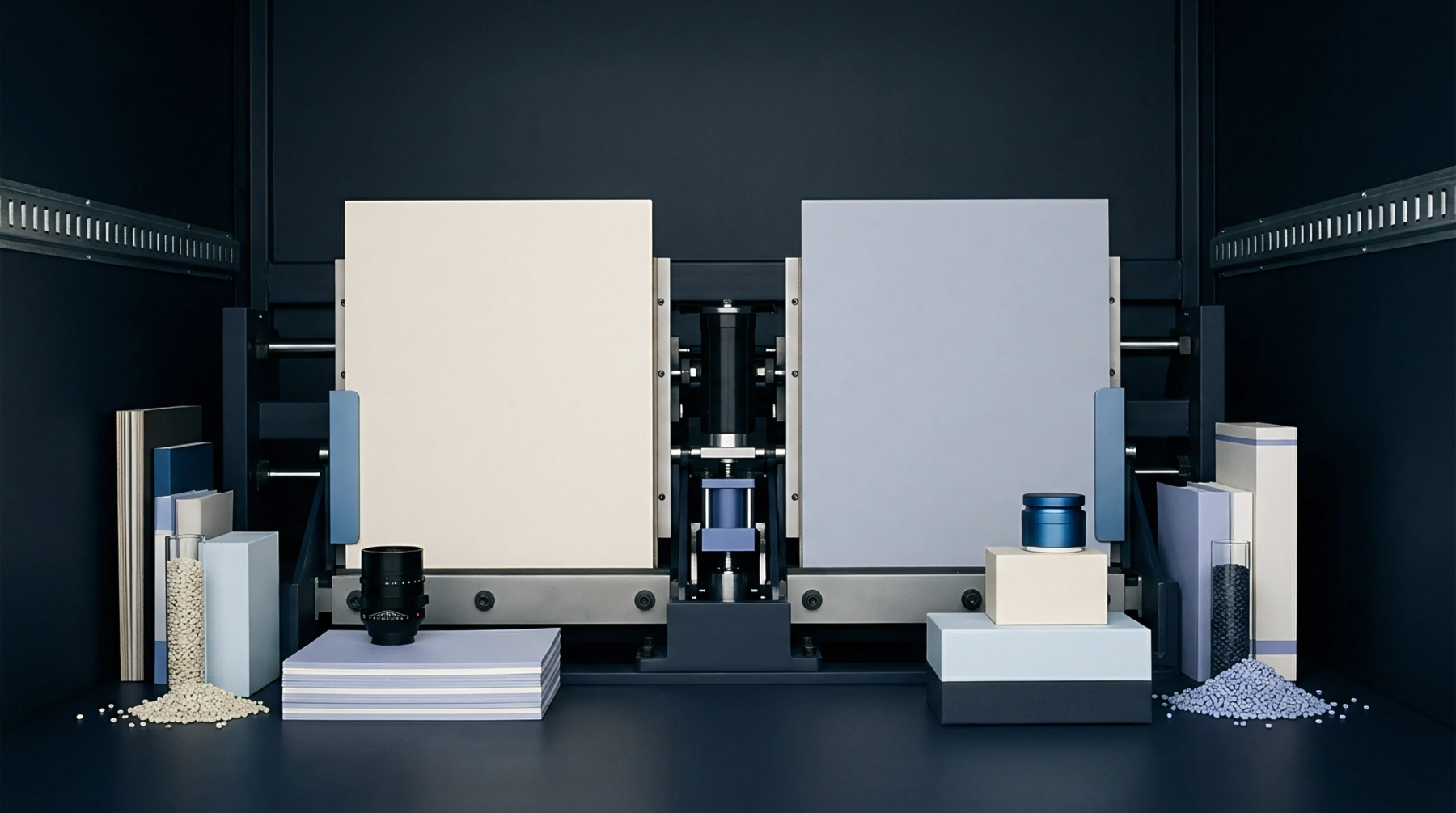
Deformation Origin
Polymer films and synthetic barrier layers applied to paperboard experience localized yield phenomena when subjected to tensile strain. The onset of craze nucleation marks the initial formation of micro-voids and aligned polymer fibrils in regions of concentrated mechanical stress. Converting operations monitor film behavior to prevent barrier failure during high-speed scoring, creasing, and package folding.
Stress Analysis
Applied mechanical loads concentrate around structural surface defects, inclusions, or density variations within the polymer matrix. During craze nucleation, localized tensile stresses cause microscopic cavitation, generating tiny voids that are bridged by oriented polymer fibrils that bear applied load. Testing methods such as tensile strain optical microscopy track the formation of these craze zones in barrier films like oriented polypropylene or poly lactic acid.
Environmental factors, including exposure to organic solvents, surfactant chemicals, or elevated ambient temperatures, reduce the critical stress required to initiate crazing. If allowed to proliferate, these localized craze zones coalesce into open micro-cracks, ruining grease resistance and increasing oxygen permeation across converted packaging boards.
Fracture Threshold
Micro-void generation stops yielding to plastic flow when applied stress drops below the critical craze initiation limit. Exceeding this critical strain threshold leads to rapid crack propagation and total structural failure of the polymer coating.