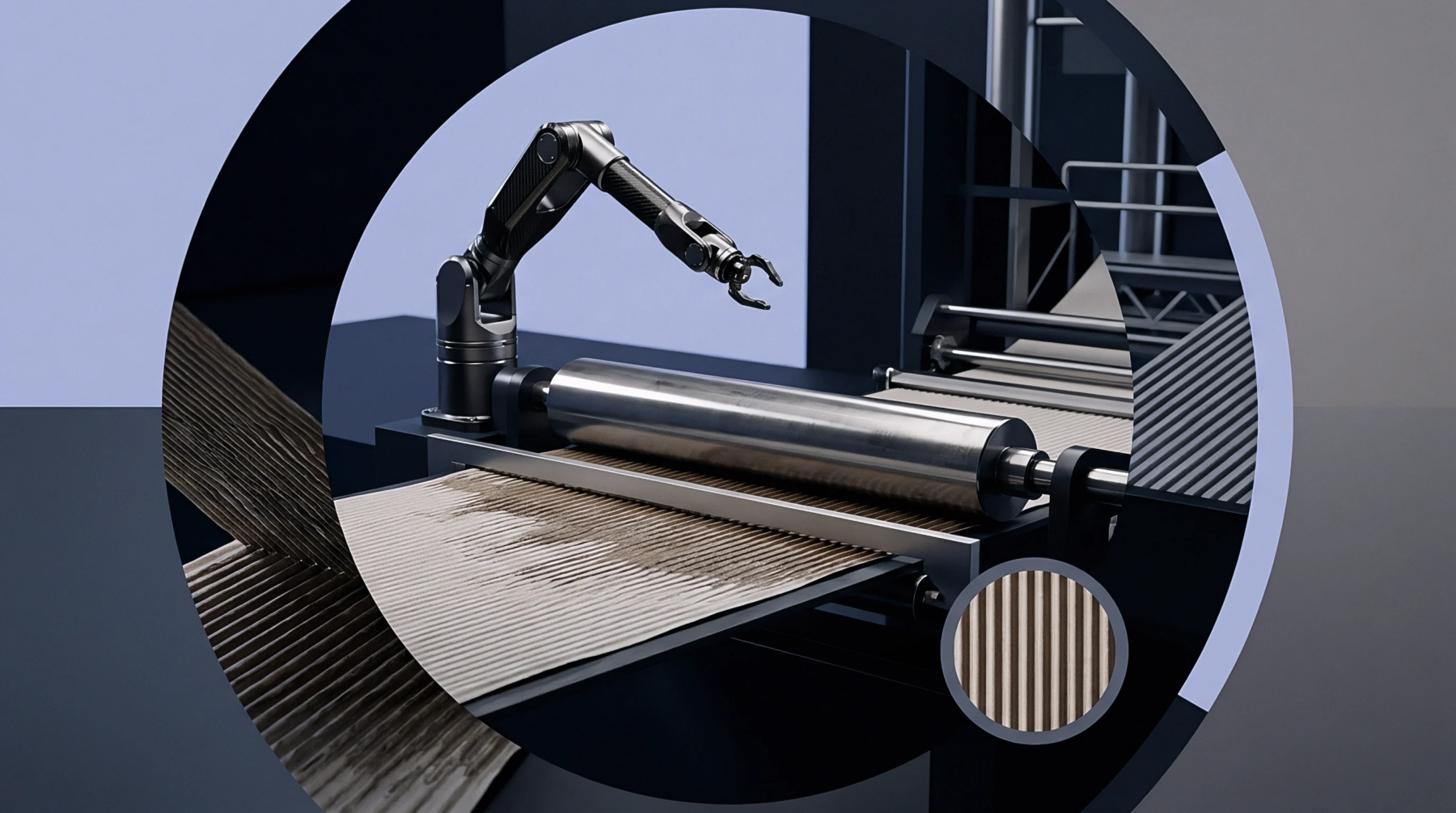
Blade Profile
Steel strip configured with a beveled edge functions as a cutting rule within die-cutting flatbeds, slicing through paperboard and corrugated packaging substrates during conversion. Press operators mount the tempered metallic profile into wooden or laser-cut laser boards to establish the perimeter of cartons, folding boxes, and display units. Dimensional stability dictates whether the steel maintains structural integrity under the high tonnage of platen presses without bowing or warping across repeated impressions.
Height tolerances remain extremely tight across standard manufacturing specifications to ensure uniform penetration depth through heavy folding boxboard and linerboards without crushing the internal fluting structure. Bevel angle geometry determines the clean separation of fibres versus a crushed fracture edge, balancing edge sharpness against resistance to lateral deflection during high-speed runs.
Die Press
Platen machinery exerts massive linear pressure downward onto the forme assembly, driving the fitted steel strips completely through the substrate and into a resilient underlying counterplate. Production speeds depend on the hardness rating of the metal ribbon, as softer grades wear down prematurely during long runs, while overly brittle variations fracture under localized impact forces. Operators adjust the make-ready backing sheets beneath the counterplate to compensate for minute height variations across the chase, ensuring equalized cutting pressure in every zone of the die.
Uneven pressure distribution creates incomplete separation on one side while crushing the substrate fibres on the opposite edge, leading to packaging failure during automatic filling and sealing operations.
Substrate Action
Metallic strips sever packaging materials by combining localized compression with sharp shearing forces, forcing the fibrous matrix to part cleanly along a predetermined vector. Paperboard density, moisture content, and fibre length directly influence how the material responds to the advancing bevel, requiring specific profile heights for corrugated flutes compared to solid bleached board. Dull edges compress the top liner excessively before separation occurs, generating unsightly burrs and excessive dust accumulation that interferes with subsequent gluing stations on the converting line.
Correctly matched bevel configurations part the paper layers smoothly while maintaining the structural rigidity of the surrounding packaging panels.