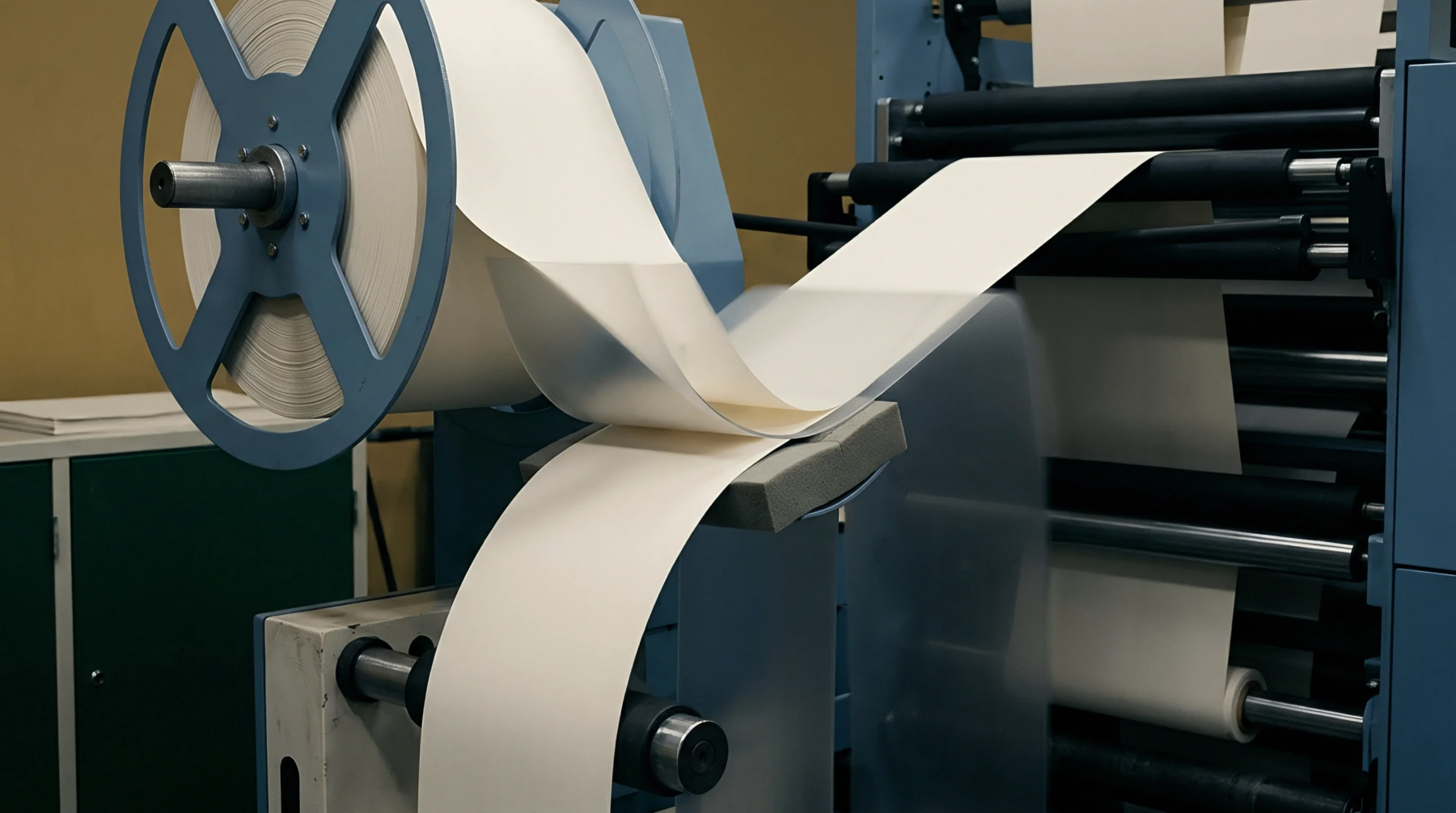
Machine Dimension
Transverse working distance between the lateral containment edges of a paper forming section defines the maximum physical span across which fibre slurry can form a continuous wet web. In industrial fourdrinier and twin-wire papermaking machines, deckle width establishes the untrimmed cross-machine boundary of the sheet before edge trimming removes uneven wet margins. Mechanical deckle straps, adjustable edge rulers or edge-trim squirts define the lateral margins where stock slurry drains, confining the fibre suspension to the designated wire area.
This dimension ceases to denote sheet size once the consolidated web leaves the press section and passes into the dryer group, where cross-directional shrinkage progressively reduces the actual web width.
Trim Optimization
Converting facilities and packaging printers schedule order patterns against paper machine output to minimize unusable scrap generated during slitting. The nominal deckle width dictates how many narrower reels of standard shipping container dimensions or commercial print rolls a single parent roll yield. Software algorithms group varied customer roll sizes to consume the available sheet width with minimal side trim.
Small residual widths below commercial reel specifications must be discarded and routed back to the broke pulper, representing lost machine capacity and added energy consumption.
Shrinkage Variable
Fibre shrinkage during drying alters the relationship between the forming width and the final salable roll dimension. Wet stock formed across an initial deckle width contracts unevenly across the machine axis, exhibiting pronounced shrinkage near the sheet edges where web tension cannot restrain the drying fibres. Paperboard producers adjust edge jet positions and slitter positions to compensate for this variable transverse shrinkage, securing finished rolls that meet strict width tolerances for high-speed corrugated converting lines.