Coating Accumulation
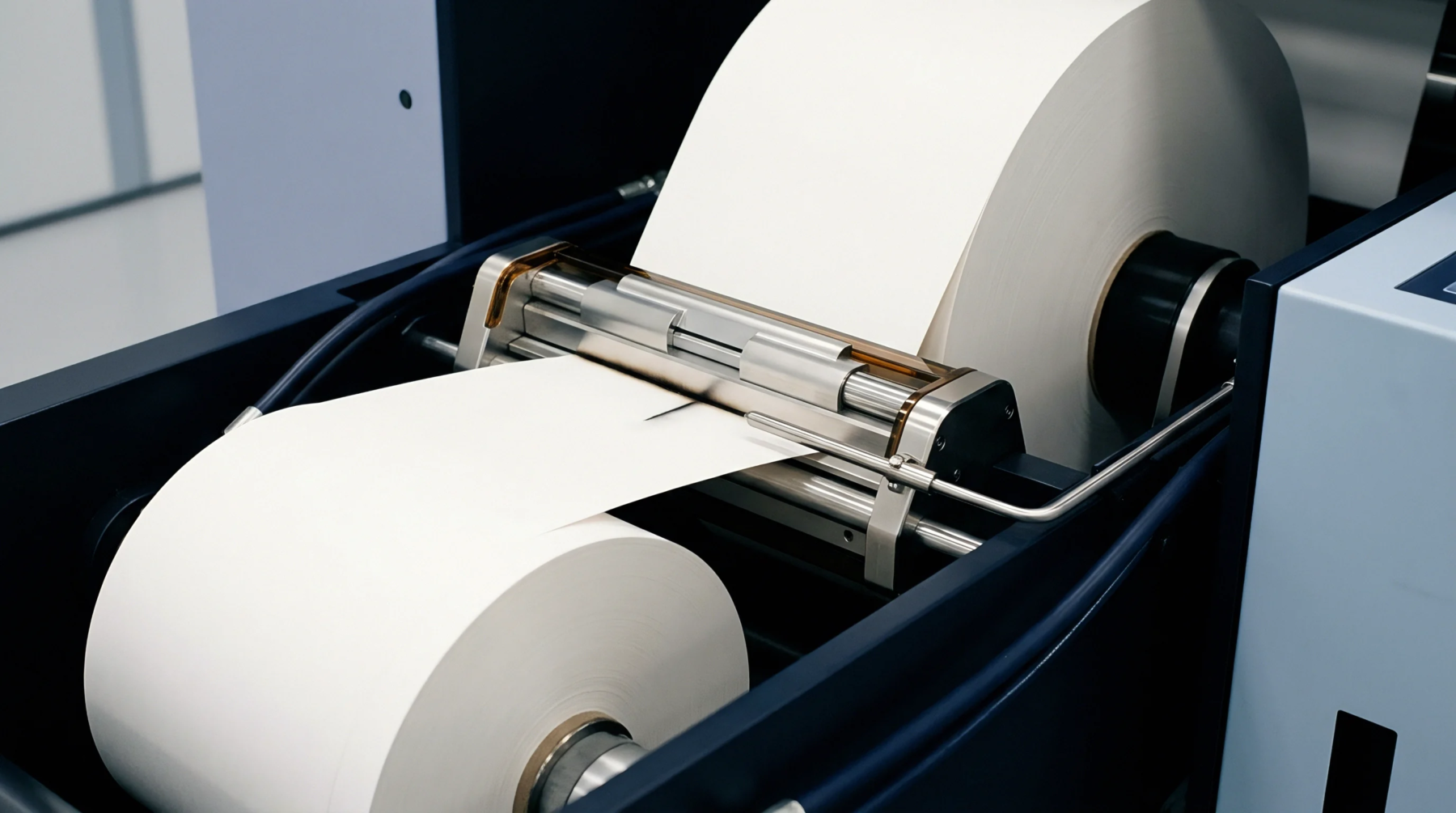
Pressurized liquid pooling at the exit boundary of a metering assembly represents a common failure mode in paper coating operations. This phenomenon, known as doctor blade weeping, occurs when a small bead of coating color builds up behind the blade and periodically drops onto the moving paper web. High solid contents and high machine speeds exacerbate this behavior.
Rheological Influence
Liquid formulation behavior under high shear conditions determines the stability of the transfer process. When a coating color experiences intense deformation under the blade tip, its shear-thickening properties can cause a rapid increase in local viscosity. This sudden resistance limits the smooth passage of the fluid, forcing a portion of the material to accumulate at the blade edge rather than being evenly distributed.
Proper formulation adjustment with rheology modifiers reduces the severity of the buildup.
Production Defect
Uncontrolled deposits from the blade edge lead to printing difficulties during subsequent converting stages. A localized drop on the paper surface creates an area of variable absorption, resulting in uneven ink pick-up and visible streaks on the finished package. High-speed flexographic presses will often experience web breaks when these hard spots pass through the impression nip, causing downtime and waste.
Adjusting the blade angle and increasing the blade pressure help to maintain a clean shearing edge, thereby ensuring a uniform coating thickness across the entire width of the substrate.