Surfactant Relaxation Kinetic Effects on Wetting Defects in Blade Coating
Surfactant relaxation kinetics govern blade coater wetting defects: rapid non-equilibrium surface tension decay under five milliseconds prevents air entrainment.
Wedge
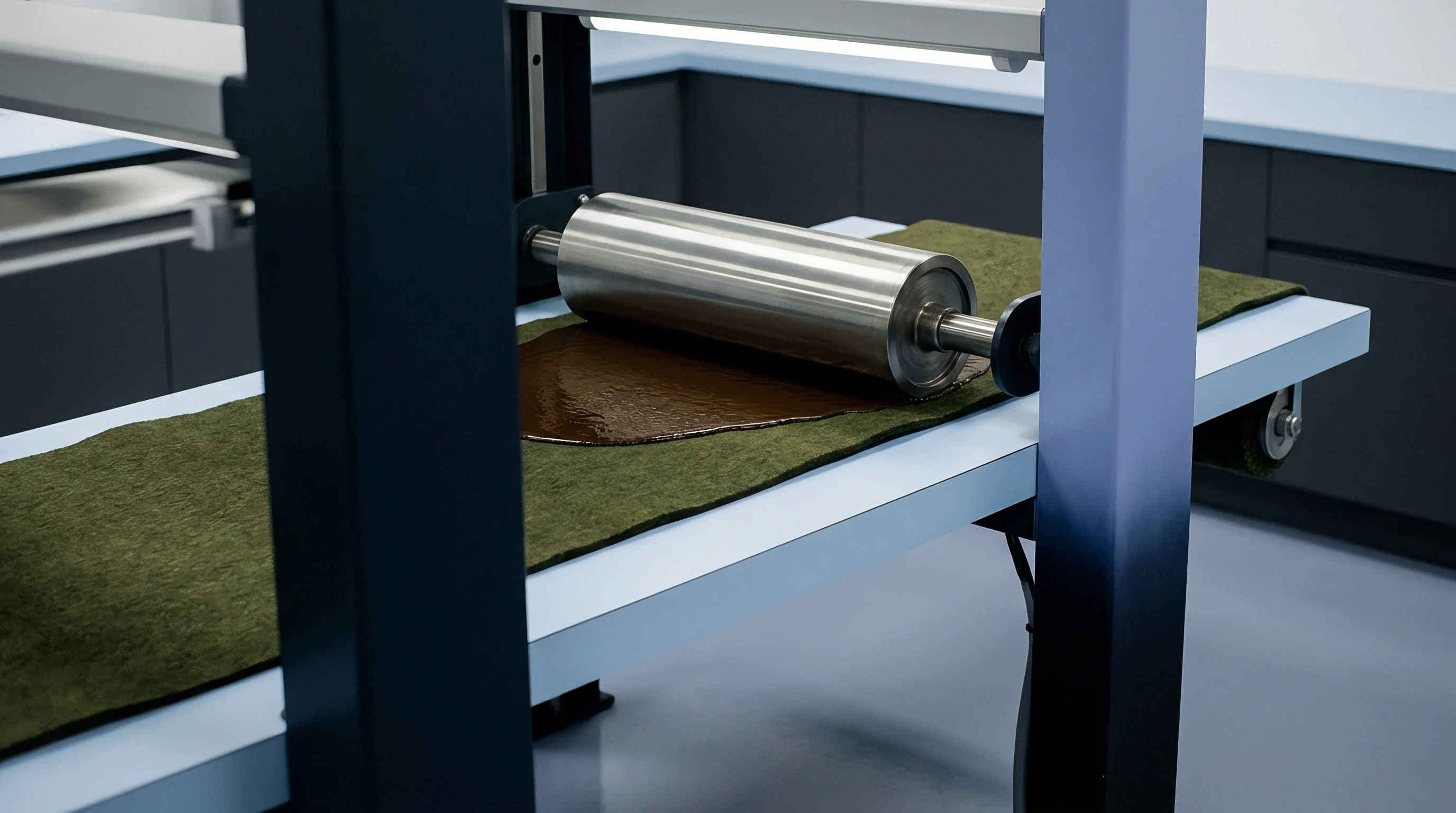
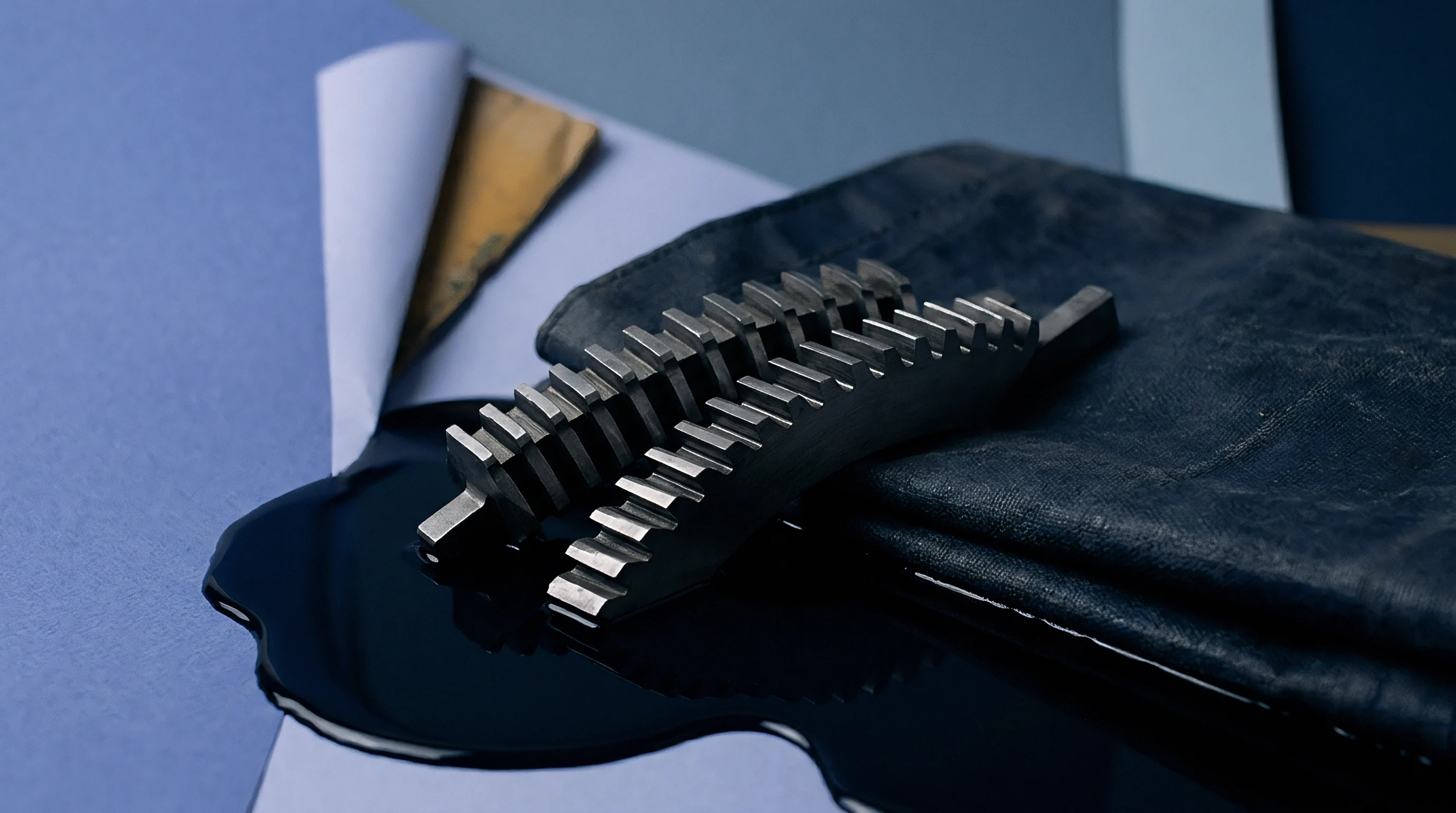
A ceramic-tipped metering blade runs clamped at forty-five degrees against a base sheet travelling at twelve hundred meters per minute. The liquid coating color enters the converging zone under hydrodynamic pressure reaching three bar before the doctoring edge meters the film down to eight grams per square meter. In that converging geometry, fresh fluid volume continuously displaces toward the dry cellulosic web.
Contact between the aqueous suspension and the raw fibre network occurs over an exposure window lasting less than five milliseconds before mechanical smoothing takes place. Within this sub-millisecond regime, interfacial chemistry dictates whether the liquid film seats uniformly across raw fibres or skips over surface micro-cavities.
The fluid boundary encounters an unprimed, porous topography. Raw paper stock carries microscopic air pockets within surface voids, bounded by sizing agents and mechanical pulp fragments. When the liquid meniscus approaches the moving paper interface, air must displace rapidly into the sheet structure or vent laterally along the blade line.
Liquid spreading depends on instantaneous boundary tension rather than the static values printed on chemical specification sheets.
A formulated coating color with an equilibrium surface tension of thirty-one millinewtons per meter exhibits a transient boundary value of sixty-two millinewtons per meter at five milliseconds surface age under maximum bubble pressure tensiometry at twenty-three degrees Celsius.
Base paper roughness measured by Parker Print-Surf under ten-kilopascal clamp pressure registers between 3.8 and 5.2 micrometers on standard folding boxboard liners. When surface tension remains high through the mechanical dwell period, the meniscus cannot conform to irregular surface contours. Liquid bridges span across fibre peaks without penetrating depressions.
Microscopic dewetting fronts establish along hydrophobic fibre bundles, trapping bubbles against the cellulose surface. The applicator roll turns.
The operational penalty surfaces downstream during drying and calendering, where entrapped air blisters expand into pinholes, leading to ink rejection on gravure presses and widespread customer rejections.

Kinetics
Surfactant molecules in an aqueous dispersion distribute between bulk solution, pigment surfaces, latex particle shells, and phase boundaries. Molecular orientation toward an expanding interface demands finite migration time. Tensiometric testing across millisecond regimes exposes the physical latency separating bulk dissolution from boundary saturation.
Transient Tension Evolution
Non-equilibrium surface tension testing via maximum bubble pressure tensiometry establishes the speed of surfactant transport. When an expanding bubble creates fresh liquid-gas interface within milliseconds, surfactant monomers must diffuse from the bulk solution, orient hydrophilic heads toward water, and project hydrophobic tails into the gas phase. In coating colors running at sixty-eight percent solids with high calcium carbonate and kaolin clay content, free water volume remains restricted to narrow channels between packed mineral particles.
Molecular migration slows under mechanical confinement. Bulk diffusion coefficients for conventional ethoxylated nonionic surfactants drop from 10 to the minus ten square meters per second in pure water down to 10 to the minus twelve square meters per second inside dense mineral suspensions. Surfactants also adsorb preferentially onto the vast surface area of fine ground calcium carbonate, which presents eight to twelve square meters of mineral surface per gram.
Unadsorbed monomer concentration in the aqueous phase drops below the saturation limit needed for rapid transport.
| Surfactant Chemistry Class | Equilibrium Tension (mN/m) | Tension at 5 ms (mN/m) | Tension at 20 ms (mN/m) | Tension at 100 ms (mN/m) |
|---|---|---|---|---|
| Linear Alcohol Ethoxylate (9 EO) | 30.5 | 61.2 | 52.4 | 38.1 |
| Branched Secondary Alcohol Ethoxylate | 29.2 | 55.8 | 46.3 | 34.0 |
| Symmetrical Acetylenic Diol (Ethoxylated) | 32.0 | 37.5 | 34.1 | 32.4 |
| Sodium Dioctyl Sulfosuccinate | 27.8 | 48.6 | 39.2 | 31.0 |
| Fluorochemical Surfactant (Anionic) | 19.5 | 58.4 | 49.7 | 32.6 |
The data demonstrates that equilibrium measurements fail to predict fluid behavior under doctor blades. A fluorochemical additive drops equilibrium tension below twenty millinewtons per meter, yet at five milliseconds its transient tension exceeds fifty-eight millinewtons per meter because bulky fluorinated chains diffuse sluggishly through mineral mazes. Symmetrical acetylenic diols migrate and orient five to eight times faster, maintaining boundary values below thirty-eight millinewtons per meter across identical timescales.
Adsorption Boundary Mechanisms
Surfactant transport inside the coating head divides into consecutive kinetic regimes:
- Bulk diffusion transport moves surfactant unimers through water channels between suspended pigment platelets toward newly formed interfaces.
- Steric boundary deceleration occurs as surfactant molecules encounter crowded latex stabilizer layers and water-soluble thickeners like carboxymethyl cellulose.
- Interface adsorption entry governs the energetic jump of hydrophobic tails out of the aqueous phase across the phase boundary.
- Steric molecular reorientation aligns polar heads and hydrophobic tails along the boundary to establish surface pressure.
Viscosity compounds the wetting delay. Laboratory measurements using capillary rheometers at shear rates exceeding 10 to the sixth reciprocal seconds indicate that high extensional viscosity along the blade heel further retards molecular rotation. Surfactant molecules trapped within polymer coils cannot access the interface before the doctor blade forces the final film profile onto the sheet.
Whether synthetic Gemini surfactants can resolve this diffusion bottleneck without destabilizing styrene-butadiene latex binding remains unproven on high-speed industrial coater heads.

Defects
Coating irregularities originate directly from the inability of liquid suspensions to establish continuous contact with moving base paper. When non-equilibrium boundary tension exceeds forty-five millinewtons per meter at the blade entry zone, the wetting perimeter destabilizes under hydrodynamic shear.

Where Do Air Entrainment Voids Form?
High web velocity pulls an invisible gas envelope directly beneath the trailing doctor steel. The wetting line, where dry base paper, wet coating color, and ambient air meet, experiences intense pressure gradients. Base paper carries roughness valleys measuring several micrometers deep according to ISO 8791-4 testing.
When the transient contact angle between slurry and cellulose remains broad, liquid cannot drop into valleys before the blade passes overhead.
Air enters the coating wedge. High speed suppresses surfactant migration. The dynamic contact angle widens beyond the dewetting boundary of 110 degrees.
Gas cavities then break into micro-bubbles under hydrodynamic pressure peaks, generating micro-foaming directly beneath the blade tip.
- Micro-bubble entrainment initiates when the advancing meniscus fails to wet hydrophobic wood fibers, trapping sub-micron air pockets at the substrate line.
- Cavity coalescence gathers dispersed micro-bubbles into millimeter-scale gas blisters under the localized suction zone behind the metering nip.
- Blade profile weeping pushes accumulated foam along the rear blade bevel, causing irregular fluid build-up that alters mechanical metering geometry.
- Streaking and skip marks manifest as solid pigment deposits lodge beneath the blade, leaving uncoated linear voids across the running reel.
Defective sheets go to broke. Pinholes expose raw base paper. Printing tests conducted according to TAPPI T 558 demonstrate that localized contact angle variation across skip defects causes severe mottle during offset lithography and gravure ink transfer.
When ink hits an uncoated fibre bundle surrounded by dense mineral pigment, solvent absorption rates vary by an order of magnitude. The consequence is missing halftone dots and catastrophic blistering during heatset drying.
A wetting line operating above the critical capillary threshold destabilizes into air cavities regardless of baseline mechanical blade pressure.
A chemical additive vendor typically claims that downstream blade weeping stems purely from mechanical blade wear or baseline paper porosity swings rather than surfactant exhaustion at the contact perimeter.


Additives
Formulation chemistry balances interfacial tension reduction against foam generation and pigment dispersant stability. Surfactants that perform well in static dip tanks often destabilize high-solids blade coating colors running at extreme shear rates.
Molecular Architecture Selection
Molecular geometry governs relaxation speed. Traditional nonionic surfactants like nonylphenol ethoxylates and linear primary alcohol ethoxylates feature flexible hydrocarbon tails linked to hydrophilic polyethylene glycol chains. These molecules exhibit low equilibrium surface tension, but their linear chains tangle in aqueous media, slowing diffusion through restricted water networks.
Symmetrical branched structures, notably 2,4,7,9-tetramethyl-5-decyne-4,7-diol, feature a central acetylenic bond that imparts molecular rigidity, flanked by symmetrical tertiary alcohol groups and branched alkyl tails.
This compact geometry minimizes intermolecular entanglement. Symmetrical acetylenic diol molecules diffuse through high-solids mineral suspensions with minimal steric drag. Their orientation at freshly sheared fluid interfaces occurs within three to ten milliseconds.
Acetylenic chemistry also exhibits defoaming characteristics, whereas conventional ethoxylated alcohols stabilize macroscopic foam that chokes deaerators and feed pipes. Chemical synthesis of these specialty diols involves catalytic ethynylation of methyl isobutyl ketone with acetylene under high pressure, a process concentrated in specialized chemical facilities where volatile gas management governs production volumes. The global supply chain for these molecules remains concentrated, creating pricing volatility during regional manufacturing interruptions.
| Chemistry Designation | Aggregation Limit (wt %) | Tension at 5 ms (mN/m) | Foam Volume (mL after 5 min) | Pinhole Count (per m²) |
|---|---|---|---|---|
| Unmodified Base Formulation | None | 68.4 | 12 | 145 |
| Ethoxylated Tetramethyldecynediol | 0.25 | 36.8 | 18 | 4 |
| Secondary Alkane Sulfonate | 0.15 | 49.2 | 180 | 62 |
| Silicone Polyether Copolymer | 0.10 | 42.1 | 210 | 38 |
| Alkyl Polyglycoside (C8-C10) | 0.30 | 53.5 | 320 | 89 |
Surfactant additions displace polyacrylate dispersants from calcium carbonate surfaces if dosage rates drift out of control. Polyacrylates maintain mineral suspension stability by electrostatic repulsion; unseated polyacrylate polymers enter the aqueous phase, causing severe depletion flocculation. Viscosity shoots upward under low-shear conditions inside machine run tanks, while high-shear viscosity under the blade edge thins uncontrollably.
Screening surfactants for high-speed blade coaters requires specific analytical procedures:
- Bubble pressure tensiometry profiling measures surface tension decay from one millisecond to ten seconds at operational temperatures.
- High-shear rheology profiling tracks viscosity up to 10 to the sixth reciprocal seconds to confirm absence of dilatancy.
- Pigment zeta potential tracking verifies that nonionic surfactant packages do not displace anionic polyacrylate dispersants.
- Ross-Miles foam persistence testing determines whether mechanical agitation generates persistent micro-foam in machine return lines.
Fast molecules lower the barrier. Bubble tensiometers register the variance. Pigment particles crowd the meniscus.
Surfactants that suppress transient surface tension without generating micro-foam maintain coating uniformity across changing machine speeds.
A compact molecular geometry with centrally placed hydrophilicity accelerates boundary migration across every sheared fluid interface.

Spoilage
Substrate selection and chemical dosing govern financial yields on continuous coating assets. A commercial high-speed coater producing double-coated graphic board runs twenty tonnes of finished product per hour. Wetting failures that induce micro-streaking or blade scratches force operators to pull whole parent reels from finishing lines, sending finished tons directly to the repulper.
Yield and Broke Arithmetic
Consider a baseline converting run producing 250 g/m² coated folding boxboard on a 4.2-meter trim width machine operating at 1,000 meters per minute. The machine delivers 63 tonnes of uncalendered board per hour. If transient surface tension stays above forty-eight millinewtons per meter, wetting instability forces blade scratches across the deckle at an incidence rate of two events per reel turn-up.
Each scratch renders sixteen tons of finished board unsaleable as premium folding boxboard.
Repulping coated broke generates compounding losses. The mechanical energy required to wet and deflake heavily coated stock in hydrapulpers averages 180 kilowatt-hours per tonne. Furthermore, mineral pigments like kaolin and precipitated calcium carbonate carry low retention values upon first-pass re-introduction into the base sheet, reducing wet-end drainage rates and forcing machine speed reductions of five to eight percent.
Sourcing virgin fiber furnish to offset degraded mechanical strength across recycled broke loops adds directly to raw material outlays.
Surfactant economics must reflect finished yield rather than chemical invoice cost per kilogram. Specialty acetylenic surfactants cost between eight and fourteen euros per kilogram, compared to three to five euros per kilogram for standard linear ethoxylated alcohols. However, dosing acetylenic diols at 0.20 percent on dry coating weight adds approximately 1.80 euros per tonne of dry coating color, or 0.36 euros per tonne of finished board at a twenty-gram-per-square-meter coat weight.
Eliminating two hours of defect-driven machine downtime per week saves over 120 tonnes of production, capturing more than 96,000 euros in preserved gross contribution margin on commercial board grades.
Purchase contracts stipulating maximum allowable pinhole counts per square meter under ISO 14968 visual grading trigger automatic billing deductions whenever coater speeds cause wetting breakdown.
A standard quality assurance clause across commercial board supply agreements specifies that any delivered roll displaying more than five coating voids per hundred square meters under standardized copper copper-ammonia staining will be rejected outright at supplier expense, with all associated freight and pre-press prepress makeready charges debited directly against the mill account.