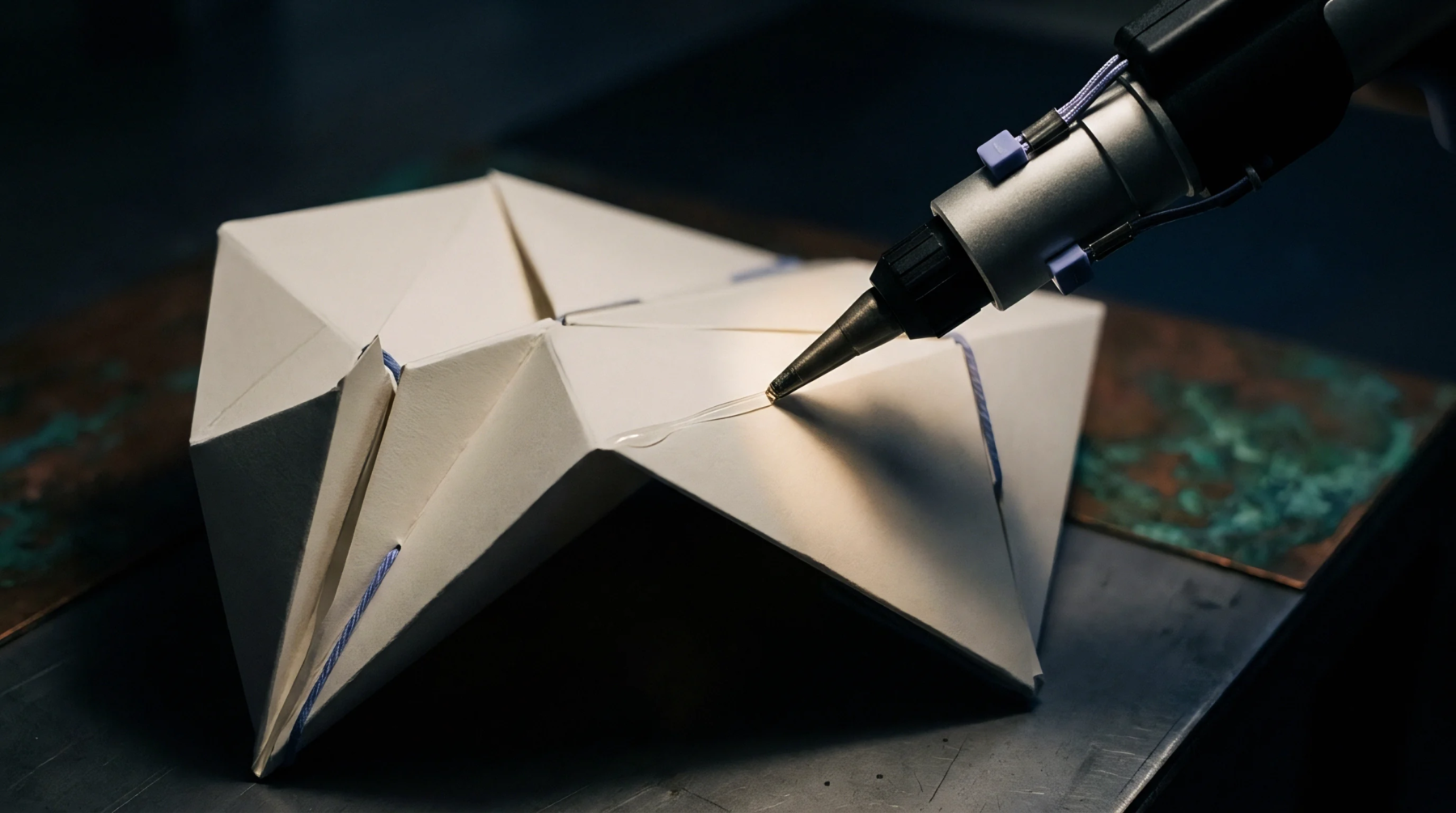
Stress Generation
Internal tension induced by the simultaneous changes in temperature and relative humidity affects the structural integrity of multi-layer packaging. This phenomenon, known as hygrothermal stress, occurs when different materials in a laminated structure expand or contract at different rates under environmental shifts. It commonly leads to curl, delamination, or cracking in composites where paper is bonded to polymer or metal foil.
Mechanical Action
Thermal expansion combines with moisture-driven fiber swelling to produce complex stress distributions across the sheet thickness. For example, when a cold and dry package is moved to a warm and humid environment, the outer paper layers absorb moisture and expand, while the internal plastic barrier resists this change. This gradient generates a bending moment that forces the packaging wall to warp or twist.
In high-speed packaging lines, such deformations can cause feeder jams and misaligned labels, creating costly downtime during production runs. This issue is particularly acute for products that transition from refrigerated storage to ambient display shelves.
Protective Measure
Mitigating this stress requires matching the thermal and moisture expansion coefficients of the adjacent layers as closely as possible. Converters often apply moisture-barrier coatings or use symmetric laminates to distribute the forces evenly across both sides of the sheet. These design adjustments protect the package from mechanical failure during long-distance transit through varying climate zones.