Pressure Distribution
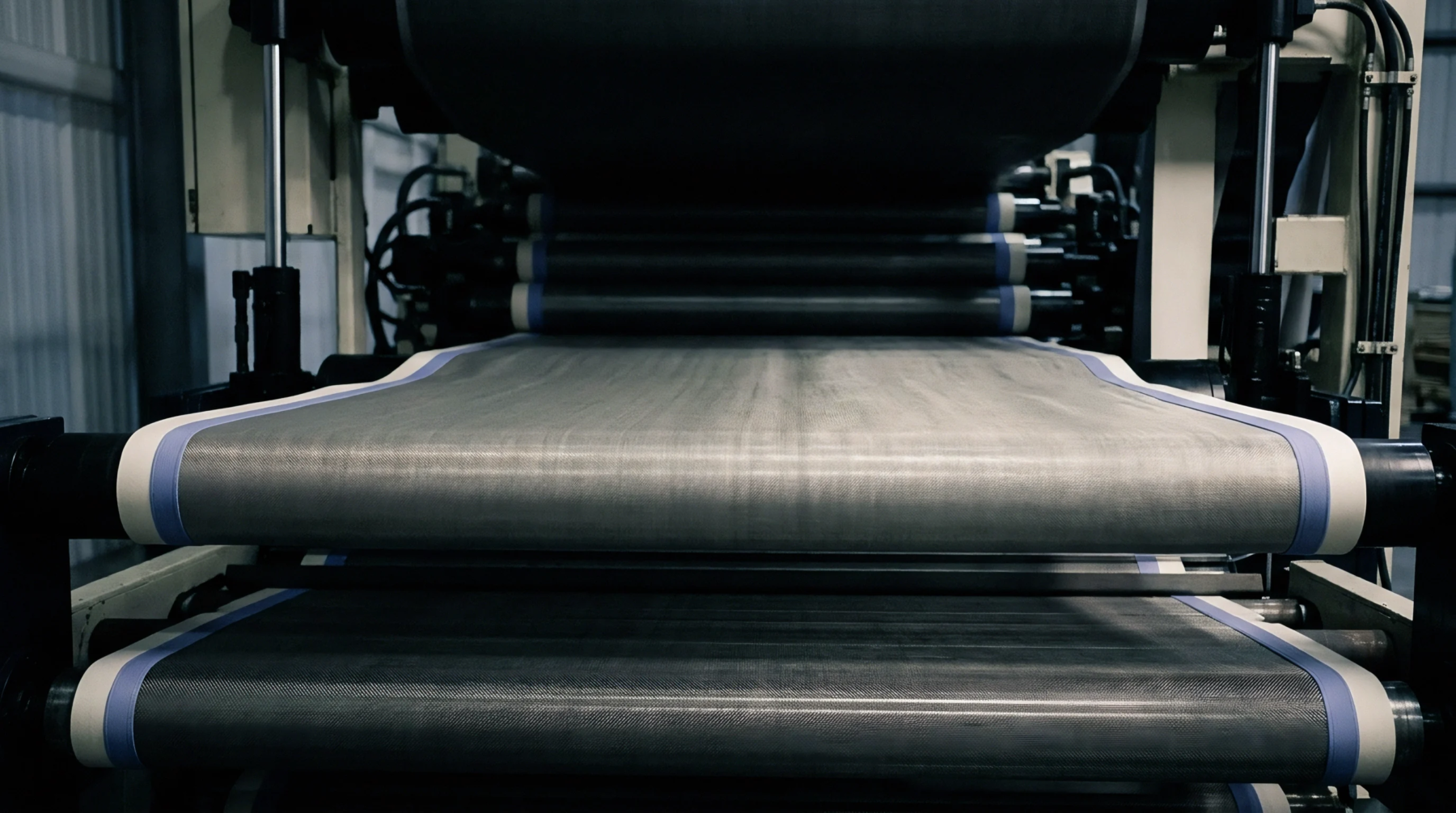
Force per unit width quantifies the mechanical compression applied at the interface of two contacting rollers. This linear nip load governs how effectively an adhesive transfers or how thoroughly a sheet compacts during calendering. High forces promote tighter bonding but risk crushing the internal structure of porous substrates.
Precise regulation prevents excessive sheet thinning while maintaining uniform contact across the machine width.
Structural Deformation
Surface contact occurs when rubberized or steel rolls press against one another under controlled hydraulic or pneumatic tension. Linear nip load operates as the primary variable that determines the width of the contact zone and the intensity of the pressure peak. Increased force widens this gap, which slows the transit of paper and alters the dwell time for moisture migration or coating leveling.
Uniformity depends upon the crown profile of the rolls and the consistency of the loading mechanism. Operators adjust these settings to correct localized variations in density or surface smoothness across the web.
Production Boundary
Machine speed dictates the upper limit of the force applied because vibration and heat buildup threaten the integrity of the roll covers. Excessive settings damage the resilient surfaces of synthetic compounds and shorten the life of bearing housings. Lower thresholds prevent sheet marks and avoid the structural collapse of bulky packaging materials.
Mechanical constraints demand that these force values remain within the design specification for the roll set. Correct application balances the immediate requirement for finish quality against the long term durability of the mechanical assembly.