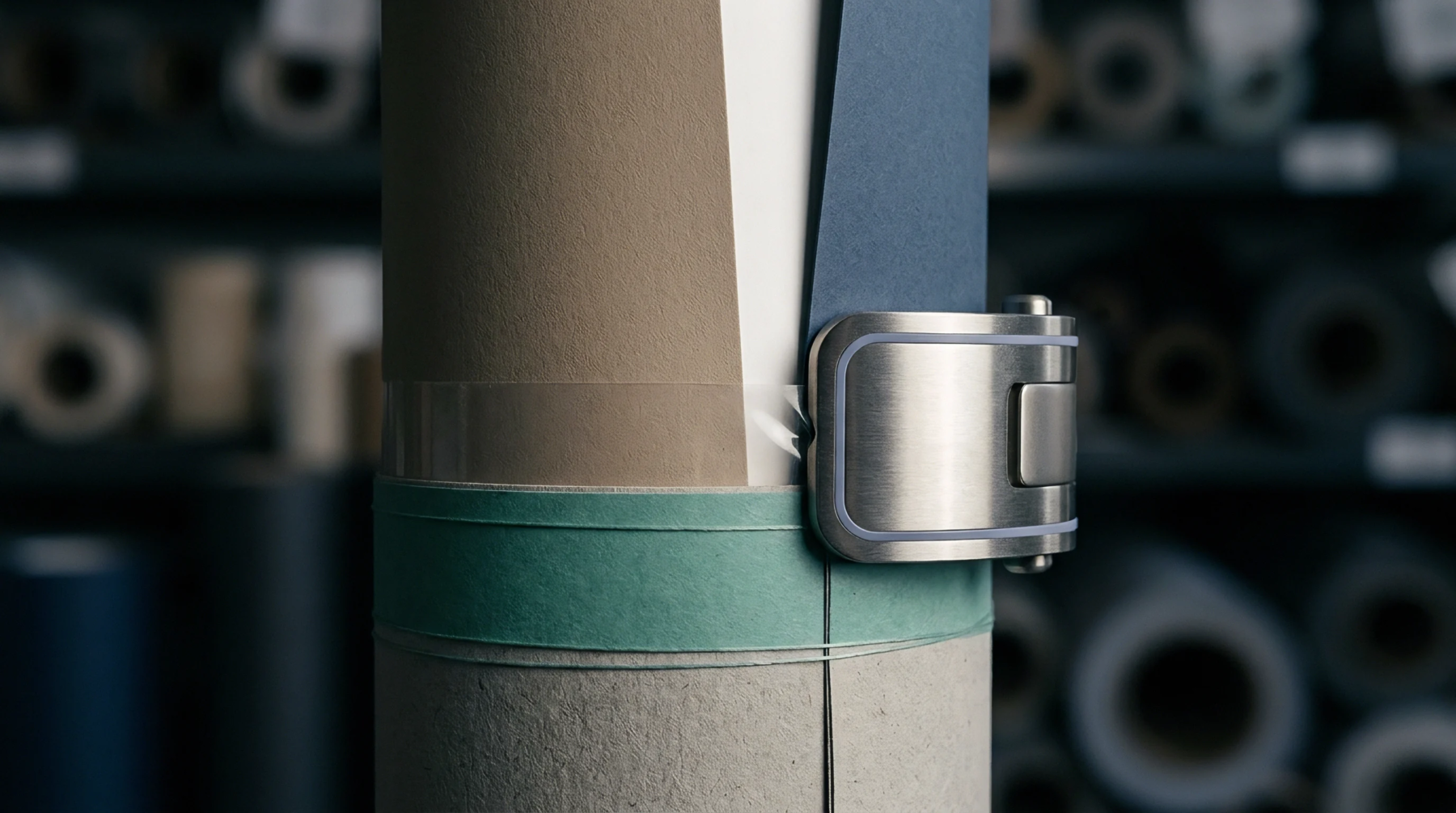
Die Clearance
Width of the groove in a creasing matrix minus the thickness of the creasing rule defines the governing dimension for establishing a controlled fold in cartonboard. This matrix channel clearance must be carefully matched to the board thickness to ensure a clean crease without rupturing the liner. A gap that is too wide leads to soft, poorly defined crease lines that fail to fold accurately.
Creasing Quality
Calculation of the correct groove width relies on the board caliper and crease direction. In the machine direction, a narrower clearance is often needed because the fibers offer less resistance to bending across the grain. In the cross direction, the stiff fibers require a wider clearance to accommodate the folded bulk of the board.
Technicians use precision dial calipers to verify these measurements during die setup. Incorrect setup results in high crease resistance, which interferes with the folder-gluer operations and can distort the final box shape.
Production Speed
Automated cartoning machines demand highly consistent crease geometry to run at peak efficiency without jams. If the crease stiffness varies due to incorrect clearance, the folding arms of the machine may fail to form the carton correctly. This inconsistency can stop the packaging line and reduce throughput.