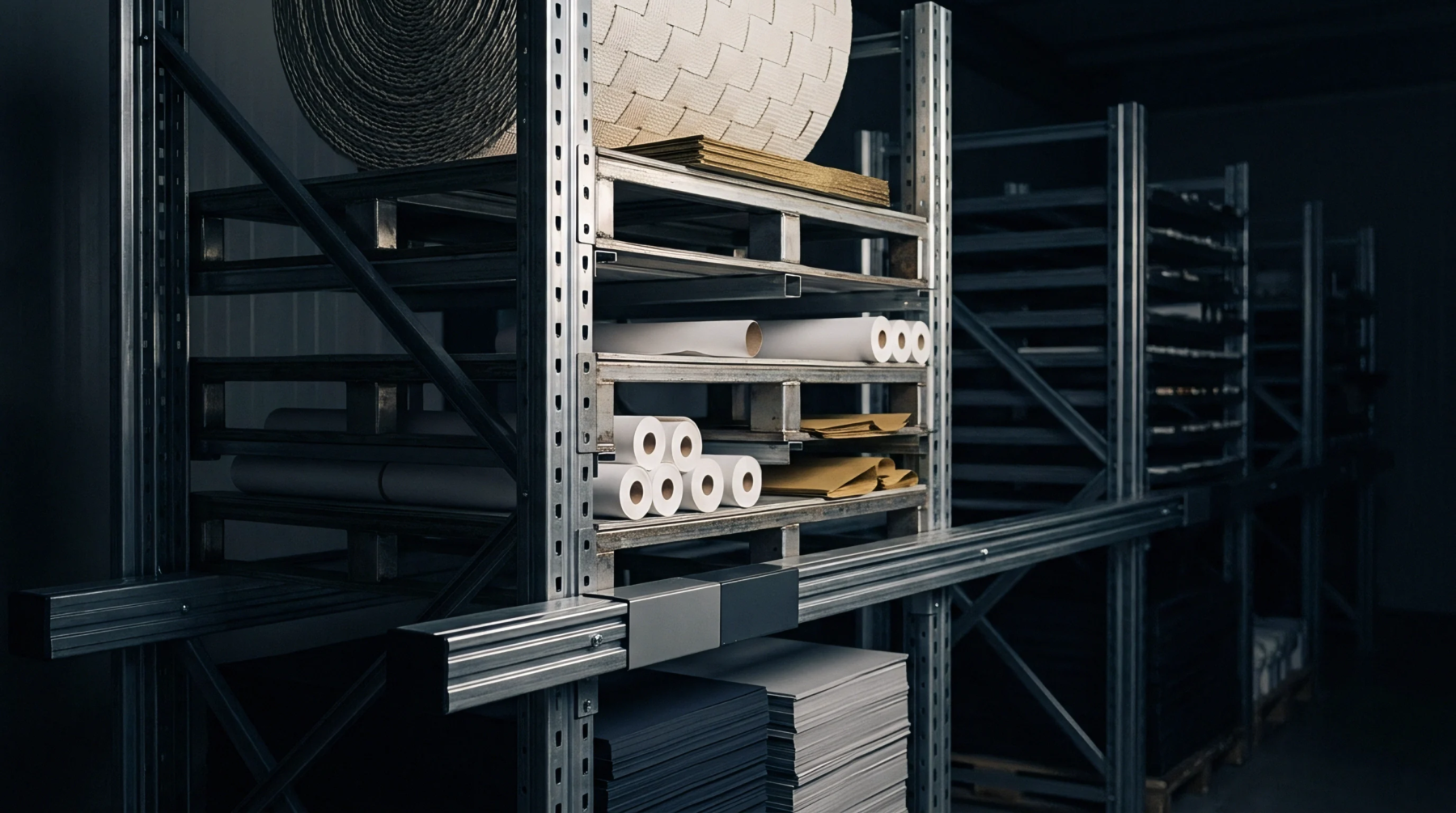
Conditioning Process
Paperboard storage protocols require skids of material to reach temperature and humidity balance with the pressroom atmosphere before unwrapping to prevent structural warping and dimensional instability. The process of moisture equilibration allows hygroscopic cellulose fibers within the sheet to absorb or desorb water molecules until moisture vapor pressure matches ambient room conditions. Standard testing standards mandate exposure to twenty-three degrees Celsius and fifty percent relative humidity for twenty-four hours prior to mechanical testing.
This procedure applies to paperboard sheets and rolls, but excludes finished corrugated boxes already subjected to structural conversion.
Dimensional Stability
Unwrapped paperboard stored in environments with unmatched relative humidity experiences uneven moisture absorption along skid edges. Moisture equilibration prevents wavy edges caused by ambient humidity absorption and tight edges resulting from dry air exposure. Sheet distortion distorts registration on multi-color printing presses and causes misfeeds in automatic box blank feeders.
Acclimatizing sealed skids for forty-eight hours stabilizes board dimensions across the entire sheet width.
Converting Performance
Consistent moisture content throughout the paperboard web ensures uniform performance during scoring and die-cutting. Skids that skip proper moisture equilibration exhibit variable stiffness, leading to scoreline cracking or unpredictable folding resistance on high-speed carton gluing lines. Moisture gradients across sheets also impair adhesive open times and cold-glue bond development during box assembly.
Paperboard converting plants monitor skid core temperatures with probe thermometers to verify balance before printing. Maintaining controlled atmospheric storage environments eliminates dimensional variation and optimizes press throughput.