Quantifying Microstructural Shear Fracture Propagation Speeds inside Recycled Fibre Crease Matrices
Recycled fibre score line delamination speed depends on ply bond energy, hornification level, and creasing channel clearance under strain rates.


Matrix
Die-cutting dies press male scoring rules into multi-ply boxboard against structured female channels. This displacement shears internal sheet layers, establishing the delamination zones needed for clean, zero-burst folds. Shear strain concentrates along weak inter-ply interfaces where local fibre alignment and binder distribution set the failure threshold.
Shear stress concentrates along weak inter-ply boundaries.
Recycled fibre networks present distinct microstructural limits during indentation. Repeated drying cycles cause repulped cellulose to hornify, shortening average fibre length and stiffening cell lumens. As a male scoring rule forces the substrate into the female channel, this lower compliance accelerates out-of-plane shear stress buildup and alters how micro-cracks form in the core matrix.

Crease Matrix Geometry and Shear Strain Concentration
Scoring rule width and channel depth dictate how deformation starts through the sheet thickness. Converting practice generally matches channel width to rule thickness plus two times substrate caliper, modified by factors for furnish bulk. Recycled packaging boards rich in short fibres yield narrower elastic deformation zones, packing shear strain into a smaller volume directly under the rule impact.
| Board Grade Designation | Grammage (g/m²) | Caliper (µm) | Recycled Fibre Share (%) | Critical Inter-Ply Shear Stress (MPa) |
|---|---|---|---|---|
| Solid Bleached Board (SBB) | 300 | 390 | 0 | 4.82 |
| Folding Boxboard (FBB) | 320 | 460 | 0 | 3.65 |
| White Lined Chipboard (GT2) | 350 | 440 | 65 | 2.41 |
| Coated Recycled Board (GD2) | 400 | 510 | 85 | 1.85 |
| Test conditions: ISO 187 conditioning at 23 degrees Celsius and 50 percent relative humidity; shear testing conducted at 50 millimetres per minute displacement rate under ISO 1924-2 guidelines. | ||||
Fibre network density determines whether crack energy dissipates along secondary delamination planes or forces premature liner splitting during rapid folding.
Indentation parameters dictate whether a crease creates smooth internal delamination or structural failure. In high-density recycled matrices, elevated filler loading and short fibre fragments reduce inter-fibre friction during shear displacement. Lacking internal sliding friction, strain cannot redistribute, causing stress to spike along the boundary between the top liner and the underlying recycled core.

Fibre Length Reduction in Recycled Stocks
Repulped mechanical furnishes lose cell-wall flexibility over repeated drying runs. Fibre shortening through multiple recycling loops drops average fibre length from 2.4 millimetres in virgin softwood kraft to under 0.9 millimetres in mixed recovered waste streams. This reduction thins out the entanglement network in the central score zone, lowering its energy absorption capacity when the crease rule strikes at speed.
Recycled fibres exhibit diminished lumen flexibility.
Lumen collapse shifts the main deformation mode from cell-wall flexing to brittle inter-ply sliding. In multi-ply boards made of recovered newsprint and corrugated waste, low Z-direction tensile strength lets micro-cracks form early under rule penetration. These initial micro-cracks open pathways for shear fractures to propagate as the sheet enters high-speed folding.
At 23 degrees Celsius and 50 percent relative humidity, recycled pulp matrices exhibit a 35 percent reduction in inter-ply shear strain capacity compared to bleached kraft virgin stock.
Selecting proper counter-matrix dimensions balances rule penetration against substrate shear strength to prevent premature rupture. Matching channel geometry to recycled sheet compressibility maintains crease integrity across production batches.

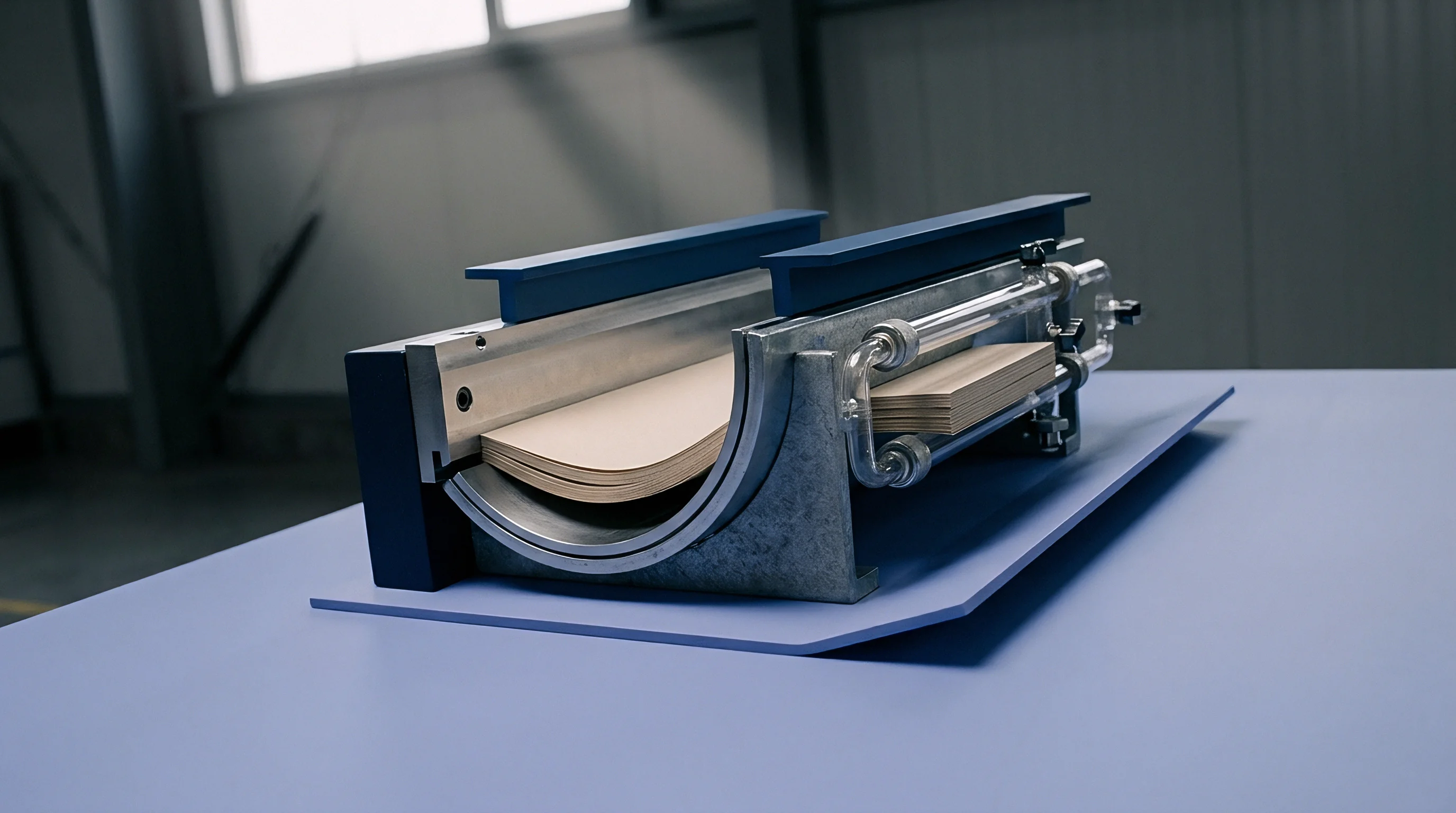
Shear
Out-of-plane stress across inner board plies forces internal material separation on entering the folder-gluer. Bending a scored line through ninety or one hundred eighty degrees transforms vertical indentation strain into horizontal shear fracture along pre-delaminated core plies. How fast this shear crack runs governs whether the printed outer liner stays intact or splits open.
High strain rates accelerate crack growth.
High strain rates during continuous packaging line operations alter how the board matrix responds physically. At line speeds exceeding three hundred metres per minute, local strain rates inside the folding crease pass one thousand per second. Under these dynamic conditions, viscoelastic relaxation mechanisms in the cellulose network fail to dissipate mechanical energy, accelerating fracture propagation along weak internal interfaces.

Dynamic Fracture Mechanics during Folder-Gluer Operations
Rapid bending moments generated at four hundred metres per minute drive micro-cracks along inter-ply interfaces. The advancing fracture separates adjacent fibre layers, driven by concentrated strain energy stored in the compressed inner plies during scoring. When shear crack velocity matches or exceeds the rate of angular rotation, delamination advances smoothly without transferring destructive tension to the outer printable surface.
Delamination absorbs energy during folding operations.
Unstable fracture propagation occurs when internal shear resistance varies across the web. Recycled board furnishes show significant basis-weight and density fluctuations in both machine and cross directions. Localized regions of high starch binder concentration or dense fibre packing cause shear cracks to stall, building up strain energy until the crack jumps forward at high velocity and bursts through the top liner.
Fibre network density determines whether crack energy dissipates along secondary delamination planes or forces premature liner splitting during rapid folding.

How Does Recycled Fibre Length Affect Fracture Speed?
Shortened cellulose structures reduce internal energy dissipation inside the central core layer. When recycled fibre content passes sixty percent, average inter-ply shear fracture propagation speeds increase from thirty-two metres per second up to one hundred ten metres per second under equivalent strain rates. Short fibres provide fewer entanglements across the crack path, allowing shear fractures to travel rapidly through weak inter-ply bond lines.
Outer liners fracture when shear stress peaks.
Micro-cracks merge faster along inter-ply zones carrying elevated ash content. Mineral fillers like calcium carbonate and clay reduce the hydrogen bonding area between recycled fibres. Shear fractures propagate rapidly through filler-rich zones, bypassing controlled multi-plane delamination and forcing energy outward into tensioned liner layers.
Crack velocity variance across machine directions makes high-speed converting predictability difficult. Cross-direction creases show higher fracture propagation speeds than machine-direction creases due to predominant fibre alignment parallel to the score channel. The underlying relationship between localized shear crack velocity and unconfined core delamination under dynamic strain rates remains an open question for recycled board specification standards.

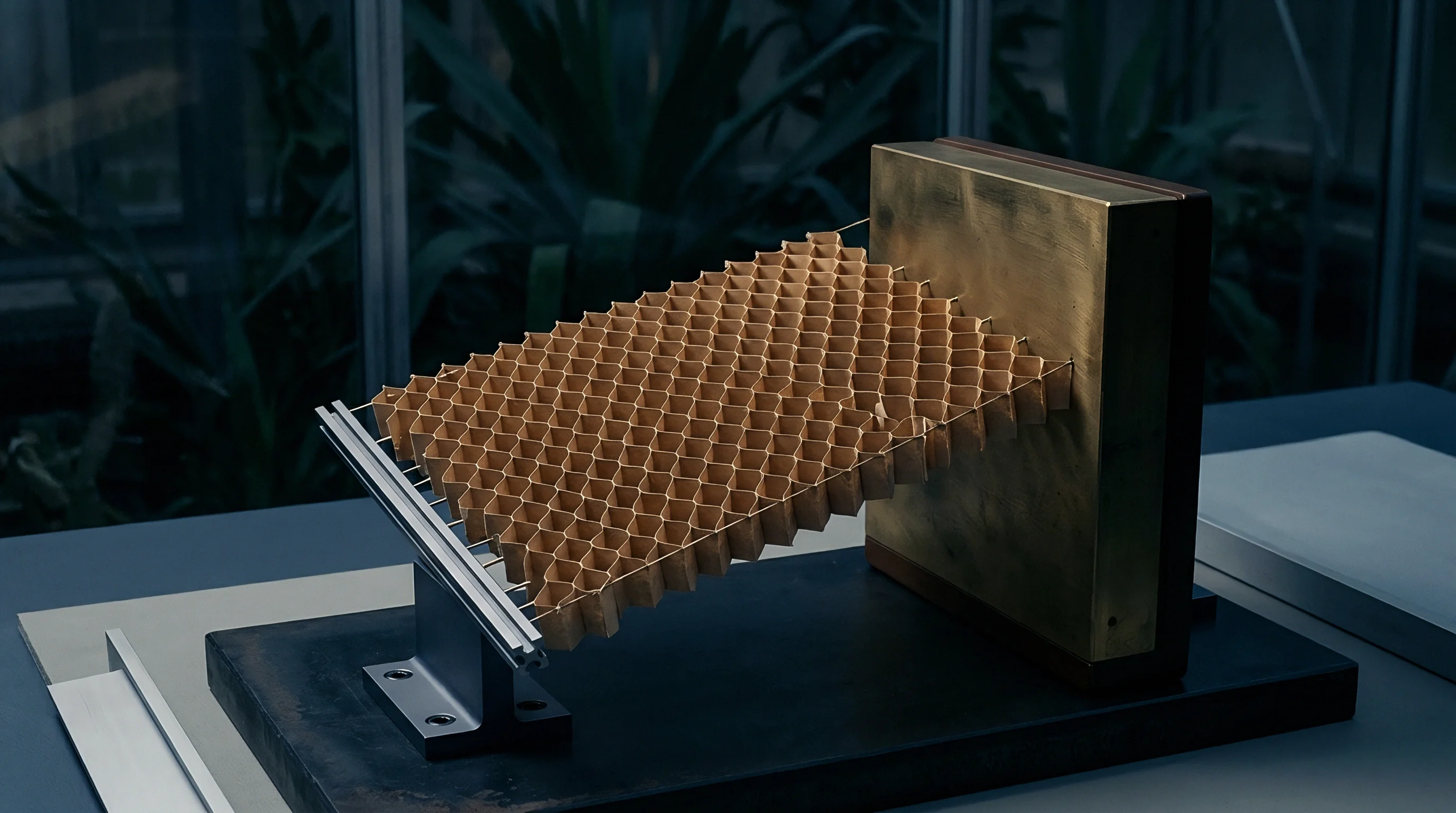
Velocity
Laboratory characterization relies on high-speed imaging paired with localized acoustic sensor arrays. Measuring shear fracture propagation speed inside recycled board matrices demands temporal resolution under ten microseconds per frame. High-speed optical measurement systems capture the exact movement of the delamination front along the crease profile during rapid specimen bending trials.
Bench testing exposes matrix stiffness limits.
Optical and Acoustic Quantification Protocols
High-frame-rate digital cameras tracking surface deformation measure displacement fields down to two micrometres per pixel. Digital Image Correlation algorithms calculate local shear strain fields in real time, mapping crack tip positions as the board specimen traverses specified folding angles. Acoustic emission sensors positioned on the counter-matrix die pick up elastic waves released during inter-ply bond failure, verifying fracture timing independently.
- Mount specimen coupons conditioned to ISO 187 into the high-speed pneumatic bending rig.
- Calibrate dual high-speed digital cameras to capture two hundred thousand frames per second focused on the score edge profile.
- Trigger the pneumatic actuator to fold the specimen through ninety degrees at a constant strain rate of five hundred per second.
- Process digital image correlation data through strain mapping software to locate the exact crack tip location across sequential frame pairs.
- Calculate instantaneous shear fracture velocity by dividing crack tip spatial displacement by temporal frame interval.
Moisture loss degrades fibre network compliance.
Combining optical tracking with acoustic wave data reveals microstructural failure events preceding visible crack growth. High-frequency acoustic signals between one hundred kilohertz and five hundred kilohertz signal micro-bond failures inside the recycled core long before macroscopic delamination becomes visible on optical camera frames. This dual quantification framework isolates internal shear initiation from surface liner failure.
A crease profile defined with excessive counter-matrix width transfers bending moment directly into the outer liner, driving unconfined shear fracture growth.

Benchtop Creasing under Controlled Strain Rates
Hydraulically driven score units test sample coupons across linear deformation speeds from ten to five hundred millimetres per second. Varying punch speed allows construction of dynamic fracture toughness curves, plotting critical energy release rate against crack tip velocity. Recycled fibre matrices show distinct rate-dependent brittle transitions, where shear crack propagation speed jumps abruptly once a threshold folding speed is crossed.
Incorrect channel depth ruins crease symmetry.
Board moisture content directly affects dynamic shear fracture speeds during benchtop testing. Samples tested at four percent relative moisture exhibit shear crack velocities nearly double those observed in samples tested at seven point five percent moisture. Lower moisture levels stiffen cell walls, reducing plastic deformation capacity and accelerating brittle shear propagation along inter-ply interfaces.
Variable score performance stems from shifts in converting ambient humidity as much as underlying fibre length degradation. Increasing matrix channel width provides immediate temporary relief against score cracking, masking low inter-ply shear strength through altered bending kinematics.


Board
Substrate performance depends on the architectural distribution of virgin and recovered furnish layers. Multi-ply folding boxboards use distinct pulp compositions across top liner, internal core, and back liner positions to balance stiffness against cost per sheet. The interaction between virgin top liners and recycled core plies sets the local boundary conditions governing shear crack redirection during crease formation.

Inter-Ply Bond Strength and Recycled Layering
Z-direction cohesion governs whether internal separation occurs smoothly or produces outer surface rupture. Standardized measurement via Scott Bond testing quantifies energy absorption during internal ply separation under impact loading. Low Scott Bond values in recycled core plies correlate directly with rapid shear crack propagation during folding operations.
| Grade Code | Top Liner Furnish Type | Core Recycled Content (%) | Scott Bond Energy (J/m²) | Shear Crack Speed (m/s) |
|---|---|---|---|---|
| CRB-1 | Bleached Deinked Pulp | 100 | 115 | 112.5 |
| GD2-2 | Coated Woodfree Virgin Kraft | 85 | 140 | 88.0 |
| GT2-1 | Coated Mechanical Pulp | 65 | 175 | 54.2 |
| FBB-V | Bleached Chemical Pulp | 0 | 220 | 28.4 |
Starch spray increases inner layer cohesion.
Internal shear fractures propagating through multi-ply recycled sheets hit several distinct structural interface modes. Structural degradation across repeated recycling loops destabilizes inter-ply cohesion, changing how crack fronts advance through core layers.
- Liner Bursting occurs when shear cracks propagate at high speeds without establishing horizontal delamination, forcing strain outward into the tensioned surface layer.
- Secondary Delamination Collapse manifests when low inter-ply shear strength allows excessive unconfined separation, reducing score stiffness and causing package assembly mis-alignment.
- Crease Rollback arises when asymmetrical shear crack propagation forces the score axis to drift away from the die center line during folding.
- Asymmetric Shear Splitting happens when variance in core ply density diverts the delamination front into the outer top liner rather than along central plies.
Starch Penetration and Fibre Shortening Dynamics
Wet-end chemical additions attempt to bridge mechanical strength deficits caused by repulping degradation. Spraying cationic starch between recycled board plies on the multi-wire paper machine increases inter-ply hydrogen bonding. Excessive starch concentration creates rigid inter-ply zones that elevate brittle shear fracture velocity under high strain rate creasing.
Material density dictates final crease integrity.
Refining intensity applied to recovered fibre streams balances freeness against sheet drainage on the wire. High refining levels increase fibre hydration and bonding strength, slowing shear crack speed during converting, but reduce bulk and bending stiffness per unit basis weight. Papermakers manage this trade-off to maintain caliper specifications while supplying required delamination headroom.
Standard delivery contracts mandate compliance with ISO 16260 internal bond strength criteria, specifying minimum values of one hundred thirty Joules per square metre for recycled packaging grades intended for high-speed automated cartoning lines.
Margin
Commercial viability hinges on minimizing boxboard converting waste on high-speed folding packaging lines. Sheet reject rates, press stoppages, and carton structural failures directly erode operating margins when substrate performance deviates from specified creasing parameters. Calculating landed unit costs requires accounting for both material yield and converting line productivity losses caused by premature shear fracture during folding.

Tooling Calibration and Run Speed Optimization
Die-cutter setup parameters demand precise alignment between female groove widths and substrate caliper. Running high-recycled-content board on tooling optimized for virgin FBB leads to liner splitting, forcing press operators to reduce folder-gluer speeds. Dropping line speed from four hundred metres per minute to two hundred sixty metres per minute to prevent score line failure increases machine-hour overhead allocation per finished package.
Liner splits cause immediate press stoppages.
Consider a fifty-tonne packaging procurement order of three hundred fifty gram per square metre recycled GT2 board at a purchase cost of one thousand one hundred twenty dollars per tonne. Standard sheet yield produces eight hundred fifty-seven thousand finished packaging blanks across the production run. Baseline waste allowances account for one point five percent scrap under optimal creasing delamination conditions, representing a material waste cost of eight hundred forty dollars.
High gluer speeds multiply rejection rates.
When high shear fracture propagation speed causes top liner bursting at full line speed, scrap rates increase to four point six percent. This drift destroys an additional twenty-six thousand five hundred seventy blanks, adding one thousand seven hundred thirty-six dollars in direct material loss. Operational downtime to clear jammed blanks adds four point two press hours at one hundred eighty dollars per hour, creating seven hundred fifty-six dollars in extra conversion expense and raising total finished unit cost by two dollars and ninety-one cents per thousand packages.
ISO 187 conditioning parameters dictate strict temperature and moisture equalization prior to die-cutting to prevent dry-fibre shear snapping.
Unit Cost Impact of Crease Matrix Mismatch
Converting line stoppages driven by liner cracking increase total manufacturing spend per thousand units. Tooling friction generates localized thermal spikes inside the crease matrix, further drying short fibres and elevating shear fracture propagation speeds during continuous operation. Preventing these failures requires continuous verification of substrate shear properties against die geometry prior to commercial press commits.
Tooling friction generates localized thermal spikes.
Specifying board stock without matching internal shear bond strength to expected folder-gluer strain rates results in cracked packaging scores, rejected retail deliveries, and full batch re-runs at the converter’s expense.