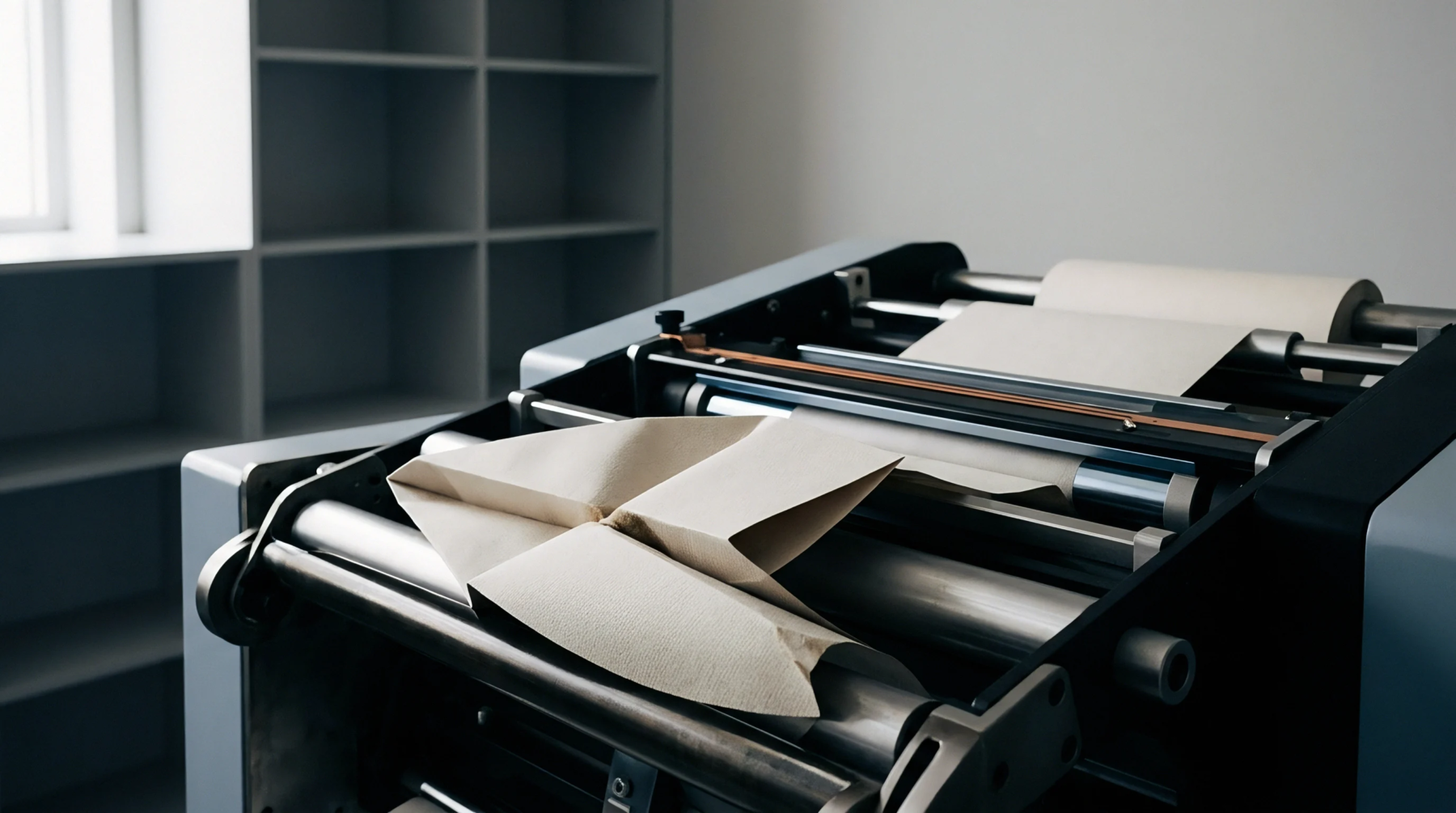
Mechanical Calibration
Precision mechanical adjustments align the upper fixed bed and lower moving platen inside a die-cutting press to ensure uniform force across the cutting chase. Correct platen press alignment eliminates localized pressure variations that cause incomplete knife penetration or premature rule wear during cardboard blanking. This mechanical state governs sheet-fed flatbed converting equipment, excluding rotary cutting cylinders that rely on continuous roll impression pressure.
Pressure Distribution
Achieving true parallelism requires leveling the bed support toggles using micro-patching sheets behind the cutting plate. When platen surfaces deviate from parallel alignment by even fractions of a millimetre, steel cutting rules apply uneven force across the sheet layout. Technicians place pressure-sensitive tape or impression paper across the chase to locate low spots and add paper shims until knife impression depth reaches exact uniformity.
Proper pressure balance extends steel rule operational life and prevents damage to synthetic creasing matrices. Dynamic deflection under maximum tonnage requires compensation through frame pre-stressing to maintain target parallelism at operating speeds exceeding nine thousand sheets per hour.
Parallel Threshold
Maximum allowable bed tilt across a one-metre span is restricted to less than fifteen micrometres under full load. Thermal expansion of press frames during extended production runs requires re-checking alignment parameters. Physical limits are breached when structural frame twist exceeds mechanical shimming capabilities.