Mechanical Load
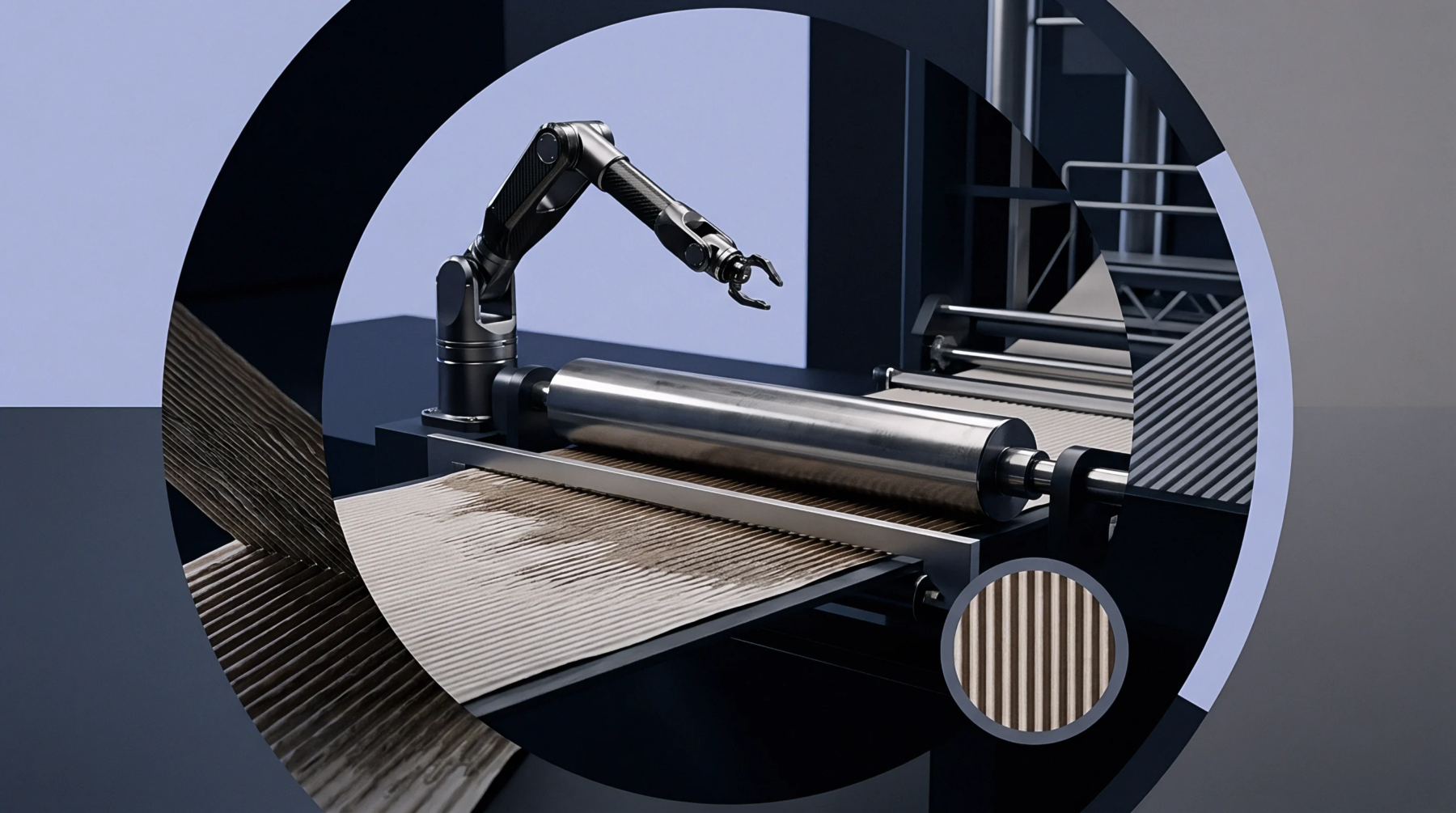
Force application through a flat metallic surface determines the final density and surface finish of a substrate during the finishing stages of production. Platen pressure compression governs the contact force between the stationary or moving plates and the material surface to eliminate voids within the fiber network. This regulation ensures the thickness remains uniform across the entire sheet width.
Calibration of these hydraulic or mechanical systems remains the primary factor in preventing sheet damage or uneven density distribution.
Consolidation Mechanism
Hydraulic rams drive the vertical movement of the plates to exert a controlled weight over a specific area. Platen pressure compression works by forcing the fiber structure to collapse inward, which increases the bonding surface area between individual fibers. Air permeability drops as the internal pores reach a smaller dimension under this concentrated load.
Operators adjust the dwell time and the total force to achieve the required caliper and smoothness targets for high quality printing papers.
Operational Variance
Production lines fluctuate in their output requirements based on the grade of the paper being processed. Variations in the moisture content of the sheet require real time adjustments to the platen pressure compression to avoid crushing the fiber or causing surface cracking. Harder paper stocks demand higher force levels to move the material compared to softer, high bulk substrates.
Consistent control over these variables dictates the final success of the calendering process.