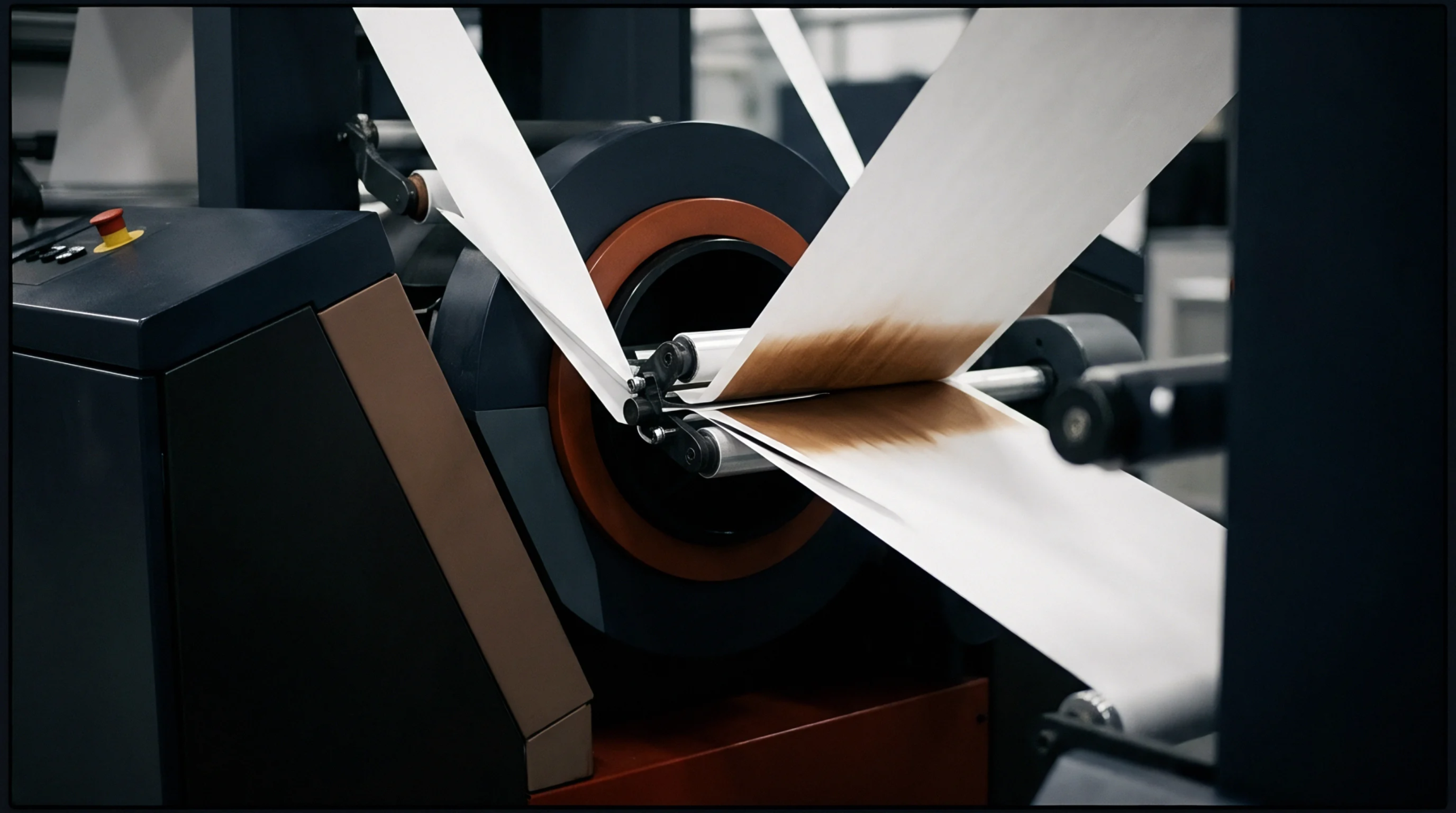
Caliper Gradient
Caliper gradient is a measurable thickness departure across a paper web or paperboard sheet, occurring when production variables create uneven mass distribution from the wet end through the calendar stack. Profile variance describes this dimensional deviation specifically, quantifying how much local caliper departs from the target caliper across the transverse direction of a running web. Papermakers assess profile variance by passing moving stock through continuous array gauges, recording micrometer outputs at fixed intervals along the cross machine axis.
Coaters and converters rely on uniform caliper to prevent uneven pressure during printing and conversion, because irregular thickness causes localized dot gain or poor foil transfer. High profile variance compresses certain sections excessively during supercalendering, destroying bulk and stiffness in narrow lanes while leaving adjacent stock too thick for tight folding cartons. When cross direction caliper swings exceed strict machine tolerances, reels are rejected before reaching sheeting lines or printing presses because uneven winding creates telescoping rolls and internal stress fractures.
Stack Skew
Stack skew is an uneven thickness profile resulting from thermal crown distortion on calender rolls during high speed runs. Machine operators correct profile variance by adjusting thermal expansion zones across the calender stack, introducing localized cooling air or heating pads to alter roll geometry. Hydraulic loading cylinders compensate for deflection under high nip pressure, but mechanical wear creates permanent crowning errors that constant profiling cannot remove.
Converter processing lines require predictable caliper because slight thickness irregularities accumulate across multi web laminations, causing registration slip on rotary die cutters and severe jamming on high speed carton gluers. Paper mills measure acceptance using standard deviation across multiple transverse samples, establishing strict limits to ensure subsequent converting operations run without web breaks or creasing faults.
Bulk Defect
Bulk defect is a density anomaly caused by uneven consolidation within the press section, manifesting as localized variations in apparent density rather than mere surface topography changes. Sheet density fluctuations alter ink absorbency and moisture migration during offset lithography, creating mottled print surfaces where thin lanes accept excess vehicle and thick lanes starve the ink film. Packaging manufacturers track profile variance continuously to maintain crush resistance standards across corrugated mediums and folding boxboard, since structural integrity depends on uniform caliper through every scoring line and crease.
Mechanical adjustments at the slice lip control initial fiber orientation and basis weight distribution, preventing the formation of dense streaks that resist uniform calendering. Material uniformity determines whether a finished packaging run meets final conversion tolerances without requiring excessive waste trimming along the deckle edges.