Deformation Process
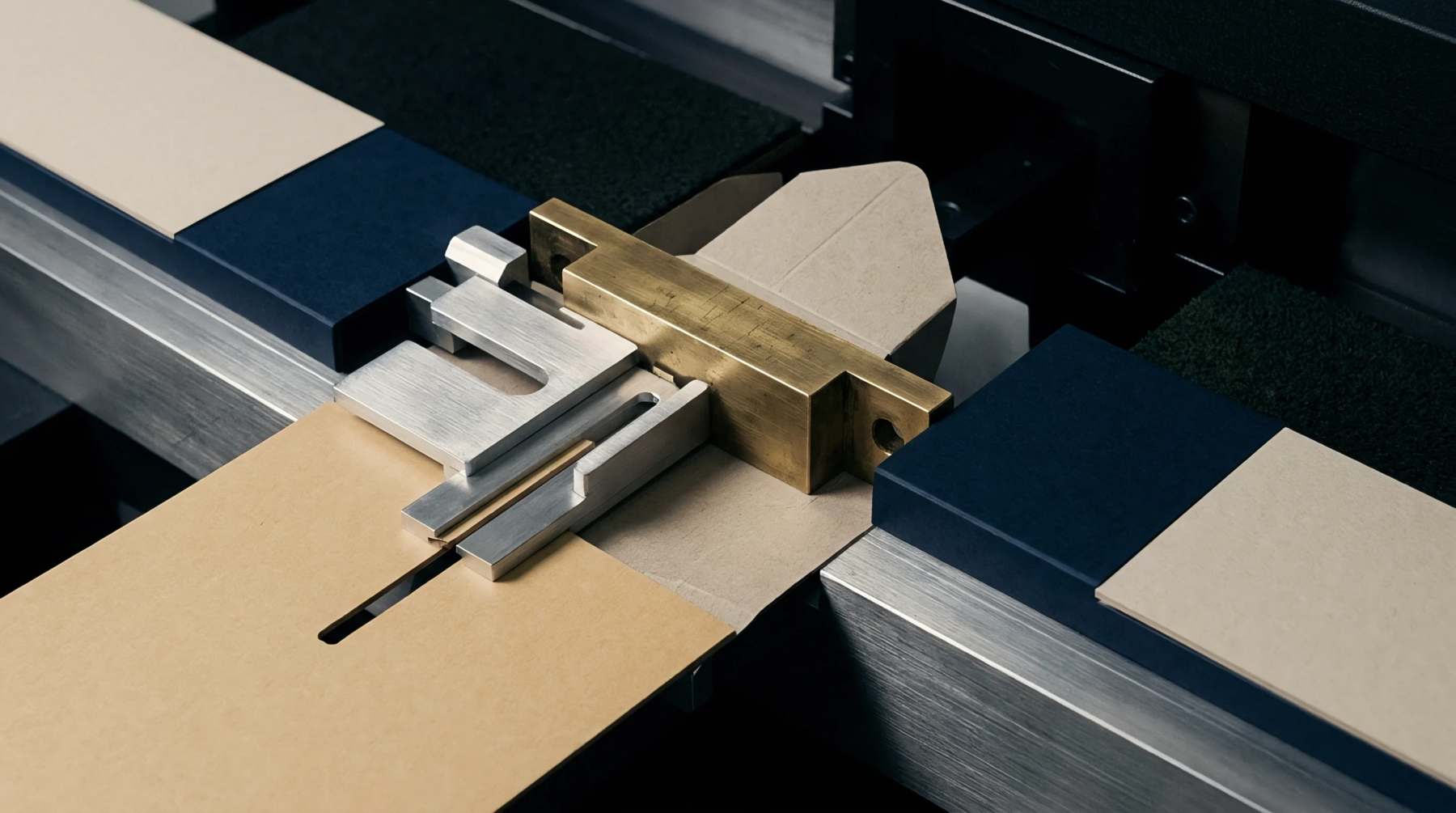
Progressive mechanical displacement of paperboard plies into a female counter matrix creates a localized hinge structure known as a crease. Converting dies execute score bead formation when a rounded creasing rule pushes the board downward into an aligned matrix channel during platen closure. The physical process establishes folding hinges for cartons.
Through-cutting and perforating operate through separate mechanical principles.
Internal Shear
Downward rule penetration forces paperboard into the matrix cavity, subjecting internal cellulose plies to intense shear without rupturing surface liners. During proper score bead formation, internal fiber bonds shear apart cleanly, allowing individual plies to slide over one another and form a permanent raised ridge on the reverse board surface. This internal delamination reduces board bending stiffness locally, creating a hinge that folds at low bending force.
Shallow bead development from insufficient platen pressure leaves the crease overly rigid, causing carton panel bowing during automated erecting. Score bead formation must achieve clean internal shear without cracking the tensioned exterior liner during subsequent folding operations.
Profile Integrity
Finished score profiles require uniform height, width, depth and lateral symmetry to ensure balanced folding resistance along carton edges. Proper score bead formation produces a well-defined bead that centers exactly between matrix shoulders without lateral skew. Coated cartonboard requires controlled board moisture content between six and eight percent, as dry fibers snap under creasing stress while damp board resists clean delamination.
Symmetrical beads guarantee uniform resistance when folding panels through ninety and one hundred eighty degrees.