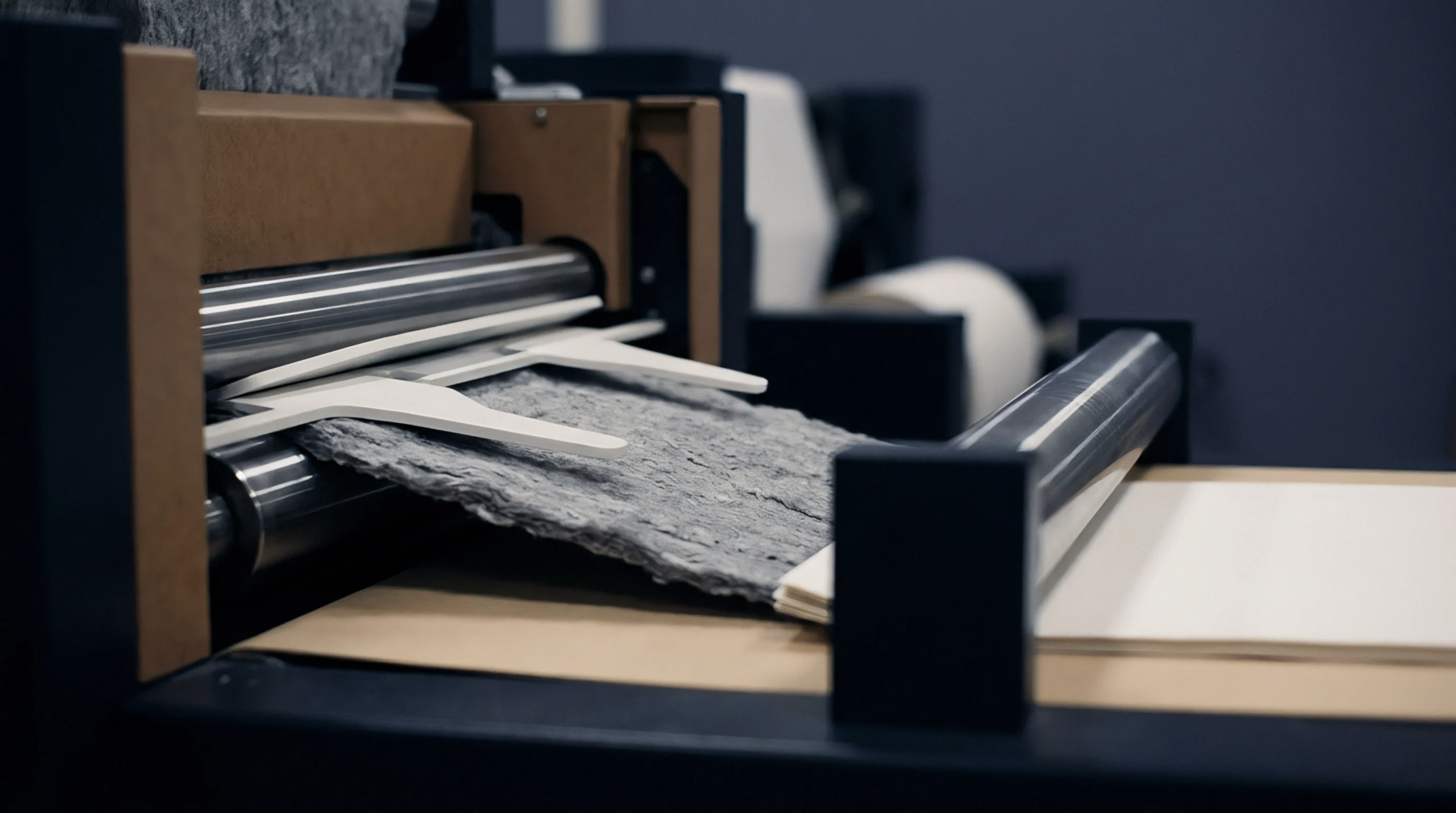
Fibre Composition
Derived from the secondary processing of deciduous wood sources, short-fiber recycled pulp comprises wood cells with an average length of under one millimeter. These fibers arrive at the paper mill following the breakdown of existing paper products, typically office waste or coated groundwood papers. Mechanical strength remains lower than that of softwood alternatives due to the restricted physical entanglement of the shorter cellulose structures.
Filling density increases when these fine particles populate the sheet, resulting in a tighter formation that improves surface smoothness for high-resolution printing.
Production Mechanism
Manufacturing plants introduce this material into the furnish to improve the opacity and printability of the final substrate. Because the short structures collapse easily during the pressing and drying stages, the resulting paper shows reduced bulk but improved dimensional stability. Mill operators balance the proportion of these fibers against long-fiber components to maintain a specific burst and tear index.
Excessive addition causes paper brittleness, which risks web breaks during high-speed converting operations or downstream offset printing.
Converting Impact
Printers select sheets formulated with this constituent when the final product requires superior ink coverage and reduced show-through. The smaller dimensions fill the gaps between the longer fibers, creating a uniform surface topography that demands less ink to achieve solid color densities. Coatings sit more evenly across the surface of the finished paper, preventing the pinholing effects common with coarse fibrous structures.
Uniformity in the substrate formation determines the consistency of the dot gain experienced during commercial print runs.