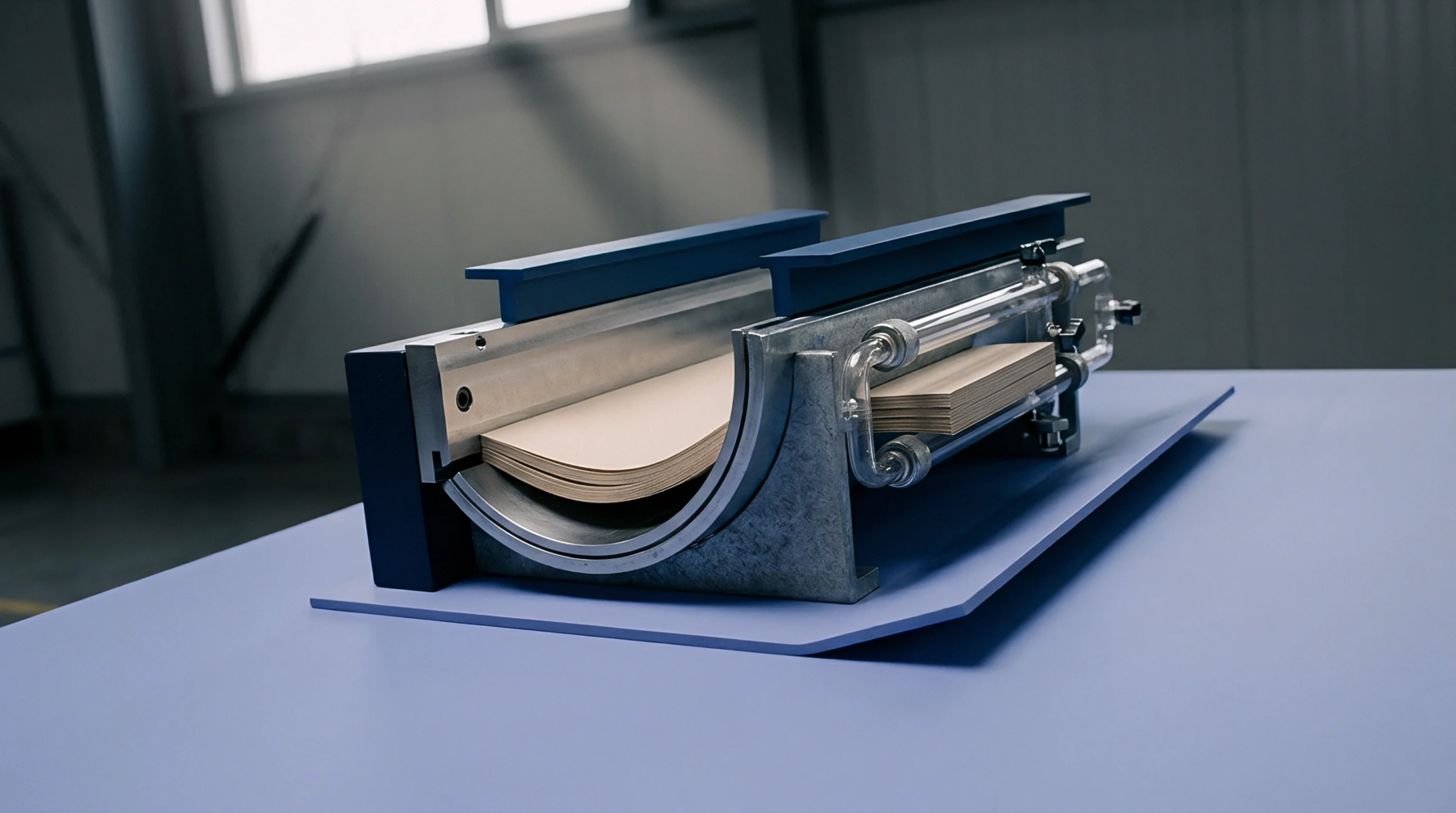
Elastic Hysteresis
The mechanical tendency of folded paperboard to return to its original flat shape after being creased and bent describes the elastic memory inherent in cellulose fibers. This springback recovery occurs because the fibers along the outer edge of the fold are stretched but not completely broken. High-speed packaging machinery must apply continuous pressure to the glued seam until the adhesive sets to counter this force.
Crease Restoration
Quality scoring and creasing in the die-cutter are designed to disrupt the fiber matrix and minimize this mechanical resistance. If the creasing is done correctly, the springback recovery is reduced, allowing the carton to remain closed without putting tension on the glue line. Measuring this force profile on a test bench allows converters to verify that the crease behaves as expected before starting a production run.
This measurement prevents the run from proceeding with creases that would force the seams open on the packing line.
Humidity Effect
Cellulose fibers are highly sensitive to moisture, which softens the cell walls and reduces the internal stiffness of the paperboard. In dry environments, the board remains stiffer, and the force of the springback increases, which can stress the adhesive joints. This sensitivity necessitates the storage of finished cartons in climate-controlled environments.