Physical Transformation
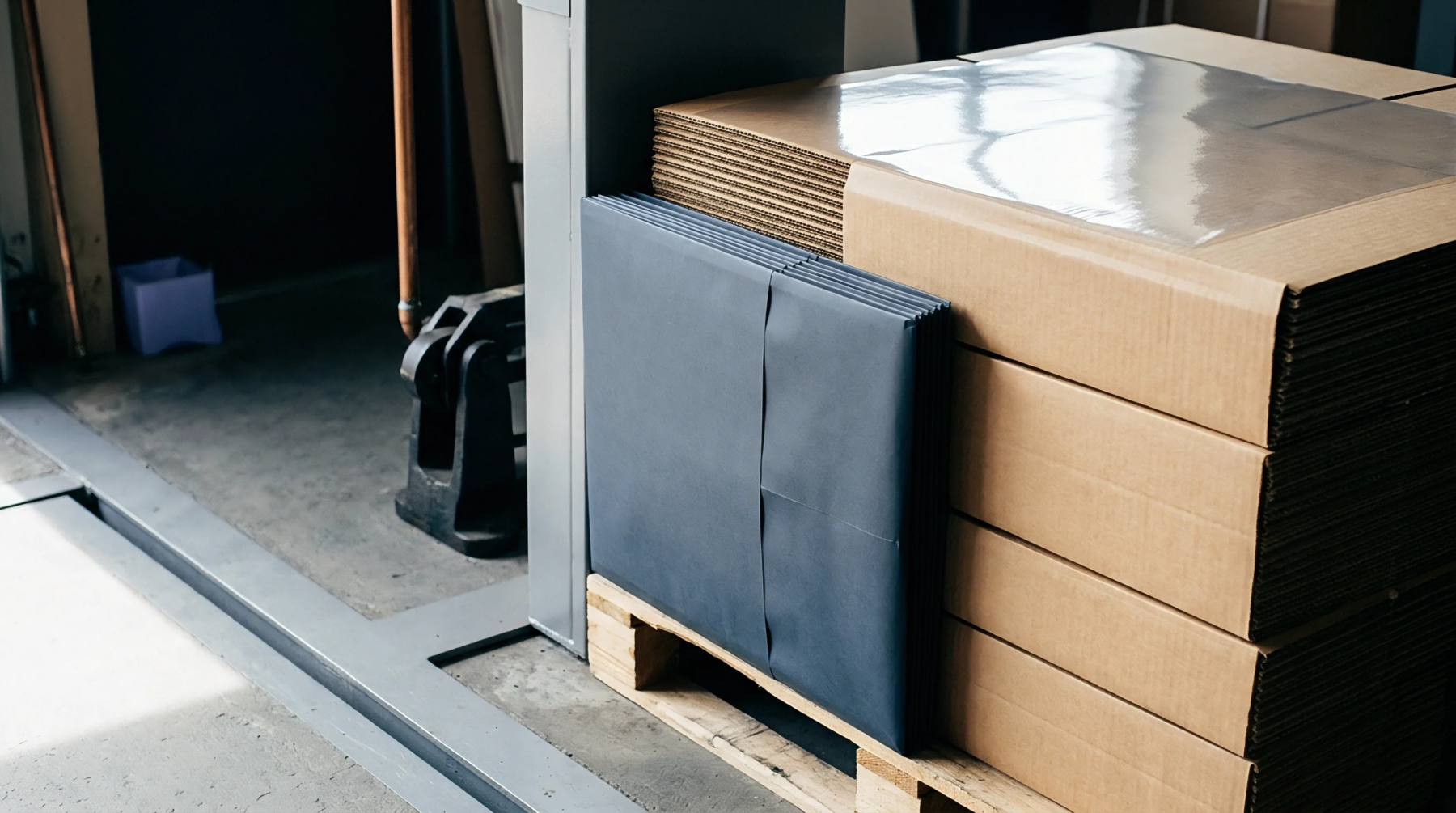
Moisture accumulation occurs when atmospheric water vapor transitions into a liquid state on the internal surfaces of polyethylene load containment materials. Stretch wrap vapor condensation forms during transit when sealed pallets experience rapid shifts between hot and cold temperature zones. Air trapped within the load contains a fixed amount of humidity that reaches its saturation point as the temperature drops.
Cooling surfaces force the air to release this water in the form of droplets that adhere to the film interior.
Material Impact
Film integrity changes when liquid water creates a persistent layer between the plastic and the corrugated board of the secondary packaging. Cellulose fibers in the boxes soften as they absorb this moisture which reduces the stack strength of the unit load. Corrugated containers undergo deformation under standard warehouse racking pressures once the moisture content passes a specific threshold.
Wet fiber surfaces weaken the adhesive bonds in tape closures and labels.
Operational Control
Warehouse managers mitigate risks by ensuring that pallets reach ambient equilibrium before the application of the plastic film. Ventilation holes in the wrapping layer allow for the exchange of air during temperature shifts which prevents the saturation of the internal volume. Desiccant inserts absorb excess humidity inside the pallet shroud to keep the interior dew point below the external temperature.
Automated wrapper settings adjust the tension to balance the required load stability against the need for airflow. Maintaining low initial humidity in the packing area limits the volume of water available to collect as liquid.