Hot Acid Hydrolysis Selective Hemicellulose Degradation and Viscosity Optimization Mechanics
Optimize hot acid hydrolysis by balancing P-factor severity against intrinsic viscosity loss to remove hemicellulose while protecting cellulose purity.


Liquor
Prehydrolysis kraft dissolving pulp operations target an alpha-cellulose fraction above 95 percent while depressing pentosan concentration below 3.5 percent. The primary reaction medium pairs dilute sulfuric acid between 0.3 and 0.8 weight percent with direct steam injection inside batch or continuous digester vessels. Operating temperatures stabilize between 165 and 175 degrees Celsius.
Residence times run from 45 to 90 minutes. Hemicelluloses, primarily O-acetyl-4-O-methylglucuronoxylan in hardwoods and galactoglucomannan in softwoods, exhibit lower degrees of polymerization and higher accessible amorphous fractions than native cellulose microfibrils. Hydronium ions selectively cleave beta-1,4-glycosidic linkages within these non-cellulosic polysaccharides at reaction rates two orders of magnitude faster than the dense crystalline cellulose core.
The operational tension centers on intrinsic viscosity control, measured via cupriethylenediamine solubility under ISO 5351. Dissolving pulp destined for viscose staple fiber, lyocell, or cellulose acetate requires an intrinsic viscosity ceiling between 450 and 650 milliliters per gram. Processing mills that let hydronium activity run unbuffered risk random cleavage along the cellulose backbone, inducing peeling reactions and lowering cellulose yield.
Yield drops translate into higher wood furnish consumption per air-dry metric ton of manufactured dissolving pulp.

Hydronium Selectivity across Polysaccharide Fractions
Protonation begins at the glycosidic oxygen linking adjacent xylose or mannose units. Formation of the oxocarbenium ion intermediate constitutes the rate-determining step. Hydrolysis rates depend on the steric accessibility of the bond and the presence of electron-withdrawing substituents such as uronic acid groups.
Dilute sulfuric acid hydrolysis at 170 degrees Celsius cleaves hardwood xylan glycosidic bonds roughly twenty-four times faster than crystalline cellulose glucan chains.
Softwood glucomannans hydrolyze faster than hardwood xylans under identical hydronium concentrations. Acetyl side groups cleaved during the initial ten minutes liberate native acetic acid directly into the cooking liquor. Autohydrolysis mechanisms begin without initial mineral acid charging.
Adding exogenous sulfuric acid establishes immediate liquor acidity, suppressing pH to 2.2 and accelerating the depolymerization curve before secondary lignin condensation reactions lock residual pentosans inside the fiber matrix.
Mills using post-digester hot acid stages on bleached kraft pulp face distinct kinetic profiles. Hydrolyzing an already delignified pulp using 0.5 to 1.5 percent sulfuric acid at 95 to 105 degrees Celsius provides fine control over degree of polymerization. Unbleached prehydrolysis targets bulk hemicellulose removal, while post-bleach acid hydrolysis fine-tunes intrinsic viscosity without altering the basic cellulose crystalline lattice.
Viscosity control failure at the prehydrolysis stage creates non-recoverable processing penalties during subsequent downstream alkalization and xanthation stages. An uncontrolled hot acid cook damages pulp accessibility and drives chemical usage upward across the bleach plant.
Kinetics
Polysaccharide degradation under hot acid conditions follows pseudo-first-order kinetics relative to remaining unhydrolyzed polymer mass. Solubilization splits into two distinct kinetic domains: a rapid phase representing accessible amorphous hemicellulose, followed by a slow phase representing residual, crystalline-associated pentosans and amorphous cellulose domains. The rate equation for xylan removal expresses this dual-rate reality through two parallel reactions governed by separate rate constants:
k_fast = A_fast exp(-E_fast / (R T)) ^n
k_slow = A_slow exp(-E_slow / (R T)) ^n
Activation energy for the rapid xylan degradation phase ranges between 110 and 125 kilojoules per mole, whereas the slow phase requires 135 to 150 kilojoules per mole. Cellulose chain cleavage exhibits an activation energy exceeding 165 kilojoules per mole. Maintaining reactor conditions within the window where xylan degradation proceeds while cellulose cleavage remains kinetically restricted requires narrow temperature tolerances.
P-Factor Calculation and Reaction Severity
Commercial digester control relies on the prehydrolysis factor, termed the P-factor. This metric integrates cook temperature and reaction duration into an operational integer based on the Arrhenius relationship, referencing an activation energy of 125.6 kilojoules per mole relative to water at 100 degrees Celsius:
P = Integral dt
Typical dissolving pulp prehydrolysis operates within a P-factor window of 250 to 450. Exceeding a P-factor of 500 initiates aggressive chain cleavage of native cellulose, manifesting as an uncontrolled drop in cupriethylenediamine viscosity and an increase in alkali resistance loss (R18 to R10 spread).
| Target P-Factor | Cook Temperature (°C) | Retention Time (min) | Residual Xylan (% pulp) | Intrinsic Viscosity (mL/g) | Alpha-Cellulose (% ISO 699) |
|---|---|---|---|---|---|
| 200 | 165 | 42 | 6.8 | 820 | 91.2 |
| 300 | 170 | 38 | 4.2 | 670 | 94.5 |
| 400 | 170 | 51 | 2.8 | 540 | 96.1 |
| 500 | 172 | 58 | 1.9 | 410 | 96.8 |
| 600 | 175 | 62 | 1.2 | 290 | 94.2 |
Elevating the P-factor beyond 500 reduces xylan below 2 percent. Cellulose chains undergo scission, causing alpha-cellulose purity to drop as degraded cellulose fragments dissolve during subsequent alkaline extraction stages. The mill loses yield without gaining end-use performance.
Viscosity loss accelerates when localized hot spots develop within the digester column. Acid distribution nozzles require clean spray patterns to prevent acidic zones from over-hydrolyzing wood chips prior to uniform vessel heating. Non-uniform acid impregnation leads to bimodal molecular weight distributions in the finished dissolving pulp, degrading filtration performance in viscose processing plants.
Degradation
Cleaving polysaccharides yields monomeric pentoses and hexoses within the hot acid hydrolysate. Continued exposure to hydronium ions at elevated temperatures dehydrates these sugars into reactive byproducts. D-xylose dehydrates into 2-furaldehyde (furfural), releasing three water molecules.
D-glucose and D-mannose dehydrate into 5-hydroxymethyl-2-furaldehyde (HMF), which subsequently breaks down into levulinic acid and formic acid under prolonged thermal acid treatment.

Byproduct Condensation and Lignin Repolymerization
Furfural and HMF possess reactive carbonyl and conjugated double-bond systems. In acidic media, these furan derivatives undergo self-condensation or cross-condensation with liberated dissolved lignin fragments. The resulting insoluble polymeric structures, known as pseudo-lignin, deposit directly back onto the cellulosic fiber surface.
- Pseudo-lignin deposits coat the fiber wall, increasing the post-hydrolysis kappa number by two to six units and resisting conventional oxygen delignification stages.
- Carbohydrate-derived organic acids accumulate in the liquor, driving pH downward from an initial 2.5 to values below 1.8, causing runaway cellulose depolymerization if base buffers are absent.
- Colloidal pitch destabilization occurs under severe acid conditions, leading to deposition on extraction screens, heat exchanger tubes, and downstream blow tank valves.
- Furfural stripping vapor carryover introduces corrosive condensates into relief condensers, accelerating stress-corrosion cracking along 316L stainless steel piping.
Lignin condensation onto pulp fibers impairs bleachability. Condensed lignin contains carbon-carbon bonds (specifically 5-5 and beta-5 linkages) that resist electrophilic attack by chlorine dioxide or oxygen. Bleaching condensed pulp consumes an additional three to eight kilograms of sodium chlorate per metric ton of bleached pulp to reach an ISO brightness of 89.5 percent.
Bleaching chemical consumption climbs when condensation products bridge remaining pentosans directly to residual lignin during prehydrolysis.
Washing efficiency on acid-stage displacement presses dictates how much degraded matter travels forward. Entrained hydrolysate carrying furfural and dissolved xylan fragments consumes expensive alkaline extraction chemicals in subsequent pulp stages. Effective extraction requires thorough separation of the liquid phase immediately following the hydrolysis holding period.
A supplier stating that high-severity prehydrolysis produces clean cellulose ignores the processing reality of the bleach plant, where pseudo-lignin deposition forces heavier chemical additions that drop the pulp degree of polymerization further.

Viscosity
Intended end uses determine the target degree of polymerization for dissolving and specialty paper pulps. Viscose filament applications demand narrow molecular weight distribution around a degree of polymerization of 500 to 600, while ether-grade cellulose often demands values exceeding 1,200. Measuring intrinsic viscosity provides indirect quantification of chain length distribution.
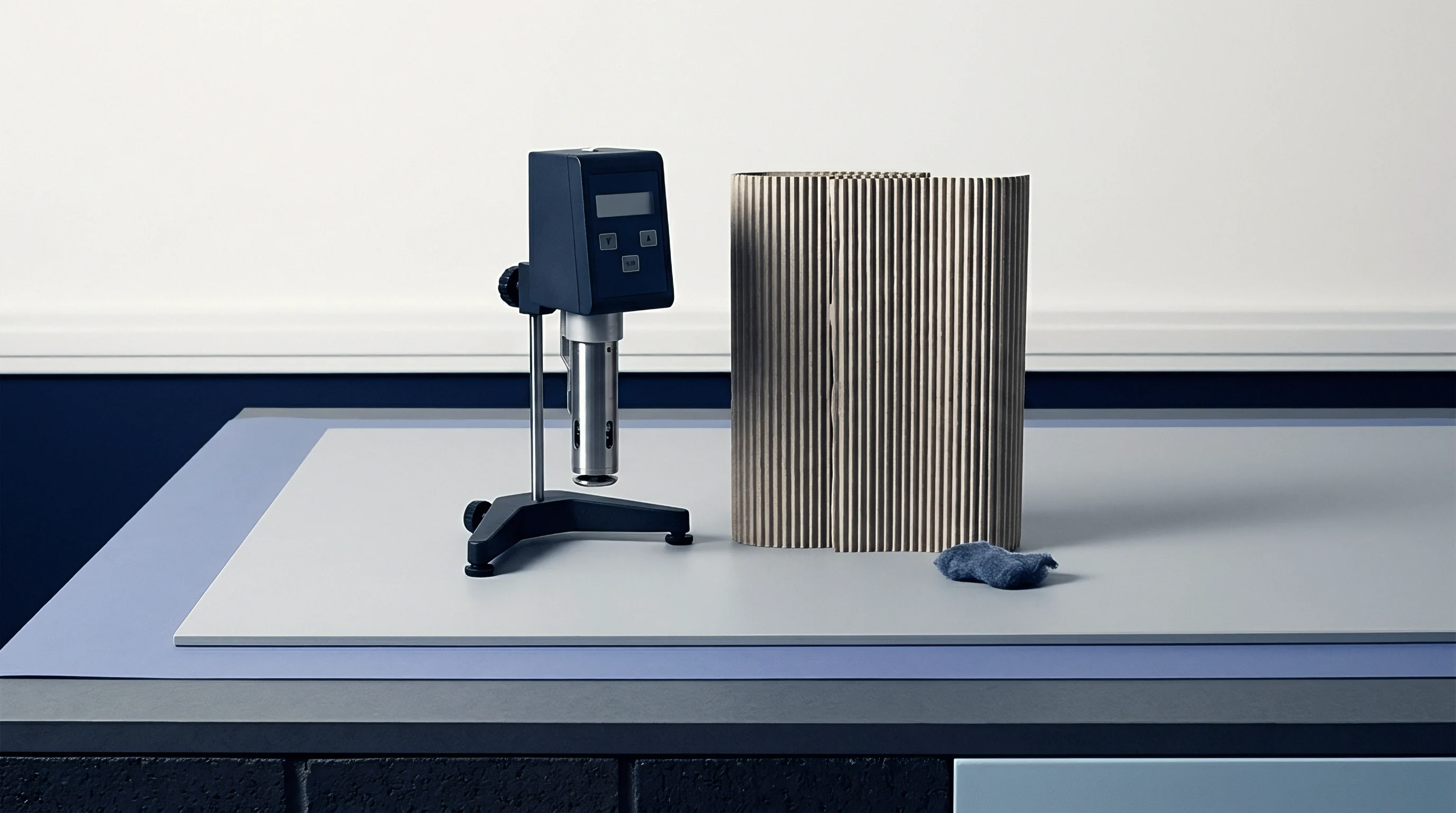
Standard testing methods evaluate intrinsic viscosity by dissolving delignified pulp in 0.5 M cupriethylenediamine (CED) solution, recording specific viscosity across capillary viscometers under ISO 5351 or TAPPI T 230 om-19 conditions. The Martin equation translates relative viscosity into intrinsic viscosity:
log = log + k c
Calculations assume an empirical constant k of 0.13 for cellulose-CED systems at 25.0 degrees Celsius. Inaccurate temperature control during the viscometer bath test generates substantial analytical drift; a fluctuation of 0.5 degrees Celsius alters the resulting intrinsic viscosity value by 1.2 percent.

Correlating Chain Scission with Pulp Strength Profiles
Hydrolytic chain scission reduces pulp degree of polymerization (DP) via random cleavage across accessible amorphous regions. The relationship connecting number-average degree of polymerization to degradation time follows the Ekenstam equation:
(1 / DP_t) – (1 / DP_0) = k_scission t
Crystalline domains preserve the leveling-off degree of polymerization (LODP), which hovers around 200 to 250 for wood pulps treated with strong mineral acids. Specialty papermaking furnishes subjected to hot acid conditions exhibit altered fiber mechanics.
| Acid Reaction Time (min) | CED Viscosity (mL/g) | Zero-Span Tensile (N/cm) | Tensile Index (N·m/g) | Burst Index (kPa·m²/g) | Tear Index (mN·m²/g) |
|---|---|---|---|---|---|
| 0 | 840 | 142 | 78.4 | 5.8 | 7.2 |
| 30 | 680 | 138 | 74.1 | 5.3 | 6.9 |
| 60 | 550 | 131 | 68.9 | 4.7 | 6.1 |
| 90 | 440 | 112 | 56.2 | 3.6 | 4.8 |
| 120 | 320 | 84 | 38.5 | 2.1 | 3.2 |
Zero-span tensile testing under ISO 15320 measures individual fiber strength. The data shows zero-span tensile holds steady until intrinsic viscosity drops below 550 milliliters per gram. Once the degree of polymerization declines past that threshold, individual cell walls sustain structural failure, and fiber web strength falls precipitously.
Papermaking webs made from over-hydrolyzed furnish lose wet-web strength on high-speed converting lines. Web breaks multiply, causing press-section downtime and elevated waste rates.


Balance
Industrial optimization demands balancing hemicellulose extraction against the retention of long-chain cellulose. Achieving high alpha-cellulose levels without severe yield and viscosity penalties requires managing process parameters simultaneously: acid charge, liquid-to-wood ratio, operating temperature, and dwell time. Mill operators employ multi-point control algorithms to adjust retention periods dynamically as incoming wood moisture and chip basic density fluctuate.

Worked Process Engineering Construction
To quantify the economic and chemical trade-offs across operation modes, examine a continuous prehydrolysis kraft digester processing eucalyptus wood chips:
- Furnish baseline assumptions fix wood intake at 1,000 bone-dry metric tons per day with an initial glucan content of 48.0 percent, xylan content of 15.5 percent, and Klason lignin of 27.5 percent.
- Operating Mode Alpha utilizes water autohydrolysis without mineral acid at 170 degrees Celsius with a liquid-to-wood ratio of 3.5:1 and a P-factor target of 320.
- Operating Mode Beta introduces dilute sulfuric acid at 0.4 percent on dry wood at 165 degrees Celsius with a liquid-to-wood ratio of 3.2:1 and a P-factor target of 260.
- Pulp yield results yield 372 air-dry metric tons of dissolving pulp per day under Mode Alpha against 388 air-dry metric tons under Mode Beta, reflecting improved preservation of short-chain glucan fractions.
- Viscosity consistency measures standard deviation of intrinsic viscosity across 24 daily samples at 38 milliliters per gram for Mode Alpha, narrowing to 14 milliliters per gram for Mode Beta due to stable liquor hydronium buffering.
- Chemical cost variances show sulfuric acid addition and post-hydrolysis caustic neutralization in Mode Beta add 11.20 dollars per air-dry metric ton, balanced against a daily yield gain of 16 metric tons of finished market pulp.
Selective degradation requires acid injection designs that achieve rapid liquor turnover. A slow liquor exchange cycle allows local hydronium concentrations to spike in stagnant zones. This non-uniform chemical action degrades high-molecular-weight cellulose while leaving dry-chip cores unhydrolyzed, producing high shive counts in the unbleached stock.
Consistent intrinsic viscosity targets require tight thermal boundaries across digester cooking zones rather than broad chemical additions.
Downstream alkaline extraction steps (E or Eop stages) extract the low-molecular-weight xylan fragments hydrolyzed during the hot acid treatment. Cold caustic extraction (CCE) with 6 to 10 percent sodium hydroxide at 25 to 40 degrees Celsius extracts resistant pentosans through physical swelling and dissolution. Hot acid hydrolysis coupled with cold caustic extraction delivers alpha-cellulose purity exceeding 98 percent for specialty acetate pulps.

Governance
Pulp derived from hot acid hydrolysis pathways enters markets governed by chain of custody frameworks, food safety migration thresholds, and packaging waste recovery metrics. Buyers specifying dissolving pulp for packaging barriers, microcrystalline cellulose (MCC), or specialty grades must verify certification trails back to forest management units and certify chemical compliance across international boundaries.

Traceability Scope and Verification Pathways
FSC-STD-40-004 and PEFC ST 2002 govern the physical and accounting separation of certified raw material streams. Wood chips entering the prehydrolysis digester are classified under transfer, percentage, or credit accounting systems. The chain of custody examiner cross-references transaction declarations on delivery dockets against the public certificate databases before verifying claimed credit percentages.
Fibers originating from prehydrolysis pulp mills lose anatomical features during chemical degradation, making microscopic species verification via ISO 9184 impossible on downstream converting lines. Fiber tracing relies exclusively on documented chain of custody accounting. If an upstream mill mixes controlled wood or non-certified fiber into its digester furnish without credit balance coverage, downstream converters forfeit their claim status under customs and auditor reviews.

Food Contact Migration and Packaging Compliance
Specialty packaging grades using acid-hydrolyzed cellulose for barrier coatings or structural stiffeners fall under Regulation (EC) No 1935/2004, the German BfR Recommendation XXXVI for paper and board, and 21 CFR 176.170 in the United States. Hot acid hydrolysis breaks polysaccharide chains into water-soluble oligosaccharides, cellobiose, and furans, creating potential migrant chemical species.
- Overall migration testing under EN 1186 requires exposing barrier substrates to food simulants (Simulant A for water, Simulant B for 3 percent acetic acid, Simulant D1 for 50 percent ethanol) at 40 degrees Celsius for 10 days, maintaining overall migration below 10 milligrams per square decimeter.
- Specific migration limits apply to residual furfural and HMF degradation products, requiring liquid chromatography-mass spectrometry (LC-MS) screening with limits of quantification below 0.01 milligrams per kilogram of food simulant.
- Cold water extract testing per EN 645 and hot water extract testing per EN 647 verify that low-molecular-weight carbohydrate fractions do not leach into wet foodstuffs or create sensory taint under ISO 13302 organoleptic evaluation.
- Heavy metal leaching limits enforced through Council of Europe Resolution CM/Res(2020)9 require verification that sulfuric acid dosing did not introduce trace metal contaminants into food-contact paper matrices.
Packaging incorporating hydrolyzed cellulose must comply with recyclability requirements outlined in the Packaging and Packaging Waste Regulation (PPWR). Material design guidelines under EN 13430 penalize high-solubility carbohydrate fractions that wash out into papermaking effluent during re-pulping, lowering standard fiber yield measurements below the mandatory 85 percent recovery floor.
Contracts without specific pass-through clauses leaving migrant compound liabilities undefined expose packaging convertors to border rejection fines and mandatory inventory destruction if customs inspectors identify unauthorized furan residuals in imported barrier board.

Proof
Purchasing agreements for dissolving and specialty hydrolyzed pulps mandate verifiable testing documents covering intrinsic viscosity, chemical purity, and regulatory chain of custody. A certificate of analysis without documented test conditions, calibration standards, and accredited laboratory identification is commercially invalid.
Dossier Structure for High-Purity Furnish
A defensible qualification dossier consolidates technical and documentary proofs across the supply route. The buyer validates specific analytical metrics prior to authorizing shipment releases from the producing mill.
| Test Parameter | Normative Standard | Mandatory Specification Window | Verification Artifact |
|---|---|---|---|
| Intrinsic Viscosity | ISO 5351:2010 | 520 ± 25 mL/g (CED solution, 25.0°C) | Accredited Lab Report with capillary constants |
| Alpha-Cellulose Purity | ISO 699:2015 | Minimum 96.0% (residual insoluble in 17.5% NaOH) | Gravimetric analysis sheet and test temperature log |
| Alkali Solubilities | ISO 692:2020 | S18 below 4.5%, S10 below 6.5% | Volumetric titration calculation notes |
| Residual Pentosan | TAPPI T 223 cm-10 | Maximum 2.5% xylan content | Distillation and spectrophotometric test run logs |
| Chain of Custody | FSC-STD-40-004 V3-1 | 100% FSC Mix Credit allocation | Invoice line code and delivery docket transaction reference |
| Food Contact Purity | BfR Rec. XXXVI / EN 647 | Furfural < 0.05 mg/dm², HMF < 0.02 mg/dm² | LC-MS/MS migration report from ISO 17025 facility |
Shipment verification requires testing samples across the delivery lot rather than relying on composite batch averages provided by the manufacturer. Mill-supplied quality reports often reflect steady-state operations, omitting out-of-spec pulp manufactured during prehydrolysis digester transitions or acid charging fluctuations.
Should residual pentosan content exceed 2.8 percent in dissolving pulp shipments, viscose processing lines experience spinneret clogging, elevated xanthate consumption, and frequent broken filaments. If intrinsic viscosity falls below 450 milliliters per gram, the resulting fiber lacks adequate wet tenacity, failing European packaging drop tests.
International border entries enforce strict liability regimes on packaging claims under Regulation (EU) 2024/1991 on substantiation of environmental claims. Importers of record carry the burden of proof for all recyclability and renewable content declarations. When customs authorities demand evidence of chain of custody or safety compliance, a gap in the qualification dossier results in immediate consignment detention at the port of entry.
The standard procurement agreement shifts customs storage penalties, testing surcharges, and container demurrage costs directly to the supplier whenever a delivery lot fails verification against the specified analytical parameters.