Understanding European Packaging Recyclability Standards and Test Protocols
Packaging recyclability under European standards demands finished-pack accredited laboratory pulping tests proving eighty percent usable fiber recovery.


Criterion
European packaging legislation separates documentary declarations from physical recyclability. Under the Packaging and Packaging Waste Regulation, every packaging unit placed on the European Union market faces mandatory design-for-recycling criteria backed by harmonised laboratory evaluation methods. National producer responsibility organizations no longer accept self-declarations of recyclability based purely on constituent fiber purity.
An unlined solid board carton carrying heavy varnishes or synthetic hot-melt adhesives loses its recyclability status if repulping yields drop below defined fiber thresholds. Border officials and market surveillance authorities examine the underlying technical dossier rather than the chasing arrows logo printed on the folding flap. Without laboratory reports matching the exact substrate grammage and finishing chemistry of the imported lot, consignments risk border impoundment and statutory penalties.
The regulatory benchmark pivots on EN 13430 alongside the harmonised laboratory testing methodologies codified by the Confederation of European Paper Industries and the 4evergreen alliance. These standards evaluate whether a fiber-based packaging item disintegrates under standard hydro-pulper conditions, whether coarse rejects remain within tolerable limits, and whether the recovered stock produces recycled test sheets free from structural defects. Sourcing departments accustomed to relying on generic mill certificates face severe financial exposure.
A paper mill certificate confirming virgin fiber provenance under FSC or PEFC rules addresses forestry stewardship alone. It confirms nothing about repulpability once inks, moisture barriers, and laminating adhesives cover the base sheet.
A contract clause conditioning final invoice settlement on accredited laboratory recyclability reports transfers regulatory reclassification penalties directly back to the converter.
Converters frequently supply test certificates performed on unprinted base boards, leaving the packaging importer liable for the converted item. Verification starts with the finished packaging article in its final structural configuration, complete with inks, barriers, structural joints, and cold-seal coatings. Qualifying an incoming packaging stock demands systematic review against established evaluation steps.
- Substrate structural characterization validates the baseline grammage, moisture content, fiber orientation, and primary furnish composition of the unfinished base board against certified technical datasheets.
- Finishing chemical appraisal measures total surface coverage of aqueous dispersions, extrusion coats, foil stamps, laminating adhesives, and printing inks across all exterior panels.
- Laboratory pulping qualification submits the fully converted container to standardized disintegration under accredited test methods to determine coarse reject fractions.
- Sheet formation evaluation screens the recovered stock for macrostickies, optical impurities, burst strength degradation, and sheet uniformity on a laboratory sheet former.
- Regulatory grade assignment matches the empirical yields against statutory recyclability performance tiers to establish the applicable extended producer responsibility eco-modulation coefficient.
The resulting qualification file shields the buyer against statutory audit claims. National compliance registers cross-examine invoice numbers against technical dossiers whenever packaging waste declarations fall into discounted fee brackets. Importers lacking primary test data face retrospective fee reclassifications backdated across entire multi-year procurement runs.
EN 13430 Clause 4.2 stipulates that designers must verify recyclability using recognized test methods on the complete commercial package, rendering raw-material mill certificates legally ineffective for fully converted cartons.

Sieve
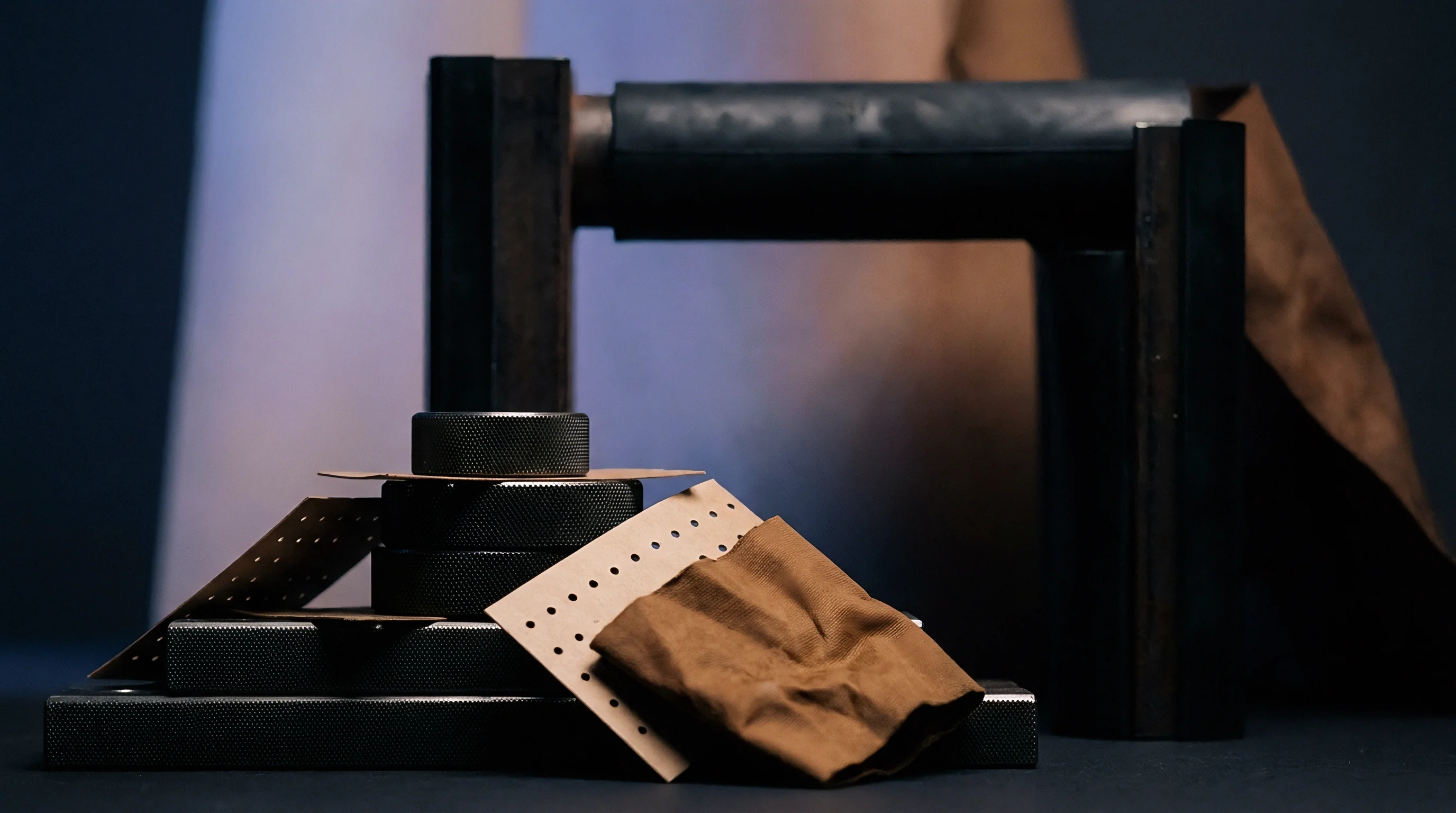
Physical recyclability testing begins in the laboratory pulper. The standard evaluation path defined by the Cepi Recyclability Test Method Version 2 and PTS-RH 021/97 subjects packaging cut into standardized fragments to controlled mechanical disintegration. The testing laboratory operates a standard disintegration pulper at 40 degrees Celsius with a pulp consistency of 5 percent for ten minutes.
This mechanical shear breaks the fiber network, allowing individual cellulose fibers to hydrate and disperse into suspension. Tough moisture-barrier layers, plastic laminates, and wet-strength resins resist this dispersion, retaining fibrous bundles that fail to pass through subsequent fractionation screens.
The disintegrated suspension moves directly into a Somerville screening apparatus fitted with a precision slotted plate. The aperture slots measure exactly 150 micrometers in width. Cellulose fibers pass readily through the slots under continuous water spray.
Coarse plastic fragments, unpulped board flakes, adhesive films, and foil shreds remain behind on the screen face. Technicians collect this coarse reject fraction, dry it to constant weight at 105 degrees Celsius, and calculate the reject percentage relative to the initial dry mass of the packaging sample.
A coarse reject mass fraction exceeding twenty percent at the 150-micrometer slotted plate automatically classifies the packaging substrate as non-recyclable under standard mill processing conditions.
Screening severity changes the outcome. While standard packaging grades undergo evaluation at neutral pH, water-resistant food service boards often undergo alkaline disintegration at pH 8.5 to assist resin breakdown. The laboratory must state the exact chemical conditions used.
An alkaline pass does not predict behavior in standard neutral-loop paper recycling mills.
| Test Parameter | Cepi Version 2 Standard | PTS-RH 021/97 Category II | Evaluation Impact |
|---|---|---|---|
| Disintegration Consistency | 5.0 percent dry mass | 2.5 to 5.0 percent | Higher consistency increases fiber-to-fiber attrition during rotor shear |
| Water Temperature | 40 degrees Celsius | 40 degrees Celsius | Warm liquor accelerates swelling without melting synthetic adhesives |
| Agitation Duration | 10 minutes (30,000 revs) | 10 to 20 minutes | Extended duration artificially reduces measurable coarse reject mass |
| Screening Aperture | 150 µm slotted plate | 150 µm Somerville slot | Traps unpulped fiber flakes and synthetic barrier membranes |
| Maximum Coarse Rejects | Less than 20 percent | Less than 20 percent | Exceeding the threshold triggers automatic recyclability disqualification |
| Minimum Useful Fiber Yield | 80 percent of dry fiber | 80 percent dry matter | Commercial recycling lines reject lots falling below this usable yield |
Fiber yield calculations separate true cellulose recovery from inorganic filler losses. Consider a worked calculation for a clay-coated folding cartonboard lot carrying an aqueous acrylic dispersion barrier. The dry carton sample weighs 100.0 grams, containing 82.0 grams of cellulose furnish, 12.0 grams of mineral pigment coating, and 6.0 grams of synthetic acrylic copolymer.
Disintegration produces 7.5 grams of coarse screen rejects caught on the 150-micrometer sieve plate. The fine screen accept slurry contains both dispersed fibers and mineral pigments. Centrifugal washing and filtration separate the useful pulp, yielding 73.8 grams of bone-dry recovered fiber.
Usable fiber yield equals 73.8 grams divided by the initial 82.0 grams of base fiber, which calculates to 90.0 percent. Total material rejection, combining screen rejects and dissolved or colloidal losses, amounts to 26.2 grams. Because the usable fiber recovery clears the 80.0 percent statutory baseline and coarse rejects remain below the 20.0 percent ceiling, the packaging sample passes the mechanical screening stage.
If the acrylic coating fails to fragment cleanly, wrapping around fiber clusters, coarse rejects jump to 22.0 grams. The useful fiber yield drops to 71.0 percent. The lot immediately fails.

Does Laboratory Disintegration Guarantee Industrial Pulp Yield?
Pulper mechanics in commercial paper mills differ from benchtop laboratory equipment. High-consistency industrial pulpers run between 12 and 18 percent solid consistency to optimize power consumption. Helical rotors generate vigorous hydraulic shear rather than high-speed mechanical cutting.
Synthetic coatings that fragment neatly in a benchtop disintegrator can shear into micro-particles under mill conditions, contaminating water loops. Whether these laboratory screening thresholds accurately mirror the economic yield curves of high-speed deinking plants remains an unresolved controversy among pulp recovery specialists.
Sheet
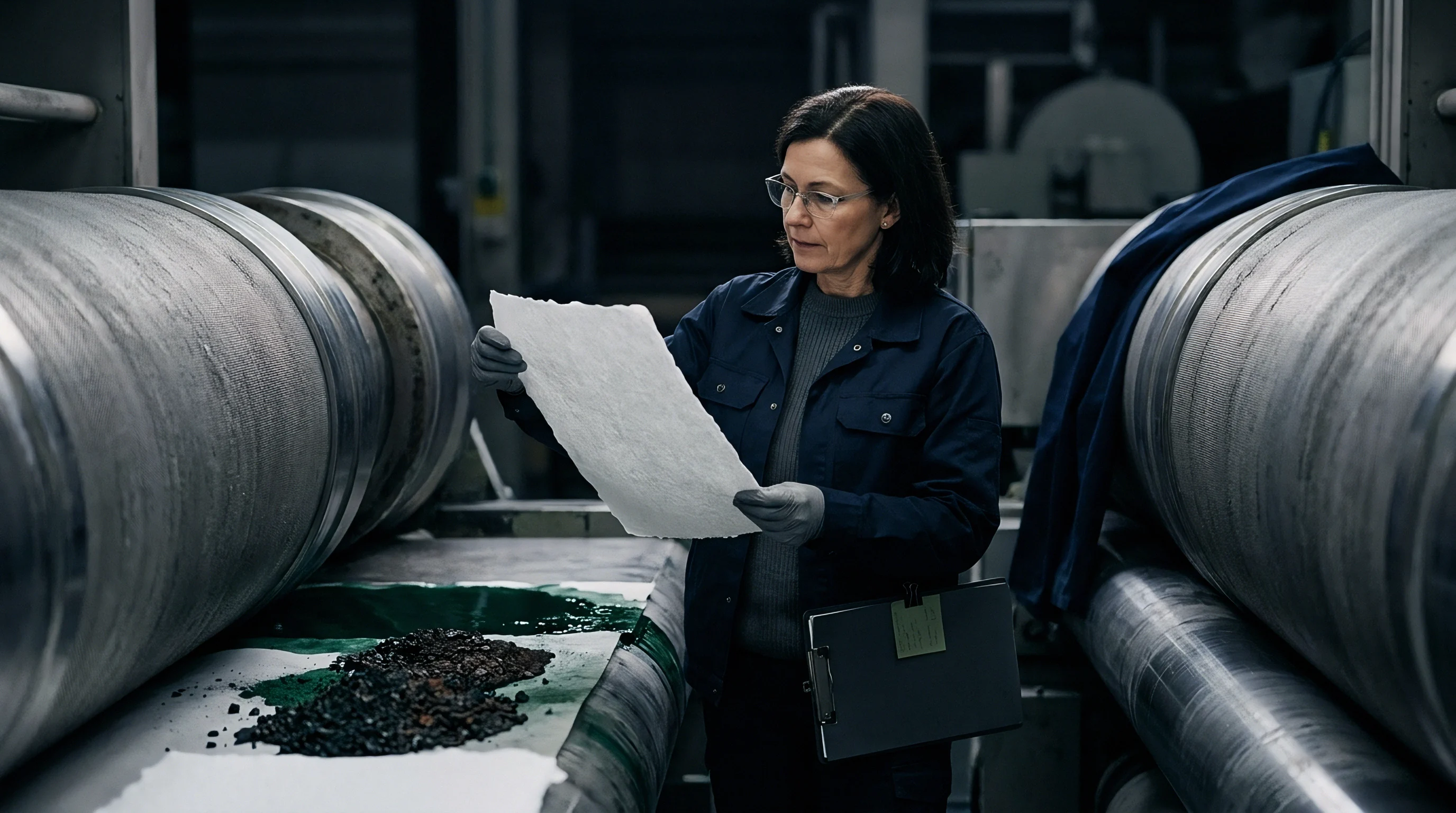
Passing the slotted screen does not complete recyclability qualification. The accept pulp collected downstream from the 150-micrometer sieve plate must form commercial-grade handsheets on a Rapid-Köthen or British Standard sheet former without generating processing defects. Fine adhesive fragments, insoluble ink vehicles, and micro-dispersed synthetic resins pass through screen slots alongside cellulose fibers.
These components, termed microstickies, remain suspended in the pulp slurry until sheet formation, pressing, and drying force them onto hot metal surfaces. The finished recycled sheet reveals whether the packaging furnish contaminates papermaking machinery.
Laboratory technicians condition the dried handsheets under standard atmosphere at 23 degrees Celsius and 50 percent relative humidity according to ISO 187. The surface of each handsheet undergoes high-resolution automated optical scanning under polarized light to quantify visual blemishes, unpulped specks, and dirt counts. Inks that fail to detach from fibers during disintegration cause optical discoloration, darkening the recycled pulp and lowering its ISO brightness score.
For bleached board packaging intended for closed-loop high-grade recovery, a drop exceeding five brightness units under ISO 2470 disqualifies the material.
Stickiness evaluation requires rigorous physical appraisal. Laboratory personnel press heated polished metal plates against the handsheet surface at 120 degrees Celsius. Adhesives with low glass transition temperatures soften, transferring onto the metal or causing the test sheet to tear upon separation.
On commercial fourdrinier machines, this behavior manifests as wire blinding, felting deposit buildup, and web breaks. A packaging engineer must guard against several distinct sheet-forming failure modes.
- Macrosticky tackiness causes adhesion between dried handsheets and test drying plates, signaling severe risks of paper machine cylinder contamination.
- Optical speck agglomeration deposits dark ink particles greater than 0.4 square millimeters across the sheet area, degrading commercial value.
- Structural pinholes develop where water-repellent coating particles prevent hydrogen bonding between adjacent cellulose fibers during web consolidation.
- Mechanical tensile loss reduces the burst and tensile index of the formed sheet by more than twenty percent relative to a virgin control furnish.
The converter claimed the modified wax coating would disperse entirely into process white-water without adhering to drying felts.

Barrier
Barrier coatings represent the primary operational challenge in modern fiber packaging recyclability. Functional food packaging relies on barrier chemistry to arrest water vapor transmission, grease absorption, oxygen ingress, and liquid penetration. Traditional low-density polyethylene extrusion coatings, applied at 15 to 30 grams per square meter onto solid bleached sulphate board, provide effective resistance but generate substantial coarse rejects.
During pulping, the polyolefin film delaminates into large continuous sheets. While modern mills with specialized detrashing units extract these sheets, basic corrugated medium mills lack the pulping residence time to separate polyethylene cleanly from fiber.
A fluorochemical barrier treatment subjected to ultrasonic solvent extraction reveals total organic fluorine levels exceeding fifty milligrams per kilogram, triggering immediate regulatory rejection.
Aqueous dispersion barriers utilize synthetic polymers such as styrene-butadiene latex, acrylic copolymers, or polyolefin dispersions formulated with mineral fillers like talc or kaolin clay. Applied via gravure, blade, or rod coaters, these formulations dry into microscopic coherent films. The ratio of mineral pigment to polymer binder dictates whether the coating fragments under shear.
High polymer concentrations create elastic films that stretch rather than fracture, plugging screening baskets. High pigment concentrations promote brittle fracture, permitting the mineral particles to wash away freely while liberating cellulose fibers.
| Barrier Technology | Coating Weight | Screen Reject Level | Fiber Recovery Rate | Recyclability Verdict |
|---|---|---|---|---|
| Extruded LDPE Film | 18 to 25 g/m² | High (14 to 18 percent) | Acceptable (80 to 84 percent) | Limited to specialized mills with detrashing lines |
| Aqueous Acrylic Dispersion | 6 to 10 g/m² | Low (2 to 6 percent) | High (90 to 95 percent) | Passes standard neutral repulping protocols |
| PVOH Barrier Layer | 3 to 5 g/m² | Negligible (under 1 percent) | High (94 to 98 percent) | Dissolves in hot water; cold-water loops cause gumming |
| Wax / Hot-Melt Blend | 12 to 20 g/m² | Moderate (6 to 12 percent) | Poor (under 75 percent) | Fails optical cleanliness; creates severe sticky deposits |
| Aluminum Foil Laminate | 6 to 9 µm foil | Severe (18 to 28 percent) | Low (68 to 78 percent) | Disqualified unless certified in dedicated liquid carton systems |
Extruded bioplastics introduce different failure mechanisms. Polylactic acid and polyhydroxyalkanoates exhibit high rigidity at ambient temperatures. In industrial repulpers operating at 40 degrees Celsius, however, polyhydroxyalkanoate coatings soften, wrapping around screening wires.
Polylactic acid remains brittle and fragments into angular flakes. These flakes escape slot screens, entering the papermaking system where they melt on drying cylinders, creating localized spots on new paper webs.

Will Ultrasonic Extraction Reveal Concealed Fluorochemical Treatments?
Total fluorine screening through combustion ion chromatography catches chemical grease barriers that evade visual inspection. Fluorinated chemistry, including per- and polyfluoroalkyl substances, provides oil and grease resistance without adding physical coating thickness. European market surveillance programs enforce strict limits on intentional fluorochemical addition.
When laboratory testing measures total organic fluorine above regulatory action thresholds, the packaging dossier fails immediately, regardless of physical fiber repulpability.
Clean water-based dispersion barriers with high mineral loading break cleanly during pulping without leaving tackified deposits.

Modality
Commercial packaging procurement requires aligning physical test data with extended producer responsibility fee structures. Under the Packaging and Packaging Waste Regulation, packaging designs receive recyclability grades spanning Performance Class A down to Performance Class D. Packaging failing to attain Class C faces an outright ban from entering the internal market by 2030. Producers pay modulated compliance fees tied directly to these performance grades.
A carton achieving Grade A recyclability incurs baseline extended producer responsibility tariffs, whereas a Grade C container triggers punitive surcharges that erode operational profit margins.
Producer responsibility schemes in Germany, France, and the Netherlands operate distinct fee adjustment algorithms. In the French system administered by Citeo, non-separable coatings or disruptive pigments like carbon black initiate fee maluses reaching one hundred percent of the base recycling tariff. In Germany, the Zentrale Stelle Verpackungsregister enforces minimum standards for recyclability assessment.
Its guidelines penalize fiber-based packaging containing over five percent non-fiber components unless accredited laboratory tests demonstrate equivalent repulpability performance.
| Performance Class | Recyclability Assessment Yield | Industrial Processability | EPR Fee Modulation Impact |
|---|---|---|---|
| Grade A | Equal to or greater than 95 percent | Recycled in standard mills without modification | Standard base fee with potential bonus discount |
| Grade B | Equal to or greater than 90 percent | Minor rejects; compatible with standard equipment | Standard base operational fee |
| Grade C | Equal to or greater than 80 percent | Acceptable recovery; elevated reject handling cost | Punitive surcharge applied to unit packaging weight |
| Grade D | Equal to or greater than 70 percent | Requires specialized secondary pulping loops | Severe statutory penalty; subject to commercial phase-out |
| Grade E / Disqualified | Less than 70 percent usable fiber | Non-recyclable under commercial standards | Market access denied under internal market regulations |
Importers must assemble a defensible technical compliance dossier before moving shipments across customs borders. When customs inspectors or environmental agencies challenge a recyclability declaration, the importer holds the legal burden of proof. Customs officers do not accept supplier sales sheets or generic statements of compliance.
- Certified bill of materials enumerating every raw substrate, pigment coat, barrier polymer, hot-melt adhesive, printing ink, and functional additive with dry-weight percentages.
- Accredited test report conforming to Cepi Version 2 or PTS-RH 021/97 protocols conducted by an ISO/IEC 17025 accredited laboratory facility.
- Calculation ledger demonstrating useful fiber yield, total coarse reject percentages, and optical cleanliness scores on formed sheets.
- Safety data sheets confirming the absence of fluorinated surfactants, toxic heavy metals, and persistent processing aids across all packaging layers.
- Producer register confirmation demonstrating active corporate registration and category filing within the national packaging clearing house of each target destination market.
Omitting any element of this technical dossier exposes the importer of record to border retention, mandatory product recalls, retroactive fee assessments, and administrative fines that exceed the commercial margin of the underlying packaging order.