High Resolution Mass Spectrometry Disambiguation of Photoinitiator Degradation Products in Polyolefin Barrier Films
Sub-ppm mass accuracy and collision-induced dissociation resolve isobaric photoinitiator cleavage products from polyolefin oligomers below regulatory limits.


Photolysis
Ultraviolet radiation passing through acrylic overprint varnishes activates photoinitiators to release reactive radical species during film curing. Type I photoinitiators, including 2-methyl-1-(4-methylthiophenyl)-2-morpholinopropan-1-one and 2-hydroxy-2-methylpropiophenone, undergo homolytic bond cleavage upon absorbing light between 250 and 380 nanometers. This cleavage yields reactive benzoyl and alkyl radical fragments designed to polymerize acrylate monomers.
A fraction of these radical fragments escapes the polymer matrix without reacting, remaining as free, unreacted moieties or undergoing secondary degradation reactions. Free radicals abstract hydrogen atoms from adjacent polyolefin chains, initiating localized polymer oxidation and generating structural degradates.
Polyolefin barrier films constructed from low-density polyethylene or polypropylene layers present non-polar polymeric networks that do not block small organic photoproducts. Free photoproducts undergo thermally driven diffusion through the polyolefin web toward unprinted contact surfaces. Corona treatment applied during film converting introduces oxygenated functional groups, including hydroperoxides and carbonyls, onto the polyolefin surface layer.
These oxygenated sites react with residual photoinitiator radicals, forming stable oxygenated adducts that alter the local surface chemistry. Understanding these primary and secondary photo-reaction pathways enables accurate identification of migrant compounds in barrier structures.

Norrish Cleavage Pathways in Surface Coatings
Type I homolytic cleavage follows well-defined energy transitions that break specific carbon-carbon bonds within the initiator molecule. Norrish Type I alpha-cleavage of substituted acetophenones generates a benzoyl radical and a tertiary carbon radical. In 2-methyl-1-(4-methylthiophenyl)-2-morpholinopropan-1-one, alpha-cleavage produces the 4-methylthiobenzoyl radical and the 2-morpholino-2-propyl radical.
Secondary beta-cleavage occurs when the tertiary alkyl radical loses a morpholino group, yielding acetone and sulfur-containing aromatic fragments. Oxygen dissolved in the wet ink film intercepts these alkyl radicals at diffusion-controlled rates, producing peroxyl radicals that further degrade into substituted benzoic acids, aldehydes, and alkyl hydroperoxides.
Type II photoinitiators, such as isopropylthioxanthone and benzophenone, operate through hydrogen abstraction from co-initiators or surrounding polymer chains rather than homolytic carbon-carbon cleavage. Photolysis of isopropylthioxanthone yields thioxanthone pinacol dimers alongside monohydro-thioxanthone radicals. Isopropylthioxanthone undergoes photo-oxidation in the presence of air to yield isopropylthioxanthone sulfoxide and isopropylthioxanthone sulfone.
These sulfur-oxidized derivatives possess higher polarity and distinct chemical structures compared to the parent initiator. Each cleavage and oxidation event yields distinct breakdown products that alter the chemical fingerprint of the cured varnish.
Thermal oxidation during polyolefin extrusion generates isobaric polyketones that mirror photoinitiator photoproducts in low-resolution mass spectra.

Matrix Interactions in Substrate Corona Layers
Polyolefin film surfaces undergo high-voltage electrical discharge during convertor priming to increase surface tension. This surface modification breaks polymer chains, creating alkyl radicals that react with atmospheric oxygen to form peroxides, ketones, and carboxylic acid sites. Corona treatment generates reactive ozone.
When photoinitiator radicals reach this functionalized polyolefin layer, radical recombination forms covalent bonds between the initiator fragment and the polyethylene chain. Synthetic antioxidants added during polymer resin production, specifically hindered phenols like octadecyl 3-(3,5-di-tert-butyl-4-hydroxyphenyl)propionate and phosphite processing stabilizers, compete with initiator fragments for free radical capture.
Reaction between photoinitiator fragments and polymer additives produces complex hybrid oxidation products. Radical abstraction from hindered phenol antioxidants generates quinone methide intermediates that couple with benzoyl radicals from the overprint varnish. Secondary reactions between oxidized phosphite antioxidants and peroxy radicals from photoinitiator degradation generate phosphate esters with molecular weights spanning 300 to 800 Daltons.
These matrix interactions generate a dense chemical background within the polyolefin barrier layer. Analytical methods must isolate these matrix-derived species from true photoinitiator photoproducts to prevent erroneous regulatory assignments.
The extent to which secondary alkyl radical adducts incorporate permanently into the polypropylene backbone during high-energy ultraviolet exposure remains an open analytical question.
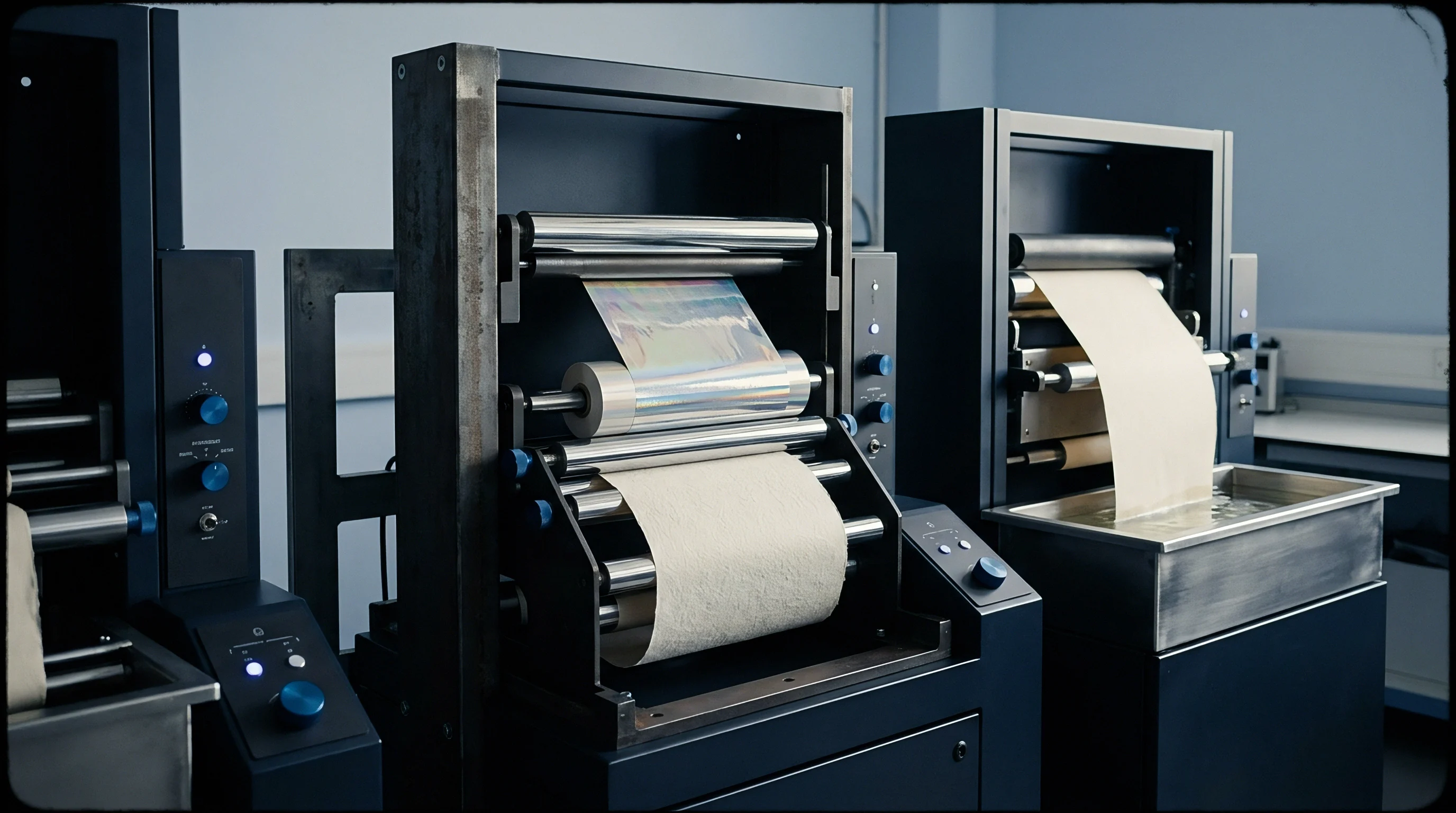
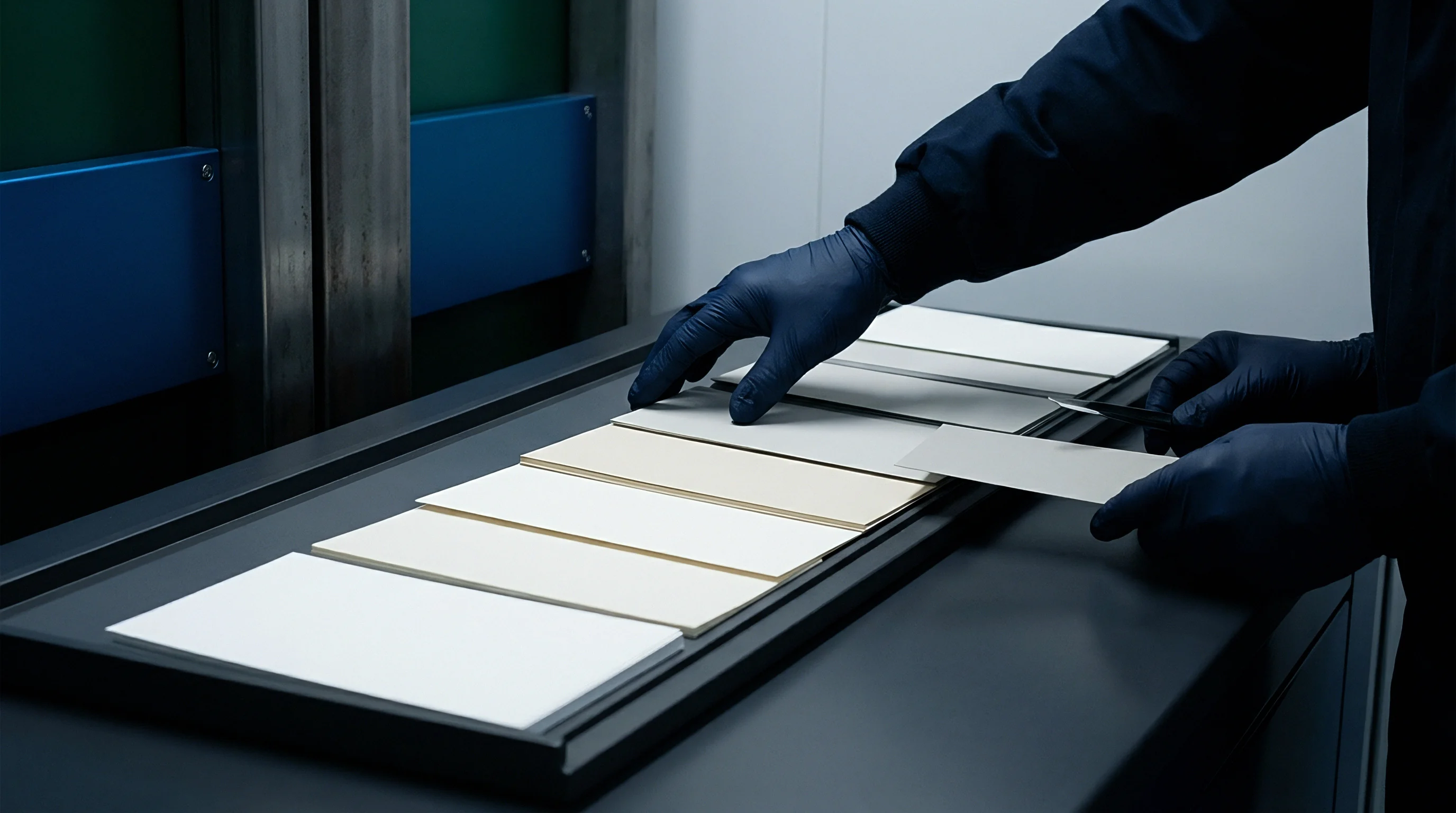
Cleanout
Preparing printed barrier laminates for analytical characterization demands selective isolation of target degradates without dissolving the underlying polymer substrate. Polyolefin films swell when exposed to non-polar organic solvents, leaching low-molecular-weight synthetic waxes, anti-block additives, and polyolefin oligomers into the extraction fluid. Dissolved oligomers co-elute with target analytes during liquid chromatography, causing ionization suppression inside mass spectrometer sources.
Extraction workflows must employ solvent systems that penetrate crosslinked acrylate varnish networks while leaving non-polar polyethylene or polypropylene chains intact.
Ultrasonic extraction conducted at room temperature prevents thermal dissolution of polyolefin waxes while releasing unbound photoinitiators and breakdown products. Solvent selection balances swelling power against polymer solubility. Cold extractions prevent polymer melting.
Acetonitrile yields low oligomer solubility. Methanol provides intermediate recovery of polar photoproducts. Dichloromethane dissolves polyolefin oligomers rapidly and must be avoided during barrier film extractions.
Solid-phase extraction cleanup removes residual polyolefin waxes from liquid extracts prior to chromatographic analysis.
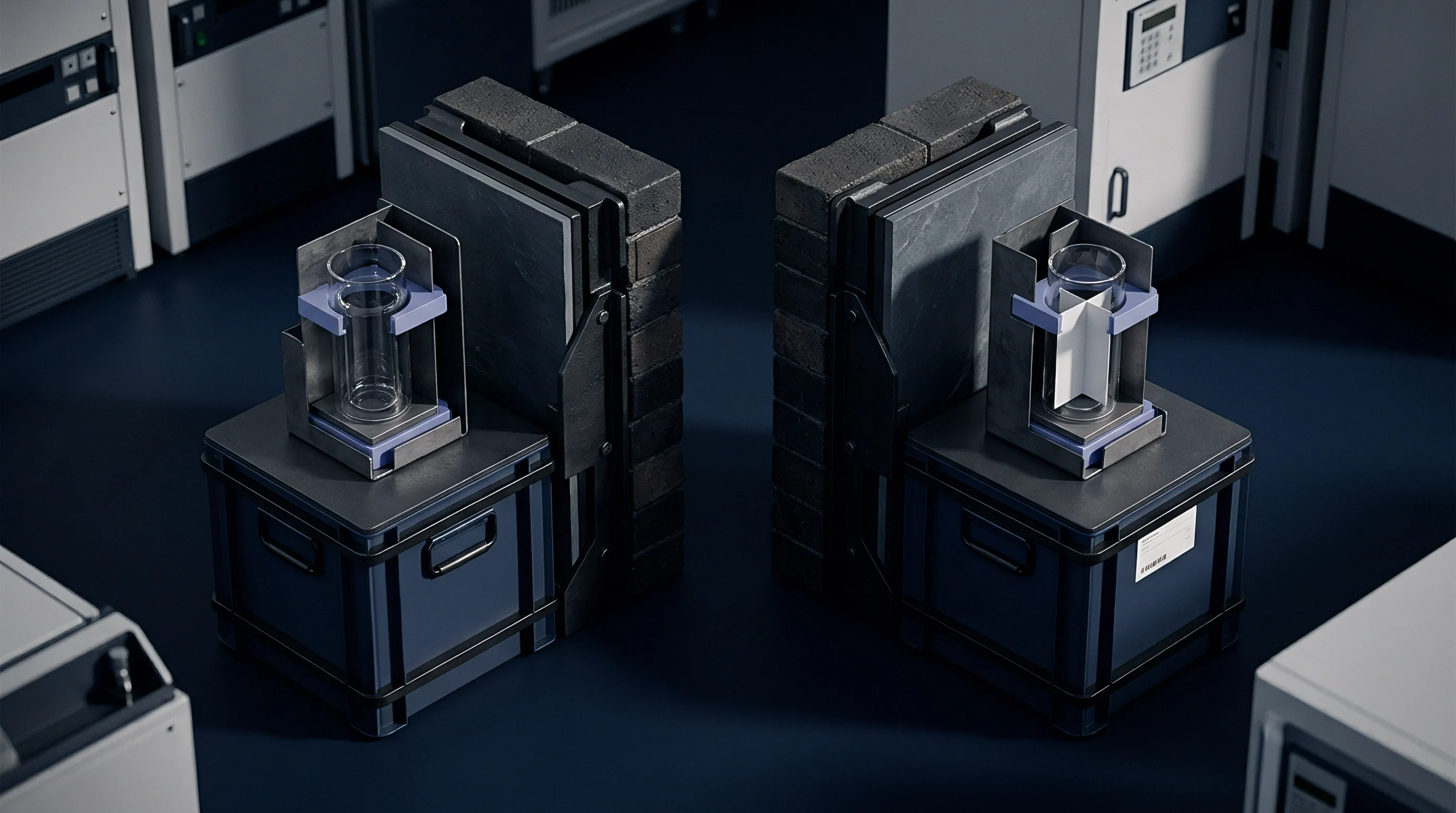
Extraction Solvent Dynamics for Non Polar Films
Acetonitrile yields low oligomer solubility while effectively penetrating crosslinked acrylate overprint networks. Testing reveals that pure acetonitrile extracts target photoproducts, including 4-methylthiophenol and 2-hydroxy-2-methylpropiophenone, with recovery efficiencies exceeding 88 percent from polyethylene films. Adding small volume fractions of tetrahydrofuran increases crosslinked varnish swelling but causes co-extraction of cyclic polypropylene oligomers.
A mixture containing 90 percent acetonitrile and 10 percent isopropanol balances varnish swelling against polyolefin stability, maintaining oligomer background concentrations below analytical interference thresholds.
Controlled extraction kinetics prevent substrate degradation. Immersing a 100-square-centimeter film sample in 20 milliliters of extraction solvent under ultrasonic agitation for 30 minutes isolates unbound photoproducts effectively. Extended extraction times exceeding two hours degrade film structural integrity, allowing internal slip additives like erucamide and oleamide to saturate the extraction liquid.
Temperature control during ultrasonication prevents local bath heating above 30 degrees Celsius. Temperature control preserves volatile cleavage products like acetone and morpholine within the extraction solution.

Solid Phase Cleanup Sequence
Silica-based C18 cartridges strip low-molecular-weight polyolefin waxes from liquid extracts before chromatographic injection. Polyolefin oligomers contain long aliphatic hydrocarbon chains that bind strongly to hydrophobic C18 sorbent phases under polar solvent conditions. Target photoproducts containing polar functional groups, such as morpholine, sulfoxide, or hydroxyl moieties, exhibit weaker retention on C18 sorbents when eluted with acetonitrile-water mixtures.
Passing raw solvent extracts through conditioned C18 SPE cartridges retains non-polar oligomers while passing target degradates into the collection vial.
- Cut barrier film sample into ten-square-centimeter strips and place inside a fifty-milliliter glass extraction vessel.
- Add twenty milliliters of acetonitrile and agitate in an ultrasonic bath at twenty-five degrees Celsius for thirty minutes.
- Condition a five-hundred-milligram C18 solid-phase extraction cartridge with five milliliters of pure acetonitrile followed by five milliliters of deionized water.
- Pass the crude film extract through the conditioned cartridge under vacuum at a controlled flow rate of two milliliters per minute, collecting the purified eluate into a glass autosampler vial.
Graphitized carbon black cartridges remove residual planar aromatic species when analyzing non-polar photoproducts. Silica gel cartridges operated in normal-phase mode separate polar degradation products from non-polar wax fractions using hexane and ethyl acetate gradient elution schemes. Proper sorbent selection prevents loss of highly volatile cleavage fragments during concentration steps.
Evaporating solvent extracts under a gentle stream of dry nitrogen at room temperature prevents volatile compound loss. Evaporation to final dryness causes significant recovery losses for light aromatic photoproducts like benzaldehyde and isopropylbenzene.
Lower temperature extraction runs consistently prevent polymeric wax co-dissolution while maintaining complete recovery of light aromatic breakdown compounds.

Mass
High-resolution mass spectrometers determine elemental compositions by measuring ion flight times or orbital oscillation frequencies with extreme exactness. Ultra-high-performance liquid chromatography paired with high-resolution mass spectrometry provides the resolving power needed to separate complex degradation mixtures. Orbitrap electrostatic mass analyzers achieve resolving power exceeding 140,000 at m/z 200, while Quadrupole Time-of-Flight instruments achieve resolving power between 30,000 and 60,000.
High resolving power separates isobaric chemical species possessing identical nominal masses but distinct exact mass values derived from elemental nuclear binding energy differences.
Exact mass measurement enables assignment of molecular formulas to unknown degradation products in polyolefin barrier films. Orbitrap mass resolution allows determination of ion mass-to-charge ratios within mass accuracy tolerances below one part per million. Isobaric matrix interferences generated by oxidized polyolefin oligomers share nominal masses with photoinitiator degradation products.
Sub-ppm mass accuracy narrows the pool of potential elemental formulas, allowing analysts to distinguish nitrogen- or sulfur-containing initiator photoproducts from pure hydrocarbon oligomer adducts.
Resolving Power Thresholds for Isobaric Resolution
Separating overlapping chemical species possessing identical nominal molecular weights demands instrument resolving power exceeding 70,000 at m/z 200. Mass resolution separates isobaric species. Consider an isobaric overlap between the photoinitiator photoproduct 4-methylthiobenzaldehyde, possessing formula C8H8OS and exact monoisotopic protonated mass 153.03686 Da, and an oxidized polypropylene oligomer fragment possessing formula C100H181O, or a smaller oxidized fragment like C10H17O2 with exact mass 153.12741 Da. At nominal mass 153, these compounds differ by 0.09055 Da, requiring modest resolution.
Differentiating target photoproducts from nitrogenous slip additives or complex peroxide adducts requires higher resolving power.
Consider the isobaric pair formed by the 2-isopropylthioxanthone photoproduct isopropylthioxanthone sulfoxide, possessing formula C16H14O2S and exact protonated mass 271.07873 Da, and a synthetic antioxidant degradation product derived from oxidized Irgafos 168 with an elemental formula of C19H27O. The exact mass difference between these species equals 0.00311 Da. Resolving this mass difference at m/z 271 requires an absolute minimum instrument resolving power of 87,200. Operating an Orbitrap analyzer at a resolving power setting of 140,000 completely resolves these peaks, yielding two clear, uncorrupted mass spectral signals.
| Target Analytes and Interferences | Elemental Formula | Theoretical Ion Mass | Measured Ion Mass | Mass Error | Required Resolving Power |
|---|---|---|---|---|---|
| Irgacure 907 Cleavage Product | C11H16NOS+ | 210.09471 | 210.09458 | -0.62 ppm | 110,000 |
| Polypropylene Triperoxide Fragment | C13H22O2+ | 210.16143 | 210.16155 | +0.57 ppm | 110,000 |
| ITX Sulfoxide Photoproduct | C16H15O2S+ | 271.07873 | 271.07890 | +0.63 ppm | 140,000 |
| Oxidized Irgafos 168 Fragment | C19H27O+ | 271.08184 | 271.08168 | -0.59 ppm | 140,000 |
| Benzophenone Hydroxyl Adduct | C13H11O2+ | 199.07535 | 199.07528 | -0.35 ppm | 95,000 |
| Erucamide Degradation Fragment | C12H23O+ | 199.17434 | 199.17448 | +0.70 ppm | 95,000 |

Isotopic Distribution Mechanics in Heteroatomic Ion Analysis
Sulfur-bearing photoinitiators exhibit a distinctive abundance ratio due to the natural three-point-one percent prevalence of the heavy sulfur-34 isotope. Sulfur exhibits an M plus two isotope. Analyzing sulfur-containing initiators like 2-methyl-1-(4-methylthiophenyl)-2-morpholinopropan-1-one or isopropylthioxanthone reveals paired isotopic peaks separated by 1.9958 Da. The intensity of the M+2 peak relative to the monoisotopic M+0 peak directly mirrors the number of sulfur atoms present in the molecular structure.
Pure hydrocarbon matrix oligomers lack this M+2 isotopic contribution, providing a clear spectral diagnostic for sulfur incorporation.
High-resolution instruments resolve isotopic fine structure, separating the sulfur-34 isotopic contribution from double carbon-13 isotope contributions. The mass difference between two carbon-13 atoms and one sulfur-34 atom equals 0.00893 Da. Measuring isotopic fine structure at resolving powers above 120,000 confirms the presence of sulfur in unknown photoproduct peaks. Nitrogen-containing photoinitiator fragments, including aminomorpholino radicals, obey the nitrogen rule.
Ions containing an odd number of nitrogen atoms possess odd nominal monoisotopic masses, whereas pure oxygenated hydrocarbon matrix interferences possess even nominal monoisotopic masses in positive electrospray ionization modes.
Mass accuracy below 1.5 ppm at 100000 resolving power is necessary to distinguish alkyl radical additions from oxygenation adducts on polyolefin chains.

Mass Defect Calculation for Polyolefin Degradates
Hydrocarbon polymers possess positive mass defects because hydrogen atoms contribute positive binding energy deviations. Hydrogen possesses an exact atomic mass of 1.007825 Da, giving polyolefin oligomers with formula CnH2n+2 mass defects ranging from +0.15 to +0.50 Da. Heteroatoms such as oxygen, sulfur, and nitrogen possess smaller or negative mass defects relative to carbon. Oxygen possesses an exact atomic mass of 15.994915 Da, creating a relative mass deficit when replacing CH4 units within an organic structure.
Plotting exact mass versus mass defect reveals distinct compositional lines for polyolefin matrix interferences and photoinitiator photoproducts.
Exact mass limits target candidate formulas. Consider a worked example construction for analyzing a 50-micrometer polypropylene film coated with an acrylate overprint varnish containing 2.5 percent by weight of 2-methyl-1-(4-methylthiophenyl)-2-morpholinopropan-1-one. Assume a specific migration test yields an unknown peak at m/z 226.08960 in positive electrospray mode.
The calculated mass defect for this ion equals +0.08960 Da. The low mass defect immediately indicates the presence of multiple heteroatoms, ruling out pure polypropylene oligomer fragments possessing positive mass defects above +0.2000 Da. Calculating candidate formulas within a 1.0 ppm mass tolerance window identifies C11H16NO2S+ as the sole matching elemental composition, corresponding to the oxidized 4-methylthiophenyl morpholino cleavage product. Recalibration restores sub ppm accuracy.
Incorrectly classifying an isobaric oligomer adduct as a regulated photoinitiator photoproduct forces unnecessary batch rejections and triggers secondary toxicology audits.

Fragment
Tandem mass spectrometry breaks parent molecular ions into reproducible structural pieces inside a collision cell pressurized with inert argon gas. Collision-induced dissociation and high-energy collisional dissociation impart kinetic energy to mass-selected precursor ions, causing intramolecular bond cleavage along predictable thermodynamic pathways. Examining product ion spectra generated at varied collision energies establishes connectivity between structural subunits, enabling unambiguous identification of chemical isomers.
Isomeric photoproducts possessing identical exact masses and elemental formulas yield distinct fragmentation patterns when subjected to tandem mass spectrometry.
Electrospray ionization and atmospheric pressure chemical ionization preserve molecular ion structures, but tandem fragmentation reveals the specific arrangement of functional groups. Differentiating isomeric photoproducts, such as isopropylthioxanthone sulfoxide versus hydroxy-isopropylthioxanthone, requires diagnostic product ions unique to each molecular architecture. Fragmentation of the sulfoxide isomer cleaves the sulfur-oxygen bond, releasing neutral sulfur monoxide or hydroxyl radicals.
Fragmentation of the hydroxy-thioxanthone isomer retains the aromatic oxygen atom while cleaving the isopropyl side chain. Diagnostic fragmentation pathways eliminate ambiguity when assigning structures to migrant compounds.

Collision Energy Calibration for Target Molecules
Adjusting laboratory potential differences controls the kinetic energy imparted to accelerated precursor ions prior to gas collisions. Low collision energies between 10 and 20 electron-volts induce cleavage of weak single bonds, such as ether linkages or morpholino carbon-nitrogen bonds. Medium collision energies between 25 and 40 electron-volts cleave alkyl side chains from aromatic rings.
Collision energy alters fragment ratios. High collision energies above 50 electron-volts shatter central aromatic core structures, yielding small hydrocarbon fragment ions that lack diagnostic structural information. Stepwise collision energy ramping ensures complete product ion coverage across soft and hard fragmentation regimes.
Normalized collision energy settings optimize fragmentation yields across wide mass ranges. Quadrupole isolation windows set to 0.4 Da isolate target precursor ions cleanly, excluding adjacent isobaric background ions from entering the collision chamber. Collision cell gas pressure maintained at 1.5 millitorr ensures single-collision conditions, preventing secondary ion-molecule reactions that produce artifact product ions.
Standardizing collision energy parameters across analytical runs maintains library matching accuracy when comparing unknown spectrum profiles against authentic reference standards.

Which Diagnostic Fragments Resolve Isobaric Degradates?
Morpholine cleavage generates an ion at m/z 86.0600 that unequivocally identifies Irgacure 907 breakdown products. The presence of m/z 86.0600, corresponding to the protonated morpholinium cation, confirms that the parent degradation molecule contains an intact morpholino moiety. Collision-induced dissociation of the precursor ion m/z 280.1366, representing parent 2-methyl-1-(4-methylthiophenyl)-2-morpholinopropan-1-one, yields dominant product ions at m/z 151.0212 and m/z 86.0600.
The m/z 151.0212 product ion corresponds to the 4-methylthiobenzoyl radical, confirming alpha-cleavage between the carbonyl carbon and the tertiary alkyl group.
| Photoinitiator and Photoproduct | Precursor Ion (m/z) | Collision Energy (eV) | Diagnostic Product Ions (m/z) | Structural Interpretation | |
|---|---|---|---|---|---|
| Irgacure 907 Alpha Cleavage | 280.1366 | 20 | 151.0212, 86.0600 | Loss of morpholino-propyl group | |
| Irgacure 907 Sulfoxide Derivative | 296.1315 | 25 | 167.0161, 86.0600 | Sulfur oxidation on aromatic core | |
| ITX Sulfoxide Photoproduct | 271.0787 | 30 | 228.0263, 212.0318 | Loss of isopropyl group and SO release | |
| Hydroxy-ITX Isomer | 271.0787 | 30 | 253.0682, 225.0369 | Water loss and carbonyl elimination | |
| Irgacure 1173 Dealkylation | 165.0910 | 15 | 105.0335, 77.0386 | Benzoyl cation and phenyl core formation | |
| BDDK Alpha Cleavage Product | 257.1172 | 20 | 151.0389, 105.0335 | Dimethoxybenzyl cleavage fragment |
Differentiating isopropylthioxanthone sulfoxide from hydroxy-isopropylthioxanthone relies on specific oxygen loss patterns during dissociation. Isopropylthioxanthone sulfoxide undergoes collision-induced dissociation at 30 electron-volts to yield product ions at m/z 228.0263, corresponding to the loss of C3H7 and O, alongside m/z 212.0318, corresponding to sulfur monoxide loss. Hydroxy-isopropylthioxanthone fragments by losing a water molecule to form m/z 253.0682, followed by carbon monoxide loss to form m/z 225.0369.
Water loss confirms the presence of a hydroxyl group attached to the aromatic core. Product ion spectrum comparison disambiguates these structural isomers rapidly.

Failure Modes in Structural Assignment
Incomplete chromatographic separation allows co-eluting matrix peaks to corrupt product ion intensity ratios. When an oxidized polyolefin oligomer co-elutes with a target photoinitiator photoproduct, both species enter the collision cell simultaneously if the quadrupole isolation window spans greater than 1.0 Da. Co-isolated precursor ions fragment together, generating composite product ion spectra containing mixed fragment signals. Composite spectra trigger false positive matches against reference spectral libraries.
Matrix suppression reduces signal strength.
- Coisolation of isobaric impurities distorting product ion intensity ratios due to overly wide quadrupole selection windows.
- Source-induced in-source fragmentation generating false breakdown product peaks prior to quadrupole selection.
- Incomplete chromatographic retention causing target photoproducts to elute within the unretained solvent front alongside polar matrix salts.
- Energy mismatches between experimental parameters and reference library spectra leading to unassigned product ion peaks.
In-source fragmentation occurs when high declustering potentials applied at the atmospheric pressure interface break thermally labile bonds before mass selection. Dealkylated photoproduct ions formed in the ion source appear as parent ions during MS/MS scans, misrepresenting the original chemical distribution inside the barrier film. Lowering capillary temperatures and reducing interface voltage drops suppresses in-source decay, ensuring that observed fragment ions originate exclusively from target precursor dissociation within the collision cell.
Higher electron-density aromatic photoinitiators yield fragment ions that clear matrix noise faster than aliphatic cleavage moieties.
Film convertors frequently maintain that unreacted photoinitiator signals in high-resolution spectra represent harmless surface blooming rather than active bond breakdown.


Migration
Chemical compounds residing within overprint varnishes diffuse through polyolefin packaging layers based on molecular weight and temperature conditions. Unbound photoinitiators and their degradation products migrate across thin polyethylene or polypropylene barrier films into packaged dry or liquid food contact matrices. European Union packaging regulations set strict legal limits on migrant chemical concentrations in food.
Article 3 of Regulation EC 1935/2004 demands that packaging materials must not transfer constituents to food in quantities that endanger human health or bring about an unacceptable change in food composition.
Specific migration limits dictate the maximum permitted quantity of a identified substance in food or food simulants. Regulation EU 10/2011 Annex I sets a specific migration limit of 0.5 milligrams per kilogram for 2-methyl-1-(4-methylthiophenyl)-2-morpholinopropan-1-one and 0.05 milligrams per kilogram for isopropylthioxanthone. Uncharacterized non-intentionally added substances, including novel photoinitiator cleavage products, face a default safety threshold of 0.01 milligrams per kilogram, equivalent to 10 parts per billion.
High-resolution mass spectrometry provides the detection sensitivity required to quantify unlisted photoproducts below this 10 ppb threshold.
Simulant Exposure Protocols and Extraction Dynamics
European standard EN 1186 establishes formal contact times and liquid media for simulating broad food contact categories. Food simulant selection matches the physical character of the intended food product. Hydrophilic foods utilize 10 percent ethanol in water.
Lipophilic foods utilize 95 percent ethanol or isooctane to simulate fatty acid contact dynamics. Dry foods utilize modified polyphenylene oxide, known commercially as Tenax, as a solid sorbent simulant. Specific migration testing requires ten days.
Unbound photoinitiators migrate through polyolefins.
Migration testing conditions reflect maximum intended shelf life storage conditions. Exposing printed polyolefin barrier films to Tenax at 60 degrees Celsius for 10 days simulates long-term storage exceeding six months at ambient temperatures. Tenax captures volatile amine fragments.
High-resolution mass spectrometry quantifies photoproducts extracted from exposed Tenax media. Solvents used to rinse Tenax after exposure undergo direct UHPLC-HRMS analysis. Quantifying target photoproduct concentrations against calibrated internal standards establishes statutory compliance for the converted barrier film structure.
Compliance under EU Regulation 10/2011 Annex I requires explicit verification that non-intentionally added degradation species remain below the 10 ppb threshold in food simulants.

Non Intentionally Added Substance Assessment Limits
Uncharacterized degradation species falling below 0.01 milligrams per kilogram of food simulant bypass mandatory toxicological testing under European packaging laws. Non-intentionally added substances exceeding 10 ppb require toxicological evaluation using structural activity relationship software, such as the Derek Nexus or Toxtree platforms, to assign threshold of toxicological concern classifications. Photoproducts containing structural alerts for genotoxicity, such as aromatic amines or unfunctionalized alpha-beta unsaturated carbonyls, face lower evaluation thresholds.
Unidentified photoproducts carrying structural alerts trigger mandatory full toxicological risk assessments.
- Structural alert identification using high-resolution mass spectral data to flag genotoxic functional moieties within unknown degradation products.
- Quantification against surrogate standards applying response factor corrections when authentic chemical reference standards are commercially unavailable.
- Cramer Class classification assignment categorizing non-genotoxic photoproducts into toxicity classes based on chemical structure features.
- Exposure scenario calculations comparing calculated daily intake figures against established toxicological threshold limits.
Quantifying unknown photoproducts without authentic reference standards introduces quantitative uncertainty due to variable ionization efficiencies inside electrospray sources. Heteroatomic photoproducts exhibit higher response factors in positive electrospray mode compared to non-polar matrix interferences. Using structurally related surrogate standards, such as deuterated photoinitiators, minimizes quantification error to within 20 percent.
Converting operations must document all screening assumptions within the chemical safety compliance dossier prior to full-scale packaging commercialization.
Article 19 of European Regulation 1935/2004 obligates the packaging buyer to retain analytical evidence proving unlisted degradation products comply with toxicological thresholds.

Loss
Discovering unapproved chemical breakdown products in converted packaging reels creates severe financial liabilities for print operations. Packaging reels found containing migrating photoinitiator photoproducts above statutory specific migration limits face immediate quarantine and rejection. Rejection fees fall on the converter.
Beyond direct material scrap costs, non-compliant packaging reels contaminate downstream filling lines, triggering recall actions for fully packaged food inventory. Product recall costs frequently exceed the total commercial value of the underlying packaging conversion contract by orders of magnitude.
Cross-border supply chains exacerbate commercial exposure when technical packaging specifications fail to establish explicit analytical acceptance criteria. Film buyers operating in regulated markets face regulatory penalties if imported packaging materials fail screening audits at retail distribution points. Specifying high-resolution mass spectrometry testing protocols within print procurement contracts transfers technical compliance risk back to the packaging converter.
Formal analytical dossiers prove due diligence, protecting packaging buyers against legal claims arising from chemical migration events.
Commercial Risk Exposure in Defective Converments
Food brand owners reject entire packaging shipments when high-resolution mass spectrometry identifies non-compliant photoinitiator photoproducts above statutory thresholds. Scrapping a 10-tonne production run of laminated barrier film represents a direct material loss exceeding 45,000 euros, incorporating substrate polymer, adhesive, UV ink, and electrical power inputs. Secondary financial claims arising from filling line downtime and contract cancellation increase total converter losses substantially.
Writing clear chemical purity standards directly into convertor supply agreements prevents disputes regarding reel acceptance.
Insurance policies covering packaging product liability routinely exclude claims resulting from known regulatory non-compliance or failure to perform standard chemical safety screening. Film converters cannot rely on general liability insurance to offset losses caused by uncharacterized photoinitiator degradation products. Implementing pre-shipment HRMS screening on composite varnish lots protects convertors against catastrophic batch rejections.
Establishing baseline photoproduct profiles for each overprint varnish formulation ensures batch-to-batch chemical consistency before reel conversion commences.

Dossier Qualification and Run Approval Costs
Establishing formal chemical safety dossiers for custom barrier films adds upfront laboratory testing fees to job make-ready budgets. Comprehensive UHPLC-HRMS non-intentionally added substance screening for a single printed film structure costs between 3,500 and 6,000 euros at accredited independent testing laboratories. This dossier fee covers solvent extraction, migration testing into food simulants, high-resolution mass spectral analysis, and toxicological hazard classification.
Spreading initial analytical testing costs across high-volume production runs reduces the compliance cost per individual flexible package to fractions of a cent.
Short run sizes exacerbate the relative impact of compliance testing costs on job profitability. A production run of 50,000 units absorbs a 5,000 euro testing dossier fee at 0.10 euros per unit, eroding profit margins on specialty barrier packaging. Converters overcome compliance fee barriers by certifying standardized overprint varnish and barrier substrate combinations across family groups.
Certifying standard varnish-substrate pairs enables re-use of baseline analytical dossiers across multiple print jobs, minimizing make-ready testing overheads while maintaining rigorous regulatory compliance across all delivered film rolls.
Clear analytical acceptance terms written directly into the converter purchase order ensure regulatory exposure stays with the film supplier.