Managing Thermally Accelerated Surface Energy Decay during Solventless Urethane Lamination
Thermally accelerated surface energy decay during solventless lamination is managed by capping curing room temperatures at 40°C to limit slip migration while maintaining inline corona treatment above 42 dynes/cm.


Stock
Flexible packaging webs rely on controlled gas discharge treatment to transform inert polymer chains into reactive surfaces suitable for adhesive bonding. Linear low-density polyethylene and biaxially oriented polypropylene inherently display non-polar surface characteristics. Without secondary surface modification, these polyolefin films present surface energy levels ranging from 29 to 31 dynes per centimeter, which prevents two-component solventless polyurethane adhesives from achieving complete interfacial wetting.
Polarity Baselines across Polyolefin Substrates
Unmodified low-density polyethylene exhibits an initial wetting tension of approximately 31 dynes per centimeter. Application of corona discharge in an air atmosphere introduces polar functional groups, primarily hydroxyl, carbonyl, and carboxyl species, onto the outer nanometer of the polymer film. This oxidation elevates the total surface energy to a target range of 40 to 44 dynes per centimeter.
The polar component of surface energy increases from less than 1 dyne per centimeter to over 8 dynes per centimeter, establishing the necessary thermodynamic condition for a liquid adhesive with a surface tension of 32 to 35 dynes per centimeter to spread spontaneously across the moving web.
Biaxially oriented polypropylene demonstrates similar initial oxidation behavior but exhibits different surface dynamics during thermal exposure. The crystalline orientation of oriented films restricts chain mobility at ambient temperatures. Heat exposure above 40 degrees Celsius relaxes amorphous regions within the oriented structure, allowing oxidized surface segments to submerge into the bulk polymer matrix.
| Substrate Grade | Initial Treatment (dynes/cm) | Additive Type & Loading | Surface Energy after 24h at 40°C (dynes/cm) | Surface Energy after 48h at 50°C (dynes/cm) |
|---|---|---|---|---|
| Corona-Treated LLDPE (50 µm) | 42 ± 1 | Erucamide (800 ppm) | 35 ± 1 | 32 ± 1 |
| Plasma-Treated LLDPE (50 µm) | 44 ± 1 | Oleamide (600 ppm) | 36 ± 1 | 33 ± 1 |
| High-Density PE (40 µm) | 40 ± 1 | Non-migratable Silica (1200 ppm) | 38 ± 1 | 37 ± 1 |
| Corona-Treated BOPP (20 µm) | 42 ± 1 | Erucamide (400 ppm) | 37 ± 1 | 35 ± 1 |
Additive Exudation Mechanics in Blown Films
Internal lubricants incorporated during resin compounding diffuse toward outer film boundaries to reduce the surface friction coefficient. Erucamide and oleamide function as low-molecular-weight slip additives designed to migrate to the polymer surface post-extrusion. Cold webs resist fluid spread.
Thermal energy applied during solventless lamination and subsequent hot-room curing increases the diffusion coefficient of these fatty acid amides by several orders of magnitude.
Migrating slip molecules compete directly with reactive polyurethane groups for position at the interface. As fatty acid amides accumulate on the treated film surface, they form a continuous hydrophobic layer that shields the underlying polar carboxyl and hydroxyl sites. The effective surface energy drops precipitously.
Low surface energy destroys wetting.
Corona treatment creates transient carboxyl and hydroxyl groups on non-polar polyolefin webs, which spontaneously reorient toward the polymer bulk when kinetic energy increases.
Film extruders frequently attributes dynamic dyne drop to inadequate corona unit maintenance on the converting line. Converter audits demonstrate that the loss of surface energy on stored polyolefin rolls stems primarily from internal surfactant diffusion accelerated by elevated ambient storage temperatures rather than electrical discharge degradation at the treater station.

Kinetics
Elevated processing temperatures increase the internal molecular motion of semi-crystalline polymers, enabling rapid migration of active species. Thermal energy supplied by heated metering rolls, lamination nip assemblies, and post-lamination curing rooms supplies the activation energy needed for both polymer chain rotation and surfactant transport through amorphous channels.
Hydrophobic Recovery and Functional Group Reorientation
Oxidized chemical structures created by discharge treatment decay when thermal energy permits the polymer backbone to rotate. This thermodynamically driven process, known as hydrophobic recovery, buries polar functional groups away from the polymer-air interface into the non-polar interior of the film. The driving force for this reorientation is the minimization of surface free energy.
At 20 degrees Celsius, macromolecular movement in high-density polyethylene remains slow, yielding a stable Dyne level over several weeks. At 50 degrees Celsius, segmental mobility accelerates dramatically, allowing substantial functional group immersion within 12 to 24 hours.
The rate of hydrophobic recovery follows an Arrhenius relationship governed by the glass transition temperature and crystallinity of the polyolefin matrix. In semi-crystalline LLDPE, the amorphous phase provides paths for rapid chain movement. Heating a freshly treated web to 45 degrees Celsius during lamination speeds up the loss of surface polar sites.
Dyne pens indicate surface tension drops. The polar contribution to surface energy decreases from 8.5 mN/m to below 2.0 mN/m, while the dispersive component remains nearly constant at 30 to 32 mN/m.
When Does Slip Additive Migration Overpower Adhesive Wetting?
Diffusing fatty acid amides form a weak boundary layer at the interface when storage temperatures exceed 35 degrees Celsius before polyurethane polymerization completes. Solventless 100% solids polyurethane formulations contain no volatile solvents to dissolve or disperse migrated surface additives. The liquid adhesive layer relies entirely on direct physical contact with the substrate surface to establish van der Waals interactions and hydrogen bonding.
Fickian diffusion governs the flux of erucamide (C13H25CONH2) through polyolefin films. The diffusion coefficient D varies with absolute temperature T according to the equation:
D = D0 expleft(-fracEaR Tright)
where Ea is the activation energy for additive movement through the polymer matrix, R is the universal gas constant, and D0 is the pre-exponential factor. For erucamide in an LLDPE resin matrix of density 0.918 g/cm³, activation energy typically ranges from 85 to 105 kJ/mol. Heat speeds up surfactant diffusion.
Raising curing chamber temperature from 25°C to 45°C increases the diffusion coefficient by a factor of 8 to 12.
If the flux of slip molecules to the film boundary exceeds the rate at which the liquid polyurethane adhesive wets and anchors to the surface, a monolayer of slip additive precipitates between the cured adhesive film and the substrate. This weak boundary layer lacks structural integrity. Interfacial failure kills bond strength.
Consider a 50-micron LLDPE film containing 1000 ppm erucamide laminated with a 2K solventless polyurethane applied at 1.5 grams per square meter. At an elevated curing temperature of 45 degrees Celsius, the slip additive reaches a critical surface concentration of approximately 15 milligrams per square meter within 8 hours. If the adhesive system has not reached its gel point ~ the threshold where crosslinking restricts molecular flow ~ the migrating amide molecules interpose themselves between the reacting polyurethane network and the oxidized polyethylene surface.
Peel strength drops from an expected 3.5 N/15mm to less than 0.6 N/15mm, resulting in clean interfacial adhesive separation under stress testing.
At 45 degrees Celsius curing temperature, erucamide diffusion through a 50-micron LLDPE film accelerates by a factor of 3.4 compared to storage at 20 degrees Celsius.
Crosslinking speed must outpace surfactant accumulation to secure permanent interfacial adhesion.
Nip
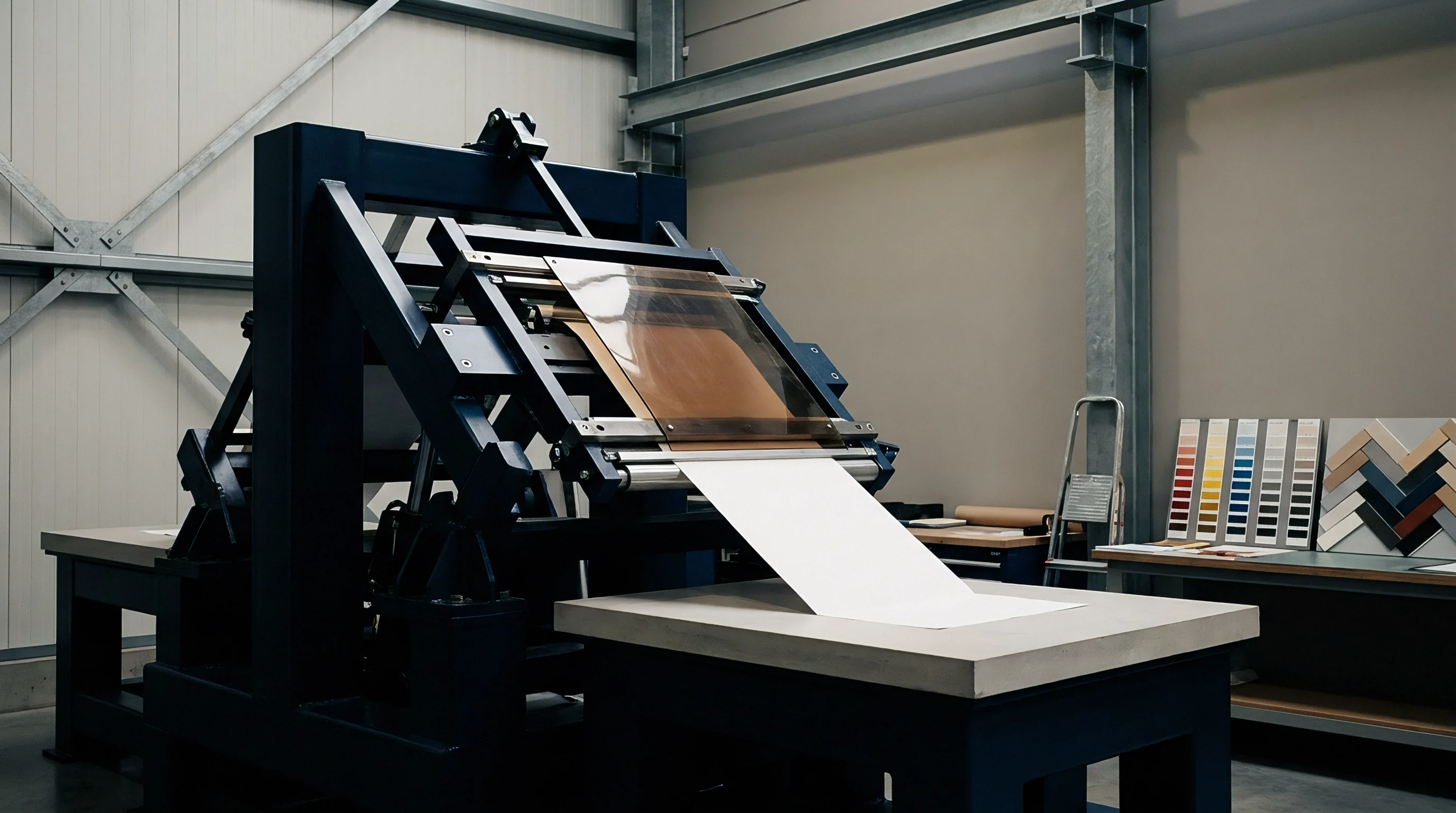
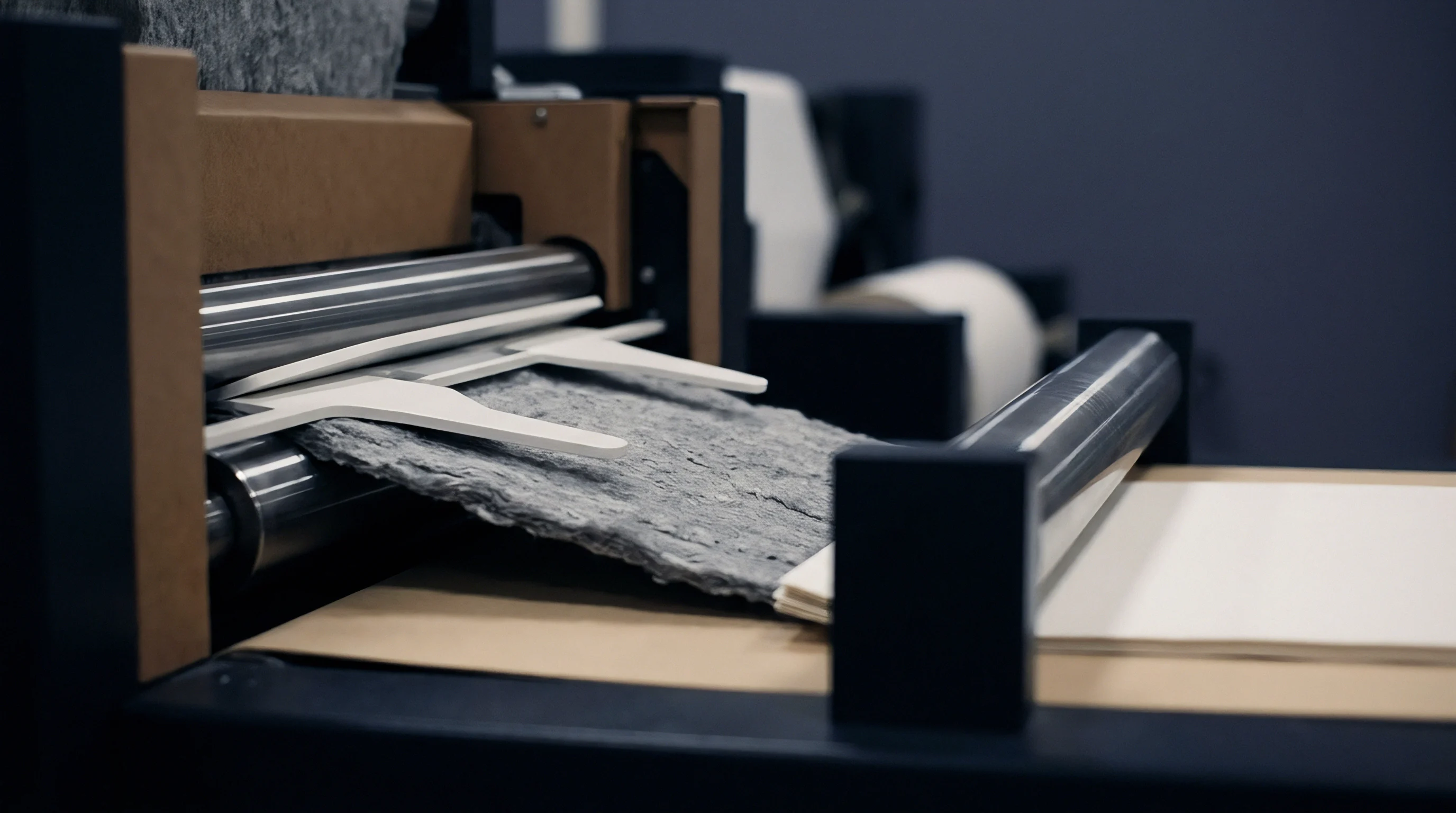
Applicator rolls transfer molten two-component polyurethane formulations onto the moving web through precise mechanical gaps. Solventless laminators utilize multi-roll metering systems where smooth steel and rubber-covered rolls rotate at differential speeds to split a liquid adhesive film down to an even coat weight between 1.1 and 1.8 grams per square meter. Maintaining fluid temperature across this roll train is vital for coating uniformity, yet heat transferred from the liquid to the moving film web initiates rapid surface energy decay if web tension and inline treatment are not synchronized.
Thermal Control across the Metering Roll Assembly
Viscosity reduction in solventless liquid systems demands precise fluid circulation within heating circuits to maintain stable fluid delivery. Standard solventless 2K polyurethane components possess high room-temperature viscosities ranging from 3,000 to 10,000 mPa·s. Heating the chemical components to 35°C ~ 45°C lowers fluid viscosity to an application window of 800 to 1,500 mPa·s.
High nip temperatures lower fluid viscosity.
Excessive cylinder temperatures transfer heat directly into the primary substrate as it passes through the coat unit. A polyolefin web entering the machine at 20 degrees Celsius absorbs thermal energy during contact with a 45 degree Celsius smooth applicator roll. This localized heating raises the web temperature, triggering instant hydrophobic recovery of the surface treatment before the second substrate is brought into contact at the primary lamination nip.
Inline Treatment Calibration and Dynamic Contact Angle
Secondary discharge units mounted immediately before the fluid applicator boost web energy back above target operating thresholds. Inline corona treaters target high-voltage discharge directly onto the film surface milliseconds prior to adhesive application. This process removes loose surface contaminants, reactivates aged polar groups, and elevates surface tension to a minimum of 42 dynes per centimeter.
- Verify bare incoming web surface energy using certified dyne test liquids under ambient room conditions.
- Engage the inline corona generator and adjust electrical power output until bare film reaching the coating unit registers between 42 and 44 dynes per centimeter.
- Set metering roll thermal oil circulation zones to maintain 38 degrees Celsius on the dosing rolls and 42 degrees Celsius on the coating roll.
- Adjust primary lamination nip temperature to 50 degrees Celsius with pneumatic pressure set to 4.5 bar across the full face width.
- Measure coat weight by taking gravimetric web samples immediately downstream of the lamination nip to confirm uniform adhesive laydown across web center and edges.
| Parameter | Minimum Threshold | Target Value | Maximum Limit | Unit of Measure |
|---|---|---|---|---|
| Adhesive Dosing Temperature | 35 | 40 | 45 | °C |
| Metering Roll Differential Speed | 1:1.2 | 1:1.4 | 1:1.6 | Ratio |
| Inline Corona Power Density | 1.5 | 2.2 | 3.0 | kW·min/m² |
| Lamination Nip Pressure | 3.0 | 4.5 | 6.0 | bar |
| Web Surface Energy at Coat Head | 40 | 42 | 46 | dynes/cm |
Compliance with ISO 8296 for surface tension measurement requires ink application under 23 degrees Celsius ambient conditioning, preventing direct raw dyne readings taken straight off a 50 degrees Celsius metering cylinder.
Operating a solventless line with applicator temperatures above recommended chemical limits reduces adhesive viscosity beyond control, inducing fluid channeling, micro-foaming, and total bond decay along the reel core.
Chamber
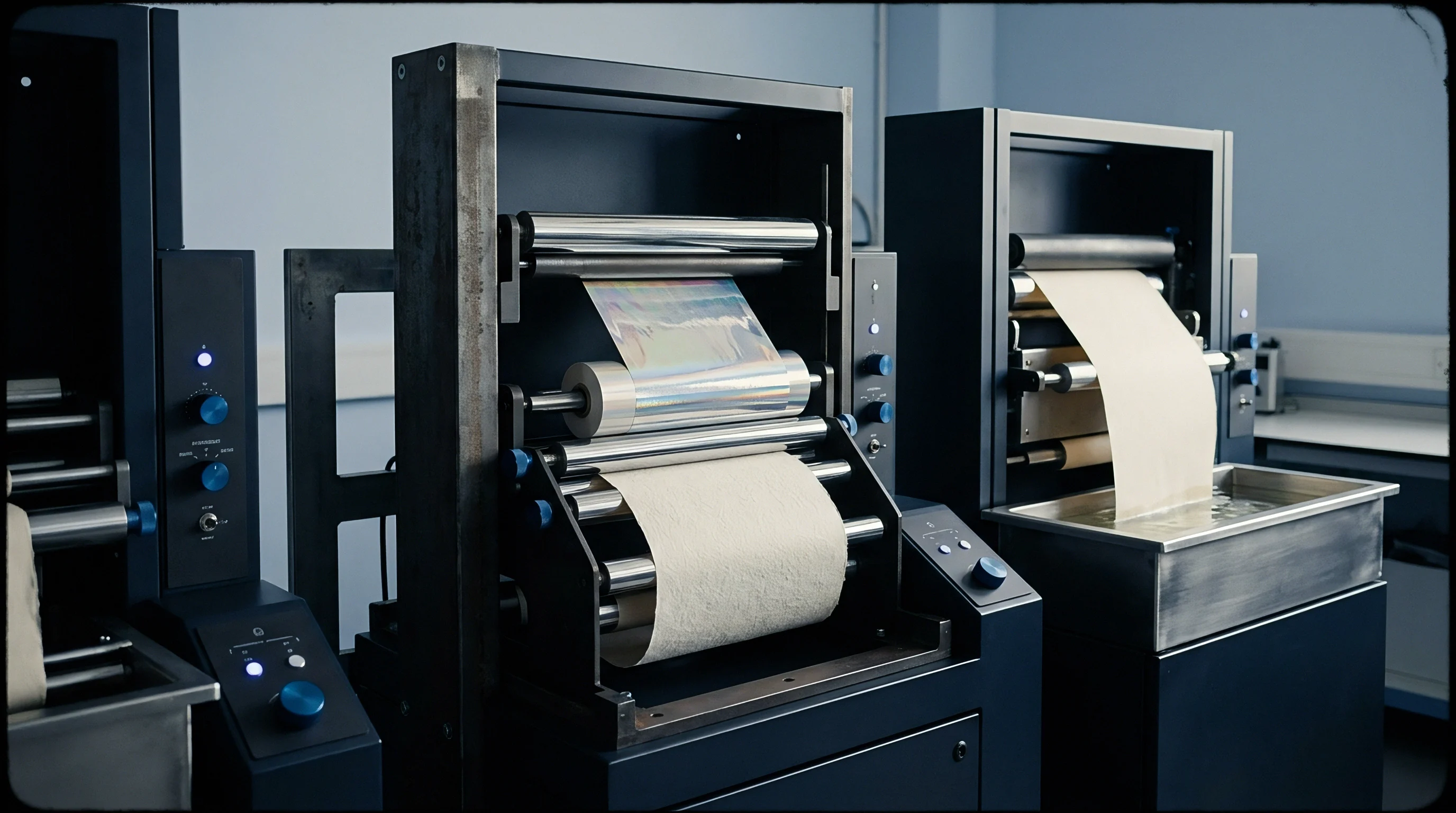
Post-lamination roll storage accelerates the chemical reaction between terminal hydroxyl groups and reactive isocyanates. Two-component solventless polyurethanes do not achieve full mechanical strength or chemical resistance at the laminator rewind station. Freshly laminated reels display green bond strength values between 0.2 and 0.5 N/15mm.
The wound roll must undergo controlled thermal aging inside a dedicated curing chamber to complete the crosslinking reaction that converts liquid monomer mixtures into a high-molecular-weight polyurethane-polyurea network.
Crosslinking Acceleration versus Surfactant Diffusion
Polyurethane network formation competes directly with the thermal migration of internal lubricants during heated curing cycles. Isocyanate (NCO) monomers react with polyol (OH) components to build molecular weight. Simultaneously, monomeric NCO groups react with ambient moisture diffused through the film edges to form amine intermediates, which subsequently react with addition NCO groups to create polyurea linkages.
Dry air prevents polyurea formation. Temperature management in the curing room regulates this chemical reaction velocity. Storage at 40 degrees Celsius accelerates NCO/OH reaction rates, reducing full cure time from 7 days to 48 hours.
Polyurethane crosslinking locks the surface. High curing temperatures simultaneously increase the mobility of unreacted slip additives within polyolefin substrates. If thermal energy speeds up slip migration more than it accelerates polyurethane crosslinking, migrating amides reach the laminate interface before the adhesive network solidifies.
The boundary layer becomes contaminated, permanently capping maximum achievable bond strength.
Thermal Gradient Elimination across Reel Cores
Internal reel temperature varies significantly between the steel mandrel core and outer winding layers during the first twelve hours of storage. A heavy reel measuring 1000 millimeters in diameter transferred from a cold converting floor into a 45 degree Celsius curing room exhibits a steep thermal gradient. Outer film layers reach chamber temperature within 2 hours, initiating rapid polyurethane cure.
The inner windings near the metal core remain at 20 degrees Celsius for up to 18 hours due to the low thermal conductivity of stacked plastic films.
This temperature differential creates uneven reaction kinetics across the roll. Outer layers cure rapidly while slip migration remains moderate. Inner layers experience prolonged exposure to rising heat while the adhesive remains uncured, causing severe surface energy decay and localized delamination near the core.
- Core Collapse Failure occurs when uncured solventless adhesive acts as a liquid lubricant under high winding tension, causing internal film layers to telescope off the core during slitting.
- Interfacial Delamination develops when heat accelerates slip agent migration into uncured liquid adhesive, forming a continuous weak boundary layer that prevents chemical anchoring.
- Reciprocal Mottling surfaces when localized surface energy loss prevents uniform adhesive wetting, resulting in optical haze and irregular visual patterns across printed foil structures.
- Thermal Curl Distortion arises when unequal thermal expansion coefficients between laminated films induce permanent structural bow during uneven cooling cycles.
Reels stored directly on concrete curing room floors lose heat unevenly, creating circumferential bond strength variations across the outer roll windings.
Does extended dwell time in elevated curing rooms permanently impair the heat-seal performance of high-slip packaging films by accumulating excess fatty amides at the sealant interface?
Metrics
Quantitative measurement of web surface energy requires strict adherence to standardized liquid mixtures and controlled atmospheric conditions. Field testing must isolate thermal decay phenomena from chemical contamination, adhesive coating defects, and mechanical measurement errors.
Standardized Dyne Evaluation and Liquid Chemistry
Wetting tension testing employs calibrated mixtures of formamide and ethyl cellosolve to identify the surface energy threshold where liquid drops spread evenly without bead formation. Standard protocol ASTM D2578 specifies applying a series of liquid mixtures with known surface tension values ranging from 30 to 56 dynes per centimeter onto the film surface using felt-tipped pens or cotton swabs. The wetting tension corresponds to the highest dyne level fluid that wets the film surface for exactly two seconds without film break or reticulation.
Dyne pens indicate surface tension drops. Spring-loaded Dyne pens can yield misleading results on films containing high slip additive concentrations. Mechanical friction from the pen tip shears the soft fatty acid amide layer, temporarily exposing underlying polar sites and producing an artificially elevated surface energy reading.
Accurate laboratory qualification requires optical contact angle goniometry using pure deionized water and diiodomethane as probe liquids.
Peel Strength Qualification and Interfacial Analysis
Mechanical separation of bonded webs under controlled tension reveals whether fracture occurs within the chemical adhesive layer or along the substrate boundary. ASTM F904 defines the standard test method for measuring comparison bond strength of similar laminates made from flexible materials. Test specimens measuring 15 millimeters in width are clamped into a universal testing machine and pulled apart at a constant rate of 280 to 300 millimeters per minute in a 90-degree or 180-degree peel configuration.
- Inspect Incoming Film Certificates to confirm base surface treatment meets minimum 42 dynes per centimeter baseline requirements prior to lamination.
- Monitor Metering Roll Temperatures continuously using calibrated infrared sensors to ensure surface heat remains within plus or minus 1.5 degrees Celsius of target.
- Log Curing Chamber Conditions including dry-bulb temperature and ambient relative humidity every four hours during the post-lamination cycle.
- Conduct Destructive Peel Testing on samples harvested from core, middle, and outer roll windings after 24, 48, and 72 hours of cure time.
| Curing Thermal Profile | Average Peel Force (N/15mm) | Peak Peel Force (N/15mm) | Observed Failure Mode | Interfacial Dyne Equivalent |
|---|---|---|---|---|
| 25°C for 72 Hours (Ambient) | 3.8 ± 0.3 | 4.2 ± 0.2 | Substrate Tear (FT) | > 40 dynes/cm |
| 40°C for 24 Hours (Standard) | 3.2 ± 0.2 | 3.6 ± 0.3 | Cohesive Adhesive Failure (AF) | 38 dynes/cm |
| 50°C for 24 Hours (Accelerated) | 1.4 ± 0.4 | 1.8 ± 0.5 | Interfacial Delamination (AT) | 33 dynes/cm |
| 60°C for 12 Hours (Extreme) | 0.5 ± 0.2 | 0.7 ± 0.2 | Clean Slip Boundary Separation | < 30 dynes/cm |
Specification documentation governing high-barrier laminates dictates that any batch exhibiting clean interfacial adhesive separation at peel forces below 1.5 N/15mm fails material qualification under EN 1464, requiring immediate rejection of the affected converting lot.
Settlement
Converting contracts assign financial responsibility for material failure based on verified conformance to written technical parameter limits. When a solventless laminated structure undergoes delamination during packaging operations or retail shelf life, commercial resolution relies on proving whether material failure resulted from defective film formulation, improper inline corona application, or excessive curing room temperatures.
Commercial Allocations for Thermally Induced Delamination
Financial losses from unbonded reel stock include lost press capacity, raw resin waste, and downtime spent clearing contaminated converting equipment. A standard converting claim calculation evaluates direct waste costs alongside operational delays. Take a 10,000-kilogram production run of a three-ply PET/Alu/LLDPE pouch structure value-added at 4.80 Euros per kilogram.
Complete delamination of the sealant layer during heat-sealing renders the entire lot unmarketable, generating 48,000 Euros in direct material scrap.
If forensic surface analysis demonstrates that surface energy decayed due to excessive erucamide concentration ~ exceeding the agreed resin specification limit of 800 ppm by more than 200 ppm ~ the film extruder absorbs the financial claim. If laboratory testing reveals that the film met chemical specifications but the converter operated curing chambers at 55 degrees Celsius to rush order delivery, responsibility shifts entirely to the lamination floor manager.
Specification Tolerances for High-Slip Laminate Runs
Purchasing agreements define upper acceptable limits for fatty acid amide concentration to prevent premature surface energy decay during hot curing. Standard specifications for lamination-grade blown LLDPE require total slip additive content to remain within 500 to 800 ppm, with a verified surface treatment level of no less than 40 dynes per centimeter upon arrival at the converting facility.
Inline corona treater maintenance logs, temperature tracking records from curing chambers, and retain samples tested according to ASTM F904 serve as mandatory evidence during commercial disputes. Converter quality teams protect operational margins by establishing strict thermal exposure caps: lamination metering roll temperatures must not exceed 42 degrees Celsius, and post-lamination curing room cycles must strictly cap ambient temperatures at 40 degrees Celsius for all high-slip polyolefin runs.