Surface Energy Thresholds for Extrusion Laminated Solid Bleached Board
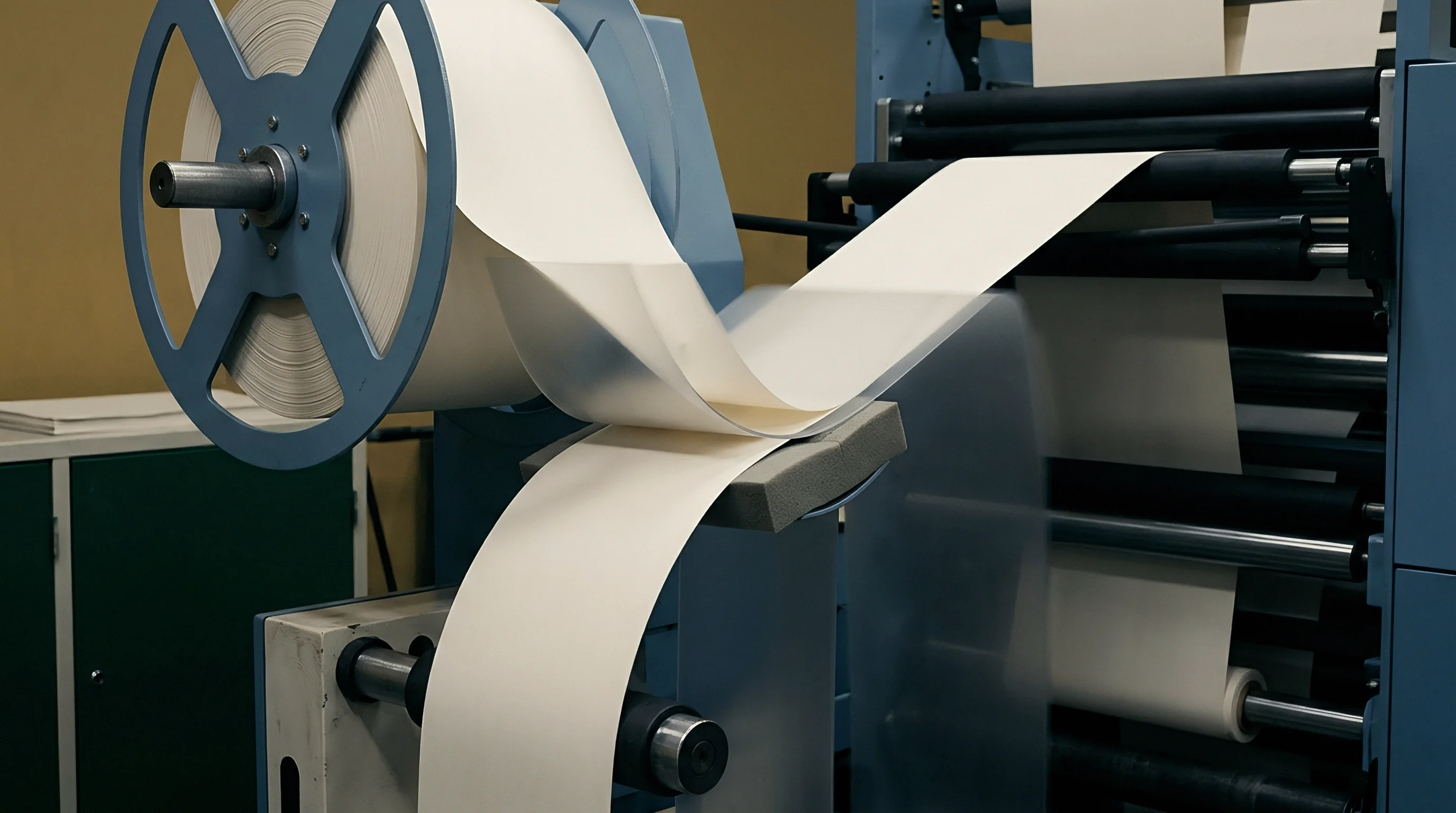
Extrusion laminating SBB requires maintaining oxidized resin surface energy above 42 dynes/cm to ensure complete fiber tear bond strength.


Wetting
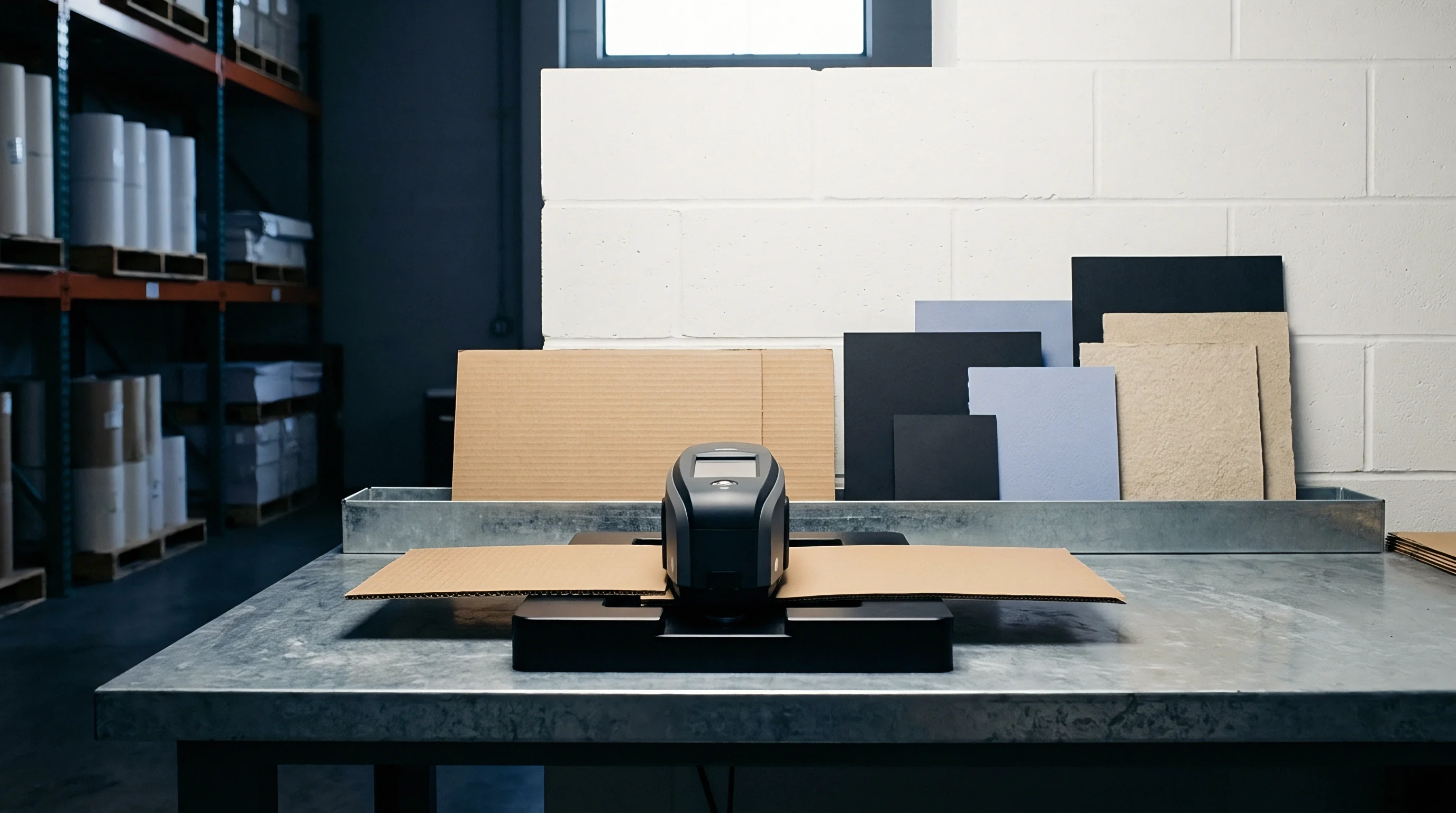
Molten low-density polyethylene emerging from an extrusion die slot at 300 degrees Celsius possesses a native surface tension of approximately 28 to 31 millinewtons per meter. Solid bleached board carrying a mineral clay coating presents a solid surface free energy between 38 and 44 millinewtons per meter. Interfacial contact between these two phases demands rapid thermodynamic spreading within the few milliseconds before the polymer curtain reaches its freezing point in the chill roll nip.
Thermodynamic Interfacial Energy Mechanics
Spontaneous spreading occurs when the total surface free energy of the solid substrate exceeds the liquid surface tension of the molten extrudate plus the interfacial tension between the two materials. The total surface energy of a mineral-coated chemical pulp sheet splits into dispersive components, originating from van der Waals forces, and polar components, originating from hydrogen bonding and dipole interactions. Uncoated bleached chemical pulp fibers exhibit strong polar character due to surface hydroxyl groups.
Kaolin and calcium carbonate mineral coatings, bound with styrene-butadiene or SA latexes, drop the polar contribution significantly while raising the dispersive baseline.
When molten polyethylene touches the board face, thermodynamic work of adhesion determines the theoretical strength of the interface. This work of adhesion is defined by the combined dispersive and polar interactions across the boundary. Liquid polymer molecules must approach within less than one nanometer of the pigment particles and latex binder matrix to establish secondary intermolecular bonds.
Insufficient liquid contact yields microscopic air voids along the interface, creating stress concentration sites that initiate premature delamination under mechanical flexing.
| Material Phase | Total Energy (mN/m) | Dispersive Component (mN/m) | Polar Component (mN/m) | Water Contact Angle (degrees) |
|---|---|---|---|---|
| Clay-Coated SBB Top Surface | 42.5 | 35.0 | 7.5 | 62.0 |
| Uncoated SBB Reverse Side | 35.2 | 29.8 | 5.4 | 78.5 |
| Molten LDPE Extrudate (Unoxidized) | 28.5 | 28.1 | 0.4 | 96.0 |
| Corona Treated LDPE Film | 44.0 | 31.0 | 13.0 | 51.5 |
| Extrusion Grade PET Resin | 43.0 | 34.5 | 8.5 | 68.0 |
| Bio-Based PLA Resin | 38.8 | 30.2 | 8.6 | 71.2 |

Polar and Dispersive Surface Components
Extrusion laminators calculate the surface energy of solid bleached board using the Owens-Wendt-Rabel-Kaelble method with probe liquids such as ultra-pure water and diiodomethane. Test data reveals that a clay-coated solid bleached board exhibiting a total surface energy of 42 millinewtons per meter typically carries a dispersive component of 35 millinewtons per meter and a polar component of 7.5 millinewtons per meter. Unoxidized low-density polyethylene possesses almost zero polar energy, leaving its interfacial bonding reliant almost entirely on weak dispersion forces unless thermal or electrical oxidation alters the polymer chains.
An oxidized low-density polyethylene surface requires a minimum total surface energy of 42 mN/m at 23 degrees Celsius to establish thermodynamic adhesion across a kaolin-coated solid bleached board.
Mineral coating formulations alter this energy spectrum considerably. High calcium carbonate ratios increase surface roughness while reducing polar sites, requiring higher melt temperatures to force the viscous polymer into micro-topographical crevices. SB latex binders soften under the thermal load of the hot extrudate, promoting micro-mechanical interlocking.
Synthetic latex excess creates a hydrophobic barrier layer that reduces polar attraction, driving the required substrate wetting threshold upward by three to five dynes per centimeter.
Matching the polar component of the extrudate to the surface energy of the mineral coating guarantees mechanical fiber tear during destructive peel testing.

Discharge
High-voltage dielectric barrier equipment modifies the chemical structure of both the moving paperboard web and the solidifying poly curtain. Applying electrical treatment to the solid bleached board prior to the extrusion nip strips loose surface moisture, burns off low-molecular-weight organic contaminants, and introduces functional oxygen groups directly onto the clay binder matrix.
Corona and Flame Surface Oxidation
Dielectric treaters generate a high-frequency atmospheric plasma discharge between an electrode assembly and a ceramic-covered ground roll. Air molecules within the spark gap ionize into ozone, free radicals, and high-energy electron streams. These reactive species strike the board substrate, breaking carbon-carbon and carbon-hydrogen bonds on the surface.
Free radical sites react instantly with atmospheric oxygen, creating polar hydroxyl, carbonyl, and carboxyl functional groups.
Flame treatment provides an alternative for high-speed lines running above four hundred meters per minute. Propane or natural gas burners operating at precise air-to-fuel ratios project an ionized flame zone against the board. Thermal excitation strips hydrogen atoms from the organic binders in the coating, depositing functional oxygen groups without generating the surface pinholes that can occur under aggressive electrical spark discharge.
- Electrode gap calibration sets the clearance between ceramic dielectric rolls to 1.5 millimeters to prevent localized arc pitting across the conductive coating layer.
- Specific power density calculation adjusts generator output relative to web width and line speed to deliver a precise target of two kilowatt-minutes per square meter.
- Ozone extraction airflow verification maintains negative pressure inside the treater hood to remove corrosive gas and stabilize ionization efficiency.
- Substrate surface temperature monitoring ensures pre-heating remains below sixty degrees Celsius to avoid binder migration before dielectric exposure.
Air Gap Melt Oxidation Dynamics
Thermal oxidation occurs within the open air gap between the extrusion die lips and the nip roll assembly. As the molten polyethylene curtain at 300 to 315 degrees Celsius travels through the ambient air gap, atmospheric oxygen reacts with the hot polymer surface. This thermal reaction creates peroxide radicals that split into polar carboxylic acids and ketone groups along the outer molecular layer facing the paperboard.
Substrates failing to maintain 40 mN/m surface energy under ISO 8296 testing conditions trigger immediate lot rejection prior to lamination.
Air gap distance controls the duration of thermal exposure. Extending the air gap from one hundred to two hundred millimeters increases surface oxidation and raises the polar energy component of the melt curtain. Excessive air gap duration cools the polymer web before contact, increasing melt viscosity and preventing full micro-mechanical penetration into the board pores.
Line operators balance air gap distance against line speed to land the exact oxidation window required for complete bonding.
Film suppliers frequently attribute lamination failure to board mill coating additives rather than admitting post-corona power attenuation on their extrusion line.

Adhesion
Evaluating the mechanical bond between extruded polymer films and chemical pulp substrates requires precise physical testing protocols. Destructive testing separates simple mechanical entrapment within paperboard pores from true thermodynamic boundary formation across the pigment interface.
Peel Resistance and Interfacial Shear
Standard ninety-degree and one-hundred-eighty-degree T-peel tests measure the force needed to strip a laminated poly layer from solid bleached board. Test specimens cut to fifteen-millimeter width are pulled on a universal testing machine at a constant crosshead speed of three hundred millimeters per minute under ISO 187 atmospheric conditioning. Strong bonds exceed the internal cohesive shear strength of the paperboard, resulting in total fiber tear where the rupture propagates entirely within the chemical pulp layers rather than along the polymer interface.
Laminates showing structural failure along the boundary layer without fiber displacement indicate low surface energy during extrusion. Increasing the surface energy of the board above forty-four millinewtons per meter shifts the failure mode from interfacial peeling to full fiber tearing. Scoring and folding operations exert intense shear stress on this boundary layer; insufficient surface treatment causes the poly film to snap away from the board surface along the crease spine, destroying liquid tight properties.
| Test Protocol | Primary Measurement | Operator Sensitivity | Line Suitability | Quantified Error Margin |
|---|---|---|---|---|
| ASTM D2578 Dyne Ink Solutions | Wetting tension threshold | High (Fluid bead dynamics) | Direct offline bench | Plus or minus 2.0 mN/m |
| ISO 8296 Reagent Standard Set | Critical surface tension | Moderate (Defined fluid film) | Quality lab verification | Plus or minus 1.0 mN/m |
| Sessile Drop Contact Angle (OWRK) | Polar / Dispersive breakdown | Low (Automated optics) | Research qualification | Plus or minus 0.3 mN/m |
| ASTM D1876 Peel Strength Test | Interfacial bond force (N/15mm) | Low (Mechanical load cell) | Destructive lot sign-off | Plus or minus 0.1 N/15mm |
Standard Measurement Protocols
Dyne test pen fluids formulated to ASTM D2578 utilize mixtures of ethyl cellosolve and formamide to gauge surface wetting tension. Applying a thin film of liquid across the clay-coated board reveals surface energy based on fluid film stability. If the liquid film remains continuous for two seconds without beading up, the substrate surface energy equals or exceeds the ink rating.
Solvents in dyne inks can dissolve trace surface additives, yielding falsely elevated readings on coated substrates carrying high surfactant loads.
A clean fiber tear across the entire creased score line indicates sufficient polymer oxidation regardless of bench dyne pen readings.
Optical contact angle goniometry provides absolute surface free energy measurement without solvent distortion. Automated dispensers place controlled two-microliter drops of polar water and non-polar diiodomethane onto the board surface. High-speed camera arrays capture the baseline contact angle within five hundred milliseconds of drop deposition, preventing absorption artifacts caused by the micro-porosity of the board coating.
Software algorithms calculate the exact polar and dispersive contributions, establishing a precise baseline for qualifying raw paperboard deliveries.
Contractual compliance for liquid packaging board requires ninety-five percent fiber tear failure under ASTM D1876 T-peel conditions following twenty-four hours of ambient conditioning.
Failure
Chemical contamination, processing anomalies, and environmental decay combine to break down interfacial adhesion in extrusion laminated structures. Identifying the physical root cause of delamination requires tracking the material state from initial extrusion nip contact through long-term warehouse storage.
Which Dyne Level Prevents Long Term Storage Delamination?
Maintaining a minimum surface energy of forty-two millinewtons per meter immediately after lamination does not ensure long-term bond stability if internal chemistry remains active. Solid bleached board carrying low-density polyethylene requires an initial post-treatment level of forty-six millinewtons per meter to compensate for inevitable surface energy decay. Internal additives inside the polymer resin, specifically fatty acid amide slip agents and anti-static compounds, migrate through the amorphous regions of the poly matrix toward the lower-energy surface over time.
Storage temperatures above thirty-five degrees Celsius accelerate this additive migration. Erucamide and oleamide molecules accumulate at the poly-board interface, forming a weak boundary layer that drops effective surface energy down to thirty-four millinewtons per meter within fourteen days. This chemical migration destroys the secondary hydrogen bonds formed during lamination, converting a board that previously passed destructive fiber tear tests into a laminate that cleanly delaminates under light peeling force.
- Interfacial peeling without fiber transfer occurs when resin melt oxidation falls below required carboxyl density during high-speed line runs.
- Delayed delamination during warehouse storage develops as fatty acid amides migrate through the polymer matrix to the board surface interface.
- Blister formation along score lines results from excessive moisture vapor expansion within the raw pulp stock during high-temperature extrusion contact.
- Pinholes in light-weight poly coatings stem from localized dewetting over hydrophobic wax inclusions embedded within the mineral coating layer.
Migratory Additives and Surface Energy Decay
Board mill additives present equal operational risks to surface stability. Uncured wet-strength resins, sizing agents, and synthetic coating binders can outgas under the intense heat of the extrusion nip. Water vapor trapped within the chemical pulp core blasts outward through the mineral coating layer as the sheet encounters three-hundred-degree molten polymer.
This vapor flash pushes the cooling polymer away from the board surface, creating micro-blisters that drastically reduce total bonded area.
Fatty acid amide migration reduces effective surface energy by eight dynes per centimeter over fourteen days of warm storage.
Extrusion laminators prevent pinhole formation and micro-dewetting by controlling board moisture content strictly between 5.5 and 6.5 percent prior to lamination. Board delivered above seven percent moisture generates steam pressure at the nip that breaks the mechanical bond, while board delivered below five percent moisture absorbs coating latex water too rapidly during initial manufacturing, leaving brittle surface binder networks prone to micro-cracking under electrical treatment.
Ignoring post-extrusion dyne decay leads to catastrophic box failure on automated high-speed filling lines, forcing line shutdowns and structural product recalls.
Yield
End-of-life processing standards and Extended Producer Responsibility schemes drive material specifications for poly-coated packaging. Extrusion lamination variables determine both the industrial repulpability efficiency of the solid bleached board and the landed unit price of the finished converter run.

Recyclability Scoring and Fiber Recovery
European recycling test standards, including the Cepi Recyclability Laboratory Test Method, evaluate poly-laminated paperboard based on total recovered chemical pulp yield and screen reject percentages. Heavy polyethylene coatings applied at coat weights above twenty-five grams per square meter form durable, continuous film sheets during hydropulping. These thick films remain intact under mechanical agitation, allowing coarse screens to separate the plastic matrix clean from the liberated pulp slurry without generating fine micro-plastic fragments.
Lightweight poly layers applied below twelve grams per square meter present severe processing challenges during stock preparation. Thin extruded coatings break into small, flexible flakes under pulper rotor shear forces. These small plastic fragments pass through five-hundredths-of-an-inch screen slots, entering the final paper stock where they cause sticky deposits on paper machine drying cylinders.
Achieving high surface energy lamination allows lower poly coat weights to remain anchored to large fiber bundles during disintegrator processing, improving screen rejection statistics.
| Specification Structure | Poly Polymer Type | Poly Coat Weight (g/m²) | Cepi Fiber Yield (%) | EPR Surcharge Category |
|---|---|---|---|---|
| Single-Side Barrier SBB | LDPE Resin | 12.0 | 92.4 | Standard Base Rate |
| Double-Side Barrier SBB | LDPE Resin | 28.0 (14/14) | 84.1 | Moderate Penalty Tier |
| High-Barrier Pack SBB | EVOH / LDPE Coex | 22.0 | 88.5 | High Penalty Tier |
| Commercial Bio-Barrier SBB | PLA Resin | 15.0 | 91.0 | Eco-Modulated Rebate |
Laminated Board Commercial Arithmetic
Financial calculations for extrusion lamination runs balance raw polymer resin costs against processing line scrap, energy consumption, and regulatory waste penalties. Consider a fifty-tonne production run of three-hundred-gram solid bleached board specified with a single-sided low-density polyethylene barrier. The raw paperboard substrate costs approximately 1,400 USD per tonne, while extrusion grade low-density polyethylene resin costs 1,650 USD per tonne.
Running a fifteen-gram LDPE coat weight requires 2.5 tonnes of polymer resin per fifty tonnes of board substrate, yielding a raw material base cost of 74,125 USD. Operating an inline corona treater adds 450 USD in direct electrical utility charges over the run, while generating an average make-ready scrap rate of 2.5 percent during line bring-up and tension calibration. Selecting an optimized surface energy treatment protocol reduces scrap by 1.2 percent, saving 450 kilograms of board and 22 kilograms of polymer resin during line setup.
- Substrate coating binder ratio balances ink holdout against the micro-porosity needed for mechanical polymer anchoring.
- Polymer coat weight threshold remains below fifteen grams per square meter to secure standard repulpability certification under Cepi guidelines.
- Corona generator power logging verifies consistent surface oxidation across the entire master roll width during high-speed extrusion.
- Dyne stability testing interval monitors surface decay kinetics at twenty-four hours, seven days, and thirty days post-lamination.
Eco-modulated Extended Producer Responsibility fees impose direct financial surcharges based on total plastic content. Plastic film content exceeding fifteen percent of total package weight moves the finished structure into higher tax categories across several European jurisdictions, adding up to 350 EUR per tonne in waste management fees. Keeping poly extrusion coat weights low while maintaining high surface energy adhesion protects both structural bond performance and the net profit margin of the packaging run.
It remains to be established whether emerging bio-based polyhydroxyalkanoate barrier extrudates can achieve thirty-eight dynes per centimeter surface stability without compromising repulpability yield targets.