Mechanical Energy Thresholds for Multi Ply Board Creasing Failures
Controlled multi-ply board creasing requires tuning rule penetration energy to exceed core shear strength without passing the outer liner tensile fracture limit.
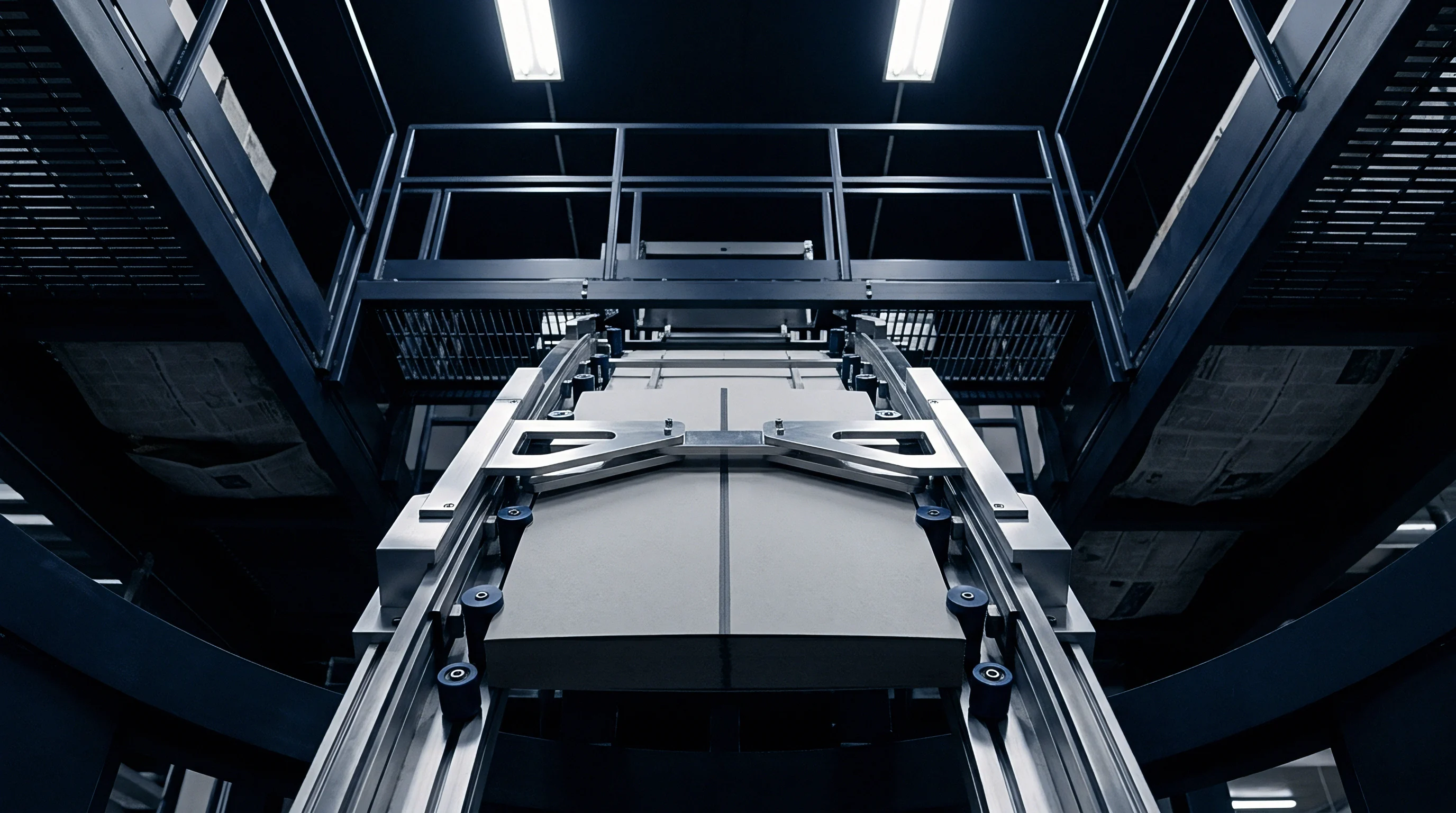

Compression
Rule penetration into multi-ply boxboard forces an instantaneous shear field through the middle plies while stretching the outer coated liner across the counter channel. Folding boxboard structures separate these duties by furnish layer. Bleached chemical pulp on the outer liners withstands tensile elongation, whereas mechanical pulp or recycled fiber furnishes in the interior plies yield under transverse shear stresses.
The transformation forms an internal hinge. Without controlled delamination across the core, the board behaves as a solid beam during carton folding, forcing the tensile strain on the exterior liner past its yield limit.
Mechanical energy input during the creasing stroke governs whether the plies delaminate cleanly or split unpredictably. The displacement of the creasing rule into the board sheet transfers work through normal indentation and lateral shear displacement. High-speed recording instruments mounted to platen die-cutters record this transfer as a force-displacement curve.
The area under this curve defines the creasing energy. When the energy input falls below the shear failure threshold of the core plies, the board retains structural integrity across its cross-section. The board resists folding, producing rounded, bulging crease lines and elevated folding torque.
Excessive energy input punches through the top liner or shears the internal plies destructively, eliminating all hinge stability.
Delamination requires an energy absorption between 0.055 and 0.125 Joules per 100 millimeters of crease line on 350-micrometer folding boxboard conditioned at 23 degrees Celsius and 50 percent relative humidity.
Core ply composition dictates how energy distributes across the z-axis. Mechanical pulps like thermomechanical pulp or chemithermomechanical pulp feature stiff, bulky fibers with lower specific surface area and fewer inter-fiber hydrogen bonds than refined chemical kraft fibers. Under cross-directional indentation, these mechanical fibers separate readily along fiber walls.
Shear stress peaks early. The delamination zone spreads laterally.
- Tensile liner rupture develops on the printed face when internal core delamination fails to materialize, forcing all displacement strain into the outer surface plies.
- Compressive inner buckling manifests as irregular wrinkles or ruptures along the female matrix groove when the bottom liner cannot fold smoothly into the channel void.
- Shear blowout occurs beyond the intended crease width when low z-directional bond strength permits unconstrained delamination across the score edges into the panel body.
Virgin chemical kraft fibers exhibit greater elongation at break than mechanical fibers. Stiff core plies absorb less deformation energy before fracturing. Recycled board furnishes present short, recycled fibers loaded with mineral fillers that fracture at lower shear stresses yet lack the elastic springback needed to maintain crisp carton edges.
Caliper loss during creasing sets the initial folding resistance. The balance between z-directional shear and outer liner tension defines acceptable converting performance. A balanced furnish yields a durable hinge without tearing the surface coating.
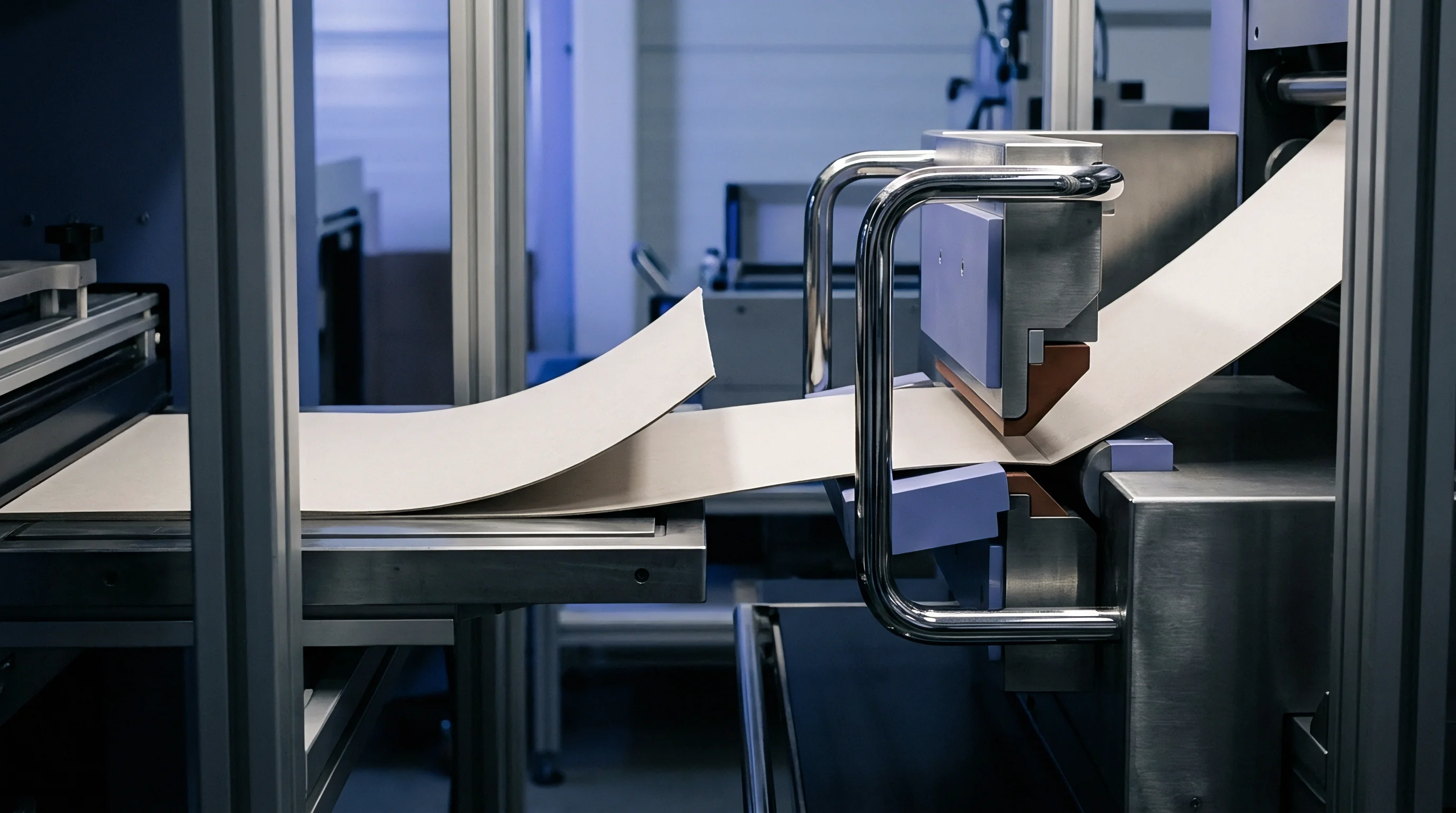

Matrix
Channel geometry across the steel counter-plate sets the spatial distribution of bending strain during rule insertion. Die-cutting tooling pairs a rounded steel creasing rule of defined width with a female counter-channel cut into phenolic resin, pressboard, or steel counter plates. The groove width and depth dictate the shear angle imposed on the board plies.
A narrow channel pinches the caliper against the channel shoulders, creating sharp shear cutoffs. An overly wide channel disperses the downward force, causing inadequate internal cleavage and spongy fold lines.
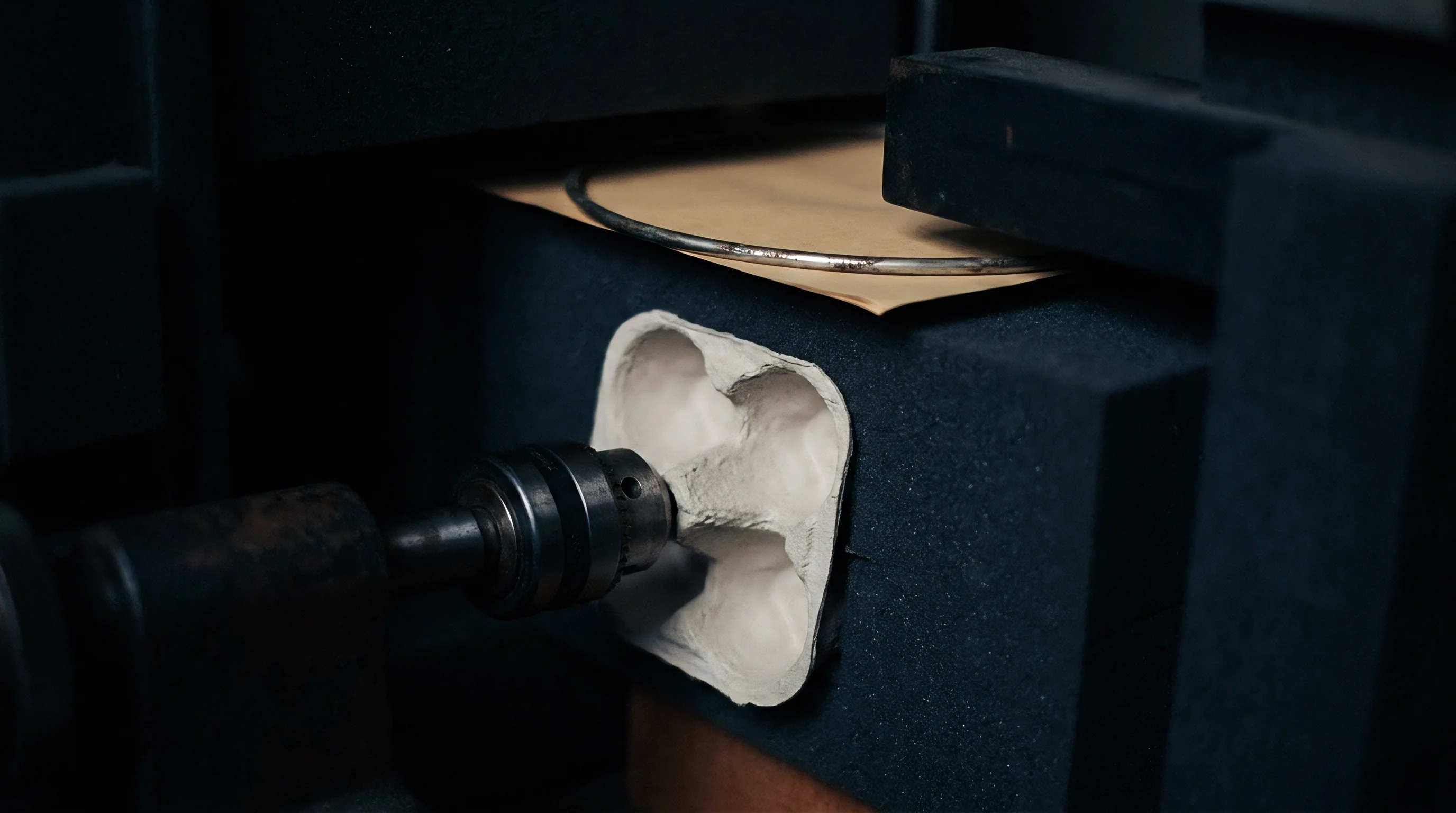
Should Die Clearance Exceed Board Caliper?
Converting specifications balance the channel width against nominal sheet thickness to prevent edge pinch. The industry standard formulation calculates female channel width as the rule width plus 1.5 to 1.7 times the board caliper for folding boxboard, adjusting toward 1.4 times caliper for solid bleached sulfate grades. Solid bleached sulfate features uniform chemical pulp throughout all plies, requiring sharper shear localization to induce delamination.
When channel width drops below rule width plus 1.3 times the caliper, shear forces transform into localized cutting action. Liner fibers tear. The matrix edge shears the bottom liner before internal delamination initiates.
Creasing rule profiles introduce geometric stress concentrations. Standard rules utilize round-edge profiles with radii matching half the rule thickness. Flat or knife-edge profiles intensify contact pressure, driving the top liner beyond its yield point before sufficient bending occurs to stress the core in shear.
High-speed flatbed autoplaten presses operate with cycle times below 60 milliseconds per stroke. Dynamic shock waves travel through the board thickness. Tooling alignment drifts under press vibration.
Channel wear widens the score.
| Substrate Grade | Caliper (µm) | Rule Width (pt / mm) | Matrix Channel Width (mm) | Channel Depth (mm) | Creasing Energy (J/100mm) | Primary Failure Mode |
|---|---|---|---|---|---|---|
| Folding Boxboard (FBB) | 380 | 2 pt / 0.71 | 1.30 | 0.40 | 0.082 ± 0.008 | Top Liner Cracking at Low Depth |
| Solid Bleached Board (SBB) | 350 | 2 pt / 0.71 | 1.20 | 0.35 | 0.114 ± 0.011 | Core Shear Pinched at Narrow Matrix |
| Coated Recycled Board (CRB) | 420 | 2 pt / 0.71 | 1.45 | 0.45 | 0.068 ± 0.009 | Matrix Shoulder Blowout / Delamination Spreading |
| White Lined Chipboard (WLC) | 450 | 3 pt / 1.05 | 1.75 | 0.50 | 0.076 ± 0.010 | Inner Liner Bursting Under Compression |
Penetration depth dictates the progression of work done on the multi-ply sheet. Initial contact compresses the top coated liner, consuming elastic work without inducing plastic deformation. As the rule moves deeper into the counter groove, z-directional normal stresses transition into interlaminar shear stresses.
When shear stress exceeds the internal bonding limit, the plies split. The board collapses into several thinner, decoupled layers that bend independently without fracturing the outer faces.
Matrix channel geometry governs the trade-off between exterior tensile rupture and interior delamination spread.
- Tooling verification establishes the baseline by measuring creasing rule height with micrometer calipers against press platen datum blocks.
- Channel alignment checks evaluate the concentricity of the rule centerline relative to the female matrix trough using carbon impression papers. Misalignment shifts shear forces onto a single channel shoulder, cutting the liner.
- Depth penetration calibration sets the stroke lower dead point in increments of 0.02 millimeters to establish the threshold between under-creasing and backliner bursting.
- Dynamic speed validation verifies the set penetration depth under production speeds of 7,000 to 9,000 sheets per hour. Press frame deflection under load alters actual rule penetration.
Tooling manufacturers often claim their generic matrix profiles work across all paperboard categories without adjustment, blaming pressroom humidity or web tension whenever scores burst during converting trials.

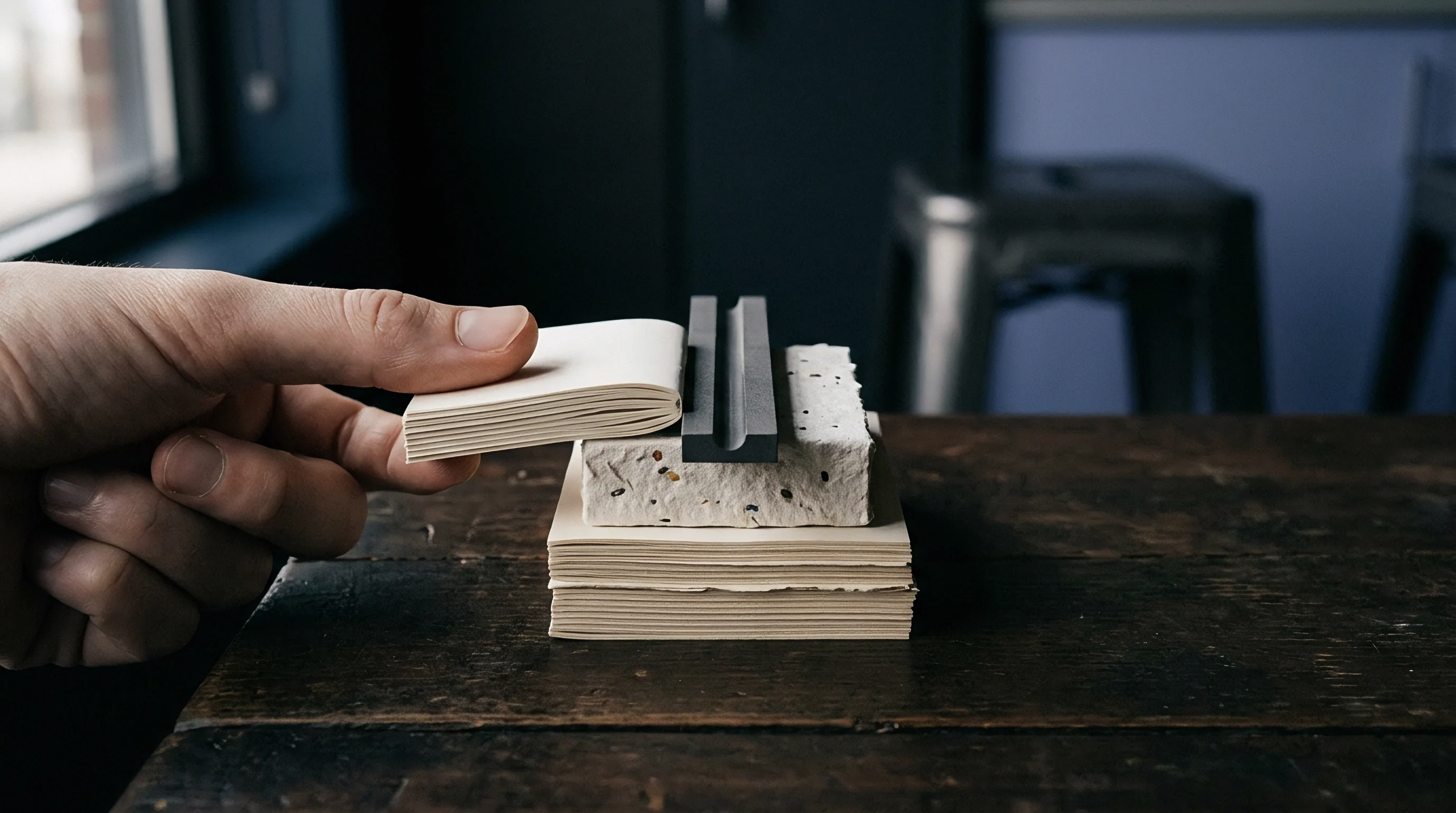
Fracture
Delamination failure manifests along distinct planes when mechanical work input departs from the permissible creasing window. In multi-ply boards, each interface between distinct pulp layers forms a potential fracture path. The mechanical work necessary to initiate delamination depends on the cohesive strength of individual fiber networks and the adhesive bonds between plies.
If the energy absorbed during indentation fails to reach the critical strain energy release rate of the internal ply boundary, delamination cannot propagate. The outer plies then absorb the bending strain during folding. Tension snaps the top plies.

What Fracture Mechanics Govern Ply Separation?
Internal ply interfaces split under localized transverse shear when the rule forces the board into the female channel. Multi-ply boards produced on multi-former cylinder or fourdrinier machines exhibit anisotropic fracture toughness. Fracture toughness along the z-axis (Mode I opening) ranges from 100 to 300 J/m², whereas interlaminar shear fracture toughness (Mode II forward shear) spans 250 to 600 J/m², depending on furnish refining and starch spray application between plies.
Under the creasing rule, the stress state combines Mode I and Mode II loadings. Mixed-mode fracture drives crack propagation parallel to the sheet surfaces.
Fiber orientation adds directional variance. Fibers aligned predominantly along the machine direction exhibit elevated tensile modulus and lower elongation in that direction, alongside reduced transverse shear resistance across the cross direction. Creasing perpendicular to the machine direction demands lower energy to achieve interlaminar delamination because cross-directional shear stresses decouple the parallel fibers easily.
Creasing parallel to the machine direction requires higher mechanical energy input. The fibers resist transverse splitting. High indentation depths risk top liner cracking before the longitudinal bonds fracture.
| Board Property | Test Method | GC1 / GC2 (FBB) | SBS / SBB | WLC / CRB | ||
|---|---|---|---|---|---|---|
| Scott Internal Bond Strength (J/m²) | ISO 16260 / TAPPI T 569 | 130 – 190 | 220 – 340 | 110 – 160 | ||
| Z-Direction Tensile Strength (kPa) | ISO 15754 | 280 – 390 | 450 – 620 | 220 – 310 | ||
| Tensile Strain to Break MD (%) | ISO 1924-3 | 1.8 – 2.4 | 3.0 – 4.2 | 1.4 – 2.0 | ||
| Tensile Strain to Break CD (%) | ISO 1924-3 | 3.1 – 4.5 | 4.8 – 6.5 | 2.5 – 3.8 | ||
| Creasing Energy Window (mJ/cm) | Instrumented Crease Test | 6.5 – 11.2 | 9.8 – 16.5 | 5.2 – 8.8 | ||
| Residual Bending Moment Ratio (%) | ISO 2493 / TAPPI T 829 | 35 – 48 | 40 – 55 | 30 – 42 | ||
| Values represent standard industrial ranges for cartonboard calipers between 320 µm and 450 µm conditioned at 23°C and 50% relative humidity. | ||||||
Moisture dictates fiber ductility. When board moisture drops below 6.0 percent, fiber networks stiffen. Tensile elongation drops.
Brittleness accelerates at low humidity. Under dry ambient conditions, the mechanical energy threshold for outer liner tensile rupture shifts downward, overlapping with the delamination threshold. The operating window closes entirely.
Creasing rules crack the coating and top fibers at penetration depths that fail to generate core cleavage. Moisture levels above 8.5 percent produce fiber plasticization. Inter-fiber friction drops.
The core yields at low energy, but the resulting crease lacks defined crease recovery forces, causing bulging carton panels on packaging lines.
Mineral coating formulations influence fracture initiation on the tensile face. Coated boards carry 15 to 30 grams per square meter of pigment and latex binders per side. Calcium carbonate pigments build brightness and opacity but introduce rigid, low-strain mineral domains into the surface.
Kaolin clay platelets offer higher aspect ratios, sliding under strain to improve flexibility. High calcium carbonate ratios reduce coating elongation at break below 1.2 percent. The brittle coating develops microcracks under the rule edge.
Microcracks act as stress concentrators, channeling fracture directly into the underlying chemical pulp plies.
Stiffness drops under cyclic flexing. Excess penetration ruptures the backliner. Energy dissipation prevents surface cracking.
How the dynamic stress pulse of high-speed rotary die-cutters alters mixed-mode fracture propagation relative to static benchtop crease testing remains unresolved across academic and industrial packaging research.
Dossier
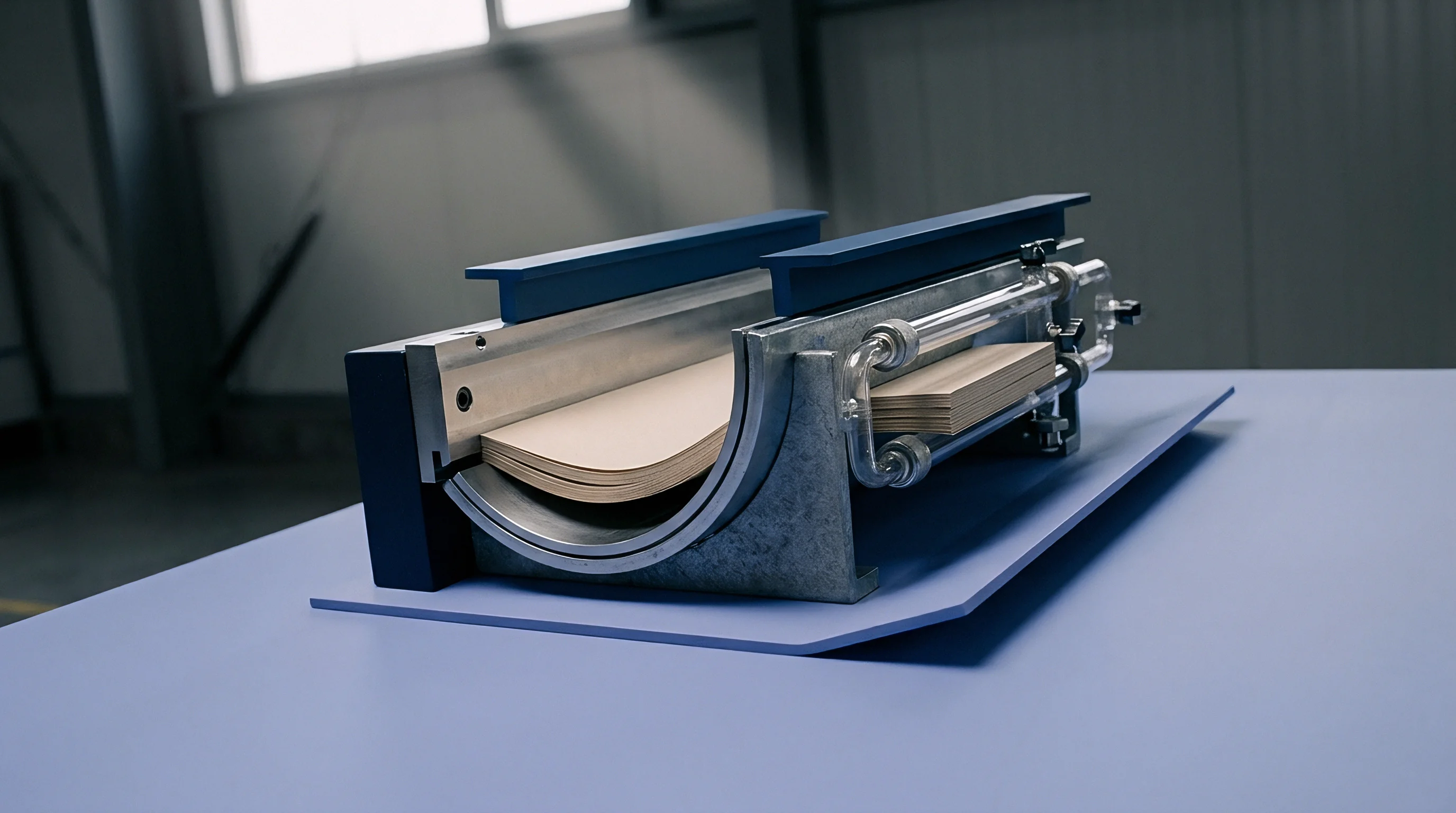
Laboratory compliance testing relies on standardized bench routines to isolate creasability metrics from rotary die variables. Test methods characterize board behavior by measuring the bending moment of an uncreased sample relative to a creased sample folded to 90 degrees. The ratio between these bending resistances, defined in ISO 2493-1 and TAPPI T 829, quantifies the crease recovery and crease stiffness reduction.
A standard crease drops residual folding resistance by 50 to 70 percent compared to the uncreased board. Reductions below 40 percent trigger folder-gluer jams. Reductions exceeding 80 percent indicate sheared, broken score lines that destabilize the structural carton frame.
Specifying board stock requires explicit test protocols and defined acceptance boundaries across physical, chemical, and converting metrics. Incoming quality control protocols verify compliance prior to press staging.
- Equilibration verifications confirm pallet moisture via sword probe testing to guarantee equilibrium with standard atmospheres per ISO 187 (23°C, 50% relative humidity).
- Z-directional strength audits execute Scott Bond testing under ISO 16260 to verify that interlaminar shear strength stays within the required 130 to 190 J/m² band for mechanical-core folding boxboards.
- Tensile elongation mapping validates strain-to-break values in both machine and cross directions using ISO 1924-3 constant rate of elongation testers.
- Instrumented creasability curves construct force-penetration profiles using laboratory creasing devices like the Pira Crease and Board Stiffness Tester or Marbach Creasability Tester.
- Visual crack assessments examine the coating and top liner across folded creases under 10x optical magnification following automated folding to 90 and 180 degrees.
Contractual board specifications governed by ISO 2493-2 bind suppliers to a maximum crease residual bending resistance ratio of 50 percent, penalizing shipments that cause cartoning line jams.
Laboratory creasing units operate at slow displacement velocities, typically 10 to 50 millimeters per second. Commercial platens drive creasing rules into stock at velocities exceeding 1,500 millimeters per second. Viscoelastic polymers inside the fiber walls and latex binders within surface coatings exhibit strain-rate dependency.
Higher strain rates elevate the apparent elastic modulus while depressing ultimate strain to failure. Rotary dies introduce dynamic shock. A sheet that demonstrates clean delamination on a laboratory screw-driven tester may crack on an autoplaten running at 8,500 sheets per hour.
Commercial contracts define actionable rejection criteria through physical property envelopes. The buyer establishes specific clauses detailing acceptable tolerance bands for bulk, moisture, and ply-bond strength. When mill certs omit Scott bond values or report broad averages across multiple parent reels, converters bear the liability for press downtime.
Standard delivery contracts referencing DIN 55437-1 specify that delivered board reels must exhibit cross-web caliper uniformity within plus or minus 3 percent, protecting the converter from variable penetration depths across wide-format die beds.
Outlay
Converting operations price scoring defects through folder-gluer waste tallies and automated packing line stoppages. When a multi-ply board exhibits a narrow creasing energy window, press crews expend hours adjusting make-ready sheets, shimming die plates, and swapping matrix channels. A make-ready delay on a large-format flatbed die-cutter consumes between 80 and 150 euros per hour in machine overhead.
Die setup adjustments burn 500 to 1,500 waste sheets per run. High bulk reduces shear resistance.
Commercial filling lines run at speeds between 300 and 800 cartons per minute. At these line rates, carton blanks pass through robotic carton erecters that rely on uniform crease resistance. If the creasing force failed to induce delamination across the score line, folding resistance remains high.
Box squaring degrades immediately. The robotic vacuum cups fail to pull the carton into a square geometry, causing feeder mis-picks. A single feeder jam on a continuous pharmaceutical packaging line halts filling, blister sealing, and secondary casing machinery.
Packaging line downtime averages 2,000 to 8,000 euros per hour.
A carton blank that fails to fold cleanly at its engineered hinge line stops an entire automated production plant.
Downgauging calculations demonstrate how material savings evaporate when creasing mechanics fail. Packaging engineers frequently attempt to substitute a 380-micrometer solid bleached board with a 420-micrometer folding boxboard or coated recycled board to reduce substrate cost per metric ton. Folding boxboard offers higher bulk and bending stiffness per unit grammage due to its mechanical pulp core.
The mechanical pulp core exhibits lower interlaminar shear strength and tighter creasing tolerances. If the die-cutting tooling is not re-engineered with wider matrix channels and lower penetration depths, the top liner cracks along the print side. The resulting rejection of printed, cut, and glued cartons creates total financial loss encompassing raw stock, inks, coatings, die costs, and committed line time.
Scrap cartons can re-enter recycling streams, but the financial recovery is minimal compared to the value of delivered packaging. Discarded printed cartons yield repulping fiber value of approximately 80 to 140 euros per ton, representing less than ten percent of the landed stock purchase price. Waste generation cascades through the entire value chain.
Folder gluers reject warped blanks. When substrate creasing energy thresholds are miscalculated, the converter absorbs thousands of euros in spoiled inventory and customer backcharges.