Paperboard Recyclability Testing Protocols for Barrier Coated Packaging
Standardized repulping protocols quantify fiber yield, screenable flakes, and adhesive stickies to establish paperboard barrier coating recyclability grades.

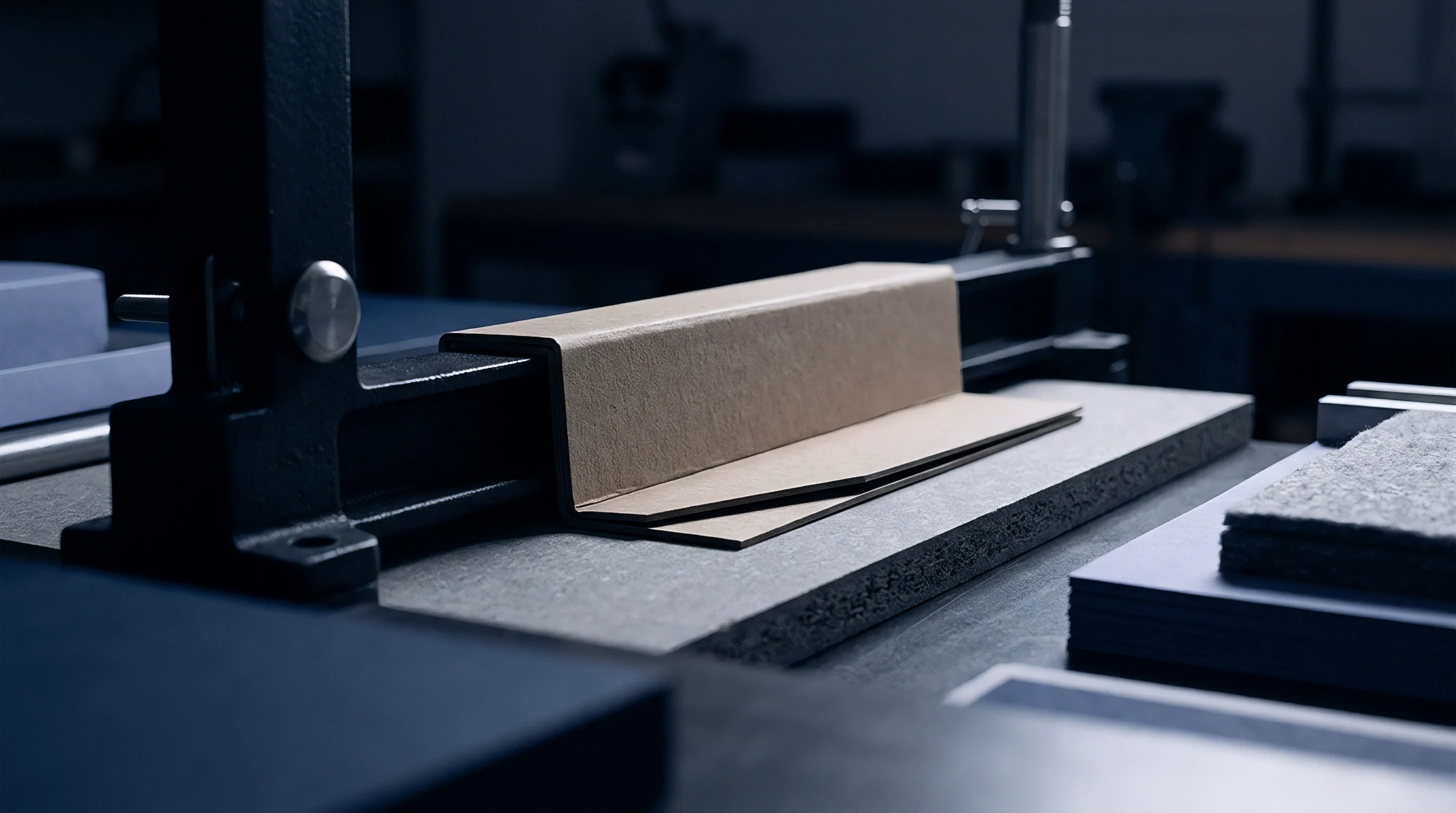
Pulper
Mechanical action drives disintegration. Industrial hydrapulpers break down recoverably coated stock through intense hydrodynamic shear, hydraulic friction, and inter-fiber collision within aqueous suspension. When barrier-coated paperboard enters the recycling circuit, the repulping sequence determines whether the synthetic film or continuous dispersion coating detaches as large, screenable fragments or breaks down into colloidal contaminants.
Rotor geometry, shaft speed, vat geometry, and pulp batch consistency govern the stress field applied to the wet fiber network. Low-consistency repulping operates between three percent and six percent solids content by weight, creating high fluid velocity that favors the detachment of ductile, non-wetting polyolefin films from solid bleached sulfate or folding boxboard substrates.
Temperature alters polymer ductility. Raising the wash water temperature above the glass transition threshold of an aqueous dispersion coating softens the synthetic matrix, inducing sticky agglomeration under rotor impact. Aqueous dispersion formulations based on styrene-butadiene latex, acrylic copolymers, or bio-based polyesters like polyhydroxyalkanoates react differently to thermal shear than traditional extruded low-density polyethylene films.
Polyethylene maintains physical integrity under standard pulping conditions, separating cleanly from bleached kraft fibers when mechanical shear breaks the interface interface bond. Dispersion coatings containing mineral fillers or cross-linking agents tend to shatter into micro-scale particles under excessive impellor speed, creating fine suspended flakes that bypass coarse screens and contaminate the finished stock paper web.

Dispersion Mechanics during High Consistency Agitation
Consistency settings between twelve percent and eighteen percent force fiber-to-fiber friction to dominate the disintegration sequence. High-consistency batch processing reduces energy consumption per tonne of dry fiber while accelerating water penetration into the hydrophilic cellulose lattice behind the hydrophobic surface layer. Chemical additives such as non-ionic surfactants or caustic soda alter interfacial tension, promoting wetting along the coating-paperboard boundary.
Water quality alters slurry pH. Maintaining slurry alkalinity between pH 7.5 and pH 8.5 neutralizes resin acids, preventing premature precipitation of dispersed polymers onto the exposed cellulose surfaces.
| Test Protocol | Consistency (%) | Temperature (°C) | Rotor Speed (RPM) | Duration (Min) | Slurry pH |
|---|---|---|---|---|---|
| CEPI Harmonised v2 | 4.0 ± 0.2 | 40 ± 2 | 3000 ± 50 | 10 to 20 | 7.0 to 7.5 |
| PTS-RH 021/97 Category 2 | 2.5 ± 0.1 | 50 ± 2 | 3000 ± 50 | 15 | 7.0 to 8.0 |
| Aticelca 501/19 | 1.5 ± 0.1 | 20 ± 2 | 1500 ± 25 | 10 | 6.5 to 7.5 |
| WMU / FBA Standard | 3.0 ± 0.2 | 49 ± 2 | 3000 ± 50 | 20 | 7.0 to 8.5 |
Rotor speed adjustments directly control particle size distributions during stock preparation. Higher rotational velocities disintegrate tough wet-strength paperboard liners, yet excessive tip speeds shred soft polyolefin films into micro-particles. Micro-particles defeat mechanical fractionators, forcing paper mills to reject contaminated slurry lots.
Controlling vat dwell time prevents the breakdown of polymeric barriers into sub-millimeter stickies, ensuring that non-paper constituents stay large enough for downstream separation screens.
Fiber Release Dynamics at Surface Boundaries
Water transport through the board edges and surface pinholes dictates the detachment rate of continuous water-barrier films. Uncoated cut edges act as primary conduits for liquid absorption, swelling the internal cellulose matrix until hydrogen bonds weaken under mechanical agitation. Laminated paperboards featuring double-sided extruded polyethylene restrict water entry strictly to cut edges, doubling or tripling the required pulping duration compared to single-side coated grades.
Substrate sizing levels, wet-strength resin content, and internal starch additions delay swelling, demanding higher mechanical energy inputs to achieve fiber liberation.
A thirty-minute pulping cycle at forty degrees Celsius liberates ninety-six percent of kraft fibers from single-sided polyethylene board while keeping eighty-five percent of the plastic film area intact above two millimeters.
Agitation in the presence of synthetic polymers leads to complex phase separation dynamics. As cellulose fibers detach, the hydrophobic coating film floats or settles based on its specific gravity relative to the liquid medium. Untreated low-density polyethylene has a density between 0.910 and 0.925 grams per cubic centimeter, facilitating floatation separation in unagitated flotation tanks.
High-density filler-loaded dispersion coatings exhibit densities exceeding 1.15 grams per cubic centimeter, causing broken flakes to sink alongside cellulose stock, complicating physical separation. Laboratory testing protocols must measure this gravity variance to predict commercial mill yield loss accurately.
Ignoring pulper shear limits and stock consistency settings during mill trials causes synthetic film fragments to break down into sub-millimeter particles, blinding machine wires, ruining press felts, and triggering catastrophic batch rejection charges from paper manufacturing facilities.
Standard
Laboratory evaluation procedures establish standardized reference environments to simulate commercial paper mill recycling systems. Controlled bench conditions eliminate variance in water hardness, temperature drift, and mechanical shear, allowing precise comparison between different barrier formulations. Testing institutions rely on standardized conditioning environments specified under ISO 187, holding paperboard samples at twenty-three degrees Celsius and fifty percent relative humidity for a minimum of twenty-four hours prior to repulping.
Unconditioned samples alter moisture content, distorting dry mass balance calculations and invalidating fiber recovery percentages.
European and North American converter markets enforce distinct assessment methodology frameworks. The CEPI Harmonised Recyclability Test Method Method v2 serves as the primary benchmark across European paper mills, focusing on fiber yield, coarse reject percentages, macrosticky contamination, and sheet optical homogeneity. North American facilities frequently reference the Western Michigan University recycling protocol, which incorporates specific screening cutoffs and recycling mill process simulation steps.
Reconciling test output discrepancies across international supply chains requires strict alignment on screening mesh dimensions, water filtration methods, and mass balances.
European Laboratory Frameworks for Fiber Recovery
European protocols emphasize quantitative mass distribution accounting across multiple separation stages. The test procedure begins by disintegrating fifty dry grams of barrier-coated paperboard in four percent consistency slurry. Following pulping, the unrefined pulp passes through a standardized laboratory slotted screen plate featuring 0.15-millimeter slot widths.
Fiber fractions passing through the screen constitute the usable pulp stream, while material retained on the screen plate represents the coarse reject fraction.
- Coarse Reject Mass measures the dry weight of unseparated fibers, intact plastic laminates, and unbroken board flakes retained on a 0.15-millimeter slotted screen plate.
- Macrosticky Surface Area quantifies tacky polymer particles collected on screen plates, expressed in square millimeters per kilogram of dry pulp stock.
- Net Fiber Yield calculates the dry mass of fully defibered cellulose passing through filtration stages relative to total initial paperboard dry mass input.
- Optical Sheet Homogeneity rates the density of unpulped flakes and synthetic speckles visible in laboratory handsheets formed from the accepted fiber fraction.
Evaluating aqueous barrier coatings under Aticelca 501/19 rules requires measuring fiber loss across four distinct severity levels, ranging from Grade A+ down to Grade C. Grade A+ board achieves full defibering under mild processing conditions with minimal gross waste, making it suitable for high-volume graphic and packaging grades. Grade C packaging requires high-energy mechanical pulping and specialized industrial screening equipment, restricting its acceptance to specific containerboard mills equipped with heavy reject processing lines. Grades falling below Grade C boundaries are deemed non-recyclable, incurring elevated producer-responsibility surcharges across European distribution markets.

North American Bench Protocols and Screening Sizes
North American testing frameworks prioritize sticky contaminant formation alongside fiber detachment rates. The Fibre Box Association protocol for wax-alternative coatings subjects candidate packaging to mechanical pulping, followed by vibrating screen separation through 0.006-inch (0.15 mm) slotted plates. Accepted pulp must form acceptable laboratory handsheets without exhibiting surface tackiness, press felt staining, or sheet blocking during thermal drying operations at one hundred degrees Celsius.
Standardized testing mandates that gross non-paper reject mass remaining on a zero-point-fifteen-millimeter slotted screen plate must not exceed five percent of total dry sample input mass.
Adhesion testing of barrier coatings under repulping conditions demands precise chemical monitoring of process wash water. Water-soluble synthetic binders, polyvinyl alcohol films, and alkali-swellable acrylic resins dissolve directly into pulper process water. Dissolved organic substances elevate Chemical Oxygen Demand (COD) levels in mill effluent systems, creating biological water treatment strain.
Testing laboratories measure COD generation per kilogram of processed board, marking formulations that leach excessive organic compounds as hazardous to closed-loop mill water systems.
Under section four of the standard European mill acceptance agreement, any paperboard lot producing macrosticky surface areas exceeding five thousand square millimeters per kilogram of dry pulp triggers immediate rejection of the delivered reel stock, transferring all transportation and disposal costs back to the board converter.


Screen
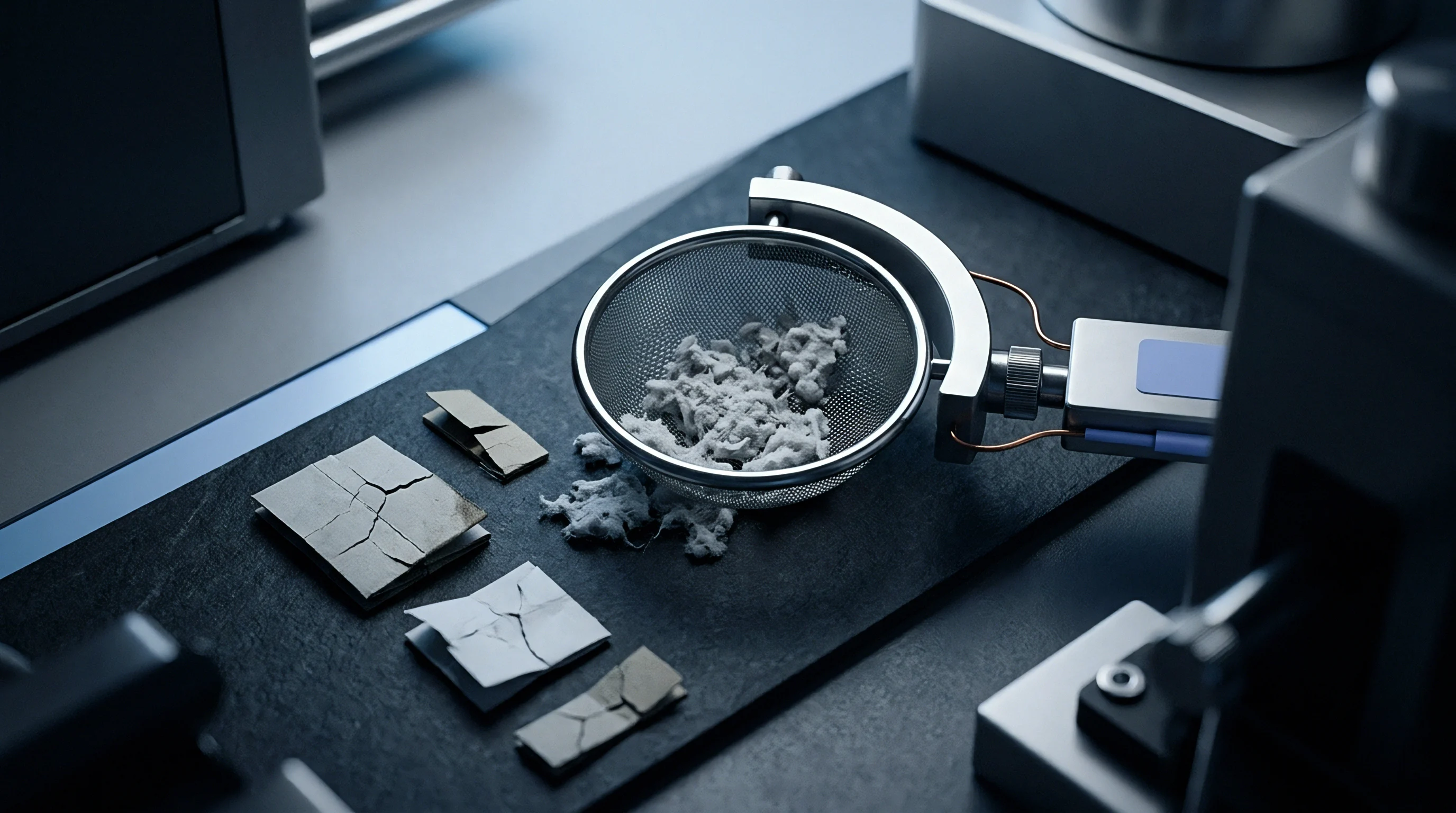
Physical separation equipment isolates cellulose fibers from non-papermaking constituents using size-exclusion mechanisms. Laboratory screen units utilize vibrating or rotary pressure chambers fitted with precision-machined slotted plates. Slot widths calibrated to 0.15 millimeters (150 micrometers) represent the standard benchmark for capturing coarse contaminants, film fragments, and unpulped paperboard bundles.
Fiber stock passing through screen slots enters the accepted stream for handsheet production, while coarse synthetic residues collect on the plate surface for gravimetric quantification.
Slot geometry directly governs contaminant capture efficiency. Parallel-sided slots offer uniform size exclusion, but smooth contours risk permitting flexible plastic films to deform under hydraulic pressure and pass through the barrier. Modern laboratory screens employ contoured or wedge-wire slot profiles that create local micro-turbulence at the screen surface, preventing flat polyolefin film fragments from aligning parallel to fluid flow lines and blinding the screen plate aperture.
How Does Coating Fragmentation Alter Reject Fractions?
Polymer matrix formulation dictates particle size distribution following mechanical disintegration. High-molecular-weight extruded polyethylene films maintain physical continuity, tearing into large, pliable sheets ranging from five millimeters to several centimeters in length. These large fragments collect on screen plates without clogging fine slots, allowing clean water and liberated fibers to pass through unobstructed.
Extruded films yield high mechanical screenability, leaving minimal fine residue in accepted fiber slurry streams.
Brittle dispersion coatings formulated with high mineral filler ratios react differently under rotor impact. Calcium carbonate, kaolin clay, or talc additions reduce film elongation at break, causing the coating layer to shatter into tens of thousands of micro-particles ranging from ten to two hundred micrometers in size. Micro-particles closely match cellulose fiber dimensions, passing freely through 0.15-millimeter screen slots into accepted pulp streams.
Fine coating fragments impair paper machine drainage, lower finished paper tensile strength, and induce surface dusting during secondary converting passes.
| Residue Type | Particle Size Range | Separation Mechanism | Primary Pass Target | Secondary Risk |
|---|---|---|---|---|
| Extruded PE Film | 5.0 mm to 50.0 mm | Slotted Screen (0.15 mm) | Coarse Reject Collector | Screen Plate Blinding |
| Brittle Dispersion Flakes | 50 µm to 300 µm | Centrifugal Cleaner | Accept Stream Carryover | Handsheet Optical Specks |
| Agglomerated Stickies | 100 µm to 2.0 mm | Flotation / Fine Screen | Reject Sludge Outflow | Paper Machine Wire Deposit |
| Dissolved Binders / PVA | < 0.1 µm (Soluble) | Effluent Biological Treatment | Water Circuit COD | Foaming in White Water |
Laboratory screening efficiency depends heavily on stock consistency during the screening pass. Slurry consistency must remain below 0.5 percent dry solids by weight during laboratory fractionation to prevent fiber mat formation over screen slots. High consistency forces cellulose fibers to interlock into a dense filter pad on the plate surface, trapping fine polyolefin particles that would otherwise pass through or blocking clean fiber flow into the accept chamber.

Slotted Filtration Efficiency and Macrosticky Extraction
Sticky contaminants pose severe operational risks to paper manufacturing machinery. Synthetic adhesives, hot-melt sealing layers, and tacky dispersion polymers soft enough to deform under pressure form macrostickies under thermal shear. Laboratory verification procedures isolate macrostickies by washing retained screen rejects onto filter paper, pressing them against silicone-coated sheets, and heating the assembly to one hundred and five degrees Celsius.
Tacky particles transfer onto the silicone substrate, providing a clear visual contrast for digital image analysis.
Screening protocols mandate that test stock consistency during slotted filtration must not exceed zero-point-five percent to prevent artificial fiber mat formation and false reject mass inflation.
Digital image scanning tools calculate both total macrosticky count and total macrosticky surface area per kilogram of processed board stock. Particles smaller than one hundred micrometers are classified as microstickies, remaining suspended in process water where they accumulate over continuous mill cycles. Microstickies defy physical screening, requiring chemical fixation agents or flotation separation methods inside commercial paper mills to prevent equipment fouling.
Coating suppliers often claim that dispersed synthetic particles under fifty micrometers present no operational hazard to paper machine wires, ignoring the reality that closed-loop mill white water circuits continuously concentrate fine particles until they agglomerate into catastrophic sticky deposits.


Score
Recyclability grading frameworks synthesize laboratory mass measurements, screening yields, and visual metrics into definitive compliance scores. Numerical scoring models establish standardized threshold criteria to determine commercial mill acceptance. Testing models apply point deductions for high reject percentages, elevated macrosticky surface areas, high water effluent oxygen demand, and poor handsheet visual homogeneity.
A grade lower than pass threshold limits restricts substrate clearance for circular packaging claims across regulated markets.
Calculating fiber recovery requires precise accounting of moisture content across all test fractions. Input board mass, coarse reject mass, fine reject mass, and accepted handsheet mass must be dried to constant mass at one hundred and five degrees Celsius. Failing to adjust for atmospheric moisture regain introduces significant errors, distorting final fiber yield scores by several percentage points.
Fiber Yield Equations and Mass Retention Calculus
Quantifying recyclability begins with determining the dry fiber yield percentage (Yfiber). The initial dry sample mass (Mtotal) comprises raw cellulose fiber (Mcellulose), inorganic mineral coatings (Mmineral), polymer barrier layers (Mpolymer), and residual moisture. Following pulping and screening passes through a 0.15-millimeter slotted plate, the dry mass of retained coarse rejects (Mreject) and the dry mass of accepted clean pulp (Maccept) establish the baseline recovery balance.
Gross Fiber Yield (%) = left( fracMacceptMtotal right) × 100
Net fiber yield calculations isolate cellulose recovery by subtracting inorganic filler mass determined via ash content testing at five hundred and twenty-five degrees Celsius under ISO 1762 rules. High mineral content in dispersion coatings inflates dry accept mass, falsely elevating gross yield figures unless ash corrections are applied.
Evaluating handsheet optical homogeneity requires automated image analysis of laboratory-formed paper sheets. Scanners evaluate handsheet surfaces under calibrated light sources, identifying dark spots, unpulped board flakes, translucent plastic speckles, and coating agglomerates. Digital vision systems count particles down to fifty micrometers, reporting total defect area in square millimeters per square meter of paper handsheet surface.
- Dry fifty grams of test board sample at one hundred and five degrees Celsius for four hours to record precise initial dry input mass.
- Disintegrate the sample in two liters of deionized water at forty degrees Celsius for twenty minutes at three thousand revolutions per minute.
- Pour the disintegrated slurry through a zero-point-fifteen-millimeter slotted screening unit while maintaining continuous wash water flow.
- Collect retained coarse rejects, transfer to an aluminum pan, and dry at one hundred and five degrees Celsius to determine coarse reject dry mass.
- Form standard laboratory handsheets from the accepted pulp stream using a Rapid-Köthen or ISO handsheet former.
- Dry the handsheets under vacuum press conditions, measure dry mass to determine net accept yield, and calculate overall percentage fiber recovery.
- Scan handsheet surfaces using a digital image analyzer to quantify visual speckle counts and macrosticky transfer areas.
Consider a practical calculation case for an aqueous dispersion barrier-coated folding boxboard specification. Assumptions: Initial dry sample mass input equals 50.00 grams. Coarse reject dry mass collected from the 0.15-millimeter screen equals 2.10 grams.
Dry handsheet accepted mass equals 45.40 grams. Total ash content of accepted pulp equals 1.80 grams.
Calculate coarse reject percentage:
Coarse Reject (%) = left( frac2.1050.00 right) × 100 = 4.20%
Calculate gross fiber yield:
Gross Yield (%) = left( frac45.4050.00 right) × 100 = 90.80%
Calculate organic cellulose yield by removing ash content:
Organic Accept Mass = 45.40 – 1.80 = 43.60 grams
Net Organic Fiber Yield (%) = left( frac43.6050.00 right) × 100 = 87.20%
Under CEPI v2 evaluation rules, a coarse reject percentage of 4.20% falls safely below the maximum 5.0% threshold. Net organic fiber yield of 87.20% exceeds the 80.0% minimum requirement. However, macrosticky analysis of this specific sample revealed a sticky surface area of 6,200 square millimeters per kilogram of dry pulp, exceeding the 5,000 square millimeter limit.
The final system output assigns a conditional pass penalty, demanding formulation adjustment before full mill clearance is granted.

Visual Homogeneity and Handsheet Optical Defect Assessment
Optical defects in recycled pulp lower the commercial value of re-manufactured paperboard grades. Plastic speckles, unpulped board bundles, and residual varnish spots create visual flaws in top-liner graphic boards. Test protocols categorize visual defects into contrast-based dark specks and translucency-based film spots.
Image processing software calculates the total equivalent black area (EBA) per square meter, penalizing board formulations that produce elevated speckle densities.
Screening results across varying barrier chemistries highlight sharp performance trade-offs. The table below illustrates typical performance metrics across four distinct barrier-coated board constructions evaluated under standard European laboratory conditions.
| Barrier Construction Type | Coarse Rejects (%) | Net Fiber Yield (%) | Macrosticky Area (mm²/kg) | Handsheet Specks (Count/m²) | Final Grade Rating |
|---|---|---|---|---|---|
| Extruded LDPE (18 g/m²) | 4.8 | 92.5 | 350 | 12 | CEPI Pass / Aticelca A |
| Aqueous Acrylic Dispersion (8 g/m²) | 1.2 | 94.1 | 6800 | 450 | CEPI Conditional / Aticelca C |
| PVOH Barrier Film Lamination | 3.1 | 91.0 | 1200 | 85 | CEPI Pass / Aticelca B |
| Bio-based PHA Co-extrusion | 6.5 | 85.4 | 8400 | 620 | CEPI Fail / Aticelca Fail |
Evaluation data reveals clear trade-offs between mechanical screenability and chemical dispersion. Extruded polyolefin layers yield higher coarse reject masses but maintain low sticky counts and high visual purity due to film integrity. Dispersion coatings minimize coarse reject mass but risk generating severe macrosticky contamination and high optical defect counts if binder glass transition temperatures drop too low during hydrapulping operations.
How far can dispersion coating formulations increase mineral filler ratios to improve repulping shear fracture without compromising liquid water barrier performance across high-humidity transit routes?
Docket
Translating laboratory test certificates into landed packaging specifications requires rigorous legal and commercial alignment. Packaging buyers and brand owners face escalating financial liabilities tied to recyclability compliance. Extended Producer Responsibility (EPR) schemes across Europe charge modulated fee structures based directly on standardized recyclability scores.
Board constructions achieving top-tier recyclability clearance qualify for baseline EPR rates, while non-compliant or conditionally rated structures suffer severe financial fee penalties.
EPR fee modulation creates substantial landed cost variance across high-volume packaging runs. In jurisdictions enforcing modulated packaging surcharges, non-recyclable composite boards face penalties exceeding four hundred Euros per tonne above baseline paper packaging tariffs. Enterprise procurement contracts must incorporate explicit recyclability performance clauses, transferring financial liability back to converting suppliers if mill test audits fail to confirm initial laboratory certificates.
Extended Producer Responsibility Tariff Classifications
National compliance schemes rely on standardized laboratory protocols to place packaging specifications into specific fee bands. A certified recyclable single-sided barrier board qualifies for eco-modulation discounts, reducing net packaging compliance costs. A double-sided laminate generating elevated macrosticky counts falls into high-penalty assessment tiers, wiping out initial material cost savings achieved at the converting press.
| Jurisdiction Framework | Certified Grade Level | EPR Modulation Status | Base Fee Target (€/Tonne) | Modulated Net Tariff (€/Tonne) |
|---|---|---|---|---|
| Citeo (France) | Standard Paper/Board (>50% Yield) | Base Category | 180.00 | 180.00 |
| Citeo (France) | Validated Dispersion (Aticelca A) | Bonus Discount (-10%) | 180.00 | 162.00 |
| Citeo (France) | Non-Recyclable (Aticelca Fail) | Malus Penalty (+100%) | 180.00 | 360.00 |
| Zentrale Stelle (Germany) | Recyclable Packaging (Minimal Rejects) | Standard Tier | 145.00 | 145.00 |
| Zentrale Stelle (Germany) | Non-Fractionable Barrier Composite | Disqualified (High Fee) | 145.00 | 420.00 |
Financial calculations highlight the commercial leverage of verified recyclability certifications. For a consumer goods brand shipping ten thousand tonnes of barrier packaging annually, moving a board specification from a Malus penalty tier to an eco-discounted tier yields over two million Euros in direct operational savings. Sourcing practices must demand certified batch test dossiers before signing annual board supply agreements.

Specification Clauses for Mill Qualification
Technical purchase orders must establish clear quality control protocols governing barrier coating consistency. Converting passes adding overprint varnishes, cold foil adhesives, or heat-seal layers alter the chemical mass balance of the original base board, potentially invalidating base mill recyclability certificates. Full-pack qualification testing requires evaluating fully finished, printed, folded, and glued carton samples rather than unprinted base stock sheets.
- Full Pack Testing Mandatory mandates that recyclability qualification certificates reflect fully printed, converted, and glued carton samples rather than raw base board stock.
- Batch Recertification Schedule establishes mandatory laboratory re-testing every twelve months or whenever raw material coating formulations undergo chemical modification.
- EPR Penalty Indemnification assigns full financial responsibility to the converter for any regulatory surcharges resulting from audit failure of certified board lots.
- Maximum Polymeric Mass Cap restricts total non-papermaking synthetic content to a maximum of fifteen percent of dry pack weight under European compliance rules.
Uncertified barrier board stock triggers immediate EPR penalty tariffs at regional customs ports. Converting operations adding unverified top-coat varnishes risk invalidating mill compliance clearances, shifting entire production runs into non-recyclable fee categories. Rigorous testing protocols provide the definitive technical baseline required to protect packaging supply chains against regulatory penalties, operational mill rejections, and greenwashing claims.
Adding offline overprint varnishes or heat-seal adhesives to an already certified base board invalidates the original recyclability certificate, requiring a complete laboratory re-test of the fully converted packaging structure.