Fundamental Laboratory Testing Protocols for Paperboard Crease Stiffness
Verify paperboard crease stiffness by conditioning to ISO 187, clamping within 0.5 mm of the score, and targeting a board-to-crease ratio between 2.5 and 3.5.

Apparatus
Modern packaging lines demand precise mechanical resistance data before scoring dies touch virgin or recycled fiber. Laboratory evaluation of crease stiffness relies on electronic bench instruments that measure the bending force of a prepared fold under controlled deflection. The load cell records millinewtons directly.
Testing hardware isolates the torque required to hinge a scored channel against the natural springback of the uncreased paperboard. Without verified sensor calibration, readings drift across single production shifts, generating false approvals for cartons destined to jam rapid erecting machines.
The core configuration mounts a sample card inside a motorized clamp that sweeps the creased fold against a sensitive force transducer. Instruments such as the Lorentzen and Wettre Crease Tester or equivalent Marbach devices measure both the raw board bending stiffness and the resultant crease resistance on identical test pieces. Operating tolerances require deflection speed stability within two percent of nominal velocity.
Variations in mechanical play between the rotating jaw and the fixed sensor pin induce erratic peak load signals.
- Load Cell Zeroing establishes the electronic baseline prior to clamping the board sample, eliminating tare discrepancies from ambient mechanical vibration.
- Specimen Insertion aligns the scored line with the exact rotational axis of the motorized clamp, preventing lateral drag against the sensing arm.
- Angular Sweep rotates the test strip through the programmed arc at a continuous velocity of fifteen degrees per second.
- Peak Force Capture records the maximum resistance in millinewtons before the internal plies begin structural relaxation.
- Relaxation Measurement captures residual resistive force at a dwell duration of exactly fifteen seconds, tracking springback decay.

Force Transducers and Angular Deflection
Torque measurements depend upon frictionless interaction between the rotating carton flap and the vertical contact point of the load cell. When a board specimen bends, the contact edge travels upward along the face of the sensing beam. This sliding interaction introduces friction vectors that can falsely inflate stiffness figures by twelve to eighteen percent if contact pins lack polished sapphire or hardened carbide surfaces.
Digital transducers convert microscopic mechanical displacement into analog millivolt signals, which onboard processors sample at frequencies exceeding one kilohertz to trap transient fracture spikes.
Deflection angles dictate the mechanics of internal ply separation. At small angles, paperboard behaves elastically, storing energy within the unruptured cellulose matrix. Beyond ten degrees, shear stresses exceed interlaminar shear strength, collapsing the delamination bubble created during die cutting.
A calibrated load cell registers this transition as a sudden plateau or drop in resistive moment, confirming that the crease functions as a controlled mechanical hinge.

Standard Geometry Variations
International methods diverge regarding the terminal sweep angle executed during verification. ISO 2493 and DIN 53121 specify bending resistance methodologies that converters adapt to crease analysis, while BS 6965 defines fifteen-degree and ninety-degree crease testing protocols. Fifteen degrees measures initial elastic resistance.
Ninety degrees replicates carton erecting plows on modern filling lines. Instruments configured for fifteen-degree testing complete the sweep cycle in one second, capturing the force that erecting fingers encounter when popping a carton sleeve from its flat-packed state.
Ninety-degree sweeps expose the long-term viscoelastic relaxation of the folded hinge. Carton packers run five hundred blanks. Over a ninety-degree sweep, the board undergoes extreme outer-ply tensile elongation and inner-ply compressive buckling.
Bench testers with dual-angle capability allow converters to quantify both initial pop-up resistance and final closing flap torque on the same scoring profile.
ISO 2493 defines bending resistance at a fifty-millimeter span, penalizing converters who calculate crease ratios using non-standard five-millimeter readings.
BS 6965 Part 1 specifies a constant angular displacement rate of fifteen degrees per second, altering legal liability during high-speed cartoning disputes.
Conditioning
Atmospheric moisture alters the mechanical behavior of cellulose fibers more rapidly than temperature fluctuations. Paperboard samples brought from dry storage into testing laboratories exchange water vapor with the room air until internal chemical potential balances ambient humidity. Cellulose fibers absorb ambient water vapor.
This hygroscopic exchange swells the fiber cell walls, softening hydrogen bonds and reducing the elastic modulus of individual paper plies. Reliable crease stiffness values cannot exist outside rigorous atmospheric control.
ISO 187 defines the standard conditioning environment for paper, board, and pulps at twenty-three degrees Celsius and fifty percent relative humidity, with allowable tolerances of plus or minus one degree and plus or minus two percent humidity. In tropical packaging operations, alternate conditions of twenty-seven degrees Celsius and sixty-five percent relative humidity apply. Failure to pre-condition samples in circulating air racks leaves moisture gradients between the outer liners and inner bulk plies, producing asymmetric folding resistance across identical test sheets.
Equilibrium Moisture Uptake in Pulp Matrices
Hygroscopic balance demands adequate dwell time in conditioned atmospheres before die cutting and testing begin. Mechanical pulps used in Folding Boxboard middle plies absorb moisture at different rates than bleached chemical pulps found in Solid Bleached Sulfate liners. Groundwood and thermomechanical pulps contain hydrophobic lignin residues that delay moisture absorption, while chemically delignified fibers hydrate within minutes of exposure.
A sheet of four-hundred-micrometer cartonboard reaches eighty percent of its moisture equilibrium within three hours, but dimensional stabilization of the creased score requires a full twenty-four hours under forced air circulation. Sealed pallets taken from cold trailers into warm converting rooms condense surface water, driving local moisture content from eight percent up to twelve percent. When scored in this hyper-hydrated condition, fibers mash rather than shear cleanly, leaving the finished boxboard prone to high folding stiffness once ambient humidity drops on the retail shelf.
| Substrate Grade | Caliper (µm) | RH 30% Moisture (%) | RH 30% Crease (mN) | RH 50% Moisture (%) | RH 50% Crease (mN) | RH 80% Moisture (%) | RH 80% Crease (mN) |
|---|---|---|---|---|---|---|---|
| Solid Bleached Sulfate (SBS) | 350 | 5.2 | 185 | 6.8 | 142 | 10.4 | 88 |
| Folding Boxboard (FBB) | 380 | 5.8 | 210 | 7.4 | 160 | 11.2 | 95 |
| White Lined Chipboard (WLC) | 400 | 6.4 | 240 | 8.2 | 185 | 12.8 | 110 |
| Solid Unbleached Board (SUB) | 420 | 5.5 | 275 | 7.1 | 215 | 10.9 | 135 |
Hysteresis Effects from Ambient Relative Humidity
Sorption isotherm profiles demonstrate that the moisture content of paperboard depends upon its prior environmental history. A board sample conditioned to fifty percent relative humidity by desorbing from a waterlogged state retains approximately one percent higher absolute moisture than an identical sample brought up from bone-dry conditions. This hysteresis loop accounts for five to eight percent variance in crease stiffness values measured on consecutive days.
Dry board cracks during high-speed folding. When relative humidity drops below thirty-five percent, cellulose fibers stiffen, raising the bending moment of the uncreased board while rendering the outer liner brittle. An operator setting die depth on an overly dry sheet cuts too deeply to suppress springback, inadvertently rupturing the tension liner.
Once that board enters a humid packaging plant, the damaged score absorbs moisture, loses structural integrity, and produces bulging carton panels under conveyor pressure.
A 400-micrometer folding boxboard conditioned at 23 degrees Celsius and 50 percent relative humidity exhibits a crease resistance drop from 280 millinewtons to 195 millinewtons after a three-second dwell.
Testing unconditioned board yields falsified low crease readings that translate into seized carton erectors, split hinges, and production line halts at the filling plant.
Clamp
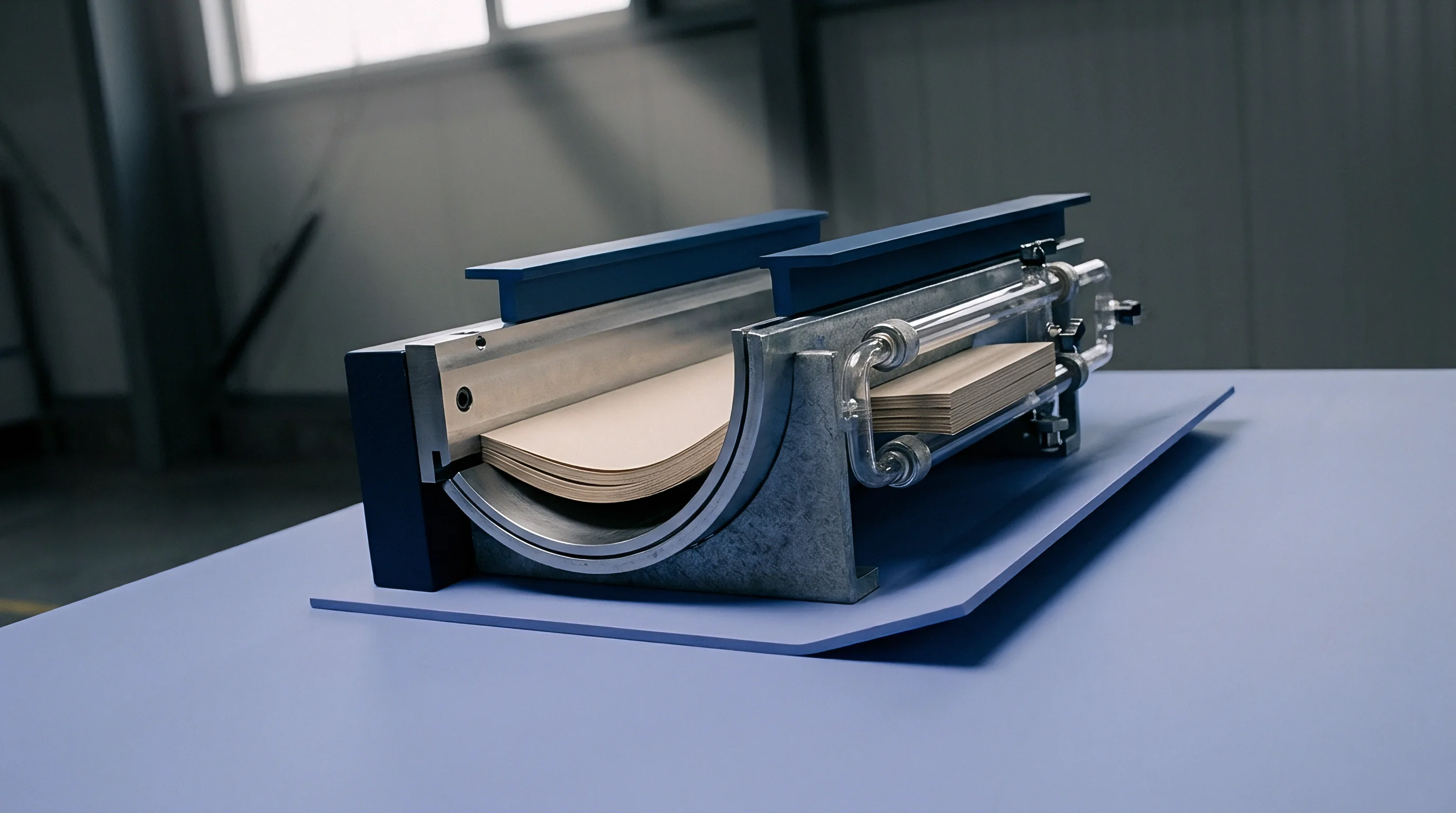
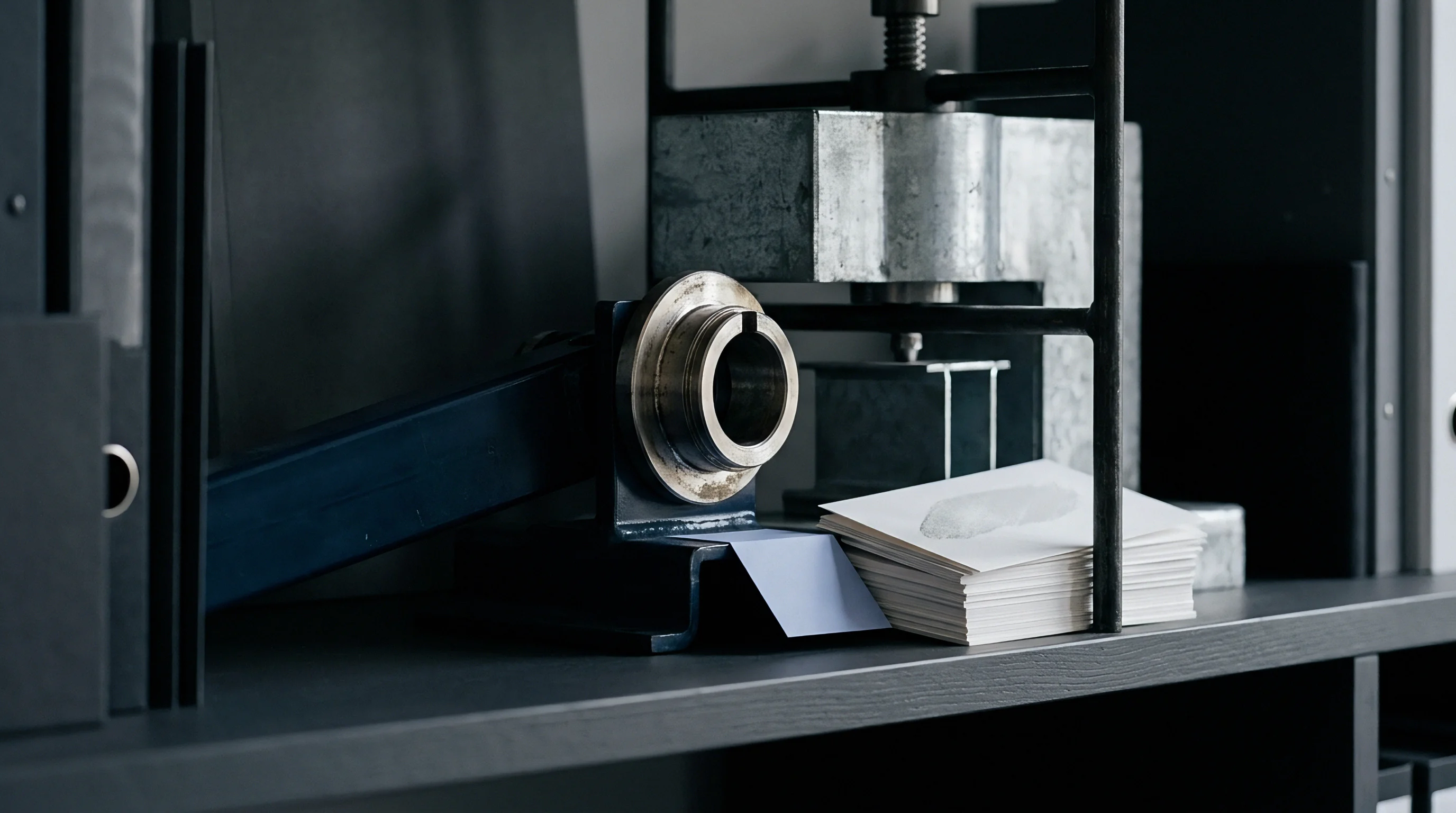
Pneumatic mechanical grips fix the test piece securely against the measuring datum during laboratory bending cycles. The clamping mechanism must restrain the uncreased body of the card without crushing the board caliper or displacing the internal fibers adjacent to the score line. The anvil depth controls score width.
If gripping faces exert excessive compressive force, the middle plies of bulky boxboards experience localized collapse, artificially lowering the measured stiffness of the overall test strip.
The distance separating the clamping jaw edge from the crease centerline governs the mechanics of deformation. International conventions establish this free bending span at exactly 0.5 millimeters or 1.0 millimeter depending on board thickness. Expanding this gap transforms the fold from a tight, localized hinge into an open, uncontrolled curl, distorting resistance numbers.
When testing laboratories omit daily calibration of clamp travel and pneumatic cylinder regulators, measured values drift without any physical change in the paperboard lot.
In sheet metal manufacturing, press brakes enforce strict bend allowances to control neutral axis migration during folding. Paperboard converting shares this mechanical reality, relying on score grooves to dictate the neutral axis position within a fibrous sandwich. Parallel jaws eliminate specimen slippage.
Pneumatic Jaws and Crease Alignment
Precise positioning fixtures ensure the score indentation sits perfectly parallel to the clamping edges. A misalignment of even half a millimeter across a thirty-eight-millimeter test width induces torsional twisting against the load cell pin. The transducer senses this rotational friction as increased bending force, recording false stiffness spikes that mask poor creasing practice.
Modern pneumatic clamps apply uniform holding pressure between 150 and 300 kilopascals across the entire width of the specimen. Serrated or knurled metal jaw faces damage soft white-lined chipboards, encouraging laboratory technicians to substitute flat polyurethane faces that minimize surface marring while maintaining grip friction. Testing operators check jaw parallelism using pressure-sensitive film to identify localized pinch points that skew test repeatability.
- Serrated Jaw Indentation crushes the bleached chemical pulp liner, creating premature hinge failure along the clamp boundary rather than the crease channel.
- Angular Misalignment forces the folded flap to strike the transducer tip obliquely, adding frictional drag to pure bending moment calculations.
- Insufficient Clamping Pressure allows the paperboard card to withdraw slightly from the jaw pocket during initial ninety-degree deflection.
- Excessive Bending Span shifts the rotational axis away from the score center, converting hinge deformation into broad panel curvature.
Shear Distortion along the Score Channel
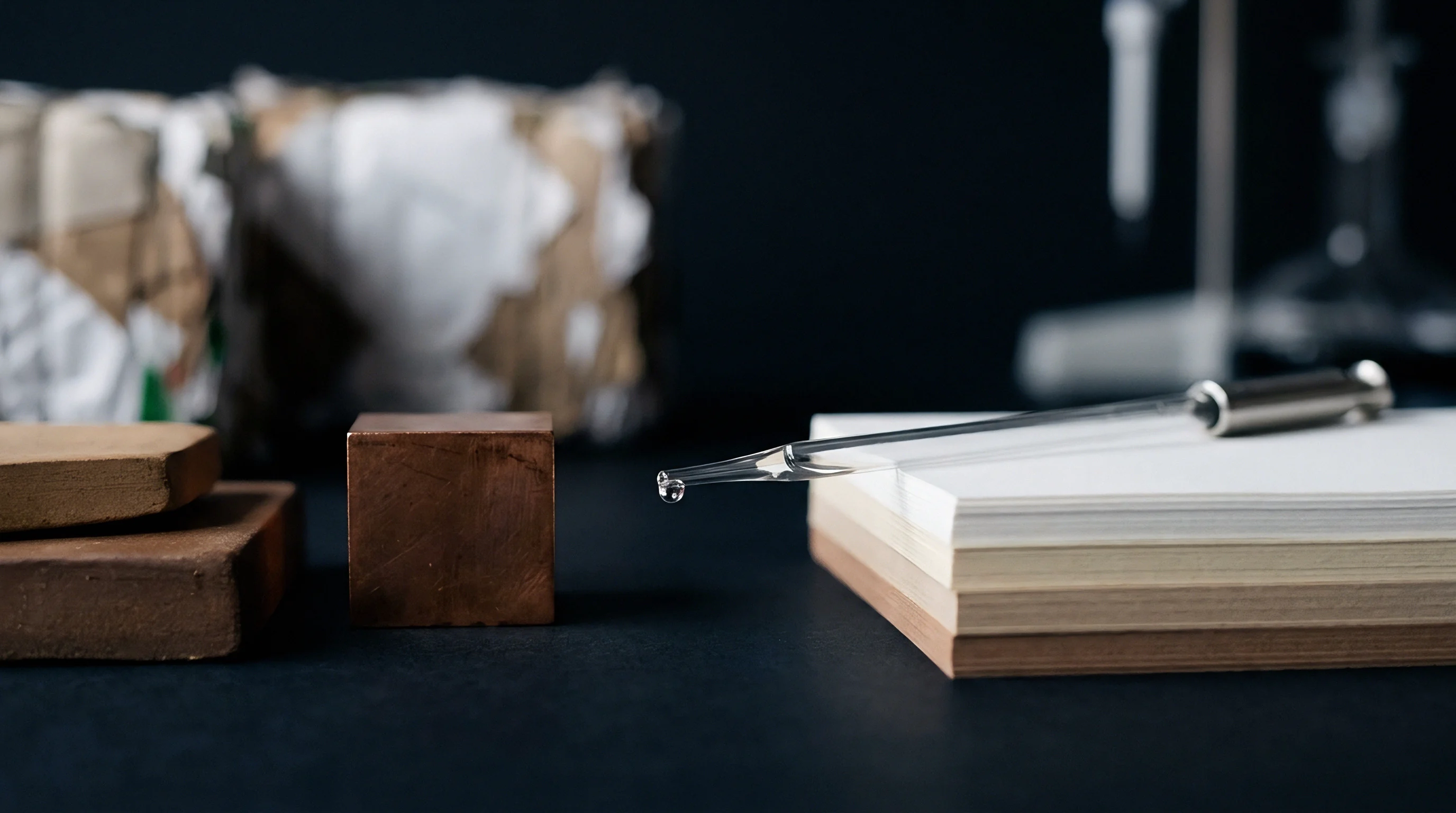
The physical transformation inside a crease resembles an intentional delamination fault. When the creasing rule strikes the board into the matrix channel during die-cutting, it shears the internal chemical bonds between plying plies while stretching the reverse liner into a tensile dome. During laboratory bending, these delaminated internal plies slide over one another like the leaves of an automotive leaf spring.
Improper alignment ruins crease force measurements. If the clamp binds these delaminated layers together by gripping too close to the shoulder of the score, the plies cannot slide freely. The sample then behaves like an uncreased solid beam, doubling the registered bending millinewtons.
Proper laboratory clamp design confines compressive force behind the score shoulder, permitting the internal plies to shear, buckle, and cushion the fold.
Board suppliers routinely assert that minor jaw indentations during bench verification do not alter the measured bending resistance of the outer linerboard.

Ratio
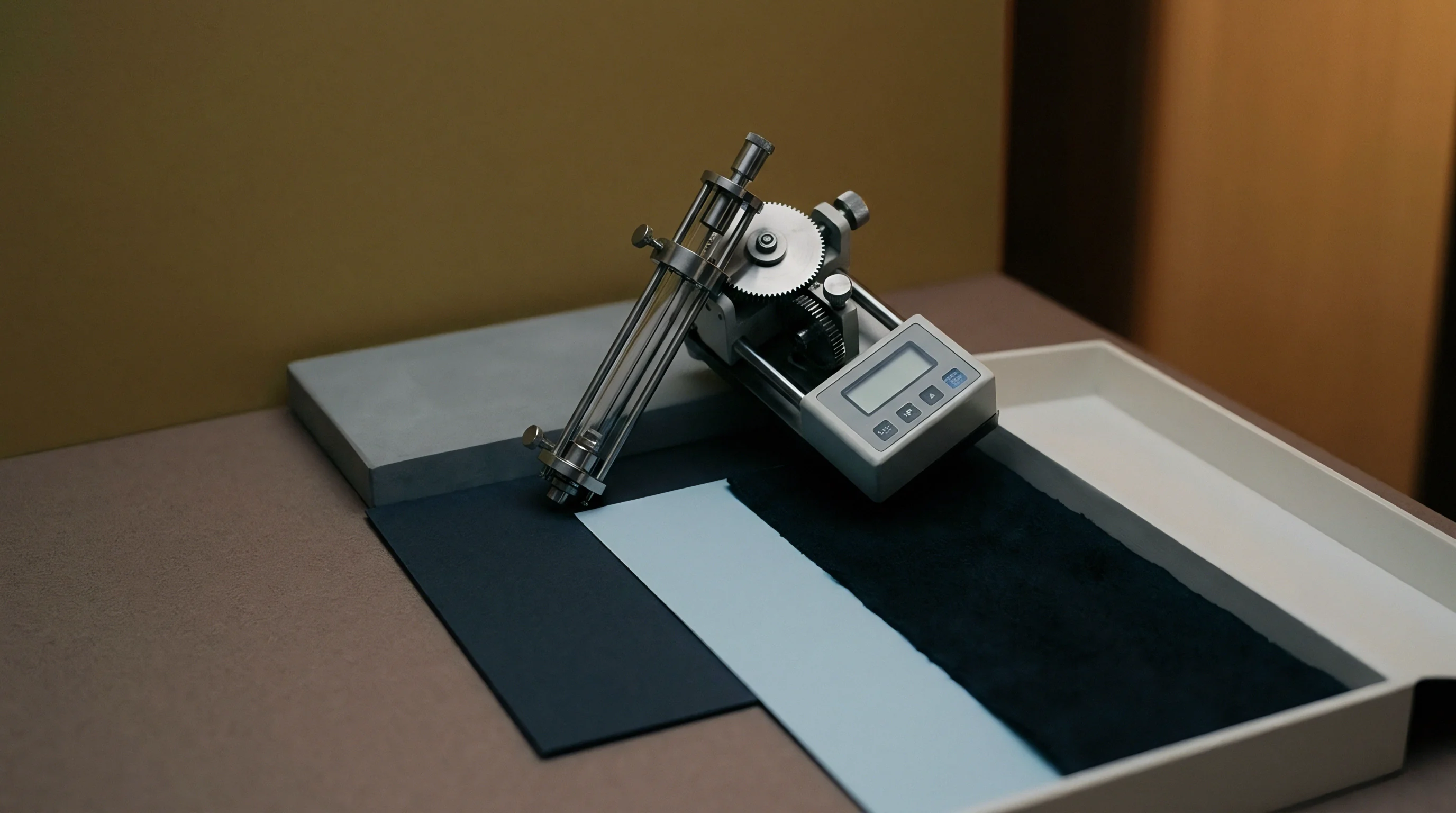
Automated cartoning performance depends on the mathematical proportion connecting crease stiffness to uncreased board bending resistance. Raw crease force alone provides incomplete data. A crease requiring one hundred millinewtons to fold might successfully run on a small cosmetic carton but fail completely on a heavy cereal boxboard.
Calculating the crease-to-board ratio contextualizes the hinge strength relative to panel rigidity.
Converters calculate this relationship by dividing the bending force of the uncreased paperboard by the bending force of the creased score, both measured at identical deflection angles and sample widths. Alternatively, British packaging standards express crease recovery as a percentage, dividing crease force by board stiffness and multiplying by one hundred. A low crease recovery percentage indicates a supple, well-delaminated hinge that folds without bowing the main carton panels.

Bending Moments across Distinct Board Calipers
Board stiffness increases with the cube of sheet caliper, while tensile strength scales linearly with grammage. Heavy substrates demand aggressive matrix creasing to achieve functional folding ratios. For a 300-micrometer solid bleached board, an uncreased stiffness of 120 millinewtons paired with a crease resistance of 40 millinewtons yields an operational ratio of 3.0, or a crease recovery value of thirty-three percent.
For an 800-micrometer recycled chipboard, uncreased stiffness reaches 800 millinewtons, demanding that the creased hinge yield below 240 millinewtons to prevent pack distortion.
High springback stalls automatic erecting plows. If the crease resistance remains too high relative to panel stiffness, the erecting arms of the packaging machine fold the carton panels instead of hinging the score. The carton emerges with curved faces, failed glue flaps, and jammed tuck-in closures.
Conversely, if the crease ratio rises above 5.0 through excessive matrix depth, the hinge becomes limp, producing sloppy, out-of-square cartons that collapse inside automated case packers.
| Substrate | Caliper (µm) | Board Stiffness MD (mN) | Crease Stiffness MD (mN) | Crease Ratio (Board/Crease) | Crease Recovery (%) |
|---|---|---|---|---|---|
| Solid Bleached Sulfate | 300 | 115 | 38 | 3.02 | 33.0 |
| Solid Bleached Sulfate | 450 | 380 | 110 | 3.45 | 28.9 |
| Folding Boxboard | 350 | 190 | 52 | 3.65 | 27.3 |
| Folding Boxboard | 550 | 620 | 165 | 3.75 | 26.6 |
| White Lined Chipboard | 400 | 210 | 78 | 2.69 | 37.1 |
| White Lined Chipboard | 600 | 540 | 195 | 2.76 | 36.1 |
Can Crease Recovery Predict High Speed Performance?
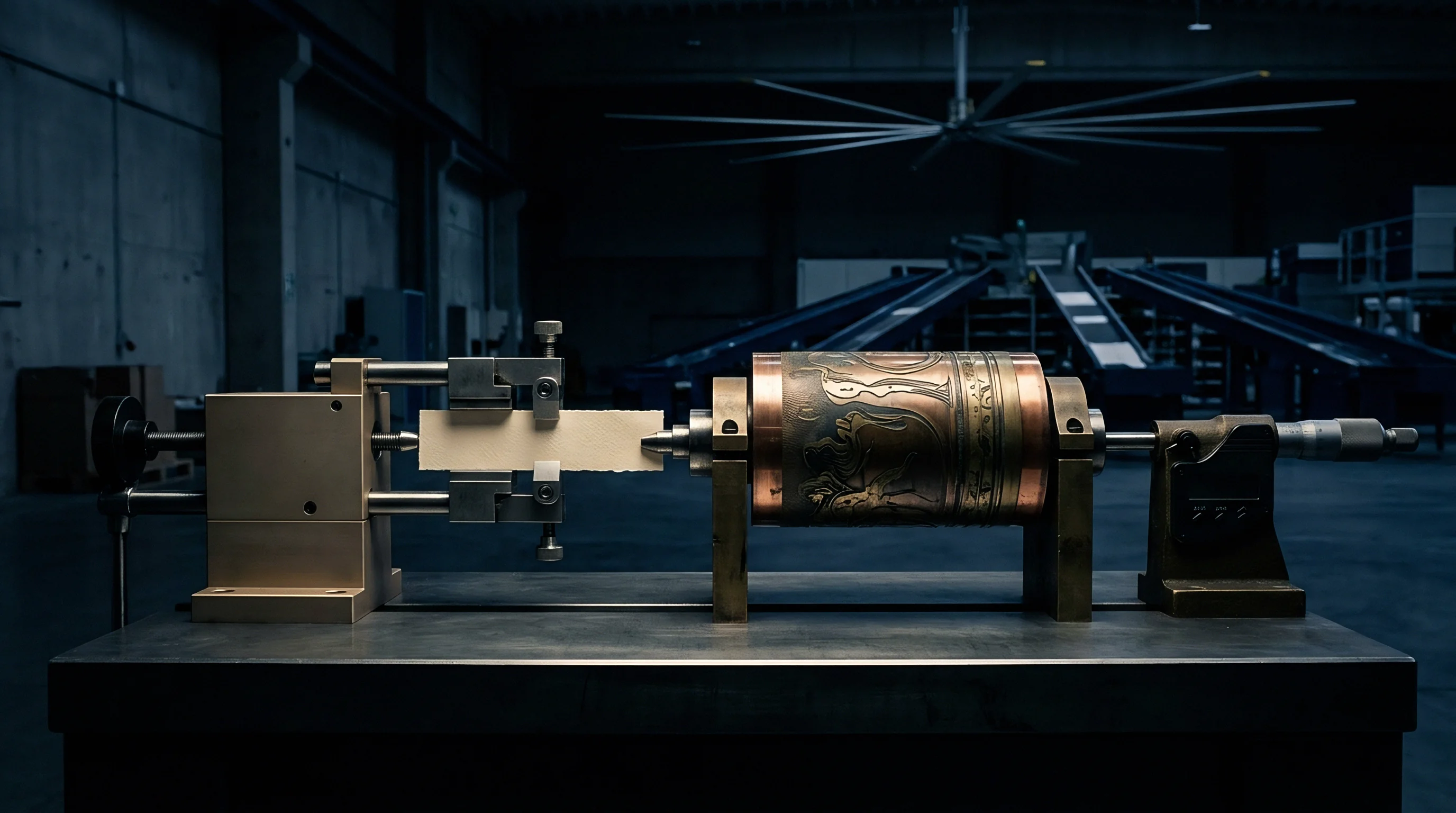
Dynamic forces on high-speed erecting machinery exceed static laboratory sweep velocities by several orders of magnitude. A packaging line running six hundred cartons per minute erects a blank in less than eighty milliseconds. Under these rapid strain rates, paperboard polymers exhibit viscoelastic stiffening, elevating effective crease resistance above values measured at slow bench test speeds.
The target ratio spans two integers.
Laboratory protocols bridge this gap by enforcing short dwell times during peak force registration. Measuring resistance at one-tenth of a second rather than fifteen seconds captures the transient elastic rebound that cartoning pick-up cups fight during machine bring-up. Sourcing agreements that omit dynamic crease ratios leave buyers vulnerable to catastrophic converting floor failures despite flawless static inspection sheets.
Take an order of forty tonnes of four-hundred-micrometer folding boxboard destined for pharmaceutical skillet cartons. Assume a baseline board stiffness of two hundred millinewtons in the cross-machine direction. Under factory floor assumptions of thirty-five percent maximum crease recovery, the creasing matrix width must match 1.3 millimeters with a 0.7-millimeter rule to hold crease resistance below seventy millinewtons.
Expanding that matrix width to 1.5 millimeters to prevent surface cracking drops board delamination, driving crease force up to ninety-five millinewtons. Crease recovery rises to 47.5 percent, breaching the runnability threshold and triggering rejection by automated line sensors.
- Target Ratio Ranges must sit between 2.5 and 3.5 for standard pharmaceutical tuck cartons running on continuous motion erectors.
- High Caliper Substrates require wider matrix channels to accommodate displaced ply volume without tearing the liner.
- Cross Direction Folds exhibit higher uncreased stiffness variability, necessitating wider tolerance bands on technical data sheets.
- Recycled Fiber Furnishes demand lower crease recovery targets due to short fiber length and brittle secondary bonding networks.
Creases formed across the paper machine grain yield lower springback resistance than creases pressed parallel to fiber alignment.
Stiff board with soft creases folds cleanly, while stubborn creases in flexible board jam packaging lines.


Pass
Finishing treatments applied across secondary converting passes fundamentally transform the mechanical response of scored board. Applying barrier laminations, heavy hot foil stamping, or thick ultraviolet curing varnishes introduces synthetic polymers to the outer paperboard surface. Polypropylene films resist folding deformation.
These polymeric skins possess elongation, tensile, and elastic recovery traits distinct from the underlying cellulose substrate, altering the force profile registered on laboratory testing benches.
A virgin boxboard exhibiting balanced crease resistance before finishing can turn into an unrunnable substrate after a single decorative or protective pass. When a finished carton folds, the outer surface undergoes pure tensile stretch while the inner surface compresses. If a lamination film lacks sufficient plastic yield, it stores mechanical energy like a drawn bowstring, dramatically elevating crease stiffness and carton springback.
Surface Laminations and Film Tension
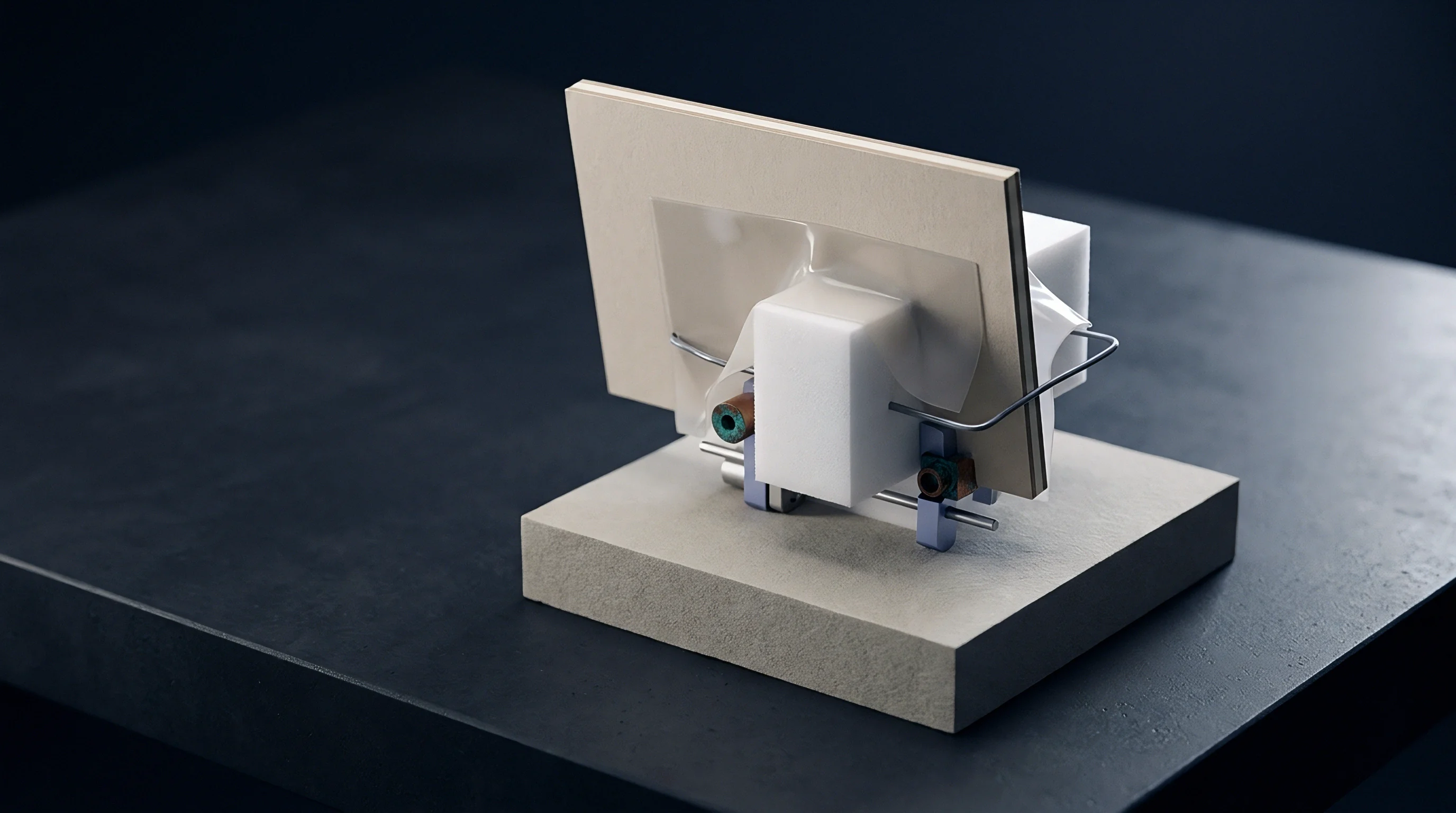
Thermal and wet-bond films alter the neutral bending plane of the paperboard sandwich. Applying a twelve-micrometer oriented polypropylene film adds negligible thickness but introduces a continuous polymer network with ultimate tensile strength exceeding one hundred megapascals. Film lamination transfers bending stress to the outermost polymer layer during right-angle folding on automated packaging lines.
Laboratory verification must isolate whether elevated crease stiffness stems from poor die penetration or excessive film modulus. In tests comparing untreated four-hundred-micrometer cartonboard to film-laminated equivalents, the laminated sheets show a thirty to forty-five percent increase in crease resistance at ninety-degree deflection. The film prevents the outer bleached liner from micro-cracking, eliminating the minor tensile failures that naturally relieve stress in unlaminated scores.
The converting line compensates by increasing creasing rule penetration depth by 0.05 to 0.10 millimeters, deliberately shearing deeper into the middle plies to offset the continuous tension of the plastic film.

Will Heavy Varnish Layers Alter Crease Recovery?
Screen-applied ultraviolet varnishes and high-build coatings impose severe embrittlement across the hinge channel. Thick varnishes add localized outer tensile stress. When deposited at coat weights exceeding eight grams per square meter, cross-linked acrylate polymers crack into jagged micro-fractures under ninety-degree folding, generating audible clicks during laboratory bench testing.
Substrate stiffness governs final pack squareness.
Curing conditions dictate this mechanical degradation. Over-curing with excessive ultraviolet lamp power cross-links the oligomer matrix beyond its design flexibility, dropping elongation-at-break from twenty percent down to less than three percent. When such cartons fold, the varnish layer either shatters, causing unsightly white flaking along the score, or remains intact while resisting compression, elevating crease springback forces by up to twenty-five millinewtons.
Technical specifications require laboratory technicians to test crease stiffness within two hours of coating passes and again after twenty-four hours to capture post-cure cross-linking creep.
Recyclability and regulatory declarations add commercial risk to these decorative choices. Water-based dispersion coatings preserve repulpability under European packaging schemes, but their high surface friction increases drag against the laboratory load cell contact pin. Running waste climbs during humid shifts.
The desk tracks instances where converters incorrectly blamed creasing rules for high stiffness readings, when testing equipment was simply recording frictional drag from soft, tacky acrylic barrier coatings.
The unresolved problem remains whether cross-linked radiation coatings alter internal ply delamination mechanics differently than traditional aqueous dispersion barriers.