Polycarbonate Polyurethane Synthetics in Flexible Packaging Mechanics
Polycarbonate polyurethane synthetics prevent barrier delamination and foil fatigue under retort conditions through superior hydrolytic and thermal stability.
Backbone
Polyurethane networks synthesized from aliphatic polycarbonate diols offer extreme resistance to environmental degradation within multi-layer packaging laminates. Linear aliphatic polycarbonate macrodiols, typically based on poly(1,6-hexyl carbonate) or poly(1,6-hexamethylene-co-pentamethylene carbonate), introduce repeating carbonate groups separated by hydrocarbon chains. These structural units yield strong microphase separation between soft aliphatic segments and rigid crystalline domains.
Diisocyanates such as isophorone diisocyanate or dicyclohexylmethane-4,4-diisocyanate form urethane segments that aggregate into hard domains through intermolecular hydrogen bonding. Hard segments provide structural rigidity.
Conventional flexible packaging structures rely on polyether or polyester polyols. Polyester linkages remain vulnerable to moisture-induced chain scission at elevated processing temperatures, while polyether chains undergo autoxidation via radical formation at tertiary carbon centers during prolonged thermal exposure. Carbonate linkages resist hydrolytic cleavage.
The absence of easily extractable alpha-hydrogens suppresses free radical propagation, keeping the polymer backbone intact under sustained thermal and chemical attack.
A polycarbonate polyurethane adhesive layer subjected to 135 degrees Celsius steam for sixty minutes retains 88 percent of its initial peel strength at five Newtons per fifteen millimeters.
Phase morphology dictates the mechanical envelope of the synthetic layer. Polycarbonate polyols containing six-carbon alkylene spacers yield a glass transition temperature between minus forty and minus thirty degrees Celsius. Lower glass transition values maintain elastomeric flexibility across deep-freeze storage regimes.
Increasing the hard segment concentration raises the modulus, generating tensile yield strengths above forty megapascals alongside elongation values exceeding four hundred percent.
Molecular Architecture and Phase Separation
Hexanediol polycarbonate diols generate semicrystalline soft segment domains that melt reversibly between thirty-five and fifty degrees Celsius. When compounded into two-component laminating adhesives or extruded films, this thermal transition permits flow and substrate wet-out during heated nip lamination. Subsequent cooling triggers recrystallization, establishing high green strength across converted rolls.
Crystallization alters laminate optical clarity.
Steric hindrance around the carbonate carbonyl group impedes nucleophilic attack by water molecules. Comparative testing demonstrates that polycarbonate diols withstand exposure to hot water immersion significantly longer than adipate-based polyester diols. The resulting synthetic layer shields adjacent barrier foils from localized stress concentrations during downstream pouch formation.
| Polyol Backbone Chemistry | Base Monomer Composition | Tensile Strength (MPa) | Elongation at Break (%) | Hydrolytic Half-Life at 85 C and 85% RH (Days) | Tensile Retention After Retort (%) |
|---|---|---|---|---|---|
| Poly(hexamethylene carbonate) Diol | 1,6-Hexanediol, Dimethyl Carbonate | 46.2 | 440 | 120 | 89 |
| Poly(caprolactone-co-carbonate) Diol | Epsilon-Caprolactone, 1,6-Hexanediol | 38.5 | 510 | 72 | 74 |
| Standard Polyadipate Ester Diol | Adipic Acid, Diethylene Glycol | 31.0 | 580 | 14 | 22 |
| Polytetramethylene Ether Glycol | Tetrahydrofuran Ring Opening | 28.4 | 620 | 95 | 41 |

Degradation Pathways in Harsh Environments
Extruded and cast synthetic layers face severe mechanical breakdown when subjected to aggressive food simulants or active packaging ingredients. Polycarbonate polyurethanes neutralize three specific degradation modes encountered in flexible convertor operations.
- Hydrolytic ester cleavage occurs when steam penetrates the outer film, breaking conventional polyester chains down to carboxylic acids that accelerate further decomposition.
- Thermal oxidative degradation attacks polyether backbones via hydroperoxide intermediates, causing embrittlement and catastrophic bond failure across flex-cracked surfaces.
- Solvent plasticization results from volatile flavor oils, ethanol, or acetic acid migrating into the amorphous regions, lowering the tensile modulus of inferior polymers.
Aliphatic polycarbonate segments resist chemical swelling from fatty acid methyl esters and medium-chain triglycerides. The continuous synthetic matrix shields sensitive aluminum oxide or silicon oxide vacuum-deposited layers from delaminating forces. Selecting higher molecular weight polycarbonate polyols minimizes migration while keeping tensile performance stable over prolonged shelf cycles.

Web
Converting lines running two-component polycarbonate polyurethane adhesives require precise control of application temperature, solids content, and machine tension. The high cohesive energy density of polycarbonate diols elevates solution viscosity relative to conventional polyether adhesives at equivalent solids. Formulations delivered in ethyl acetate or methyl ethyl ketone operate between thirty and forty percent solids to achieve gravure cylinder transfer viscosities of fifteen to twenty seconds in a Ford Cup Number 4 at twenty-five degrees Celsius.
Viscosity control prevents adhesive ribbing.
Laminating stations run heated steel nips against synthetic rubber backing rollers. Surface temperatures on the primary laminating drum stay between seventy-five and eighty-five degrees Celsius. Nip pressure ranges between four and six bar across the face width to drive uniform contact without crushing delicate high-barrier substrates.
High nip pressures crush delicate foils.
Softer aliphatic segments improve flexural endurance across cold webs while aromatic hard segments resist swelling from organic solvents.
Surface tension matching dictates transfer efficiency. Polycarbonate polyurethane synthetics exhibit liquid surface tensions between thirty-two and thirty-six millinewtons per meter. Polyolefin films, including biaxially oriented polypropylene and cast polyethylene, require corona or plasma discharge treatment to exceed thirty-eight dynes per centimeter prior to the coating unit.
Corona treatment generates active hydroxyl, carbonyl, and carboxyl sites that bond covalently with isocyanate groups during the lamination pass.
Where Does Polycarbonate Polyurethane Exceed Polyether Performance?
Mechanical stress across secondary slitting and form-fill-seal machines exposes differences between polymer groups. Polyether laminates deform under continuous web tension, showing adhesive creep and tunnel delamination around heat-seal boundaries. Polycarbonate polyurethanes present higher shear modulus and rapid modulus development post-cure, preventing web slip during tight rewind procedures.
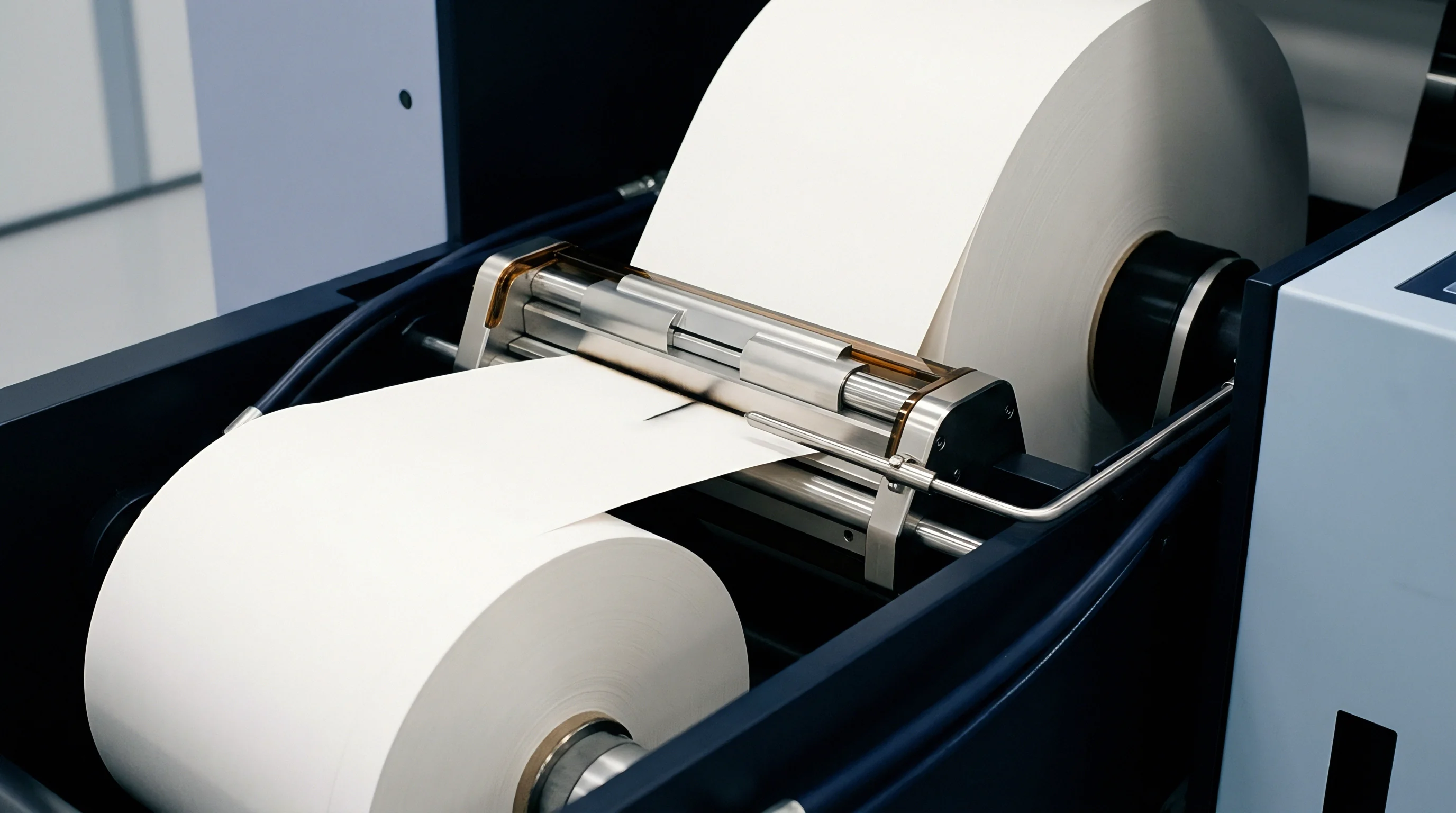
Solventless polycarbonate polyurethane variants demand specialized multi-roll coating decks. Heated dosing rollers maintained at ninety degrees Celsius reduce base resin viscosity to two thousand millipascal-seconds, enabling homogeneous metering across high-speed lines running at three hundred meters per minute. Web tension governs coating uniformity.
Make-Ready Sequence for Extreme-Duty Lamination
- Preheat the laminating cylinder and rubber impression roll to eighty-five degrees Celsius while circulating thermal oil through the core.
- Verify the surface energy of incoming metallized or clear barrier films using calibrated dyne test pens, ensuring values exceed forty dynes per centimeter.
- Circulate the two-component polycarbonate polyurethane formulation through the gravure pan until temperature equilibrium reaches twenty-four degrees Celsius.
- Set web unwind brake tension to eighty Newtons per meter of web width to suppress longitudinal wrinkles entering the primary coating nip.
- Adjust the smoothing roller gap to zero point zero five millimeters, eliminating transfer streaks before the coated substrate enters the drying tunnel.
- Engage the heated lamination nip at four point five bar line pressure, indexing web speed gradually to three hundred meters per minute while monitoring optical coat weight sensors.
Converters attempting to run standard polyether speeds with polycarbonate formulations often encounter foaming inside the coating reservoir. The resin vendor explains that bubbling stems from mechanical entrapment induced by oversized pump impellers rather than surface chemistry imbalance.
Barrier
Packaging structures engineered for industrial sterilization and retort pouch applications undergo extreme mechanical and thermal stress cycles. Multi-layer laminates comprising oriented polyamide, aluminum foil, and cast polypropylene depend on the intermediate adhesive to absorb differential thermal expansion. Polycarbonate polyurethane synthetics distribute thermal stresses evenly, preventing shear failure along the metal-polymer boundary.
Sterilization protocols operating at one hundred thirty-one degrees Celsius generate saturated steam pressures up to two point eight bar. Under these conditions, standard polyurethane adhesives soften, allowing moisture to penetrate toward the foil interface. Aluminum foil corrosion follows, leaving chalky white aluminum hydroxide blooms and complete adhesion loss.
Polycarbonate polyurethanes maintain mechanical integrity throughout the steam dwell period, preventing water accumulation at the foil surface. Retort pouches demand rigorous seals.
Converting lines lose tension control when adhesive viscosity spikes inside the application tray during extended shifts.
Flex fatigue resistance determines pack integrity throughout transport. Packaging envelopes repeatedly flexed during distribution develop microscopic pinholes across metallized films and foil barriers. The Gelbo flex test (ASTM F392) measures this vulnerability by subjecting flexible laminates to repetitive twisting and crushing motions.
What Governs Retort Delamination under Thermal Shock?
Sudden cooling following high-temperature steam sterilization induces rapid contraction across metallic substrates while plastic layers contract at different rates. The thermal expansion coefficient of aluminum foil sits at twenty-three parts per million per Kelvin, whereas cast polypropylene expands at over one hundred parts per million per Kelvin. Polycarbonate polyurethanes act as stress-absorbing mechanical dampers, flexing across the interface without experiencing cohesive shear fracture.
Crosslink density dictates performance under thermal shock. Formulating with trifunctional isocyanate trimers, such as hexamethylene diisocyanate isocyanurate, creates a three-dimensional thermoset network within the polycarbonate soft segment matrix. This crosslinked network maintains elastic recovery forces above two megapascals at one hundred thirty degrees Celsius, preventing delamination blisters.

Mechanical Integrity Indicators under Dynamic Load
- Gelbo flex pinholing rate tracks the number of physical perforations per square meter following two thousand full-twist cycles under ambient conditions.
- T-peel bond retention measures remaining tensile peel force in Newtons per fifteen millimeters after exposure to aggressive culinary acids during retort cycles.
- Interlaminar creep rate calculates micro-scale dimensional displacement along the seal border under five Newtons of dead-weight load at sixty degrees Celsius.
- Burst strength capacity records the ultimate hydraulic pressure in kilopascals sustained by sealed pouches prior to perimeter seam rupture.
Omitting crosslinked polycarbonate polyurethane layers in aggressive acid or oil retort packaging produces stress fracture delamination along package edges, releasing package contents and causing catastrophic distribution losses.

Toll
Specifying polycarbonate polyurethane synthetics alters the commercial cost structure across converting passes. Polycarbonate diol precursors require complex catalytic transesterification processes involving dimethyl carbonate and aliphatic diols, commanding raw material pricing between five and eight euros per kilogram. Conventional adipate-based polyester polyols trade between two and three euros per kilogram.
Polycarbonate polyols carry higher raw costs.
Coat weight adjustments mitigate raw material premiums. The elevated cohesive strength of crosslinked polycarbonate polyurethanes permits dry deposit weights of one point six to two point two grams per square meter, whereas standard retort polyester systems require two point eight to three point five grams per square meter to resist delamination. Lower laydown weights reduce total resin consumption per thousand square meters of converted laminate.
Machine throughput and curing dynamics influence conversion economics. Two-component polycarbonate polyurethanes develop green strength rapidly, allowing secondary slitting passes within twelve hours of lamination. Full chemical cure and unreacted isocyanate monomer decay require five days in hot rooms maintained at forty degrees Celsius, identical to standard retort adhesive schedules.
Curing cycles tie up warehouse floor capacity.
| Cost Component | Standard Polyester-Urethane Pass | Polycarbonate Polyurethane Pass | Cost Variance per 1,000 m2 (EUR) |
|---|---|---|---|
| Adhesive Raw Material (EUR/kg wet) | 3.20 | 6.40 | +18.24 |
| Dry Coat Weight Target (g/m2) | 3.2 | 2.0 | -3.84 |
| Solvent Carrier Volume (Ethyl Acetate EUR/m2) | 0.048 | 0.030 | -18.00 |
| Line Make-Ready Spoilage (Meters) | 350 | 450 | +4.50 |
| Running Waste Factor (% of web) | 1.8% | 1.2% | -8.60 |
| Extended Hot Room Dwell (EUR/pallet) | 12.00 | 12.00 | 0.00 |
| Post-Retort Pouch Scrappage Rate (%) | 2.4% | 0.3% | -42.00 |
| Assumes standard aluminum foil barrier triplex structure (PET / Adhesive / Alu / Adhesive / CPP) running at 250 meters per minute. | |||
Waste calculations reflect operational reliability across high-speed form-fill-seal lines. Laminates manufactured with polycarbonate polyurethane exhibit lower friction coefficients and zero adhesive bleed along slit roll edges. Eliminating edge-sticking prevents catastrophic web breaks during unwinding at automated packaging plants, protecting finished margins.
Extended shelf-life guarantees provide commercial justification for the higher initial pass investment. High-value contents, such as chemical pouches, medical solutions, and institutional food packs, incur massive recall costs if packaging barriers fail. Investing an additional seven to ten euros per thousand square meters in a polycarbonate polyurethane pass offsets liabilities associated with seal failure.
Modulated extended producer responsibility fees penalize multi-material pouches containing heavy adhesive layers. Thinner polycarbonate adhesive depositions decrease total non-polyolefin fractions within monomaterial-oriented flexible films, preserving compliance with emerging design-for-recycling frameworks across European jurisdictions.
Compliance
Food contact approval and chemical migration limitations define the operating envelope for synthetic polyurethanes in flexible packaging. European Union Regulation 10/2011 governs plastic materials and articles intended to come into contact with food. Adhesive layers positioned behind functional barriers must demonstrate that unreacted monomers and low molecular weight cyclic oligomers remain below specific migration limits.
Primary aromatic amines face strict regulation.
Aliphatic polycarbonate polyurethanes derived from isophorone diisocyanate or hexamethylene diisocyanate eliminate the risk of primary aromatic amine generation. Aromatic isocyanates such as toluene diisocyanate or methylene diphenyl diisocyanate produce carcinogenic aromatic amines if moisture contact occurs prior to complete cure. Aliphatic systems break down exclusively into aliphatic diamines, which carry significantly higher migration thresholds under current European Food Safety Authority evaluations.
Commission Regulation 10/2011 Annex II imposes a specific migration limit of 0.01 milligrams per kilogram for uncured isocyanate monomers, disqualifying laminates that fail primary aromatic amine screening after ten days at forty degrees Celsius.
Non-intentionally added substances present testing hurdles during migration testing. The synthesis of polycarbonate diols generates macrocyclic carbonate oligomers, specifically cyclic dimers and trimers of hexanediol carbonate. These cyclic oligomers possess molecular weights below one thousand Daltons, enabling migration through polyethylene and polypropylene sealant films during high-temperature retort treatment.
Analytical screening via liquid chromatography coupled with high-resolution mass spectrometry verifies that total oligomeric migration stays below the toxicological threshold of zero point zero five milligrams per kilogram of food simulant.
United States Food and Drug Administration guidelines under 21 CFR 177.1390 establish criteria for laminating adhesives used in flexible packaging exposed to temperatures up to one hundred thirty-five degrees Celsius. Polycarbonate polyurethane formulations pass extraction testing using distilled water, eight percent ethanol, and n-heptane under maximum thermal exposure conditions. Cyclic oligomers present migration risks.
Under Article 16 of Regulation 1935/2004, converters must hold a valid Declaration of Compliance supported by migration test dossiers, ensuring that any recipe change in polyol source triggers mandatory re-testing before commercial shipment.