Quantifying Interfacial Bond Strengths in Metallized Flexible Packaging Laminates
Quantifying metallized laminate bond strength requires standard 90 or 180-degree peel testing to isolate failure modes and enforce 2.0 N/15mm minimum limits.
Metallization
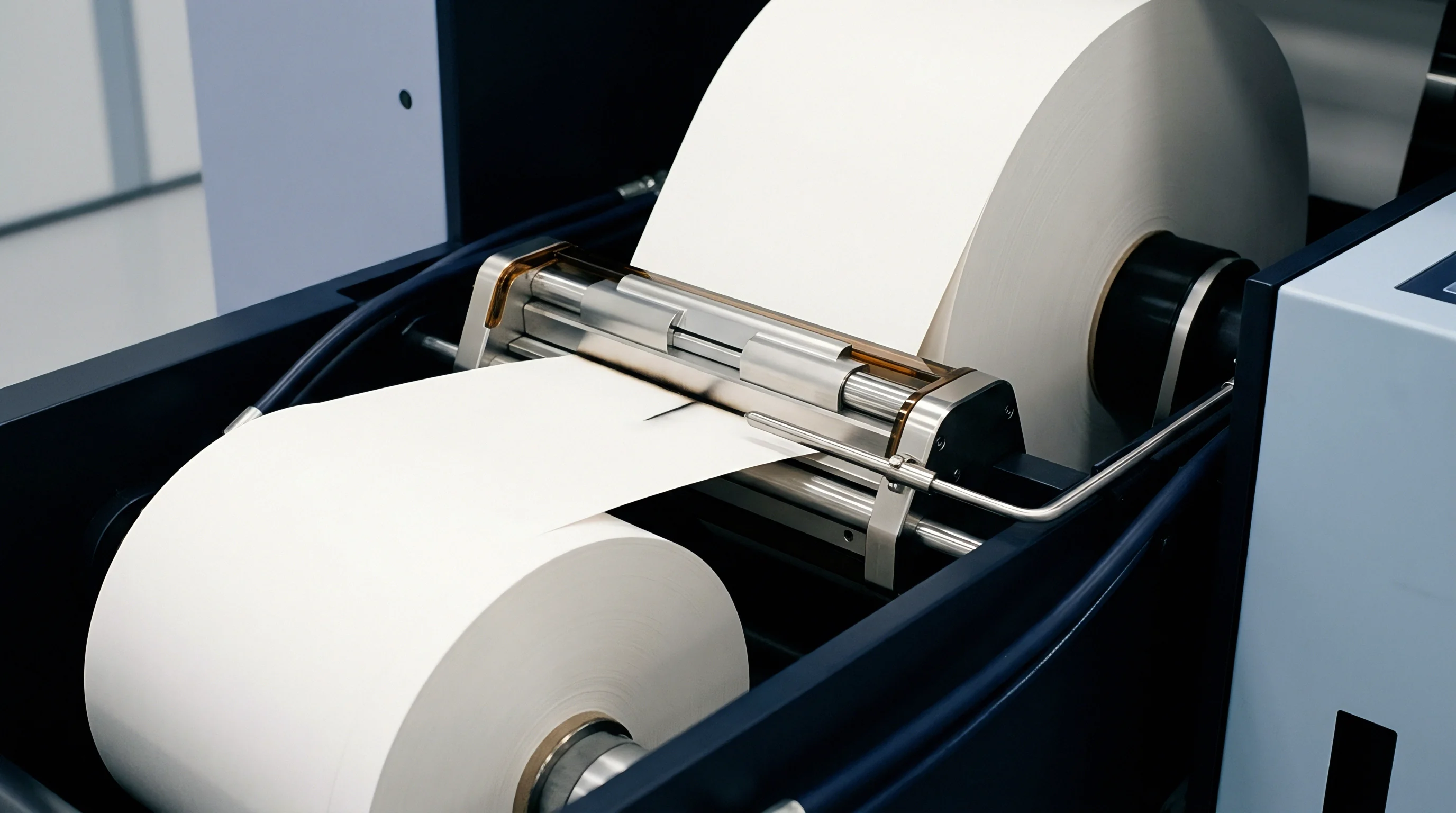
Optical density targets in high-vacuum aluminum physical vapor deposition directly dictate how continuous the deposited metal film lattice will be. During vacuum deposition, solid aluminum wire feeds into ceramic evaporators heated to roughly 1400°C to 1500°C inside a chamber held between 10⁻⁴ and 10⁻⁵ millibar. Aluminum vapor travels across the vacuum gap and condenses onto the moving film substrate, building a metallic layer usually 10 to 50 nanometers thick.
Initial adhesion relies mainly on condensation kinetic energy, web cleanliness, and the density of active nucleation sites.
Base polymer films like oriented polypropylene (OPP), polyethylene terephthalate (PET), and cast polypropylene (CPP) have low native surface energies that make metal attachment difficult. Inline corona or atmospheric plasma treatment oxidizes the film surface to raise surface energy above 42 dynes per centimeter. This adds polar functional groups ~ including hydroxyl, carbonyl, and carboxyl moieties ~ that act as chemical anchors for the vapor.
PET accepts aluminum vapor readily thanks to its inherent polar ester bonds, whereas polyolefins require aggressive inline plasma under nitrogen or argon atmospheres to prevent flaking after deposition.
Vapor Deposition Dynamics and Oxide Layer Nucleation
Deposition speed and web temperature determine the crystal structure of the metal coating. Heavy thermal loads during fast deposition cause thin polyolefin films to expand, creating microscopic internal stresses along the boundary as the web cools. As aluminum condenses on the substrate, it immediately reacts with residual moisture and oxygen in the chamber, forming a 2 to 4 nanometer surface alumina layer.
This interfacial aluminum oxide phase forms the actual contact face presented to subsequent laminating adhesives.
Thickness is monitored continuously during runs via optical density. Standard packaging grades specify 2.0 to 2.5 OD, which corresponds to an electrical surface resistivity of roughly 1.5 to 3.0 ohms per square. Higher optical density improves light and gas barrier properties, but excessive metal thickness reduces interfacial strength.
Thick aluminum deposits build up internal shear stress during rewinding, causing cohesive micro-cracks in the metallic lattice that show up as reduced peel resistance during converting.
It remains unclear whether surface micro-cracking under high web tension stems primarily from elastic mismatch during deposition or thermal shrinkage during web chilling.

Adhesion
Secondary bonding forces at the polymer-metal interface depend on thorough thermodynamic wetting during solventless or solvent-borne polyurethane application. Wet adhesive must spread completely across the metal oxide face and fill sub-micron surface voids before cross-linking begins. For proper wetting, liquid adhesive surface tension should remain at least 10 dynes per centimeter lower than the solid surface energy of the metallized web.
Incomplete wetting traps micro-air pockets along the boundary, creating localized stress points that trigger delamination under load.
Chemical bonding at this interface combines secondary van der Waals forces with primary covalent and coordination bonds. Two-component polyurethane systems ~ hydroxyl-terminated polyols cured with aromatic or aliphatic isocyanates ~ react with residual moisture and hydroxyl groups on the aluminum oxide layer. Organofunctional silane coupling agents in the adhesive migrate to the inorganic surface, forming siloxane bridges across the interface that resist hydrolytic cleavage far better than physical adsorption alone.

Polyurethane Chemistries and Curing Kinetics
Solventless polyurethanes allow fast line speeds and produce zero solvent emissions, but their low initial green strength requires careful control over curing conditions. Holding rolls at 35°C to 45°C for 24 to 72 hours ensures complete monomer conversion and network cross-linking, producing a viscoelastic layer that absorbs mechanical shear during pouching. Solvent-borne adhesives require thermal drying tunnels to evaporate ethyl acetate, but they deliver higher green bond strength and stand up better to aggressive package contents like acidic sauces or alcohol-based liquids.
| Substrate Combination | Adhesive Chemistries | Cure Time at 40°C (Hours) | Mean Bond Force (N/15mm) | Primary Failure Mode |
|---|---|---|---|---|
| 12 µm Met-PET / 50 µm LLDPE | 2K Solventless Polyurethane | 48 | 2.8 to 3.5 | PE Elongation / Film Tear |
| 20 µm Met-OPP / 30 µm CPP | 2K Solventless Polyurethane | 72 | 1.2 to 1.8 | Metal Transfer to CPP |
| 12 µm Met-PET / 70 µm CPP | 2K Solvent-Borne Polyurethane | 24 | 3.5 to 4.5 | Cohesive Adhesive Failure |
| 15 µm BOPA / 12 µm Met-PET | 2K Waterborne Acrylic | 96 | 0.8 to 1.3 | Interfacial Decoupling |
The choice of polyolefin sealant layer strongly influences final lamination strength. Cast polypropylene and linear low-density polyethylene contain low-molecular-weight fractions and additives that can destabilize the interface. Unsaturated fatty acid amides, added to control film friction, bloom toward the adhesive surface during cure.
Accumulations of slip agent form a weak boundary layer that lowers peel resistance over extended storage.
Adhesive wet-out improves when laminating nip rolls run at the highest temperature the primary carrier web can tolerate without distorting.
Flaw
Mapping fracture paths across delaminated structures isolates the weak link within composite flexible webs. When a laminate pulls apart under tension, failure rarely occurs along a single arbitrary path. Microscopic examination reveals whether separation occurred within the adhesive matrix, along the adhesive-aluminum surface, inside the aluminum deposit itself, or within the base polymer skin.
Identifying the exact plane of failure shows whether process adjustments are needed at the vacuum metallizer, the adhesive mixing station, or the laminator nip assembly.
Four main breakdown modes account for flexible barrier failures:
- Metal transfer to sealant occurs when aluminum-to-substrate adhesion falls below adhesive-to-aluminum bond force, leaving the metal layer fully stripped from the carrier film.
- Cohesive adhesive failure takes place inside the cross-linked polyurethane network, indicating insufficient monomer conversion, incorrect resin-to-hardener stoichiometry, or plasticizer contamination.
- Oxide skin cleavage manifests as separation within the aluminum oxide phase, driven by excessive oxidation during deposition or severe hydrolytic degradation in humid storage.
- Substrate surface skin tear occurs when interfacial bond energy exceeds the cohesive shear strength of the corona-treated polymer skin layer, pulling parent resin fragments away.
Peak mechanical separation force below 1.0 Newton per 15 millimeters under standard conditions guarantees seal integrity failure during automatic pouch filling.
Base film contamination presents an immediate risk during converting. Unreacted low-molecular-weight species, anti-block particles, or silicone oils picked up from idler rollers prevent uniform adhesive contact, causing spotty, discontinuous bonds across the web width. During bag making and heat sealing, these weak spots turn into micro-delamination bubbles that expand along fin and lap seals under package pressure testing.
Uneven laminator nip pressure causes longitudinal bond variation across the web. Too little pressure leaves air channels along film gage bands; too much squeezes wet adhesive toward the roll edges, starving the center. Starved regions separate immediately during post-cure slitting and rewinding.
Inadequate curing control leads to complete lot rejection, destroying process margins through unrecoverable material scrap and transport demurrage fees.
Fixture
Peel testing equipment must record force profiles without introducing errors from sample bending or backing stretch. Quantitative evaluation relies on standardized mechanical peel methods, primarily ASTM F904 and ISO 11339. ASTM F904 measures comparative bond strength between flexible layers bonded to rigid or flexible backing using a 180-degree or 90-degree separation vector.
Test strips must be cut to 15-millimeter or 25.4-millimeter widths parallel and perpendicular to the machine direction, avoiding web edge zones where coating weight varies.
How Does Chemical Attenuation Reveal Native Interfacial Force?
High-strength laminates often resist initial mechanical peeling, causing the base film to stretch or tear before the interface breaks. When substrate tearing prevents direct measurement, test procedures use chemical attenuation. Applying a small amount of solvent, such as ethyl acetate or isopropyl alcohol, directly to the peel tail swells the adhesive matrix at the bond line and allows clean mechanical initiation without tearing the film.
Once the peel path is established, the test frame proceeds through dry unassisted peeling to record baseline bond values.
| Test Parameter | ASTM F904 Standard | ISO 11339 Standard | Operational Impact of Variance |
|---|---|---|---|
| Specimen Width | 25.4 mm (1.0 inch) | 25.0 mm | Non-standard widths alter edge stress concentration profiles. |
| Crosshead Speed | 280 mm/min ± 30 mm/min | 100 mm/min ± 10 mm/min | Higher speeds artificially elevate measured force due to polymer strain rate sensitivity. |
| Peel Angle | 180-Degree or 90-Degree | T-Peel (180-Degree dual flexible) | Angle shifts modify bending energy dissipation subtracted from raw force. |
| Data Averaging Window | Excludes first 25 mm of travel | Central 80% of total peel length | Including initiation spikes falsely inflates reported mean bond strength values. |
| All tests require pre-conditioning at 23°C ± 2°C and 50% ± 5% relative humidity for a minimum of 40 hours per ISO 187 directives. | |||
Raw force traces show dynamic oscillations caused by stick-slip behavior along the bond line. Integration algorithms must calculate mean peak and mean trough force across at least 50 millimeters of peel travel. High-frequency force spikes signal discontinuous micro-bonds, whereas a flat trace indicates uniform adhesive coverage and consistent cross-linking across the laminate.
Samples held flat in test grips can still yield low bond figures when residual solvent traces within processing lines degrade the metallic bond post-shipment.
Aging
Thermal cycling and ambient humidity degrade the interface through moisture ingress and additive migration. Environmental stress testing exposes laminates to accelerated aging protocols ~ typically 40°C at 75% relative humidity for 30 days, or retort conditions reaching 121°C under pressure for 30 minutes. Water vapor moves through permeable polyolefin sealants and condenses on the hydrophilic metal oxide layer.
Hydrolysis disrupts hydrogen bonding and breaks down unreacted ester groups in the polyurethane matrix, rapidly weakening the interface.
Quantification of environmental bond retention follows a strict laboratory evaluation sequence:
- Cut representative 15-millimeter test strips from central and edge lanes of cured laminate rolls.
- Measure baseline unaged mechanical peel force per ASTM F904 across five control specimens.
- Suspend test specimens inside environmental test chambers set to specified thermal and humidity parameters.
- Extract test strips at designated time intervals of 7, 14, 21, and 30 days.
- Re-condition extracted specimens at 23°C and 50% relative humidity for 24 hours prior to mechanical testing.
- Perform peel testing and calculate percentage bond retention against baseline control values.
- Inspect delaminated faces using surface energy dyne pens and optical microscopy to identify failure plane migration.
Additive migration to the boundary layer proceeds continuously until chemical equilibrium reaches saturation across both substrate phases.
Migratory additives in polyolefin resins present an ongoing risk to bond stability. Erucamide and oleamide slip agents, added to reduce film friction on packaging equipment, are only moderately soluble in polyethylene and polypropylene. Over weeks of storage, these molecules diffuse to the surface and gather directly at the metallized interface.
The resulting lipid monolayer acts as an internal release agent, cutting initial bond strength by up to 80% within three months of converting.
Under international packaging standards, laminates intended for aggressive products must retain at least 1.5 Newtons per 15 millimeters of peel resistance after 14 days of accelerated thermal aging to prevent field failures.
Specification
Purchasing agreements for converter web stock specify minimum bond strengths in Newtons per 15 millimeters. Procurement balances barrier performance against material cost and line scrap rates. When bond strength drops below specification, converting lines experience seal delamination, package bursts in transit, and lost gas barrier performance.
Strict qualification protocols prevent converter operations from accepting sub-standard laminate lots prior to pouch production.
Quality assurance qualification requires verifying several core parameters prior to commercial lot sign-off:
- Corona treatment verification confirming substrate surface energy equals or exceeds 42 dynes per centimeter at the time of metallization.
- Optical density tolerances restricting metal layer variance within ±0.15 OD of target across the entire roll width.
- Adhesive coat weight limits enforcing minimum dry adhesive weights of 1.8 grams per square meter for dry foods and 3.5 grams per square meter for aggressive liquids.
- Residual solvent ceilings mandating total retained solvent levels remain below 5.0 milligrams per square meter per EN 13628-1 standards.
- Post-cure aging windows defining minimum curing hold times before secondary slitting and thermal pouch fabrication passes run.
Technical specifications incorporating mandatory minimum peel force values of 2.0 Newtons per 15 millimeters eliminate supplier liability disputes regarding transport seal failure.
Setup waste during lamination depends heavily on adhesive green strength and web tension control. Bringing a high-speed laminator up to an operating speed of 400 meters per minute generates 150 to 300 meters of setup scrap. If adhesive mix ratios drift during make-ready, entire roll cores end up as scrap.
Converter economics require tracking bond performance against unit cost to ensure adhesive systems meet barrier targets without driving up finished packaging expenses.
Recyclability rules under extended producer responsibility regulations are shifting specification priorities. Monomaterial structures ~ such as metallized polypropylene laminated to cast polypropylene with polyolefin adhesives ~ score higher for recyclability and incur lower fees than mixed PET and PE structures. Transitioning to monomaterials demands tighter control over web temperature and nip pressure because polyolefin films have higher thermal elasticity and narrower processing windows during solventless lamination.