Rate Dependent Viscoplastic Shear Modeling for High Velocity Polyolefin Converting
Rate-dependent viscoplastic shear modeling predicts die swell, neck-in, and trim tearing in polyolefin converting above 800 m/min.
Flow
Viscoplastic Response in Ultra-High Velocity Polymer Processing
Polyolefin melt behavior under extreme deformation rates diverges sharply from equilibrium fluid dynamics. When low-density polyethylene or polypropylene passes through converting machinery at line speeds exceeding 800 meters per minute, shear deformation within extrusion dies, coating nips, and slitting boundaries pushes strain rates beyond 100,000 reciprocal seconds. At these shear rates, the polymer chains cannot disentangle within the characteristic deformation time.
The fluid exhibits pronounced rate-dependent viscoplasticity, where the yield threshold and apparent viscosity depend directly on the local rate of strain tensor.
In high-speed extrusion lamination, molten polyolefins experience severe velocity gradients across narrow die gaps. The melt exhibits a yield-like resistance to initial flow, followed by non-linear shear thinning and plastic work dissipation. Accurate modeling of this regime requires separating recoverable elastic strain from irreversible viscoplastic slip.
Classical Maxwell or Carreau fluid models fail in high-velocity converting because they treat yield stress as fixed, ignoring rate-dependent microstructural rearrangements within semi-crystalline melt domains.
Resin chemistry governs melt memory. Short-chain branching distributions in linear low-density polyethylene alter the critical shear rate at which viscoplastic yield occurs. Under high-speed converting conditions, high-density polyethylene displays rapid shear thinning accompanied by aggressive wall slip, whereas highly branched low-density polyethylene retains strong melt strength with delayed onset of interfacial instability.
Extrusion dies operating at shear rates above 500,000 s⁻¹ display wall slip coefficients up to 1.8 × 10⁻⁴ m/(s·Pa) in low-density polyethylene melts.
Converting lines running metallocene-catalyzed polyolefins face unique rheological boundaries. Narrow molecular weight distributions lower melt elasticity while sharpening the transition into viscoplastic flow. When converting speed increases, the localized strain rate spikes near die corners, generating intense shear zones that alter film thickness profiles across the web width.
Failure to capture rate-dependent yield behavior leads directly to miscalculated pumping pressures, incorrect die gap settings, and uneven coat weights that split during downstream high-speed slitting passes.

Stress

Constitutive Equations for High-Rate Shear Deformation
Quantitative prediction of melt deformation relies on constitutive laws tailored to transient viscoplastic flow. The total strain rate tensor decomposes into elastic and viscoplastic components. While viscoelastic models dominate low-speed film casting analysis, high-velocity converting processes require overstress models that incorporate strain-rate sensitivity directly into the plastic flow rule.
The Perzyna viscoplastic formulation provides a mathematical structure for polyolefin shear modeling. Shear stress exceeds a dynamic yield threshold, driving plastic flow governed by a power-law viscosity function. Concurrently, the Herschel-Bulkley model maps steady-state shear thinning but requires modification to account for rate-dependent yield stress growth during rapid transient loading.
The Anand viscoplastic model, adapted from metal forming to high-density polymer processing, integrates internal state variables that track microstructural resistance to shear deformation.
| Resin Grade | Model Formulation | Yield Stress (kPa) | Consistency Index (Pa·s^n) | Flow Index (n) | Strain Rate Sensitivity |
|---|---|---|---|---|---|
| LDPE (MFI 4.5) | Herschel-Bulkley | 12.4 | 8400 | 0.38 | 0.14 |
| LLDPE (MFI 2.0) | Perzyna Overstress | 18.1 | 12100 | 0.31 | 0.22 |
| HDPE (MFI 0.8) | Anand Viscoplastic | 27.5 | 19500 | 0.26 | 0.29 |
| mLLDPE (MFI 1.5) | Modified Carreau-Yasuda | 14.8 | 9800 | 0.34 | 0.18 |
Strain rate history dictates localized yield stress. Rapid acceleration through a converting die gap leaves insufficient time for polymer network relaxation, causing temporary strain hardening. Yield stress delays elastic recovery.
This phenomenon creates residual stress gradients within extruded films, which manifest downstream as web curl, edge wave, and lamination delamination when cooled against cold paperboard substrates.
A polymer melt subject to instantaneous deformation retains structural memory until thermal relaxation overcomes internal stress concentrations.
High-rate shear modeling accounts for four distinct stress-driven failure modes during polyolefin converting operations.
- Gross Melt Fracture initiates when die wall shear stress exceeds the critical structural threshold of the polyolefin chain network, destroying surface optical clarity.
- Sharkskin Extrusion Instability emerges at the die exit lip where rapid acceleration creates severe localized tensile stress distributions along the free surface.
- Draw Resonance Tearing occurs during high-draw ratios as viscoplastic strain rate hardening fails to stabilize periodic cross-web caliper oscillations.
- Interfacial Shear Splitting develops in co-extruded multi-layer webs when adjacent polyolefin layers display conflicting viscoplastic yield values under identical shear rates.
In high-rate numerical simulations, constitutive equations require explicit boundary conditions for wall slip. Polyolefin melts slip against polished die surfaces once shear stress crosses a critical threshold, typically between 0.1 and 0.18 megapascals. Modeling wall slip as a non-linear function of wall shear stress corrects velocity profile distortions, preventing artificial over-prediction of core shear rates.
Suppliers frequently claim their resin additives eliminate melt fracture entirely at elevated line speeds without altering mechanical properties, yet laboratory capillary rheometry reveals that these processing aids merely lubricate the wall boundary without shifting the underlying viscoplastic flow threshold.
Web
Strain History and Kinematics across High-Speed Converting Lines
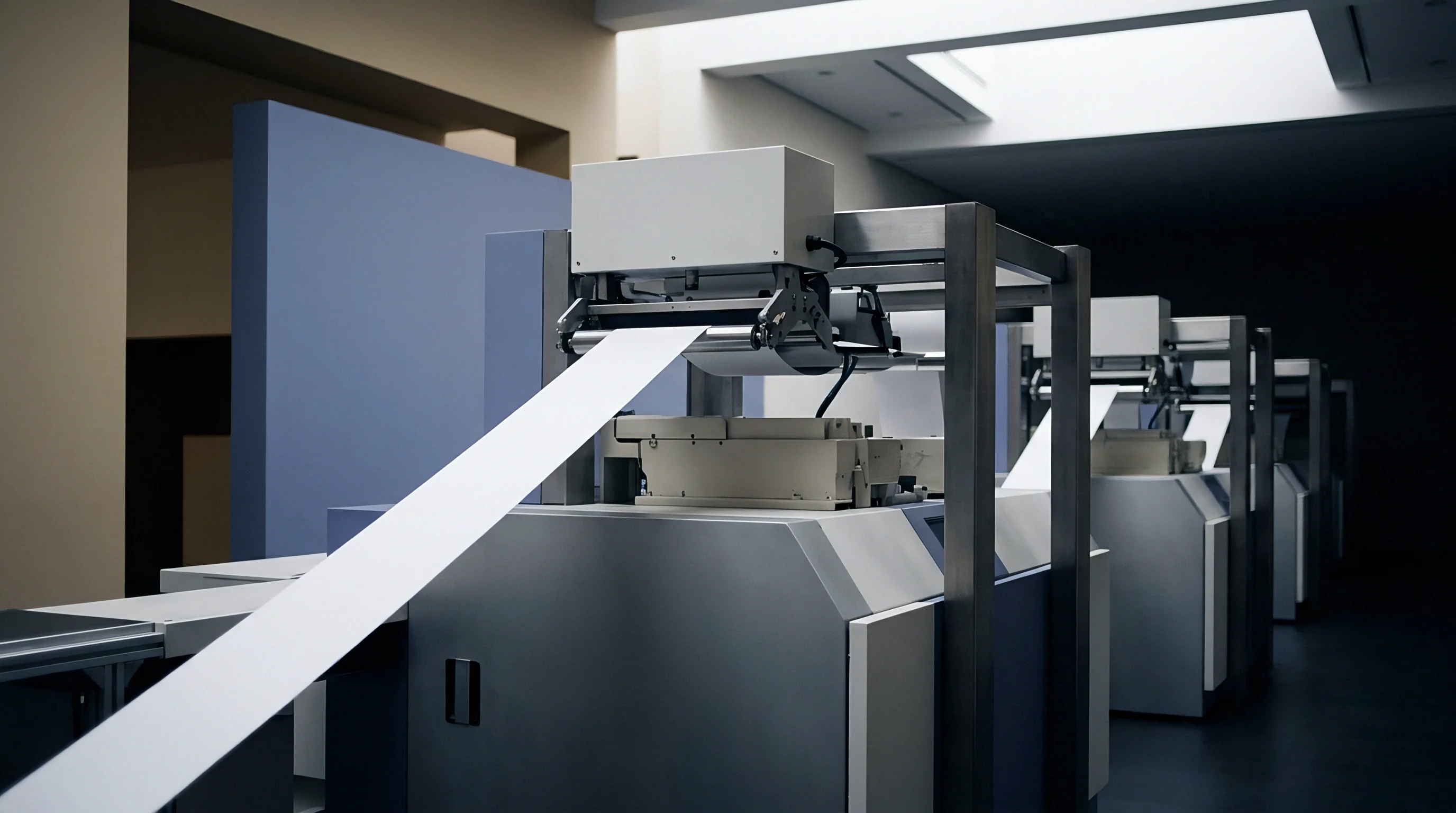
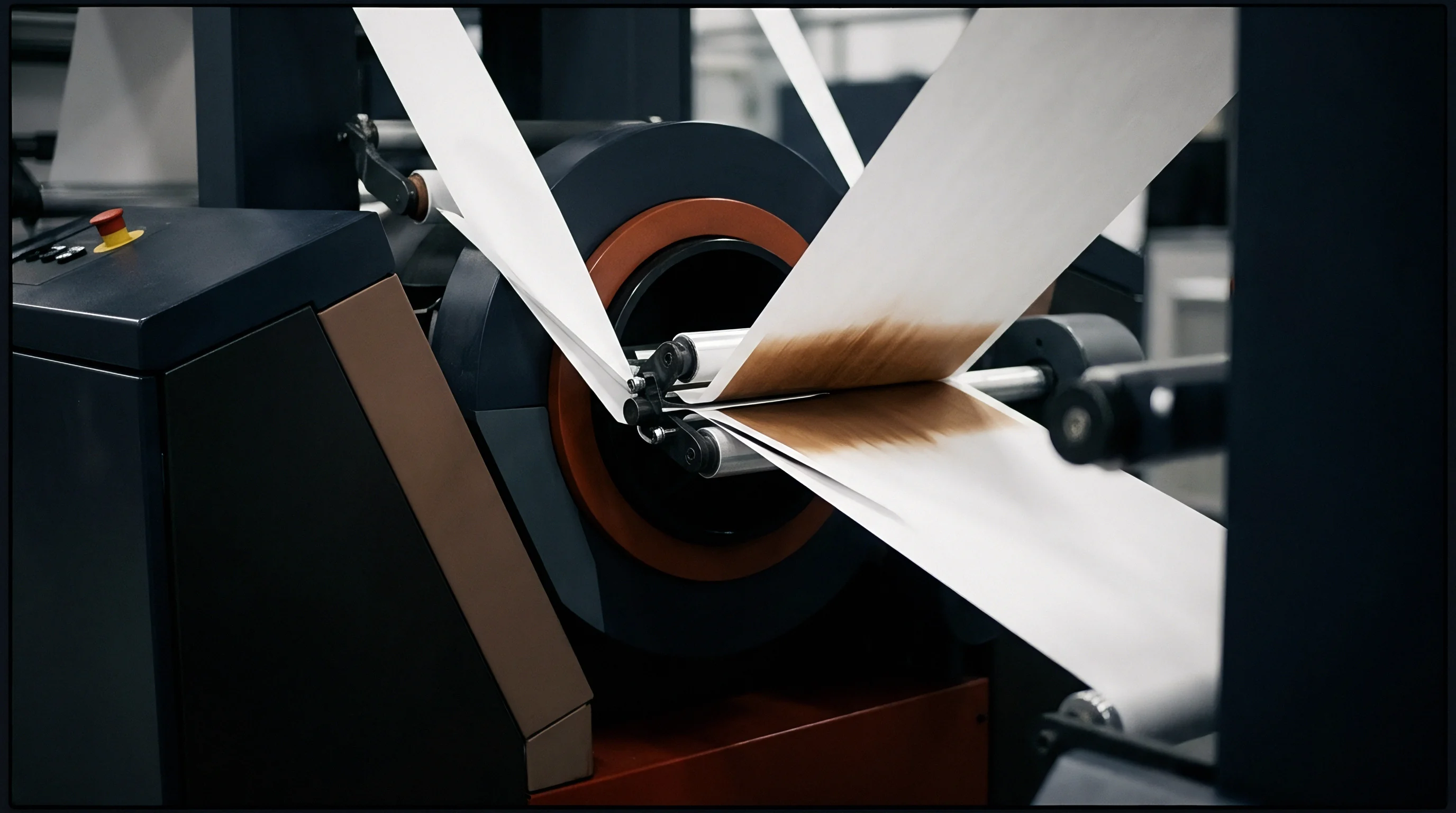
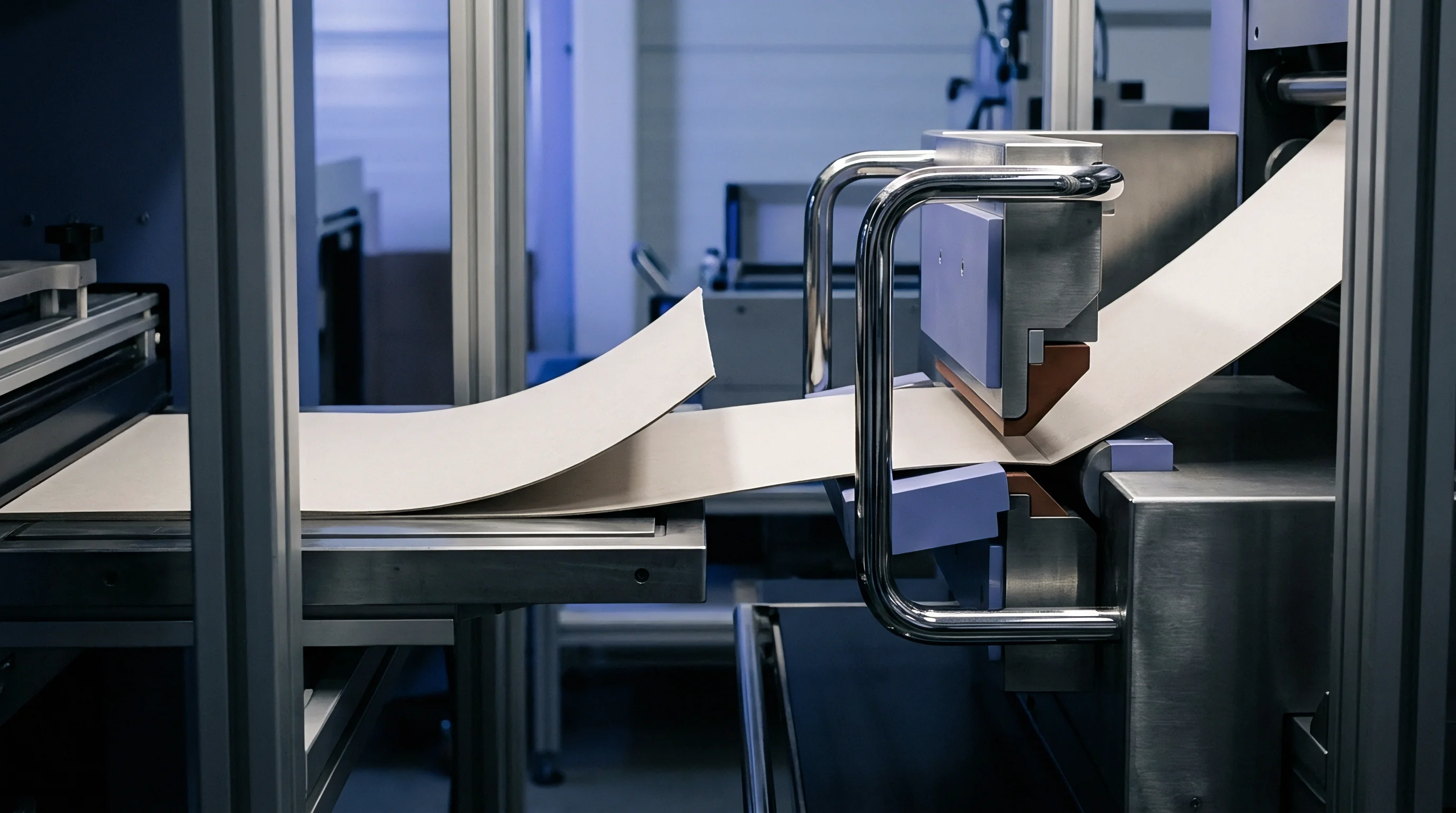
Web transport through converting machinery subjects thin polyolefin films to complex multiaxial stress fields. Speed spikes elevate strain rates. At line speeds above 1000 meters per minute, film tension combines with localized shearing across guide rollers, slitting knives, and nip rolls to induce rate-dependent plastic strain.
Why Does High Shear Viscoplastic Drift Cause Edge Tear?
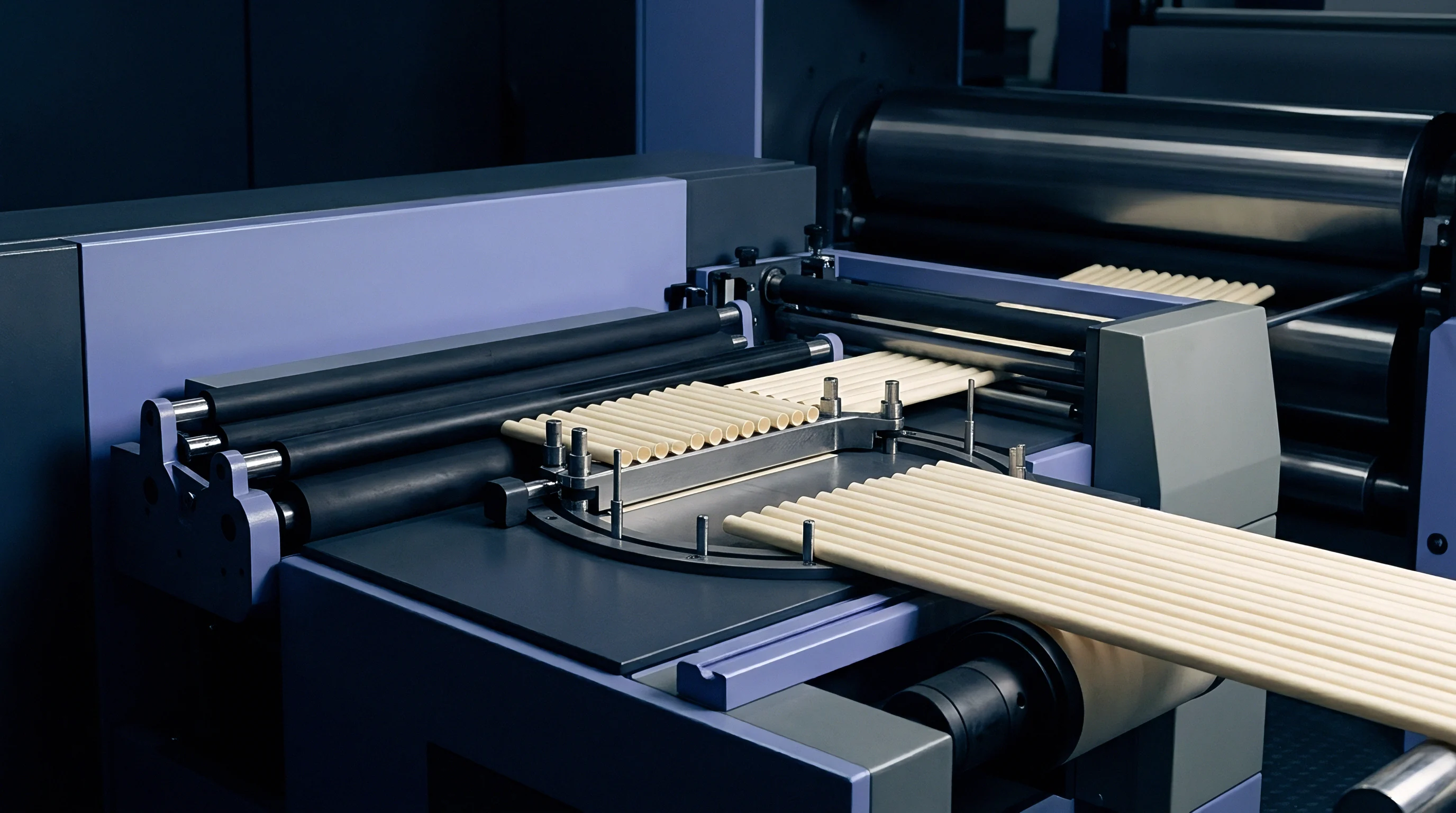
Slitting high-density polyolefin films at high speeds subjects film edges to localized shear strain rates approaching 1,000,000 reciprocal seconds. The razor or rotary knife edge crushes and shears the polymer simultaneously. If the local deformation rate exceeds the material viscoplastic relaxation rate, the film edge undergoes localized micro-yielding rather than clean brittle fracture or smooth plastic flow.
Micro-voids coalesce along the slit line, forming micro-cracks that propagate inward under web tension, causing severe trim snapping and edge tearing.
Mathematical tracking of strain history across consecutive converting passes demands an integrated kinetic framework.
- Unwinding Tension Application establishes baseline longitudinal elastic strain across the incoming polyolefin film roll before secondary processing.
- Thermal Conditioning Zone Pass reduces initial yield stress, enabling controlled pre-stretching without generating transverse web weave.
- Extrusion Lamination Nip Deformation applies combined normal pressure and high-rate shear deformation, forcing molten polyolefin into paperboard surface pores.
- Chill Roll Contact and Quenching arrests viscoplastic flow instantaneously, locking residual stress profiles into the solidified polyolefin layer.
- Slitting Knife Shear Cutting induces localized extreme shear rates along the web boundary, testing edge fracture toughness under rapid deformation.
- Winding Reel Accumulation subjects the converted substrate to decaying radial pressure and continuous tension accumulation across shift operations.
Line speed dictates shear exposure. Draw ratios alter cross-web tension. When processing low-density polyethylene laminates, high web tension combined with high shear rate slitting induces cross-web neck-in.
Web width contracts predictably when the viscoplastic Poisson ratio shifts during plastic deformation.
A web running under high tension through heated nips will stretch permanently if the localized stress exceeds the temperature-adjusted yield point for more than ten milliseconds.


Heat
Viscous Dissipation and Non-Isothermal Flow Dynamics
High shear rates generate substantial thermal energy within polyolefin melts through viscous dissipation. In narrow die lands and high-speed coating gaps, localized shear heating elevates melt temperature by tens of degrees Celsius within milliseconds. Viscous dissipation warms the land.
Because polyolefin shear viscosity drops precipitously with increasing temperature, this localized heat creates intense thermal softening along high-shear boundaries.
The Brinkman number quantifies the relative importance of viscous dissipation compared to molecular thermal conduction. When the Brinkman number exceeds unity, shear heating dominates the temperature field, establishing steep cross-channel temperature gradients. Modeling high-velocity converting without thermal coupling yields incorrect viscosity predictions and fails to capture flow channeling effects.
| Component Unit | Shear Rate Range (s^-1) | Brinkman Number | Nahme Parameter | Temperature Rise (°C) | Viscosity Shift (%) |
|---|---|---|---|---|---|
| Main Extrusion Die Land | 5,000 – 25,000 | 1.45 | 0.88 | +8.5 | -14.2 |
| High-Speed Co-Extrusion Feedblock | 12,000 – 45,000 | 2.10 | 1.24 | +13.1 | -21.5 |
| Rotary Slitting Edge Zone | 200,000 – 800,000 | 5.80 | 3.45 | +29.4 | -48.0 |
| Lamination Pressure Nip Gap | 30,000 – 150,000 | 3.20 | 1.95 | +18.2 | -31.0 |
Thermal softening offsets strain hardening. The Nahme-Griffith temperature sensitivity parameter governs whether thermal runaway occurs within the high-shear boundary layer. When shear heating reduces local viscosity faster than thermal energy can conduct into adjacent cooling channels, flow concentrates into thin, highly sheared core streams.
This structural variation creates gauge defects and density variations across converted films.
Purchasing specifications for high-velocity polyolefin laminates state that localized viscous dissipation shall not exceed a 12 kelvin thermal rise across die lips without documented cooling capacity.
Chill rolls set thermal history. Non-isothermal viscoplastic models must account for crystallization kinetics during rapid cooling. As polypropylene or polyethylene cools from processing temperatures, crystallite nucleation alters the yield stress dynamic.
Fast cooling locks in amorphous molecular arrangements, yielding lower tensile modulus but superior film clarity and reduced stress cracking potential.

Worked Calculation of Viscous Dissipation in a High-Speed Die Lip
Consider a low-density polyethylene melt processed at 230 degrees Celsius through an extrusion die lip gap of 0.5 millimeters at a volumetric flow rate producing an average shear rate of 80,000 reciprocal seconds. Take melt density as 760 kilograms per cubic meter, thermal conductivity as 0.18 watts per meter-kelvin, heat capacity as 2300 joules per kilogram-kelvin, and apparent viscosity at this shear rate as 45 pascal-seconds.
The volumetric rate of viscous heat generation equals viscosity multiplied by the square of the shear rate. Squaring 80,000 s⁻¹ yields 6.4 × 10⁹ s⁻². Multiplying by 45 Pa·s produces 2.88 × 10¹¹ watts per cubic meter of energy generation.
For a residence time in the 15-millimeter die land of 0.375 milliseconds, total thermal energy input equals 108 joules per cubic centimeter. Dividing by the product of density and heat capacity yields an adiabatic temperature rise of 61.8 kelvin. Accounting for cross-wall conduction reduces the realistic peak temperature rise to 22.4 kelvin along the die wall boundary, dropping local viscosity by 34 percent compared to centerline values.
Whether modern multi-layer die geometries can fully suppress viscoplastic shear banding without reducing total throughput below economic operating thresholds remains unresolved.

Audit

Rheological Protocols and Characterization Metrology
Extracting accurate constitutive parameters for high-velocity viscoplastic modeling requires characterization techniques capable of matching converting deformation speeds. Standard rotational rheometers operate below shear rates of 1,000 reciprocal seconds, rendering their data insufficient for high-speed converting models. Capillary rheometry, high-rate extensional rheometry, and high-pressure slit die metrology supply necessary high-rate datasets.
Capillary dies expose wall slip. High-pressure capillary rheometers push polyolefin melts through orifice dies with length-to-diameter ratios ranging from 10:1 to 40:1, generating controlled shear rates up to 1,000,000 s⁻¹. Applying the Bagley correction accounts for entrance and exit pressure drops, while the Weissenberg-Rabinowitsch correction adjusts apparent shear rates to reflect true wall shear rate conditions for non-Newtonian viscoplastic fluids.
Capillary rheometry profiles calibrated only below 10,000 s⁻¹ systematically underestimate die lip shear stress in commercial high-speed converting lines.
Converting lines require experimental validation of model predictions using high-speed optical and physical instrumentation.
- Mount high-speed laser Doppler velocimetry units along the die exit plane to capture real-time velocity profiles and quantify localized wall slip velocities.
- Install fast-response piezoelectric pressure transducers along the die land to measure dynamic wall shear stress fluctuations during speed ramps.
- Collect inline infrared thermal imaging data across the exit web to verify non-isothermal viscous dissipation model outputs.
- Execute high-speed tensile tests on film samples harvested across web width to evaluate residual orientation and viscoplastic yield stress variation.
| Test Method | Max Shear Rate (s^-1) | Primary Measurement | Sample Volume | Instrument Cost (USD) |
|---|---|---|---|---|
| High-Pressure Capillary Rheometry | 1,000,000 | Wall Shear Stress & Slip Velocity | 500 grams | 85,000 – 140,000 |
| High-Speed Slit Die Metrology | 250,000 | Inline Non-Isothermal Viscosity | Continuous Line | 120,000 – 210,000 |
| Capillary Breakup Extensional (CABER) | 50,000 (Strain Rate) | Apparent Extensional Viscosity | 5 grams | 45,000 – 75,000 |
| Rotational Cone-and-Plate Rheometry | 1,000 | Zero-Shear Viscosity & Yield Point | 2 grams | 60,000 – 110,000 |
According to EN 13430 material recycling evaluation guidelines, converting specifications that modify polyolefin viscoplastic flow through excessive cross-linking additives forfeit standard mono-material recycling validation certificates unless re-melt flow index consistency is verified under standard testing conditions.

Outlay

Commercial Economics and Material Loss Mitigation
Implementing advanced rate-dependent viscoplastic shear modeling requires upfront capital expenditure for rheological testing, computational software, and engineering staff training. These investments are offset by reduced scrap rates, faster line bring-up, and higher operating speeds across commercial production runs. In high-speed polyolefin lamination, unexpected web snaps and gauge variations account for significant material waste and unrecoverable line downtime.
To quantify the economic return of viscoplastic model implementation, consider a commercial extrusion lamination line running 30-gram-per-square-meter low-density polyethylene onto 250-gram paperboard stock at a web width of 1.5 meters and a line speed of 900 meters per minute. Operating 20 hours per day across 300 days annually yields a total annual production of 48,600,000 square meters of laminated board. Assume raw material costs of 1.65 USD per kilogram for extrusion grade polyolefin resin and 0.95 USD per square meter for paperboard substrate, bringing total substrate and resin throughput value to approximately 48.6 million USD annually.
Without rate-dependent flow modeling, initial line bring-up and trim waste average 4.2 percent of total web throughput. Unscheduled web snaps caused by localized edge tear and draw resonance contribute an additional 1.8 percent in lost material and 120 hours of lost machine time, priced at 1200 USD per hour in fixed overhead. Total unoptimized operational penalty reaches 3.06 million USD per year.
Implementing precision viscoplastic modeling optimizes die lip profiles and tension control sequences, reducing total material waste to 1.5 percent and cutting unscheduled line downtime by 75 percent. Direct material savings equal 2.18 million USD annually, while recovered machine availability adds 108,000 USD in operational margin, yielding total annual savings of 2.288 million USD against an initial modeling and metrology investment of 280,000 USD.
Capital spent on constitutive modeling pays out within the first quarter of full production scaling by eliminating guesswork during resin grade substitutions and speed upgrades.