Interply Strain Rate Sensitivity during Dynamic Packaging Creasing Operations
High creasing speeds increase paperboard dynamic stiffness, requiring wider female die channels to prevent top liner splitting and score cracking.


Rule
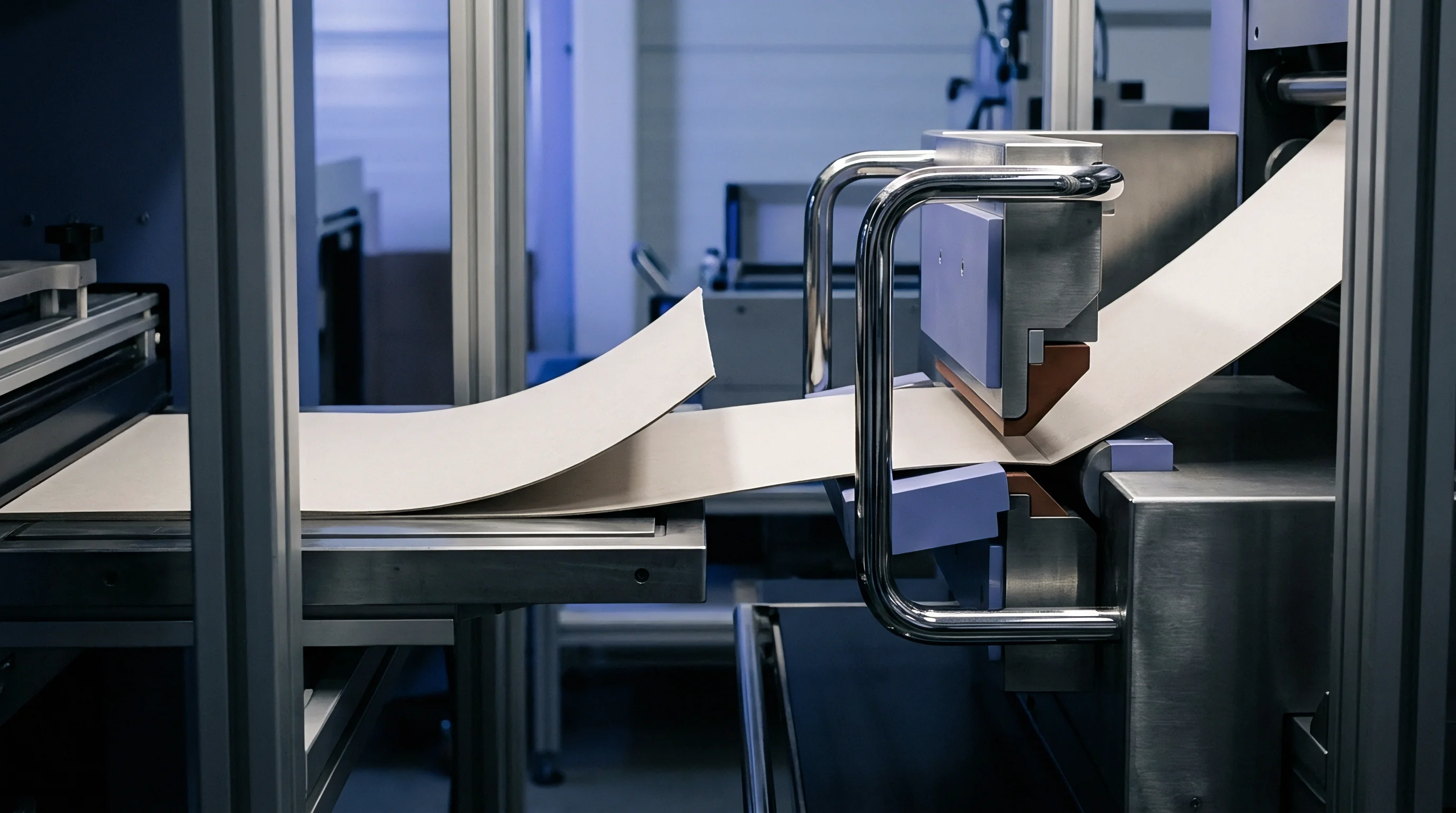
Scoring bars strike the paperboard surface at speeds exceeding two metres per second during industrial converting operations. At these operational velocities, the mechanical response of multilayer paperboard diverges from static bench observations. Fast penetration compresses upper fibre layers and subjects internal ply boundaries to severe shear displacement within milliseconds.
The rate of mechanical force application changes the stiffness of the furnish, altering how stress distributes across the sheet thickness as fiber bonds relax too slowly to accommodate the stroke.

Kinematics of Dynamic Scoring Penetration
High-speed flatbed platens and rotary scoring cylinders press steel tooling directly into multilayer packaging substrates within brief contact windows. Line throughput running at six to ten sheets per second forces the steel tip into the sheet in under three milliseconds, generating dynamic loads that far exceed static values. Under these conditions, cellulosic fibres behave viscoelastically, showing increased apparent yield stress and reduced strain capacity prior to initial fracture.
Rapid penetration drives the upper linerboard into compressive bending while generating tensile elongation across the bottom surface. The middle plies absorb the resulting shear strain through localized interply displacement. When deformation outpaces the molecular relaxation rate of the internal starch adhesive and inter-fibre hydrogen bonds, the sheet resists internal sliding, transferring heavy tension into the outer liners.
A penetration velocity of 3.5 metres per second increases interply shear stress by 42 percent compared to standard static laboratory test rates at 23 degrees Celsius and 50 percent relative humidity.
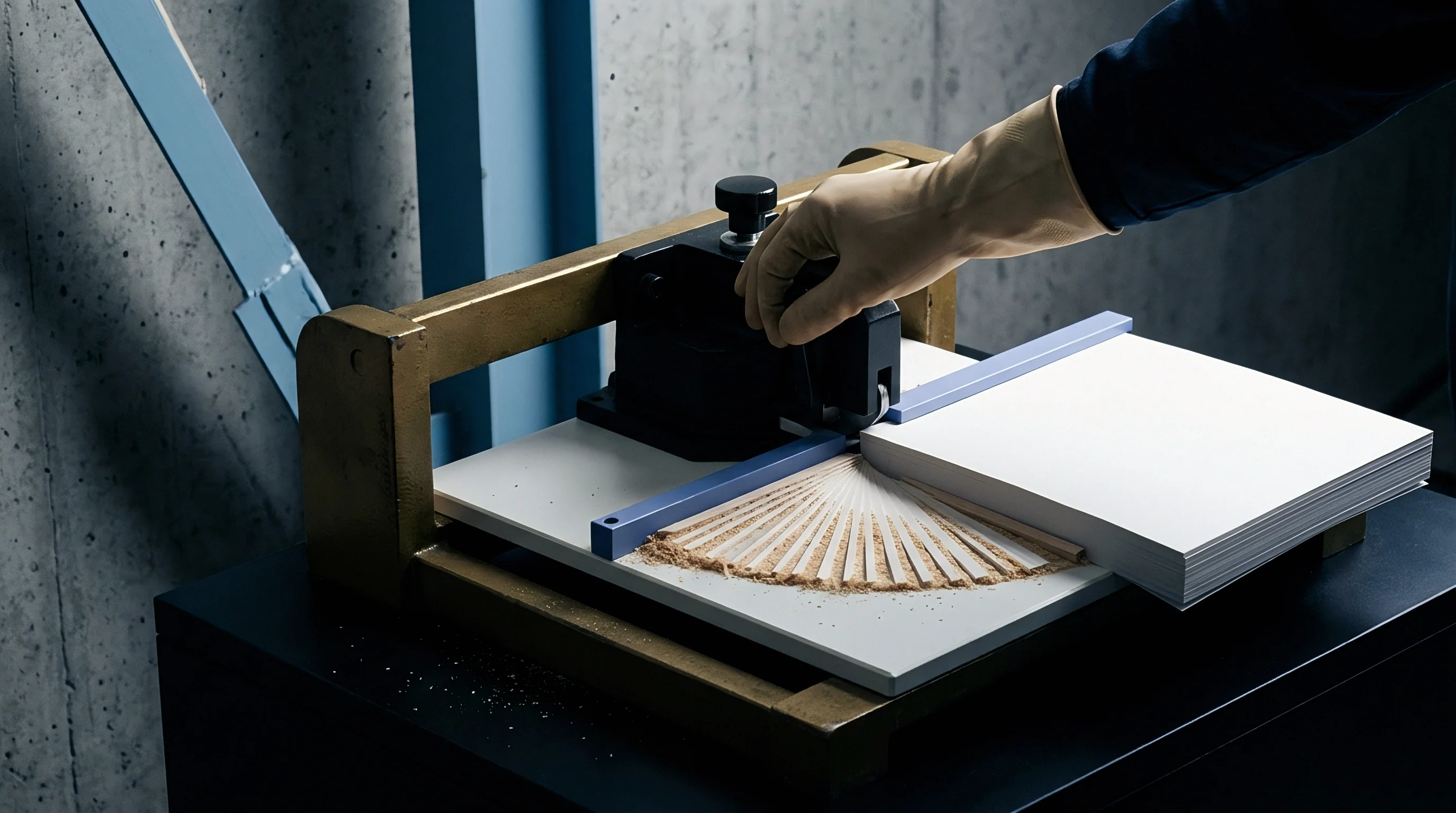
Failure to absorb this shear force through controlled internal delamination redirects stress into the outer linerboards. Top liner splitting occurs along the fold line when local tensile limits are exceeded. Conversely, inadequate interply shear resistance causes broad internal collapse, destroying the structural hinge needed for precise carton erection on automated packing lines.
- Top liner tension splitting occurs when elevated dynamic stiffness prevents elastic elongation across the outer surface during rapid rule penetration.
- Back liner bursting happens when high compressive shear fails to initiate middle-ply delamination before peak rule depth is reached.
- Asymmetric internal shear develops when moisture gradients across the board caliper create unbalanced rate sensitivity between top and bottom plies.
Score line cracking at elevated press speeds can originate from low ambient storage moisture as well as strain-rate-induced stiffening along internal ply boundaries.
Rheology
Cellulosic fibres and starch binders exhibit a time-dependent mechanical response when subjected to rapid deformation cycles. Modern packaging substrates rely on distinct furnish layers engineered for specific physical properties. Softwood kraft pulps provide tensile network integrity on the outer faces, while mechanical pulps or recycled fibers supply bulk in the middle layers where polymer chains resist fast displacement.

Strain Rate Sensitivity in Multilayer Furnishes
Deformation rates during commercial creasing range from 100 to over 5,000 reciprocal seconds, compared to 0.01 reciprocal seconds in conventional laboratory tensile testing. Because starch stiffens under rapid impact, the dynamic elastic modulus of the fibre network increases significantly as strain rates climb, elevating the peak load required to achieve target scoring depth.
The rate sensitivity of paperboard depends on fibre orientation, degree of refining, and interply bonding agents, which dictate how much fast impact limits stress relaxation. Highly refined kraft layers show higher rate sensitivity than high-bulk mechanical pulps because dense hydrogen-bonded networks lack free volume for molecular motion under rapid load increments.
| Substrate Grade | Grammage (g/m²) | Static Shear Modulus (MPa) | Dynamic Shear Modulus at 1000 s⁻¹ (MPa) | Rate Sensitivity Index |
|---|---|---|---|---|
| Solid Bleached Board (SBB) | 280 | 410 | 630 | 1.54 |
| Folding Boxboard (FBB) | 300 | 320 | 540 | 1.69 |
| White Lined Chipboard (WLC) | 350 | 280 | 510 | 1.82 |
| Unbleached Kraft Board (SUB) | 310 | 450 | 680 | 1.51 |
Recycled fibers demonstrate acute strain rate sensitivity due to shortened fibre lengths and heavy starch surface loading applied during paper manufacturing. High starch loads increase dynamic shear resistance. When creasing recycled substrates at high production speeds, the stiffened matrix prevents internal ply separation, transferring energy into surface fracture.
Slower crease rule penetration allows polymer chains within the starch adhesive layer to yield without fracturing outer linerboard fibres.
Temperature and moisture content modulate these viscoelastic response curves. Lower moisture levels reduce hydrogen bond mobility, increasing rate sensitivity and exacerbating brittleness during dynamic scoring operations by altering shear resistance.
Whether micro-friction additives applied between ply boundaries can decouple strain rate hardening from delamination resistance without reducing static box compression strength remains an active operational question across packaging converting facilities.
Cleavage
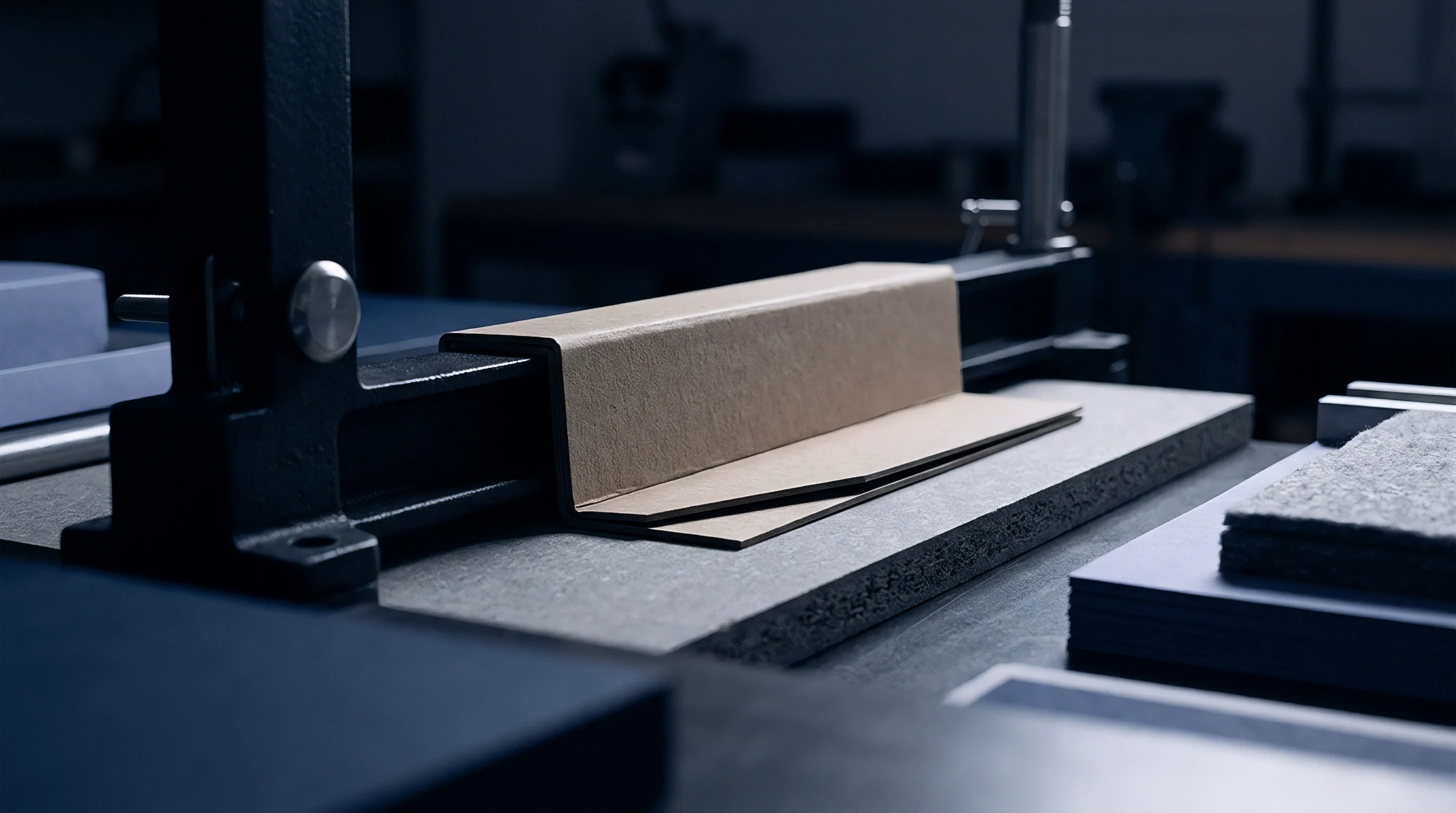
Controlled structural delamination along inner ply boundaries enables crisp, low-resistance fold lines during high-speed box formation. Creasing does not cut fibres; it breaks internal bonds in a defined region beneath the tool tip, propagating delamination through the inner plies. Micro-delaminations lower the crease’s bending stiffness, allowing ninety-degree folding without surface rupture.

Which Furnish Components Drive Rate Dependent Shear Resistance?
Hardwood kraft pulp, softwood thermo-mechanical pulp, and recycled starch matrices contribute distinct energy dissipation paths when impacted at operational press velocities. Softwood fibres deform plastically, whereas short hardwood fibres and inorganic fillers yield through brittle bond cleavage under high strain rates due to their short fiber content. The balance between plastic deformation and brittle cleavage determines whether a crease score folds cleanly.
- Condition test specimens at 23 degrees Celsius and 50 percent relative humidity for 24 hours prior to dynamic testing.
- Calibrate the high-speed impact sensor to capture peak load profiles at rule velocities between 1.0 and 5.0 metres per second.
- Position the paperboard sample across the female die channel perpendicular to the machine direction.
- Execute dynamic creasing strokes while recording force displacement trajectories and post-impact delamination width.
High creasing speeds alter the plane of internal failure within the board cross section. Static testing often shows uniform delamination centered in the middle ply. Dynamic loading concentrates shear stresses at the interfaces between dissimilar furnish layers, frequently causing abrupt cleavage near the back liner interface.
Dynamic strain hardening shifts the primary delamination plane from the middle ply boundary toward the weaker back liner surface.
When internal cleavage occurs too easily, the score line loses structural stiffness, causing carton panels to bulge during automatic erecting ~ since crease depth dictates bend force ~ while excessively high cleavage resistance forces outer linerboard fibres to absorb the load and split along the crease edge.
Operating high-speed folder-gluers with score lines weakened by rate-induced surface fracture increases feeding jams, disrupts blank squareness, and generates reject waste across automated packing lines.


Groove
Tooling dimensions provide necessary volumetric clearance for paperboard displacement during rapid penetration cycles. The geometry of the male creasing rule and female channel matrix determines the localized strain distribution across the sheet thickness, where machine-direction fibers align tightly. Tool clearance calculations derived from static bending formulas fail at high line speeds because they ignore dynamic sheet expansion and strain-rate stiffening.

Die Clearance and Female Channel Geometry
Channel widths matching two times the board caliper plus rule thickness establish standard clearances for static folding, yet dynamic strain stiffening demands wider clearances. Fast penetration limits time for material flow, forcing displaced board volume laterally into the female groove. If that groove is too narrow for the given board caliper, restricted lateral displacement raises compression forces, fracturing top coatings.
| Board Caliper (µm) | Male Rule Width (mm) | Female Channel Width (mm) | Static Creasing Force (N/m) | Dynamic Force at 3.0 m/s (N/m) |
|---|---|---|---|---|
| 350 | 0.71 | 1.30 | 180 | 275 |
| 450 | 1.05 | 1.80 | 230 | 360 |
| 550 | 1.42 | 2.30 | 290 | 440 |
| 650 | 1.42 | 2.70 | 340 | 530 |
| Dynamic forces measured using piezoelectric load transducers mounted beneath the female anvil at 23 degrees Celsius and 50 percent relative humidity. | ||||
As high rates increase top tension, radii on the male rule edges become critical under dynamic conditions. Sharp steel edges create stress concentrations that initiate surface micro-cracks before internal shear delamination develops, an effect further complicated as tool wear alters scoring force.
- Female channel width clearance balances lateral expansion space against side-wall shear forces during rapid impact.
- Male rule radius profile minimizes stress concentrations on the top coated liner during initial entry.
- Penetration depth threshold controls internal interply shear delamination without severing lower structural fibres.
- Converting press velocity settings align deformation rates with substrate moisture levels and furnish elasticity.
Wider die channels protect brittle top liners on high-speed presses when converting recycled furnish with elevated strain rate sensitivity.

Benchmark
Standardized laboratory evaluation methods measure static bending stiffness and creasing resistance at low deformation speeds. Standard bench instruments operate at constant displacement rates below 15 millimetres per minute. Because creasing forces scale with velocity, these slow measurements fail to capture rate-induced strain hardening, leading packaging engineers to specify tooling parameters unsuited for production line speeds.
Standardized Testing Protocols and Dynamic Mismatch
Standard procedures under ISO 5628 and TAPPI T 829 evaluate board stiffness using quasi-static loads that ignore strain-rate-induced stiffness increases. A board sample passing static score quality checks can fail completely on a platen press running at 7,000 sheets per hour. Static instruments give false confidence regarding linerboard flexibility.
Dynamic scoring simulators overcome this gap by measuring impact resistance at operational velocities up to six metres per second. These instruments capture real-time load displacement curves, revealing peak impact forces and total delamination energy. Dynamic data allows converters to optimize channel widths and rule profiles prior to press runs.
Compliance with DIN 55437 score ratio requirements ensures that high-speed creasing damage stays below the threshold where glue-flaps spring open on automated cartoning lines.
Establishing accurate material specifications requires correlation between dynamic creasing work and carton erection torque. Higher dynamic stiffness increases the spring-back force of folded carton flaps, causing automated cartoning machinery to misfeed blanks. Quality criteria must incorporate high-rate strain metrics to ensure consistent converting performance.
Inserting ISO 5628 bending resistance limits alongside TAPPI T 829 creasing factor specifications into board purchasing contracts binds suppliers to deliver uniform ply-bond performance under high-speed scoring conditions.