Strain Energy Release Rate Evaluation in Polyolefin Laminated Paperboard Scorelines
Polyolefin scoreline evaluation requires measuring Mode I and II strain energy release rates to prevent barrier rupture during high-speed carton folding.
Kinematics

Deformation Fields in Folded Laminated Board
Bending a scoreline forces the outer polyolefin film into pure tension while compressing the inner paperboard plies toward the crease axis. Fiber mats inside bleached board or folding boxboard yield through localized delamination between individual plies. Polymer film stretching over the outer ridge resists tensile strain until interfacial shear exceeds the bond strength between the film layer and the top liner.
Tensile failure in the outer extrudate or shear separation at the fiber-film boundary governs whether the folded edge maintains a fluid barrier.
Plane-strain conditions dominate the central span of a packaging scoreline during high-speed blank conversion. Near the cut edges of the blank, plane-stress conditions allow lateral contraction, lowering the peak stress required to propagate a score line crack. Strain energy accumulates in the polyolefin skin as the score angle approaches ninety degrees.
Mechanical strain concentrates over the male rule tip, where local deformation drives crack initiation directly into the top ply interface.
Linear elastic fracture mechanics models treat the polyolefin skin and the cellulose substrate as an orthotropic bilayer with an interfacial weakness. Energy stored in the strained polymer layer releases either through ductile necking of the polyolefin or through brittle interfacial debonding along the adhesion zone. Tensile rupture occurs when local strain exceeds the ultimate elongation of the film.
Interfacial failure dominates when the critical strain energy release rate of the polyolefin-paperboard bond falls below the fracture toughness of the bulk fiber network.
The work required to drive a crack through a scoreline interface shifts from cohesive fiber tearing to clean adhesive stripping when ambient relative humidity drops below thirty percent.
Evaluation of strain energy release rate in scorelines requires separating Mode I opening forces from Mode II sliding shear forces during the folding stroke. Tensile forces in the outer polyolefin skin pull the film perpendicularly away from the board surface during deep female die indentation. Simultaneous bending creates intense shear stresses along the interface plane.
Mixed-mode fracture criteria define the precise combination of tensile and shear stresses that initiates delamination during carton erecting.
Failure Trajectories across Crease Planes
Scorelines fail along distinct spatial pathways governed by local energy release rates. Internal paperboard shear cracks develop first within the central plies under male rule impact. Substrate ply separation reduces bending resistance, allowing the outer skin to stretch smoothly across the fold shoulder.
Insufficient internal board shear causes strain to focus directly beneath the outer polyolefin film, driving premature skin rupture.
- Cohesive liner cleavage splits the upper cellulose fiber matrix directly beneath the polymer extrusion layer while leaving the adhesive interface intact across the fold line.
- Adhesive film delamination detaches the polyolefin film from the fiber surface without pulling structural fibers, destroying grease resistance along the scoreline edge.
- Film tensile necking stretches the polyolefin layer beyond its elastic strain limit, producing pinholes, microvoids, and severe caliper reduction over the outer crease ridge.
- Transverse matrix cracking propagates perpendicular cracks through both the fiber board matrix and the outer film coat, resulting in complete barrier failure across the carton corner.
Microstructural examination reveals that polyolefin strain hardens during localized extension. Extrusion-coated low-density polyethylene exhibits distinct strain-hardening behavior compared to oriented polypropylene films. Unoriented polyethylene stretches yielding a high plastic dissipation zone that increases the apparent fracture toughness.
Biaxially oriented films store elastic strain energy efficiently, yielding unstable crack growth once a micro-crack initiates at the crease shoulder.
Thickness variations across the fiber substrate disrupt strain distribution along the scoreline axis. Grammage fluctuations as small as five grams per square meter alter the local compression ratio inside the creasing channel. High local compression increases the effective modulus of the fiber bed, transferring excessive tensile strain into the polyolefin film during ninety-degree carton folding.
Stable folding mechanics require matching the plastic deformation capability of the polymer to the yield stress of the underlying cellulose network.
Structural failure inside the scoreline alters the barrier performance of the final package. Micro-cracks measuring less than ten microns across the polyolefin layer allow gas transfer, vapor migration, and liquid ingress. Fracture energy calculations provide the quantitative framework needed to predict these physical barrier breaches before converted blanks reach filling lines.


Clamp
Fracture Toughness Test Configurations
Determining the strain energy release rate of a laminated scoreline demands specialized mechanical fixture arrangements. Standard tensile tests record global force displacement profiles, masking localized crack tip energetics. Double Cantilever Beam tests measure Mode I fracture toughness by pulling polyolefin film vertically from the paperboard base.
End-Notched Flexure methods apply three-point bending to measure Mode II shear-driven crack propagation along the laminated interface.
Specimen preparation controls measurement precision in fracture energy testing. Samples cut from production blanks require razor-sharpened starter notches introduced at the exact polyolefin-cellulose interface. Standard conditioning at twenty-three degrees Celsius and fifty percent relative humidity fixes the moisture content of the cellulosic plies before clamping.
Clamping pressures along the uncracked test segment must prevent localized crushing of the fiber core while holding the specimen flat against the test anvil.
Modified score-bending jigs measure energy dissipation directly during line folding operations. A motorized arm rotates the scored specimen through ninety degrees at constant angular velocity while load cells capture force and moment curves. Calculating the area under the torque-angle curve yields the total work of folding.
Subtracting the elastic strain energy stored in the uncracked board isolates the critical strain energy release rate responsible for interfacial fracture.
| Test Method | Fracture Mode | Primary Loading Mechanism | Data Output | Primary Application |
|---|---|---|---|---|
| Double Cantilever Beam | Mode I Opening | Direct peel perpendicular to interface | Critical strain energy release rate | Extrusion layer bond strength verification |
| End-Notched Flexure | Mode II Shear | Three-point shear bending | Shear fracture energy threshold | High-speed scoreline shear separation evaluation |
| Mixed-Mode Bending | Mixed Mode I and II | Combined lever peel and flexure loading | Phase-angle dependent toughness envelope | Erecting line score failure prediction |
| Instrumented Score Bending | Combined Crease Folding | Rotational moment application | Total work of folding curve | Converting line press set-up validation |

Calculations for Interfacial Energy Metrics
Evaluating critical strain energy release rate uses compliance calibration techniques. Beam theory formulations derive fracture energy from measured load, crosshead displacement, and crack length data. Modified beam theory incorporates root rotation at the crack tip to correct for compliance in soft paperboard substrates.
The compliance method calculates strain energy release rate by differentiating compliance with respect to crack area.
Compliance calculations follow specific analytical expressions based on specimen dimension and elastic modulus. Equation variables define load as P, width as b, crack length as a, and vertical displacement as delta. Modified beam theory adjusts crack length by an empirical parameter delta-a to account for shear deformation in the paperboard base ply.
Energy release rate under Mode I condition uses the analytical form:
G_Ic = (3 P delta) / (2 b (a + delta_a))
For Mode II shear evaluation using the End-Notched Flexure setup, calculation depends on bending stiffness and span geometry. Variable L denotes half-span length between support pins:
G_IIc = (9 a^2 P^2 C) / (2 b (2 L^3 + 3 a^3))
Area-method calculations offer an alternative approach for highly nonlinear polyolefin deformations. Measuring work input during crack extension avoids assuming linear elasticity in the film. The total area under the force-displacement curve represents total energy input.
Dividing change in work by change in fractured interfacial area yields the average critical strain energy release rate across the crack extension distance.
- Mount the pre-cracked scoreline strip in the specialized low-force tensile clamp with edge alignment guided by optical sensors.
- Apply zero-load offset calibration to clear tare weights introduced by mechanical jaw components.
- Initiate displacement-controlled loading at two millimeters per minute until stable crack propagation begins along the score shoulder.
- Capture crack front movement continuously using a high-resolution optical video microscope synchronized with load cell frequency data.
- Calculate compliance across five incremental crack lengths to construct the compliance calibration slope for the specific board lot.
- Derive critical strain energy release rates using modified beam theory equations corrected for root deflection.
J-integral evaluations capture elastic-plastic strain fields surrounding ductile polyolefin crack tips. High-density polyethylene and polypropylene films exhibit broad plastic deformation zones that invalidate pure linear elastic fracture mechanics. Numerical evaluation of the path-independent J-integral calculates net energy flow into the crack tip zone.
Critical J-integral values mark the physical onset of film tearing during folding, providing an absolute boundary for converting process window definitions.
Crease geometry alters local compliance during testing. Pre-creasing reduces stiffness locally, concentrating compliance within a two-millimeter zone centered on the score rule mark. Crack initiation inside this pre-damaged zone requires lower nominal force than crack growth into virgin laminated board.
Fracture testing protocols must account for pre-existing damage introduced during flatbed or rotary die-cutting passes.
Testing speed heavily influences critical strain energy release rate results. High-speed video tracking shows that dynamic fracture toughness at operational press speeds differs from quasi-static laboratory measurements. Viscoelastic polymer relaxation at low speed dissipates strain energy plastically, artificially inflating measured toughness values.
Laboratory testing must scale strain rates upward to match real converting velocities.
A double-cantilever beam specimen showing ductile necking across the polyolefin film prior to crack propagation indicates interfacial bond strength exceeds the yield point of the polymer layer.


Boundary
Interface Chemistry and Surface Energy
Polyolefin polymers possess low polar surface energy, presenting fundamental adhesion challenges when extrusion-coated onto paperboard. Low-density polyethylene exhibits surface energy near thirty-one millinewtons per meter, whereas cellulosics require higher wetting energies for continuous contact. Unmodified polyolefins establish weak dispersion forces across the fiber boundary.
Achieving high strain energy release rates requires active surface modification to introduce polar functional groups.
Corona discharge treatment oxidizes the molten polyolefin stream or paperboard surface prior to lamination. Ozone generation inside the corona field converts surface hydrocarbon bonds into carbonyl, hydroxyl, and carboxyl species. Oxidation raises polyolefin surface energy above forty-four millinewtons per meter, promoting chemical interaction with cellulose hydroxyl groups.
Dynamic contact angle measurements confirm that oxidized surfaces allow rapid spreading of molten extrudate into paperboard pore structures.
Flame treatment provides deep surface oxidation for high-speed lamination lines. Thermal energy from the flame plasma breaks non-polar carbon-hydrogen bonds, creating reactive free radical sites that bind oxygen atoms. Flame-treated polyolefin layers form hydrogen bonds with paperboard fibers, substantially increasing Mode I critical strain energy release rate.
Flame treatment controls surface modification depth without inducing thermal degradation across the bulk film volume.
Surface energy below thirty-eight dynes per centimeter on the polyolefin film results in clean scoreline delamination during erect-and-fill sequences.
Extrusion lamination temperature dictates mechanical keying into the paperboard surface. Polymer melt temperatures exceeding three hundred degrees Celsius lower melt viscosity, driving molten polyolefin into microscopic inter-fiber void spaces. Physical interlocking between solidified polyolefin roots and surface fibers supplements chemical bonding.
Insufficient melt temperature leaves air voids at the interface, creating stress concentration points that lower interfacial toughness during scoreline creasing.
Lamination Methods and Interfacial Energy
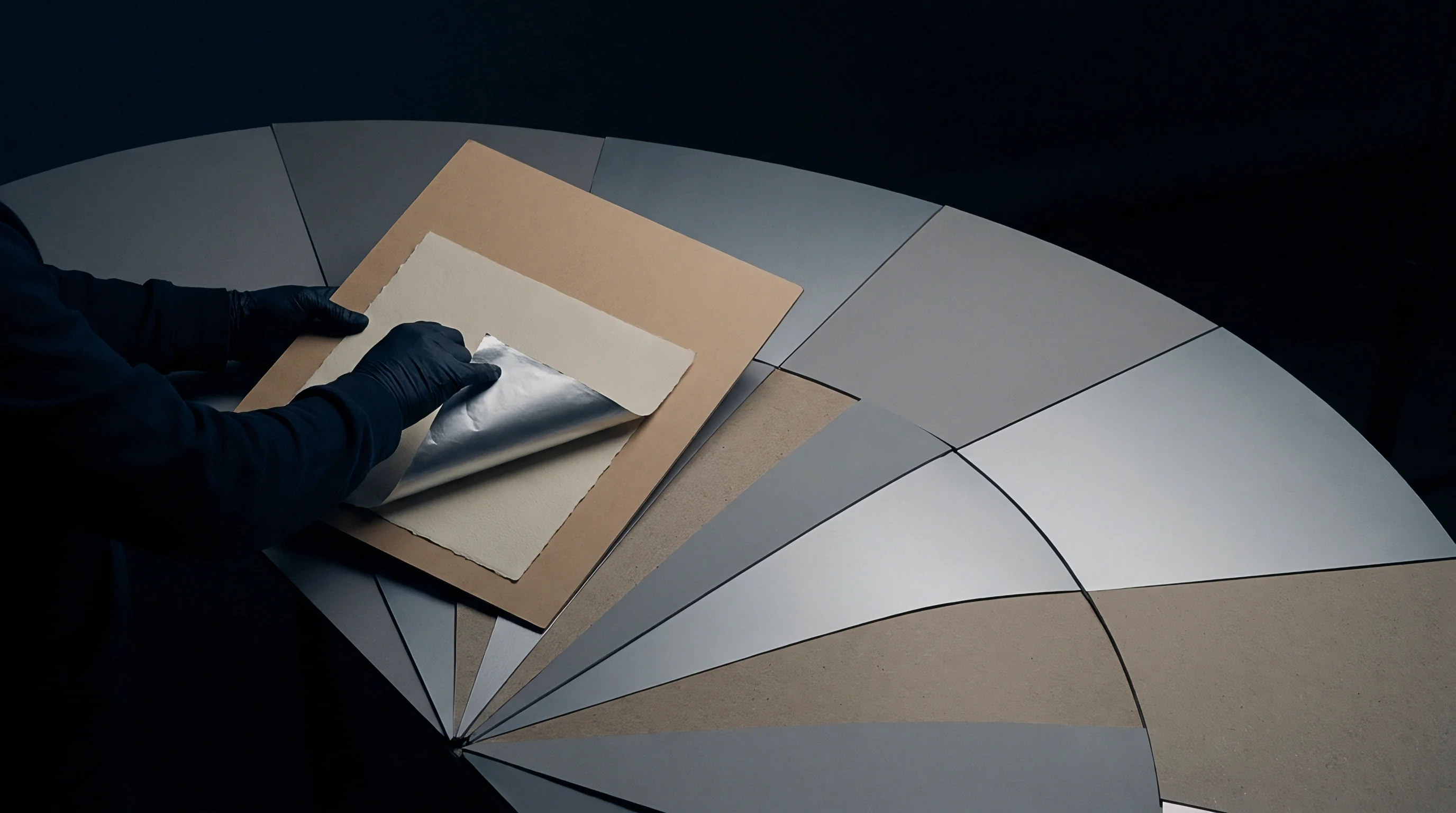
Extrusion coating and adhesive film lamination generate vastly different interfacial fracture mechanics. Direct extrusion coating produces a graded interfacial region where polymer flows around exposed surface fibers. Dry bond film lamination uses polyurethane or acrylic tie layers to join pre-formed polyolefin films to paperboard.
The mechanical integrity of the scoreline depends entirely on the weaker of either the tie-layer interface or the bulk polymer matrix.
Polyurethane tie adhesives generate high polar adhesion through urethane linkages reacting with cellulose moisture. Cross-linking density inside the adhesive layer governs shear modulus and energy dissipation during scoreline flexure. Over-cured adhesive networks become brittle, propagating cracks at low strain energy release rates.
Under-cured tie layers remain tacky and low in shear strength, sliding under Mode II stress during crease folding.
Tie-layer coat weight determines interfacial energy storage capacity during mechanical deformation. Excess coat weight creates a thick, low-modulus buffer layer that absorbs initial shearing forces during scoring. Applying thin adhesive coats below two grams per square meter limits viscoelastic energy dissipation, focusing peak strain directly at the film-fiber boundary.
Uniform adhesive deposition across the sheet width prevents localized delamination zones along parallel scorelines.
Co-extrusion technology allows combining functional layers to optimize both adhesion and barrier performance. Incorporating ethylene acrylic acid copolymers as a tie-layer directly adjacent to paperboard improves strain energy release rates. Carboxylic acid functional groups in ethylene acrylic acid react chemically with cellulose hydroxyls.
Outer layers of linear low-density polyethylene supply tough, strain-hardening behavior over the outer crease fold.
Extrusion suppliers claim that maleic anhydride grafted polyolefins eliminate the need for flame oxidation while maintaining high fracture toughness across liquid packaging scorelines. Converting experience demonstrates that oxidation levels still decay over storage time, lowering practical bond durability on aged raw material stock.
Storage aging degrades interfacial energy through polymer chain relaxation and surfactant migration. Slip additives and anti-blocking agents blended into polyolefin formulations migrate toward the paperboard interface over time. Fatty acid amides accumulate at the bond boundary, forming a weak boundary layer that drops critical strain energy release rates by more than forty percent within six weeks of lamination.
Moisture transfer across the boundary zone continuously alters interfacial mechanical properties. Cellulosic fibers absorb environmental humidity, expanding laterally and weakening physical anchor sites. Water molecules competing for hydrogen bonding sites displace physical polymer contacts.
Maintaining high fracture energy across long storage periods requires barrier chemistry that prevents moisture accumulation along the lamination line.

Caliber
Tooling Architecture and Stress Distribution
Creasing die geometry dictates the magnitude and distribution of strain energy stored within scorelines. Male creasing rules feature defined crown radii that force paperboard into female channel grooves. Rule width, channel width, and channel depth define the precise volumetric displacement of fibers during press impact.
Mismatched tooling dimensions crush substrate fibers without creating clean internal ply separation, sharply raising peak tension in the outer polyolefin layer.
Female creasing matrix selection establishes the bending clearance ratio for the laminated board. Matrix channel width must account for twice the total paperboard caliper plus the male rule thickness. Broad channel widths distribute bending forces over a wide area, reducing local deformation energy in the polyolefin film.
Narrow channels concentrate shearing forces, inducing deep micro-cracks along the score shoulders before carton folding begins.
Rule height accuracy across flatbed die-cutting platen setups governs crease uniformity. Impression variations as small as fifteen microns produce significant local differences in scoreline depth. Over-impression crushes the paperboard core completely, leaving the polyolefin skin to carry all subsequent folding strain without substrate support.
Under-impression yields insufficient internal ply separation, producing severe outer film stretching during final erecting passes.
| Board Caliper (microns) | Film Thickness (microns) | Male Rule Thickness (pt / mm) | Female Channel Width (mm) | Female Channel Depth (mm) |
|---|---|---|---|---|
| 250 to 350 | 15 to 25 | 1.5 pt / 0.53 mm | 1.0 to 1.2 mm | 0.40 mm |
| 350 to 450 | 20 to 35 | 2.0 pt / 0.71 mm | 1.4 to 1.6 mm | 0.50 mm |
| 450 to 600 | 30 to 50 | 3.0 pt / 1.05 mm | 2.0 to 2.2 mm | 0.70 mm |
| 600 to 800 | 40 to 75 | 4.0 pt / 1.42 mm | 2.8 to 3.2 mm | 0.90 mm |

Substrate Fiber Anisotropy and Crease Mechanics
Paperboard exhibits pronounced mechanical anisotropy due to fiber alignment along the machine direction. Tensile modulus along the machine direction exceeds cross-machine direction modulus by a factor of two or three. Scorelines running parallel to the machine direction fold across weak, cross-direction fiber bonds, easily initiating internal ply separation.
Scorelines running perpendicular to the machine direction must fracture stiff, machine-direction fibers, generating high internal reaction forces that strain the outer film coat.
Grain orientation controls crack growth paths during high-speed folding passes. Cross-direction scorelines focus energy into the polyolefin film because underlying fibers resist clean internal shearing. Adjusting female matrix channel widths wider for cross-direction scores reduces peak strain energy release rates below film failure limits.
Flatbed die layout design balances sheet yield against critical scoreline orientations to minimize conversion scrap.
What tooling parameters control crack trajectory during high-speed folding?
Male rule profile selection governs crack trajectory through the board thickness. Radiated crowns deliver smooth strain gradients across the polyolefin film surface. Trapezoidal rule profiles concentrate peak shear stresses sharp corners, promoting premature film tearing at the score boundary.
Curved rule contours optimize displacement kinematics during high-speed matrix penetration.
Counter-creasing plates machined from steel or counter-board materials provide precise groove definition compared to pressure-sensitive matrix tapes. Steel counters eliminate matrix channel wall deflection under platen pressure, holding exact channel dimensions across long production runs. Stable groove geometry maintains constant strain energy release rates from first-off test sheets through sheet fifty thousand.
Determining die tooling parameters requires following systematic verification steps on the converting floor.
- Measure exact sheet caliper across five points using a digital micrometer to establish base substrate dimensions prior to die setup.
- Verify polyolefin film thickness via optical cross-sectioning or non-destructive magnetic sensor systems to ensure coating uniformity across the roll width.
- Calculate matrix channel clearance applying the standard industry formula equal to board caliper multiplied by one point five plus rule thickness.
- Set platen impression baseline starting at light contact and advancing in ten-micron increments until scoreline depth reaches exactly fifty percent of board caliper.
- Inspect creased cross-sections under microscope to confirm symmetrical internal ply separation without outer film micro-cracks.
- Run high-speed fold testing on ten sample blanks, recording peak folding moment and visual surface integrity using dye penetration fluid.
Moisture content variations inside the paperboard core shift the optimum tooling dimension window. Low relative humidity renders cellulose fibers stiff and brittle, raising internal shear resistance during creasing. Dry board requires wider female grooves and larger male rule radii to avoid exceeding the critical strain energy release rate of the polyolefin film.
Environmental controls around die-cutting presses maintain stable sheet moisture, preventing scoreline splitting during dry winter production runs.


Accounting
Conversion Waste and Yield Mechanics
Scoreline failures represent a major source of converting spoilage and line downtime. Outer film splitting during folding renders filled packaging non-compliant with barrier specifications, forcing total batch rejection. Scrap rates spike during winter months when low ambient humidity lowers paperboard fracture toughness.
Tracking scrap costs against film grammage reveals the economic trade-offs inherent in lamination specification design.
Thicker polyolefin coatings provide wider creasing process windows but increase raw material costs. Increasing low-density polyethylene extrusion weight from eighteen grams to thirty grams per square meter raises raw material expenditure significantly across large production runs. The added plastic layer raises critical strain energy release rates, preventing scoreline cracks and reducing press waste.
Balancing added film cost against scrap reductions yields the minimum total cost per thousand converted units.
Make-ready waste accumulates rapidly while adjusting platen impression for complex scoreline layouts. Achieving balanced creasing depth across a ninety-up carton layout requires multiple test impressions and manual carbon-paper patch-ups. Excessive patch-up pressure easily over-creases sensitive areas, causing polyolefin skin failure.
Automated die-cutting platens with dynamic impression control shorten make-ready cycles, saving high-value laminated board stock.
Standard converting specifications mandate zero micro-cracks along primary barrier scorelines after a ninety-degree fold test under ten-times optical magnification.
Running speeds on high-speed folder-gluers exacerbate scoreline cracking risks. Erecting belts bend scorelines at rates exceeding six hundred meters per minute, generating high dynamic strain rates within the polyolefin film. Fast strain rates increase the effective elastic modulus of polymers while reducing elongation at break.
Folder-gluers must operate below maximum rated speed if scoreline strain energy release rates drop below dynamic fracture thresholds, increasing unit manufacturing overhead.
| Film Coating Weight (g/m²) | Tooling Setup Precision | Average Waste Rate (%) | Line Speed Penalty (%) | Landed Unit Cost Index |
|---|---|---|---|---|
| 15 (Low Weight) | Standard Matrix Tape | 4.5 to 6.0 | 15 (Slowed) | 100 (Baseline) |
| 15 (Low Weight) | Milled Steel Counter | 1.5 to 2.2 | 0 (Full Speed) | 98 |
| 25 (Medium Weight) | Standard Matrix Tape | 1.2 to 1.8 | 5 (Slightly Slowed) | 103 |
| 25 (Medium Weight) | Milled Steel Counter | 0.3 to 0.6 | 0 (Full Speed) | 101 |
| 40 (Heavy Weight) | Standard Matrix Tape | 0.2 to 0.5 | 0 (Full Speed) | 112 |

End of Life Fees and Extended Producer Responsibility
Extended Producer Responsibility frameworks penalize non-recyclable multi-material packaging designs through modulated fees. Polyolefin-laminated paperboard requires specialized repulping operations to separate plastic films from valuable cellulose fibers. Packaging designs containing film weights above ten percent of total structure weight face severe financial surcharges under European recycling schemes.
Minimizing polyolefin film thickness lowers regulatory fee tiers while demanding precise scoreline fracture energy management.
Recyclability grading protocols evaluate repulpability through standardized hydrapulper yield testing. Heavy polyolefin films that resist fragmentation during pulping collect on coarse screens, enabling clean plastic extraction. Thin film layers degrade into tiny flakes under high shear, generating micro-plastic contamination in recycled fiber streams.
Recyclability certification rules penalize weak, flake-forming film structures, directly impacting brand owner procurement choices.
Designing for recyclability forces reduction in film thickness, narrowing the creasing safety margin. Thinner films possess lower intrinsic strain energy storage capacity, elevating scoreline split risks. Converters must implement rigorous surface energy controls and high-precision steel counter tooling to maintain score integrity when running eco-designed ultra-thin polyolefin structures.
Submitting laminated cartons with unverified scoreline fracture toughness leads directly to field failures on automated filling lines, triggering complete lot rejections, costly freight returns, and contractual line-stoppage penalties.

Protocol

Verification Protocols and Batch Quality Audits
Formal qualification of polyolefin laminated scorelines demands systematic verification procedures prior to commercial run release. Quality assurance protocols combine physical dimensions checks, surface energy measurements, and instrumented fracture testing. Sample plans select blanks from roll start, middle, and end positions to verify property stability across entire extrusion production lots.
Laboratory test records establish the technical compliance dossier required by food and pharmaceutical buyers.
Dye penetration testing provides an immediate visual audit for scoreline micro-cracking on the converting floor. Low-viscosity solvent dyes applied along the folded outer crease wick into paperboard fibers through pinholes or cracks in the polyolefin film. Stained fibers visible on the inner carton surface confirm film layer breaching.
Automated vision inspection cameras installed on folder-gluers detect dye wicking continuously, rejecting defective blanks in real time.
Cross-sectional optical microscopy validates internal ply delamination structures without destructive tear testing. Embedded scoreline samples cut with ultra-sharp microtome blades expose internal shear crack networks under illuminated magnification. Quality technicians check that internal ply separation extends across seventy percent of the creased zone width while verifying that the outer polyolefin coating maintains continuous contact with the top liner.
Laboratory verification confirms that a critical strain energy release rate exceeding one hundred and eighty Joules per square meter prevents barrier splitting under standard erecting conditions.
Standardized score-bending test protocols measure peak folding torque and total energy absorption. Testing rigs pull scored strips through specified angular displacement rates while recording force profiles continuously. Batch approval requires folding energy curves to fall within established upper and lower statistical control limits.
Out-of-spec energy profiles flag improper platen impression setups before mass production begins.

Contractual Specifications and Tolerances
Procurement contracts for polyolefin laminated board specify explicit mechanical performance criteria alongside caliper and grammage targets. Technical delivery specifications define minimum required critical strain energy release rate values for all scorelines carrying liquid or gas barrier duties. Incorporating quantified fracture toughness parameters replaces subjective visual creasing checks with enforceable physical metrics.
Tolerance clauses govern acceptable variations in lamination layer thickness, surface dyne levels, and scoreline bending resistance. Contracts state maximum allowable standard deviations across production reels to prevent machine-setting adjustments on converting lines. Non-compliant reels falling below minimum critical fracture energy thresholds undergo immediate quarantine and return to the mill at supplier expense.
Quality audit documentation mandates delivering certified test certificates with every board shipment. Certificates of analysis record measured Mode I and Mode II strain energy release rates alongside film adhesion peel values. Traceability protocols link individual board rolls directly to mill extrusion log data, supporting rapid root-cause analysis when field scoreline failures occur.
Standard supply agreements incorporate strict warranty language regarding scoreline functional integrity: The supplier warrants that polyolefin laminated paperboard delivers critical strain energy release rates exceeding agreed minimum limits under standard conditioning, ensuring zero barrier breakdown across ninety-degree folding passes executed within twelve months of manufacture.