Strain Rate Sensitive Fracture Mechanics in Oriented Polymer Slitting
High strain rate slitting of oriented polymer films demands sharp sub-micron blade radii and tight knife clearance to minimize adiabatic heating and prevent edge micro-cracking.


Blade
Converting oriented polymer webs with precision comes down to the localized strain fields created where the cutting tool penetrates the substrate. In high-speed slitting operations running between three hundred and twelve hundred meters per minute, mechanical interaction occurs inside a localized deformation zone under fifty micrometers wide. Standard razor slitting subjects thin films like biaxially oriented polypropylene and polyethylene terephthalate to deformation rates exceeding ten thousand reciprocal seconds.
At these displacement rates, the polymer matrix builds up non-linear viscoelastic stress rather than yielding plastically in a steady, quasi-static manner. Blade sharpness, tip radius, rake angle, and bevel symmetry govern initial contact stress concentration, dictating whether the film undergoes clean shear fracture or erratic tensile splitting.
Tool wear destabilizes this local fracture zone. Solid tungsten carbide blades, ceramic-coated stainless steel edges, and high-density carbon coatings wear quite differently when cutting filled or coextruded films containing inorganic antiblock agents like synthetic silica or calcium carbonate. Over extended production shifts, edge erosion increases the effective blade tip radius from an initial nominal range of 0.1 to 0.3 micrometers up to five micrometers.
As the radius blunts, cutting shifts from localized shear fracture to broad compressive loading ahead of the tool tip.
Slitting a 20-micrometer biaxially oriented polypropylene film at 800 meters per minute with a blade tip radius exceeding 2.5 micrometers elevates edge tear frequency by 340 percent compared to a fresh 0.2-micrometer edge.
Clean cutting requires rigid tool mounting to suppress high-frequency micro-vibrations driven by web speed variations and high-strain material recovery. Radial runout in rotary shear slitting assemblies generates dynamic clearance fluctuations between the upper male knife and lower female anvil, modulating the effective strain rate during every shaft rotation. Blade deflection alters localized cutting geometry, shifting the ratio of Mode I tensile opening to Mode III anti-plane shear fracture along the cut edge.

Mechanical Interaction at High Converting Speeds
As web velocity increases, the time available for molecular chain relaxation ahead of the blade tip vanishes. Polymer segments locked in oriented crystalline networks cannot reorient within the microsecond contact window. The stress required to initiate fracture rises proportionally with the logarithm of the strain rate, increasing normal force against the blade face.
This force amplifies friction, generating intense localized heating that directly alters polymer properties at the interface.
Razor slitting relies on three main blade profiles, each behaving differently under high shear. Single-bevel blades induce asymmetrical strain fields, forcing the web to bend around the flat side and generating micro-tears along the finished edge. Double-bevel symmetrical blades balance lateral force distribution, maintaining straight crack propagation along the machine direction.
Hollow-ground edges minimize contact area, reducing frictional drag and heat accumulation across the web contact area.
| Blade Alloy / Coating Class | Initial Tip Radius (µm) | Hardness (HV) | Wear Rate Index (Relative) | Dominant Edge Wear Mechanism |
|---|---|---|---|---|
| Carbon Utility Steel | 0.30 to 0.50 | 750 to 800 | 1.00 | Abrasive micro-chipping and tip flattening |
| Sub-micron Tungsten Carbide | 0.15 to 0.25 | 1600 to 1800 | 0.12 | Adhesive binder wear and carbide grain loss |
| Titanium Nitride (PVD Coated) | 0.20 to 0.35 | 2300 to 2500 | 0.08 | Coating delamination at micro-bevel boundary |
| Amorphous Diamond-Like Carbon | 0.08 to 0.15 | 4000 to 5000 | 0.02 | Substrate flexure fatigue under lateral load |
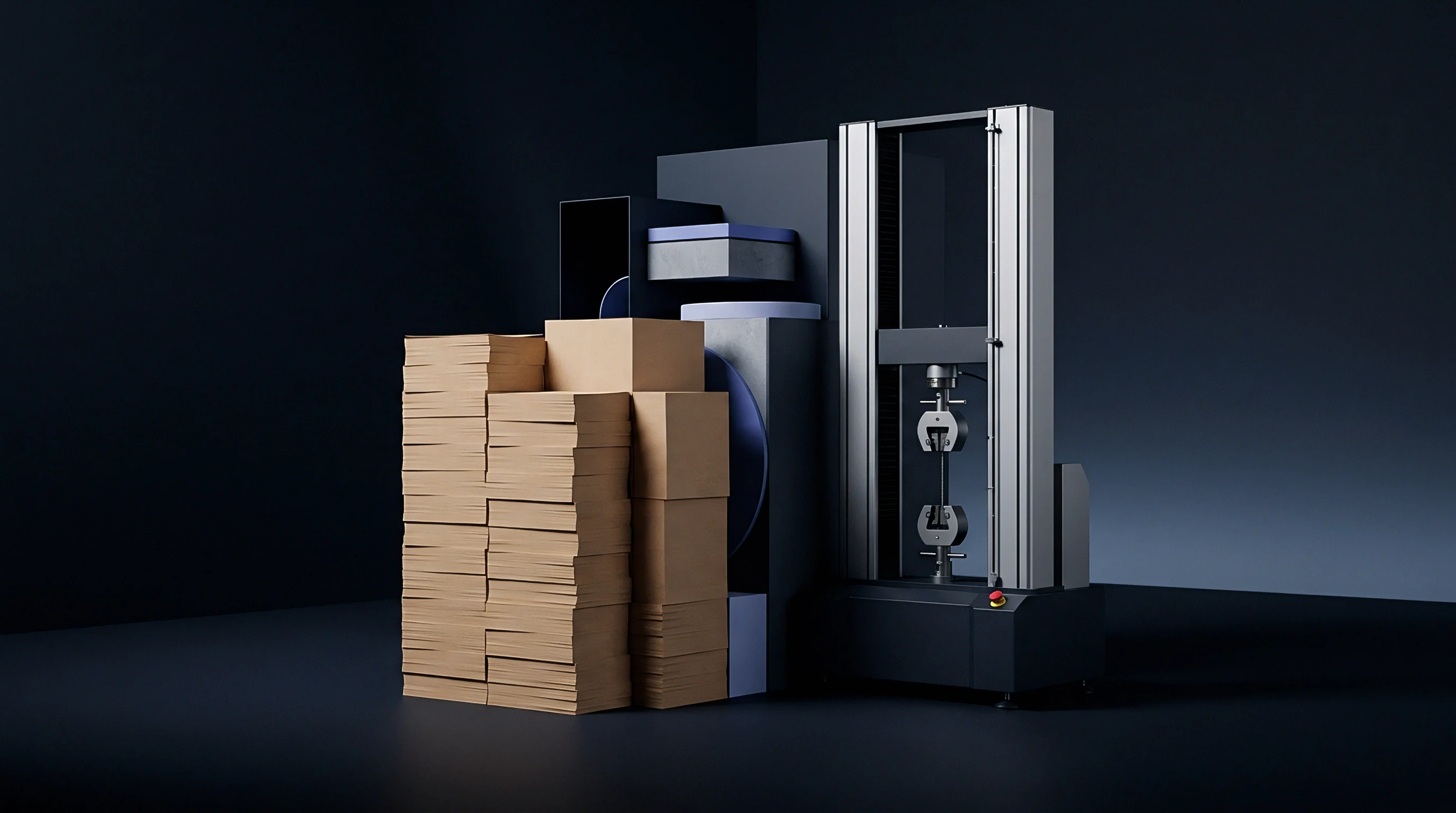
Tool Geometry and Edge Profile Dynamics
Knife selection dictates process capability across extended production runs. Carbide inserts maintain sharp radii across abrasive substrates but lack the toughness required for heavy continuous shear lines. High-speed steel offers toughness at the expense of accelerated tip blunting when processing rigid oriented films.
- Cant Angle Alignment maintains constant side pressure between rotary knives without accelerating edge friction or generating excessive heat.
- Overlap Depth Setting establishes the shear zone length and prevents web wrapping around the lower female anvil during speed ramps.
- Blade Passivation Profile controls the transition from primary elastic indentation to secondary steady-state shear cut.
- Anvil Clearance Clearance governs the transverse strain gradient across the film thickness to prevent burr formation.
Selecting an incorrect blade bevel geometry or allowing the edge radius to dull beyond specification increases lateral web forces, triggering micro-fractures along the slitting lane that propagate into catastrophic web breaks during high-tension downstream printing or lamination passes.
Yield
Polymer matrix response under intense physical deformation depends heavily on the rate of load application. At low testing speeds, oriented polymers undergo ductile yield through necking, strain hardening, and macromolecular chain uncoiling. Elevating strain rate to values typical of industrial slitting shifts the yield stress boundary upward.
High deformation velocity restricts molecular movement, causing the material to behave like a glass well above its standard glass transition temperature. The yielding mechanism converts from widespread plastic flow to highly localized shear banding.
Deformation kinetics follow Eyring rate process theory, where yield stress correlates directly with applied strain rate and system temperature. As the slitting blade forces its way through the web, high stress concentration at the tip activates molecular mobility in tiny volumes ahead of the cut. Plastic deformation within these shear bands generates thermal energy faster than the polymer matrix can conduct heat away.
This adiabatic heating creates a localized thermal zone where temperature spikes by forty to ninety degrees Celsius, softening material directly along the cutting path while surrounding regions remain rigid.
Eyring Rate Theory and Polymer Thermal Shift
Yield stress increases logarithmically as cutting velocity rises. The physical parameters governing this response involve the activation volume and activation enthalpy of the specific polymer configuration. Uniaxially oriented tapes exhibit extreme directional sensitivity: yielding parallel to the orientation axis demands significantly higher energy than yielding across the transverse direction.
Biaxially oriented webs present balanced planar yield properties, but still exhibit subtle differences based on the draw ratios applied during tenter frame orientation.
Dynamic glass transition shift alters material behavior on the slitting line. Increasing the strain rate by four orders of magnitude shifts the glass transition spectrum upward by fifteen to twenty-five degrees Celsius. A film slitting at room temperature under ultra-high strain rates behaves mechanically as if operating in a chilled environment, entering a brittle deformation regime unless local adiabatic heating counters the thermal shift.
DIN 53363 tear testing protocols understate edge failure risks on slitting lines because standard laboratory strain rates run six orders of magnitude slower than production line web speeds.

Viscoelastic Deformation in Anisotropic Matrices
Polymer orientation governs yield stress distribution. Tensile stresses applied perpendicular to the orientation direction cause rapid chain separation along amorphous regions between crystalline lamellae. Tensile forces aligned with the stretch direction demand actual chain scission or extensive lamellar slipping before yielding occurs.
This anisotropy means that razor slitting longitudinal lanes in a web primarily induces transverse tensile yielding ahead of the blade tip.
Viscoelastic stress relaxation times dictate whether the web stores or dissipates input mechanical energy. Short relaxation times allow energy conversion into heat, facilitating smooth shear cutting. Long relaxation times store elastic strain energy right up to catastrophic fracture, releasing that energy through erratic crack branching and micro-splintering along the cut edge.
Slit edge splitting often stems from raw material molecular weight distribution variations that raise the yield stress threshold at high strain rates, rather than web tension imbalance.

Rupture
Fracture initiation and crack propagation in oriented films represent a competition between elastic energy storage and dissipation processes. Linear elastic fracture mechanics parameters like energy release rate and stress intensity factor require modification when applied to thin, highly oriented polymer sheets. At slitting velocities, strain rate sensitivity suppresses plastic zone size at the crack tip.
The radius of this zone decreases as web speed increases, concentrating stress into a sharp notch that promotes rapid, unstable fracture.
Crack tip blunting occurs when local plastic deformation rounds off the sharp crack front, reducing the stress concentration factor. High strain rates inhibit blunting by elevating material yield strength above the fracture threshold. Instead of blunting, the film undergoes micro-crazing, forming networks of micro-voids interconnected by thin polymer fibrils directly ahead of the blade.
When these fibrils reach their ultimate extension limit, they break, driving steady-state crack propagation along the slitting path.
Energy Release Rates in Oriented Webs
Dynamic fracture energy release rates vary directly as a function of crack speed and orientation angle relative to the film draw direction. Slitting along the machine direction aligns crack propagation with the primary orientation axis. In uniaxially oriented films, this alignment reduces the energy required for fracture, allowing the crack to run far ahead of physical blade contact.
This runaway crack phenomenon destroys slitting control, causing web fluttering and wavy roll edges.
Modes of fracture during slitting combine primary opening mode forces with out-of-plane shear. Blade geometry dictates the precise proportion of each mode. High web tensions add a far-field tensile stress component that interacts with the blade-induced stress field, lowering the critical energy release rate required to maintain continuous separation.
| Substrate Grade & Thickness | Orientation State | Test Strain Rate (s⁻¹) | Dynamic Toughness GIc (kJ/m²) | Peak Shear Band Temp (°C) |
|---|---|---|---|---|
| BOPP 18 µm Packaging Film | Biaxial (4×4 MD/TD) | 1.2 × 10⁴ | 2.10 to 2.45 | 68 to 74 |
| BOPET 12 µm Barrier Film | Biaxial (3.5×3.5 MD/TD) | 1.5 × 10⁴ | 4.80 to 5.20 | 112 to 125 |
| BOPA 15 µm Cast Lamination | Biaxial (3×3 MD/TD) | 8.5 × 10³ | 8.30 to 9.10 | 95 to 104 |
| Mono-OPP 40 µm Tear Tape | Uniaxial (8×1 MD) | 0.45 to 0.60 (MD) | 2.0 × 10⁴ | 42 to 50 |
Crack Tip Blunting and Micro-Crazing Mechanics
Micro-crazing acts as the dominant precursor to fracture in amorphous zones of semicrystalline films. The density and length of these crazes determine whether the finished edge remains smooth or displays severe micro-cracking.
Uncontrolled rupture along the slitting lane generates distinct structural failure modes that compromise web structural integrity.
- Brittle Cleavage Splitting occurs when high strain rate shifts the fracture mode below the ductile-to-brittle transition threshold.
- Elastic Energy Runaway happens when stored tensile energy accelerates crack speed beyond the web transport speed.
- Interlamellar Delamination splits multi-layer coextruded structures along weak tie-layer interfaces due to localized out-of-plane shear.
- Fibril Pull-Out leaves microscopic stringers along the slit edge as polymer crazes fail under mixed-mode tension.
The localized adiabatic thermal zone generated at high slitting speeds can permanently alter barrier properties along metallized film edges by inducing micro-cracks in the thin aluminum layer.

Edge
Edge quality defines the functional performance of slit rolls during downstream converting. A clean slit edge presents a flat, continuous profile free of burrs, scalloping, or loose particulate matter. Under high strain rate slitting, structural imperfections appear at the microscopic level: micro-flaking, dust generation, and edge beads stem directly from localized fracture instabilities.
Excess stress concentration during cutting drives small fragments of polymer to detach from the matrix, forming static-charged fine dust that adheres to the roll face.
Edge burrs form when localized plastic yield occurs immediately prior to fracture. If the blade blunts or knife clearance widens, the film bends over the cutting edge rather than shearing cleanly. The material stretches plastically, reaches its ultimate tensile limit, and tears, leaving a raised ridge along the bottom corner of the slit lane.
This ridge increases effective edge thickness, creating localized high-gauge bands during winding that stretch the film permanently.
Slit rolls exhibiting edge burr height greater than eight percent of nominal film thickness produce staggered winding profiles that slip off roll cores during high-speed unwind operations.
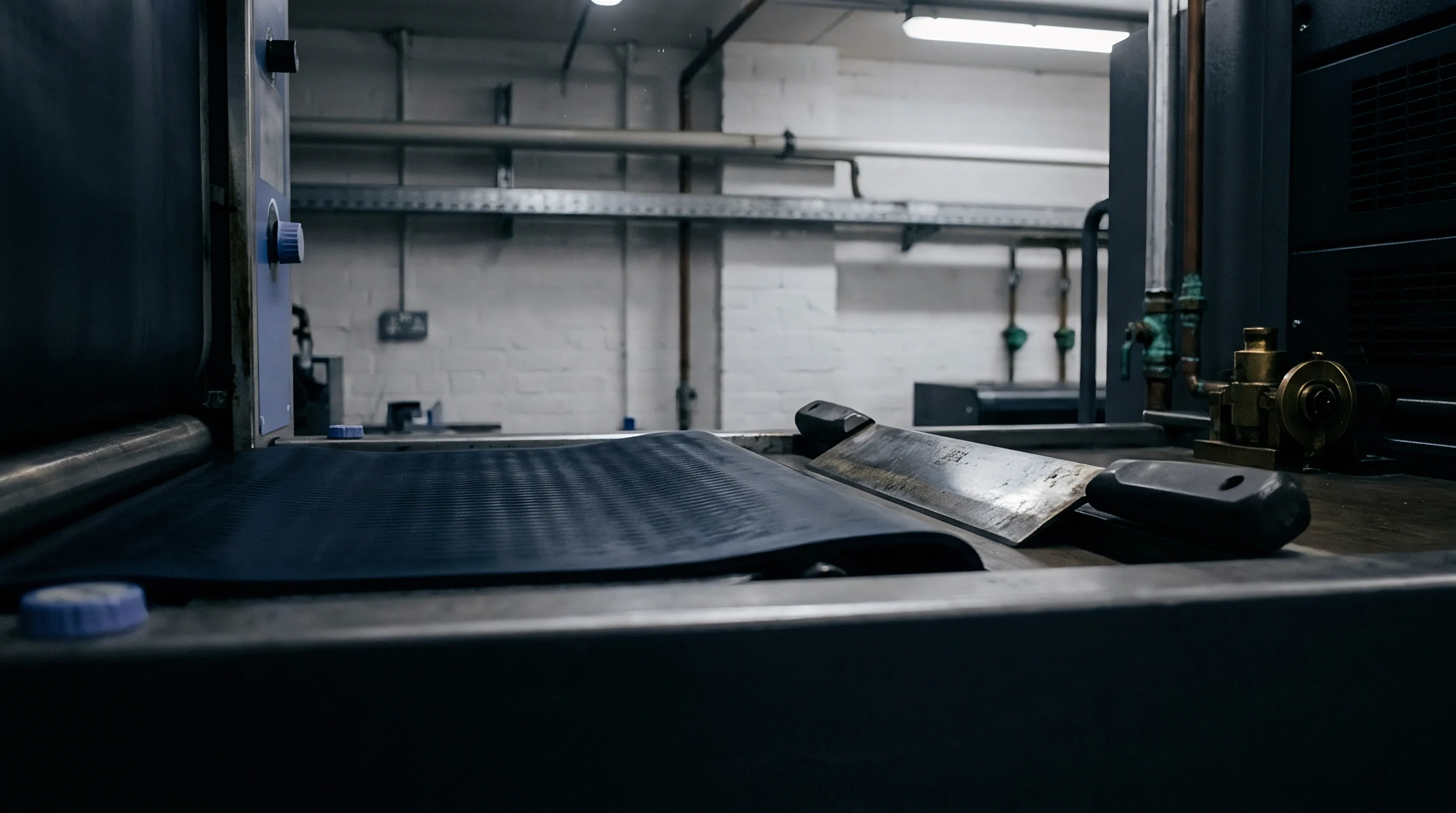
Does Transverse Molecular Orientation Alter Slit Crack Propagation Rates?
Transverse orientation dramatically alters how shear cracks propagate along the longitudinal axis. In biaxially oriented films, balanced molecular orientation forces the crack to follow the path dictated by the blade angle. Unbalanced orientation causes cut deviation, where the crack turns toward the direction of highest orientation.
This deviation forces the film against the side of the slitting knife, accelerating tool wear and generating continuous edge scalloping.
Tear resistance along the cut edge governs downstream roll survival. Small micro-cracks under ten micrometers deep act as notch sites. When the slit roll unwinds on high-tension packaging equipment, these micro-notches initiate complete web tears at stress values far below the nominal tensile strength of the bulk film.
Microscopic Burr Formation and Dusting Phenomena
Polymer dust contamination presents severe operating challenges in cleanroom converting, food packaging, and electronic insulation applications. Frictional static charging causes airborne micro-particles generated during brittle fracture to stick tightly to the film surface. Eliminating dust requires precise control over the strain-rate dependent yielding mechanism, ensuring clean shear severance without brittle fragmentation.
Blade sharpness dictates edge geometry: sharp edges localize deformation to yield smooth vertical cut faces, whereas dull blades spread deformation across a broader area, creating irregular, sloped profiles with extensive micro-crazing along the border.
Standard delivery contracts for converted oriented films mandate that edge defect counts remain below five micro-notches per hundred meters under 50x optical magnification to prevent downstream web breaks.
Line
Slitting equipment mechanics must balance web speed, tension control, blade geometry, and mechanical vibration suppression to master strain-rate sensitive fracture. Slitting systems run three main configurations: razor-in-air, razor-in-groove, and rotary shear. Razor-in-air represents the simplest setup but offers zero web support at the blade contact point, allowing web flutter to alter cutting angles dynamically.
Razor-in-groove supports the web on a slotted roll, stabilizing the cut location. Rotary shear slitting provides complete mechanical constraint, using overlapping upper and lower knives to drive precise shear failure.
Web tension must maintain flatness without exceeding the threshold that induces longitudinal necking. Tension applies far-field stress that combines with local blade stresses. Excess tension shifts the fracture regime, encouraging runaway crack initiation ahead of the blade.
Insufficient tension allows web movement, causing cut width variations and edge burr formation.
Maintaining web tension variations below two percent across speed changes suppresses edge micro-crack initiation during high-strain razor slitting.
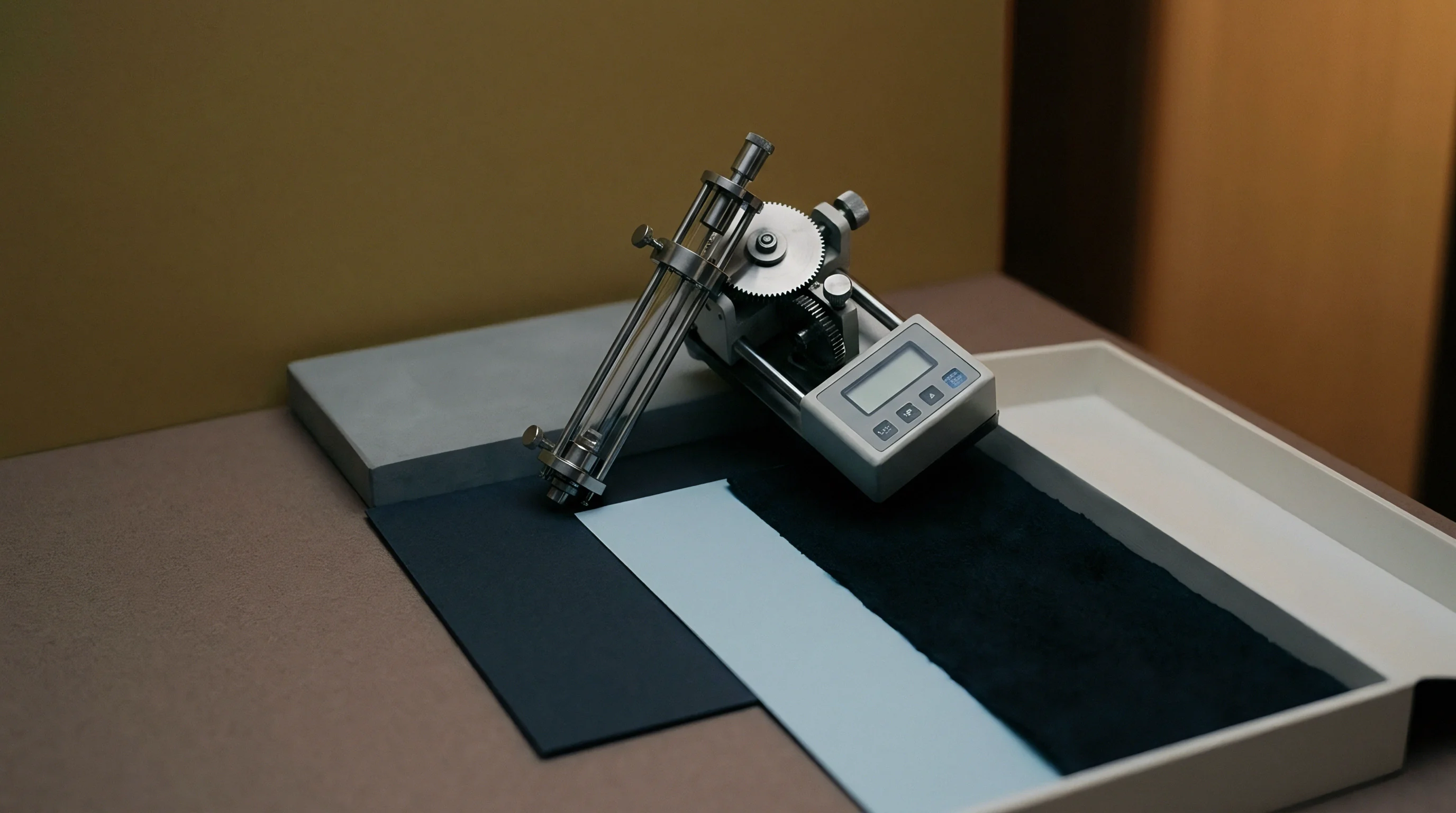
Operational Control of Knife Clearance and Tension
Rotary shear slitting requires exact control over three geometric settings: cant angle, knife overlap, and axial clearance. Cant angle provides positive contact between male and female blades at a single point. Overlap controls shear zone depth.
Axial clearance determines the gap between cutting edges through which the film passes.
Clearance settings must scale with film thickness and ductility. Rigid oriented films require tight clearances, often between two and five percent of film thickness. Excessive clearance forces the film to bend between the knives, inducing high tensile strains that cause edge burring and heavy dusting.
Worked Calculation of Thermal Dissipation Rates
Consider a 20-micrometer thick biaxially oriented polypropylene web running through a high-speed razor slitting line at a web velocity of 600 meters per minute (10 meters per second). The blade cut zone width measures approximately 30 micrometers, and the material shear yield stress at a high strain rate of 104 s-1 reaches 120 megapascals. Plastic work input per unit volume within the primary shear zone equals the integral of stress over strain, approximating 36 megajoules per cubic meter for a shear strain of 0.3.
Assuming 85 percent of this mechanical work converts directly into heat under adiabatic conditions, the thermal energy generation density within the shear volume is 30.6 megajoules per cubic meter. Polypropylene possesses a density of 905 kilograms per cubic meter and a specific heat capacity of 1700 joules per kilogram-kelvin. The localized temperature rise within the cut zone calculates as:
Δ T = frac30.6 × 106 J/m3905 kg/m3 × 1700 J/kg·K ≈ 19.9 K
This localized heating elevates shear band temperature from an ambient 22°C to nearly 42°C within microseconds, instantly lowering local yield stress and facilitating smooth shear fracture along the blade path.
| Process Variable | Baseline Value | Test Range | Impact on Strain Rate | Splinter Rate Variance |
|---|---|---|---|---|
| Web Speed (vweb) | 400 m/min | 200 to 1000 m/min | Proportional increase (dotvarε propto v) | +280% at max speed |
| Blade Cant Angle | 0.5 degrees | 0.0 to 1.5 degrees | Negligible change | +140% when angle > 1.0° |
| Axial Knife Clearance | 3.0 µm | 1.0 to 12.0 µm | Alters shear zone width (δs) | +410% when gap > 8 µm |
| Web Tension (Tw) | 150 N/m | 80 to 300 N/m | Modulates principal far-field stress | +95% at high tension |
| Data compiled across 15-micrometer oriented polyolefin film runs using sub-micron carbide rotary shear knives. | ||||
Optimal slitting setup requires a strict operational sequence to prevent premature blade failure and web breakage.
- Align lower female anvil shafts to eliminate axial runout before positioning upper male knives.
- Set the knife cant angle within the recommended 0.25 to 0.50 degree range using precision shim gauges.
- Adjust axial side pressure until light contact occurs between knife faces, avoiding excessive mechanical preload.
- Establish web tension at the minimum level required to maintain stable tracking across support rolls.
- Ramp line speed gradually while monitoring slit edge dust generation and cut profile smoothness under stroboscopic lighting.
Rigid tool mountings and tight clearance settings consistently prevent edge web splitting.

Waste
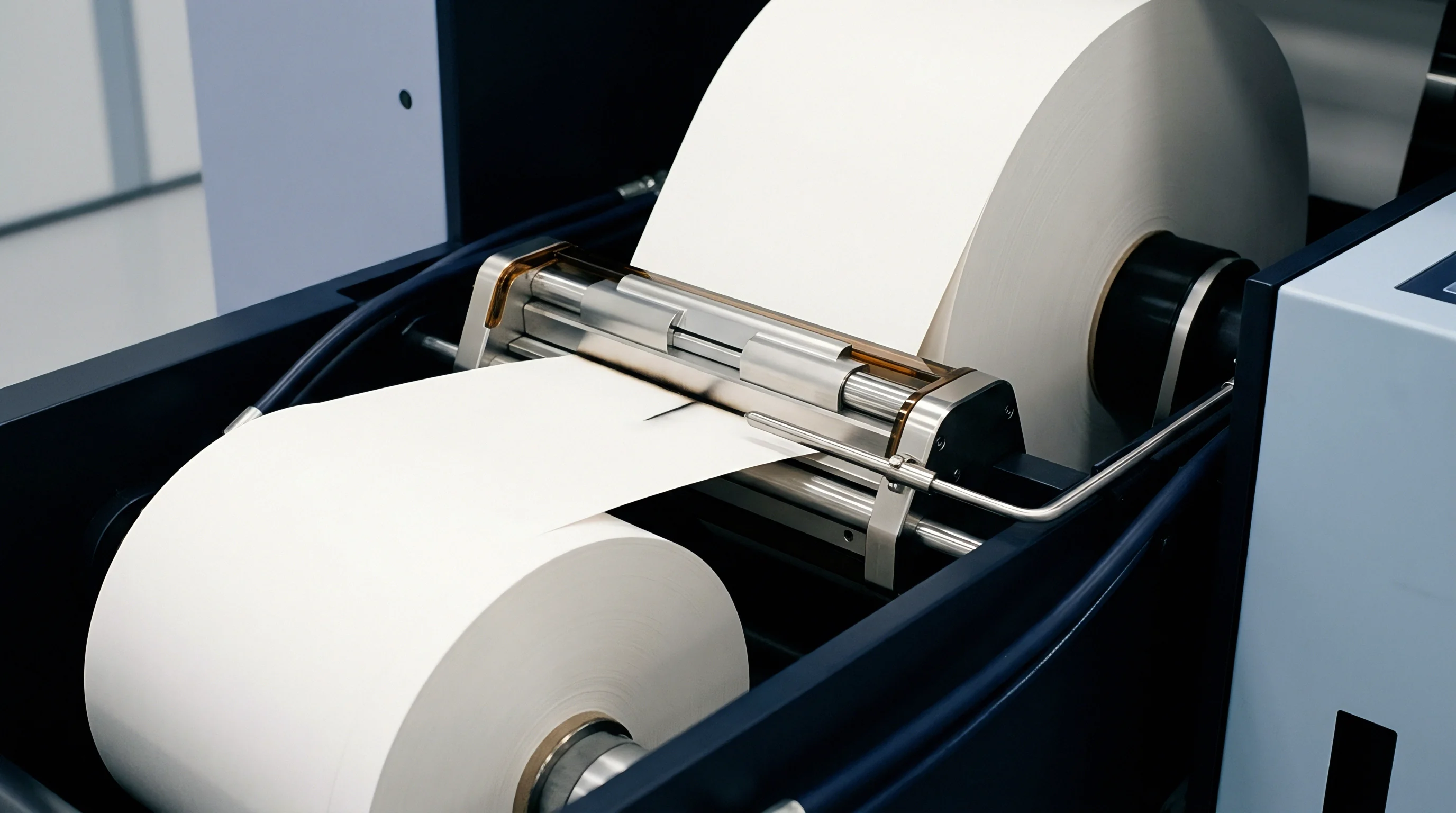
Defects at the slitting station generate direct financial losses through downtime, scrap generation, and customer claims. High-speed converting lines running wide webs generate vast quantities of scrap if slitting lanes produce edge defect profiles. Web breaks caused by microscopic edge notches halt downstream gravure printing presses or extrusion laminators, incurring high costs per incident in wasted substrate, solvent ink losses, and lost press capacity.
Managing converting performance demands a unified framework linking tool maintenance, raw material qualification, and edge quality verification. Specifications must account for the strain-rate sensitivity of oriented polymers rather than relying solely on low-speed laboratory mechanical test data. Integrating continuous automated optical edge inspection onto high-speed slitters identifies burr formation and micro-flaking immediately, enabling real-time corrective actions before entire production runs fail customer specifications.
Downstream Converting Failures and Downtime Metrics
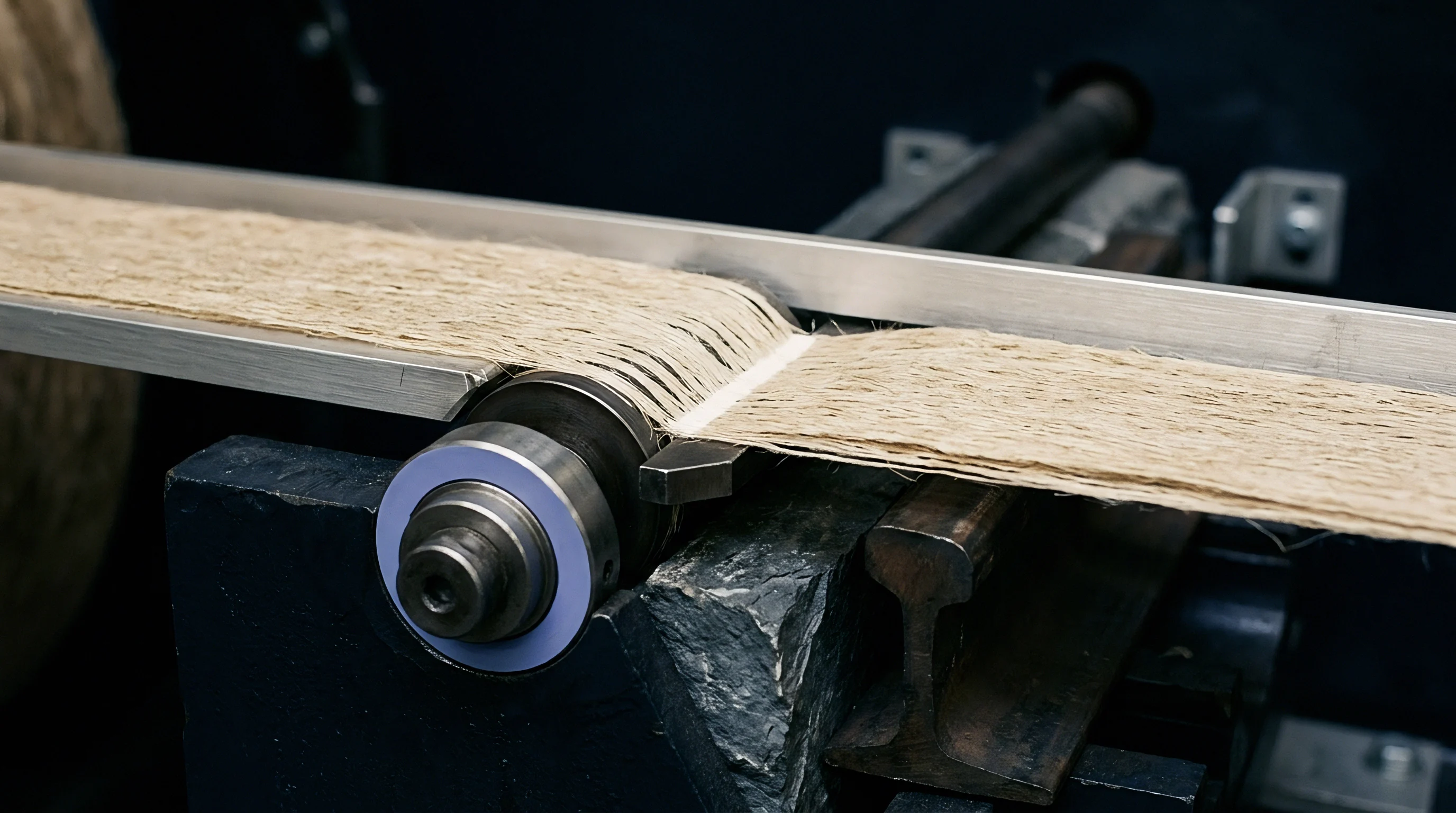
Web breaks during downstream processing represent the primary cost driver associated with poor slitting. When a slit roll unwinds at six hundred meters per minute, a single edge micro-crack exceeding critical length initiates immediate transverse web tear. The tension spike transfers back to the unwind stand, causing web wrapping around idler rolls and damaging delicate coating stations.
Downtime to re-thread the line and re-establish registration typically exceeds forty-five minutes per occurrence.
Roll face deformation resulting from edge burr accumulation represents another significant source of waste. Raised edges create hard bands along the roll circumference, stretching the film beyond its yield point. When unwound, this permanently deformed region creates baggy lanes that distort print registration and cause heat-seal misalignments on form-fill-seal packaging machinery.
Commercial Specifications for Slit Roll Acceptability
Procurement documents for high-performance oriented films must include explicit slit edge quality parameters alongside standard physical properties. Relying on basic tensile strength and elongation metrics fails to protect buyers from receiving rolls slit under improper strain rate conditions.
- Maximum Edge Burr Height limits allowable vertical plastic distortion relative to nominal film thickness.
- Edge Dust Contamination Index quantifies acceptable particulate count per unit area using standardized tape lift methods.
- Micro-Notch Frequency Threshold sets maximum allowable microscopic edge cracks per hundred linear meters of film.
- Cut Profile Squareness Angle mandates allowable deviation from a perpendicular cut face across the thickness axis.
Quality dossiers for converted oriented film rolls must contain optical microscopic edge profile scans, knife wear logs, and dynamic tension records for every split lot. Incorporating these verification requirements into purchase agreements enforces discipline at the slitting line, aligning converting operational practices with the physical fracture mechanics of high-speed web processing.