Dynamic Bending Strain Kinetics at High Velocity Mechanical Scoring Interfaces in Polymer Coated Packaging Substrates
Precision matrix clearance and calibrated score depth prevent polymer micro-cracking and interlayer delamination on high speed converting lines.
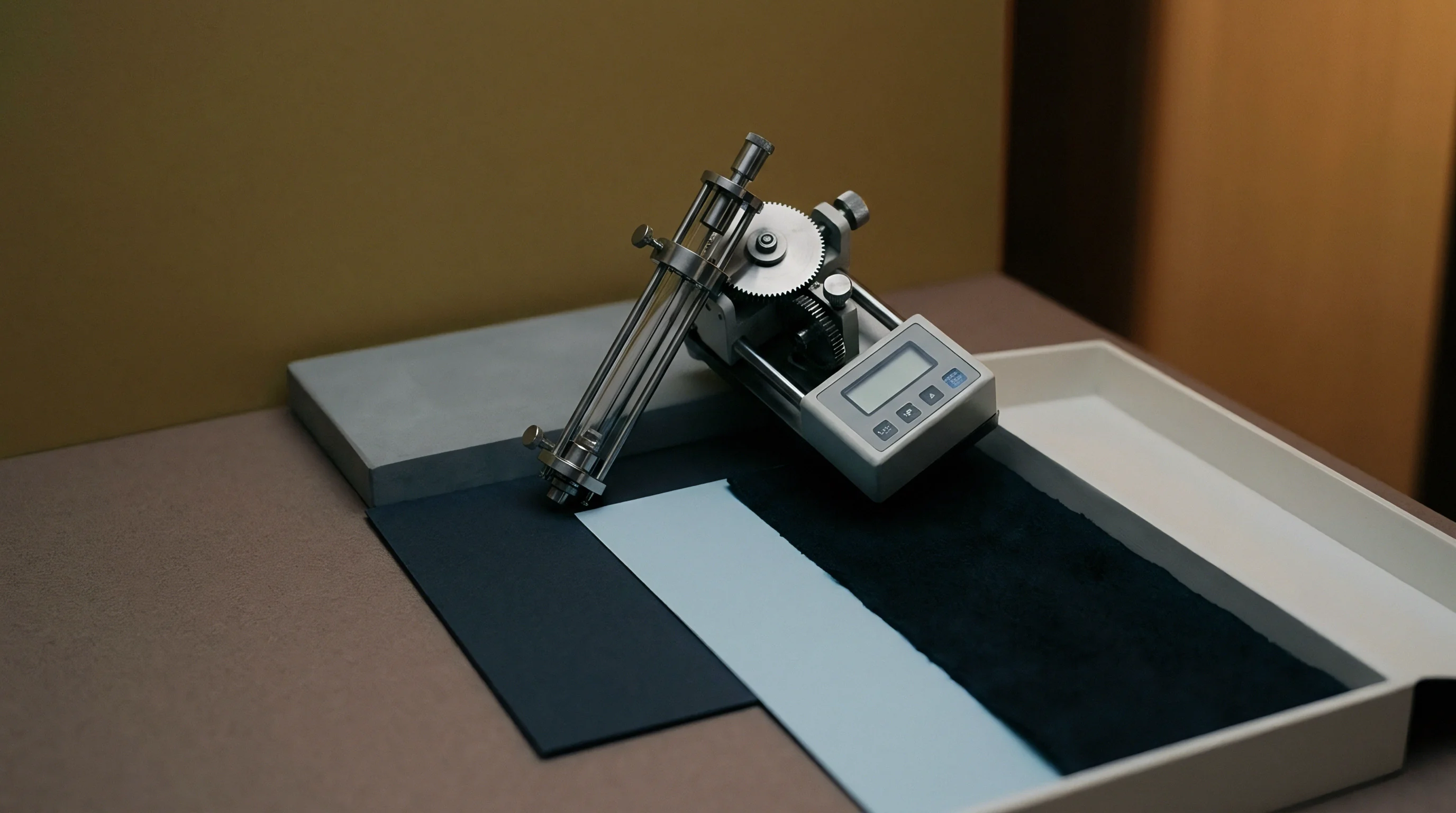

Die
Mechanical transformation of polymer-coated paperboard on high-throughput converting lines subjects the substrate interface to localized rapid displacement. Penetration of the male rule into the multi-layer composite forces the paperboard substrate to buckle inward while stretching the protective synthetic layer across the scoring edge. Line speeds exceeding four meters per second reduce indentation dwell time to sub-millisecond durations, shifting deformation mechanics from static bending to transient strain propagation.
Tool contact geometry governs the spatial distribution of these bending forces across both machine and cross directions.
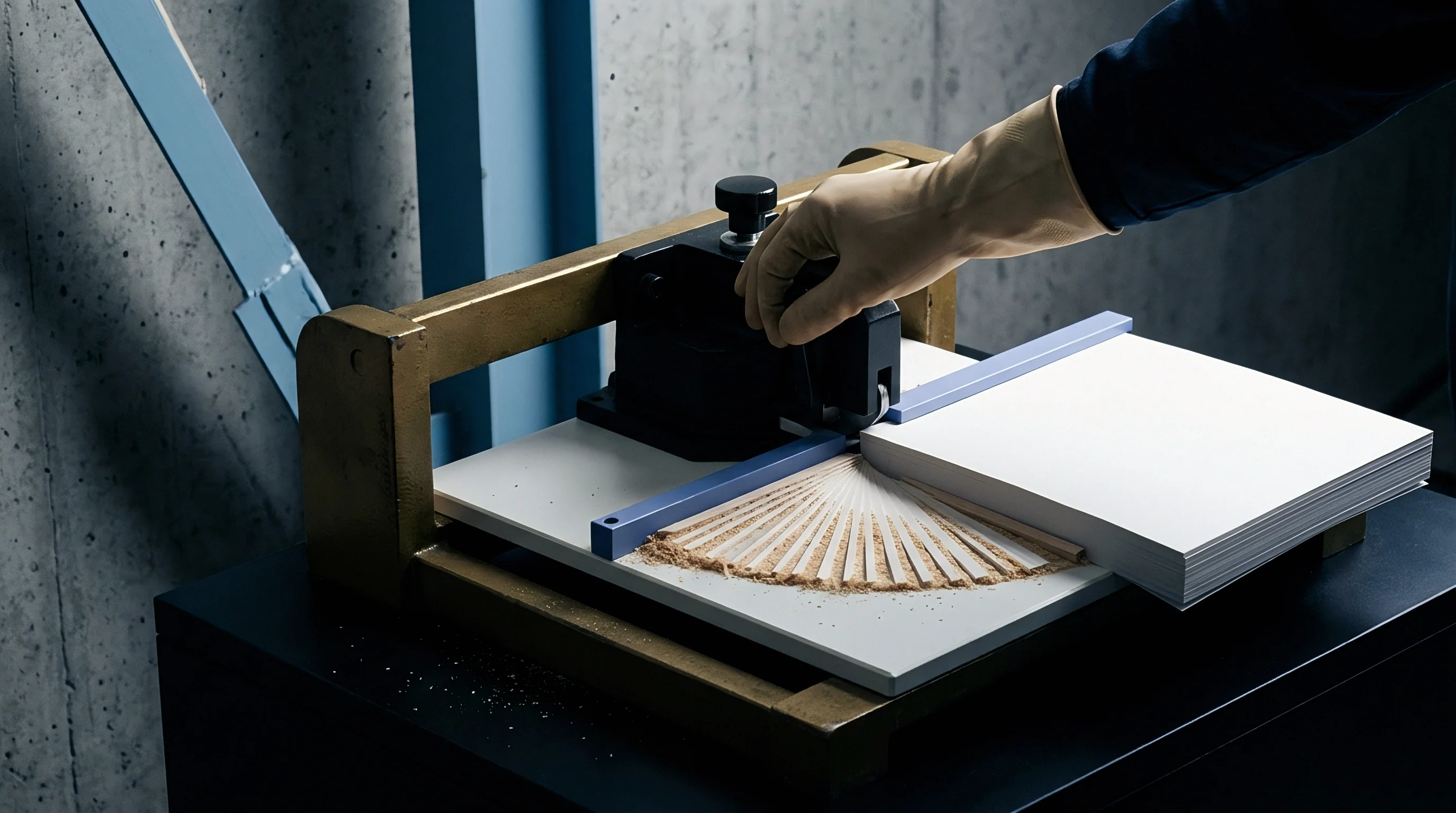
Scoring Interface Kinematics at High Web Speeds
Industrial converting equipment running at web speeds above five meters per second compresses the multi-layered sheet within timeframes under two milliseconds. This rapid displacement produces high localized strain rates along the fold line. Tensile forces concentrate in the outer polymer layer while compressive stress forces the middle fiber plies to consolidate.
Shear stress concentrates at the anvil edge. When the web velocity increases, the relaxation window for both polymer chains and cellulose fibers shrinks proportionally. Fiber movement within the matrix becomes restricted, forcing the material to absorb kinetic energy through localized structural yield.
A score crease formed at low press speed yields wider strain distributions than identical geometry executed above six meters per second.
Deformation kinetic profiles reveal severe localized strain gradients when scoring tool tip radii fall below 0.71 mm on paperboard sheets thicker than 300 micrometers. The outer extruded film undergoes severe elongation while the interior fiber network experiences transverse shear failure. High line speeds amplify peak deformation.
Standard static stress-strain measurements fail to predict material behavior under these instantaneous impact regimes. Crease formation requires balanced force distribution between the male tool tip and the female matrix channel to prevent surface fracture.

Tooling Geometry and Crease Matrix Alignment
Precision female channel widths dictates how back-ply fibers undergo tensile extension during rule insertion. Steel counter-plates or vulcanized matrix channels must align precisely with the male rule centerline to ensure symmetrical crease profile formation. Symmetrical displacement balances the strain distribution across both shoulders of the score line.
Lateral offset of the matrix channel by as little as 0.05 mm shifts the strain concentration onto one side of the polymer film, creating asymmetrical thinning and localized structural weakness.
- Tool clearance setup prevents catastrophic top-layer shear failure when converting at full line speed.
- Penetration depth calibration maintains liner continuity while forcing internal fiber network displacement.
- Matrix groove width sizing reduces strain concentration along the outer polymer surface.
- Counter-plate indentation profiling governs springback behavior after sheet ejection.
Matrix geometry dictates score stability. The ratio between matrix channel width and total sheet caliper establishes the radius of curvature formed in the creased channel. Selecting a female matrix channel that is too narrow increases the force required to form the bead, causing immediate top-liner cracking.
Choosing an excessively wide matrix channel allows the paperboard to bow without forming defined shear planes, resulting in high fold resistance and poor box squaring on automatic cartoning lines.
| Substrate Grammage (g/m²) | Polymer Layer Type | Web Speed (m/s) | Rule Tip Radius (mm) | Matrix Width (mm) | Peak Strain Rate (s⁻¹) | Outer Film Elongation (%) |
|---|---|---|---|---|---|---|
| 230 | 15 g/m² LDPE | 3.5 | 0.71 | 1.10 | 2.1 × 10³ | 6.4 |
| 280 | 18 g/m² LDPE | 5.0 | 0.71 | 1.30 | 3.8 × 10³ | 8.7 |
| 320 | 20 g/m² PET | 6.5 | 1.05 | 1.50 | 5.2 × 10³ | 11.2 |
| 350 | 15 g/m² EVOH Coated PE | 8.0 | 1.05 | 1.70 | 7.4 × 10³ | 14.1 |
| Testing conditioned under ISO 187 at 23 °C and 50% relative humidity. Deformation strain rates calculated via high-speed optical kinematics during rotary die scoring. | ||||||
Inaccurate female channel alignment generates asymmetric strain peaks that split the protective polymer skin, causing packaging line rejections and liquid leakage.

Rheology
Thermoplastic coatings applied over paperboard substrates exhibit time-dependent deformation characteristics when subjected to mechanical forces. Polyethylene, polypropylene, and polyethylene terephthalate films exhibit marked shifts in mechanical properties as application speeds increase. At static speeds, polymer chains uncoil and slip past one another, allowing ductile elongation without fracture.
Under rapid scoring impacts, chain disentanglement cannot occur within the millisecond timeframe of tool engagement. The material responds with elevated elastic modulus and increased yield stress, transitioning toward brittle behavior.
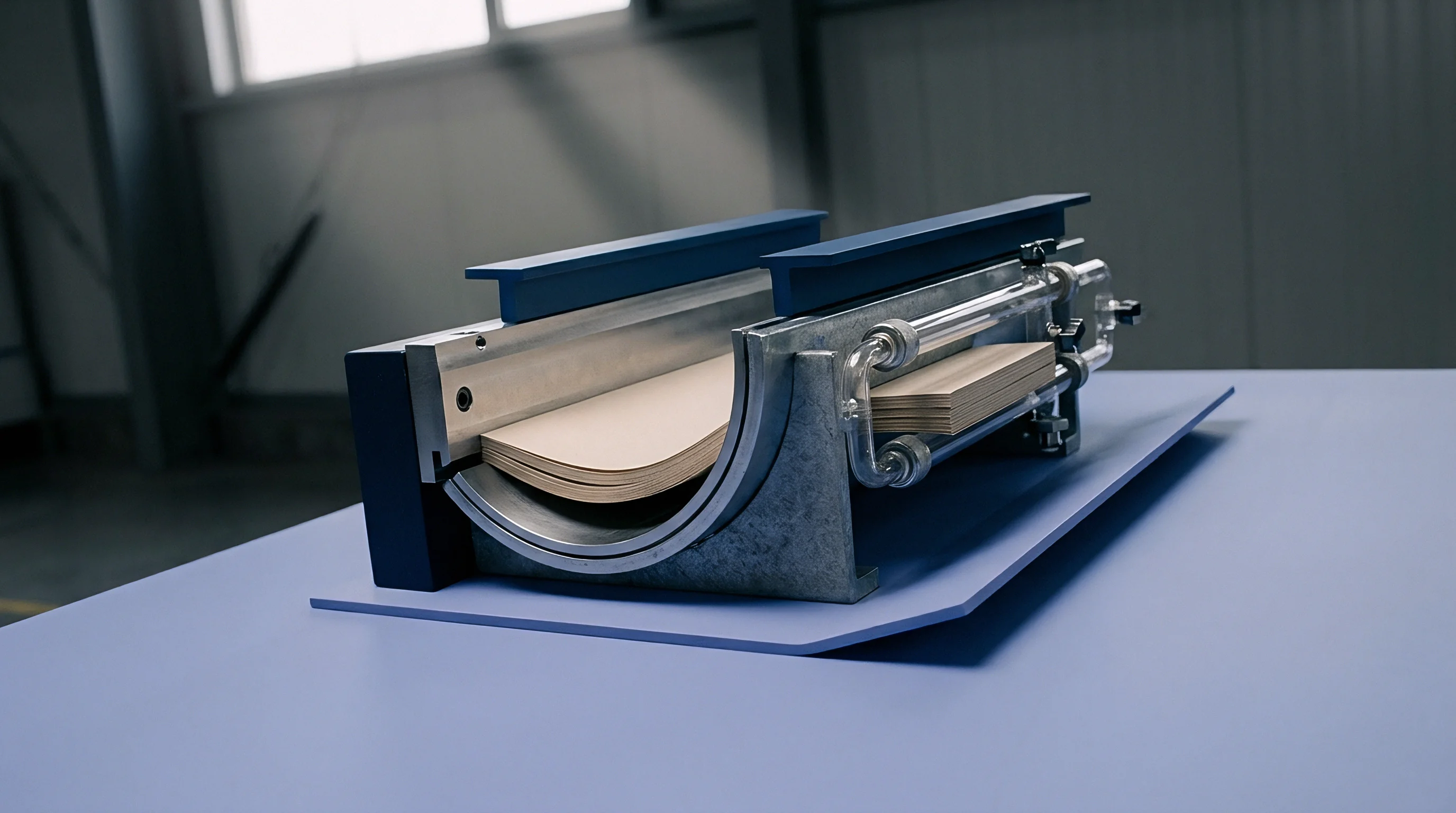
Viscoelastic Response of Polymer Barrier Films
Extruded polyolefin layers experience significant strain rate sensitivity during rapid mechanical creasing. Molecular weight distribution and polymer crystallinity dictate how the film accommodates instantaneous deformation forces. High-density formulations with tight crystalline domains exhibit restricted mobility, leading to stress concentration along polymer grain boundaries.
Low-density polyolefins provide greater compliance, though high impact velocities still drive the film beyond its yield point before localized necking can occur.
Glass transition temperatures of the synthetic layer govern film ductility during high-speed scoring. Ambient converts operating at lower shop-floor temperatures experience heightened film stiffness. Cold shifts chemistry.
Decreasing film temperature elevates yield stress, requiring higher tool penetration force to achieve identical crease depth. This thermal-velocity coupling narrows the acceptable window of penetration depths, increasing the risk of barrier layer pinholing during winter production runs.
Strain Rate Sensitivity in Polyolefin Coated Board
High deformation speeds shift the mechanical relaxation response of low-density polyethylene toward brittle fracture regimes. Consider a 15 g/m² low-density polyethylene extrusion coating applied to a 280 g/m² solid bleached board running through a rotary die unit at 7.5 meters per second. The scoring tip radius measures 0.71 mm, penetrating 0.45 mm into a 1.20 mm matrix channel.
At an instantaneous strain rate of 4.5 × 10³ s⁻¹, the yield stress of the polymer increases from an equilibrium value of 11.2 MPa, measured under standard ISO 527 static testing at 50 mm/min, up to 28.5 MPa under impact loading.
Strain hardening elevates peak tensile stress along the outer fold crown beyond the ultimate tensile limit of the polyolefin layer. Micro-craze networks form across the high-stress zone, coalescing into continuous pinholes along the score axis. Surface cracking degrades liquid barrier integrity.
Oxygen permeability increases sharply across the damaged crease line, compromising modified atmosphere packaging specifications.
Tensile strain at break for low-density polyethylene drops by twenty-eight percent under high velocity strain rates measured at 23 degrees Celsius and 50 percent relative humidity under ISO 187.
Polymer film density determines resistance to localized strain rupture. Linear low-density polyethylene blends containing short-chain branching demonstrate superior dynamic strain distribution compared to conventional low-density homopolymers. Incorporating ten to fifteen percent metallocene-catalyzed resins enhances chain entanglement density, preventing micro-void nucleation during high-speed scoring operations.
Polymer selection directly impacts high-velocity converting yield.
The exact molecular entanglement threshold where high-density polyolefin blends transition from ductile draw to dynamic brittle tearing under sub-millisecond impact loading remains unquantified across commercial extrusion suppliers.
Ply
Multilayer structural design governs how paperboard dissipates compressive energy under mechanical scoring tools. Solid bleached board consists of homogeneous chemical pulp plies, whereas folding boxboard features distinct chemical pulp outer layers sandwiching mechanical pulp interior plies. Fiber orientation, refine level, and volumetric density vary significantly across these individual layers.
Mechanical scoring must intentionally induce controlled internal shear failure within the middle plies while keeping the outer liner and polymer barrier intact.
Internal Shear and Interlayer Fiber Delamination
Compressive force applied by the male scoring rule generates peak transverse shear stress along the middle fiber layers. Controlled delamination allows the paperboard to split internally into separate thin sheets along the fold axis. Paperboard structure determines folding performance.
Internal separation reduces the bending stiffness of the sheet at the score line, creating a hinge mechanism. Without proper ply separation, the outer liner faces extreme tensile forces while the inner liner buckles chaotically, tearing the polyolefin barrier film.
Delamination absorbs kinetic impact energy. The Z-directional tensile strength of the interior fiber network, measured via ISO 16260 internal bond testing, dictates whether the sheet splits cleanly or crushes under the scoring tool. Values between 180 and 240 Joules per square meter provide the ideal structural compliance for folding boxboard grades.
Lower values cause uncontrolled layer separation across wide zones, destroying package corner rigidity. Higher values prevent internal splitting, forcing the outer polymer film to bear excess tensile load.
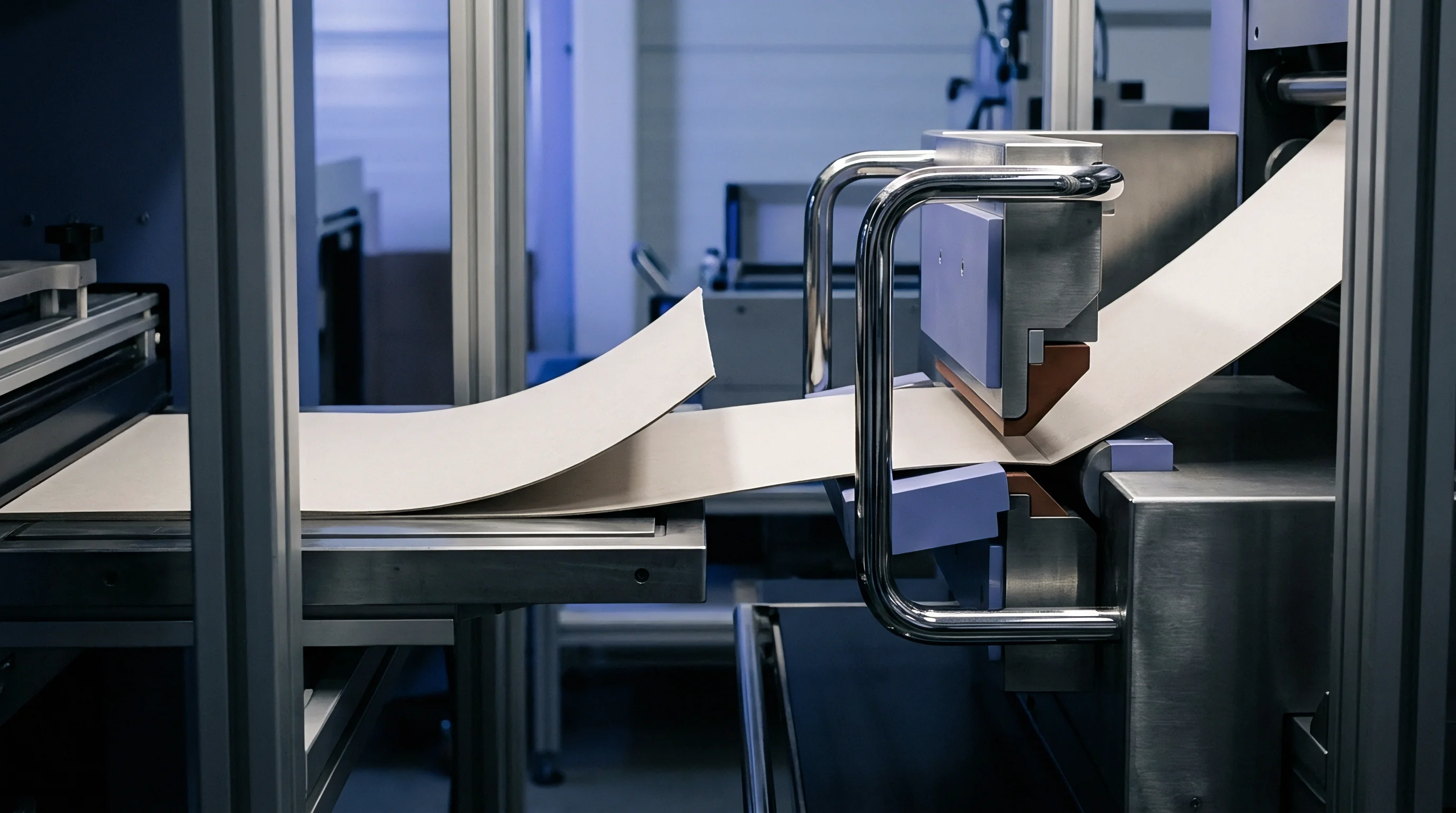
How Strain Hardening Alters Delamination Zone Width?
Increased loading rates restrict plastic deformation, confining internal sheet separation to a narrower zone directly beneath the scoring tip. Fast tool entry rates generate high shear wave velocities that propagate through the thickness of the board. High line speeds amplify peak deformation.
If the middle plies lack adequate compressibility, shear energy cannot dissipate laterally, concentrating force against the top liner interface.
Microscopic failure modes at polymer-board interfaces showcase distinct physical breakdowns under aggressive scoring kinetics:
- Top liner tensile rupture occurs when outer fiber elongation exceeds the yield capacity of the furnish.
- Polymer pinhole formation develops along localized strain peaks where barrier films stretch across fiber voids.
- Middle layer shear crushing collapses internal bulk without generating the delamination needed for clean folding.
- Backliner micro-fluting forms when excessive penetration depth forces outer plies into structural buckles.
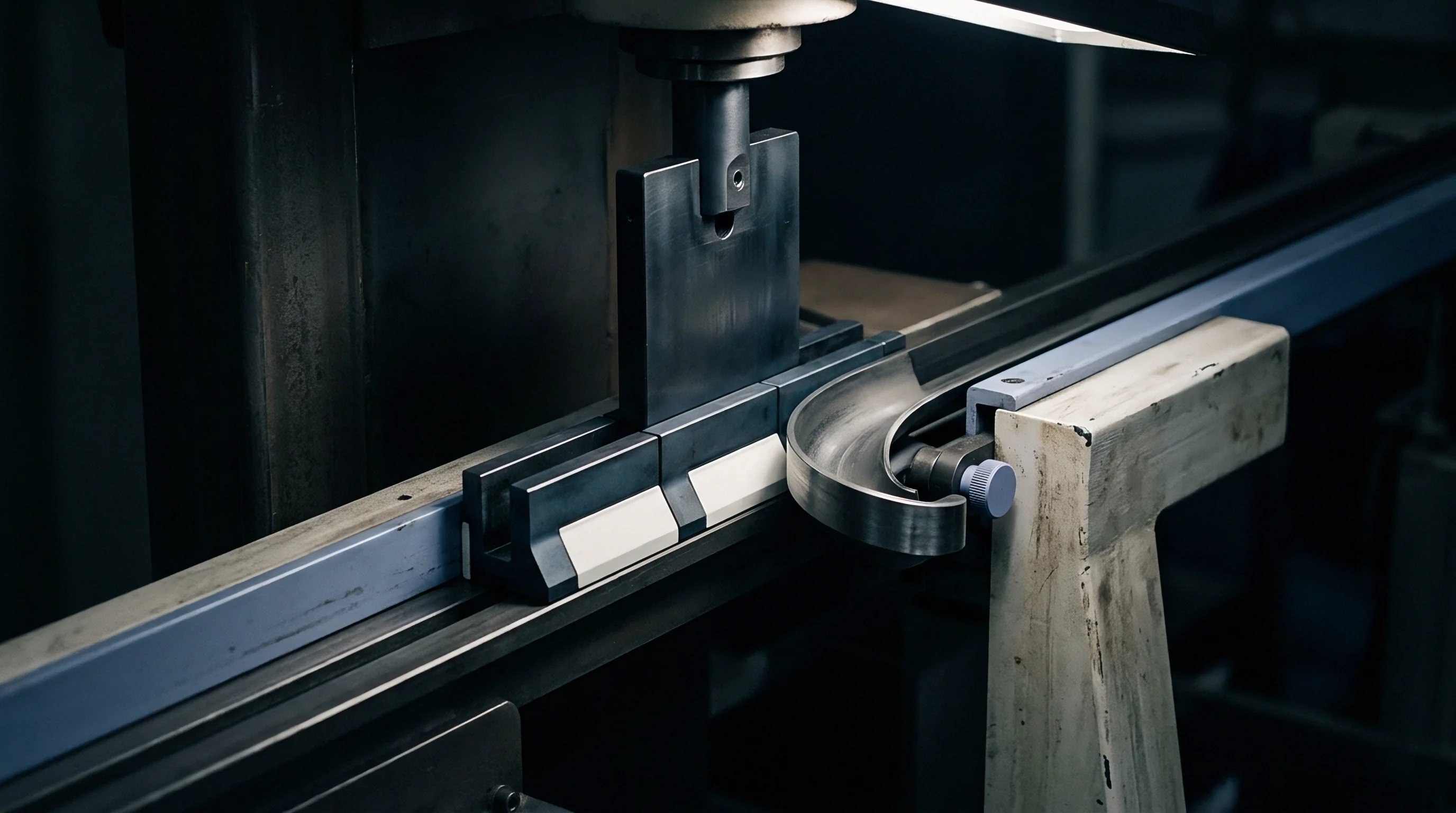
Furnish Composition and Ply Bond Strength
Chemical pulp fibers in outer layers provide tensile resistance, whereas mechanical pulps in central layers facilitate controlled delamination. Long softwood fibers in the top ply yield a high strain-to-break capacity, distributing localized tensile loads over a wider area. Hardwood fibers in interior plies pack densely but yield readily under transverse shear stress.
Moisture alters fiber wall elastic modulus. Maintaining sheet moisture between 6.5 and 7.5 percent preserves fiber flexibility, enabling cleanly defined ply delamination without surface cracking.
Specification of ISO 16260 internal bond values below one hundred and seventy Joules per square meter correlates with uncontrollable polymer coating shear separation during high-speed folding operations.
Evaluating stock stability requires checking furnish variables prior to high-speed scoring runs:
- Scott Bond verification ensures internal ply strength falls within the target range of 180 to 240 Joules per square meter.
- Moisture content monitoring maintains ambient equilibrium between 6.5 and 7.5 percent to preserve fiber flexibility.
- Extrusion thickness audit confirms polymer barrier depth stays within two micrometers of nominal specification.
| Grade Structure | Caliper (µm) | Scott Bond (J/m²) | Cobb 60 Value (g/m²) | Delamination Mode | Polymer Crack Rate (%) |
|---|---|---|---|---|---|
| Solid Bleached Board (SBB) | 300 | 260 | 22.5 | Narrow Shear Zone | 4.2 |
| Folding Boxboard (FBB) | 350 | 210 | 24.0 | Balanced Ply Split | 0.3 |
| Coated Recycled Board (CRB) | 380 | 145 | 31.0 | Wide Uncontrolled Separation | 8.9 |
| Unbleached Kraft Board (SUB) | 320 | 290 | 19.0 | High Resistance Tensile Rupture | 5.1 |
Substrate converters frequently encounter mill claims asserting that elevated micro-cracking rates stem entirely from unconditioned plant ambient humidity rather than inconsistent fiber refine levels across multi-ply runs.
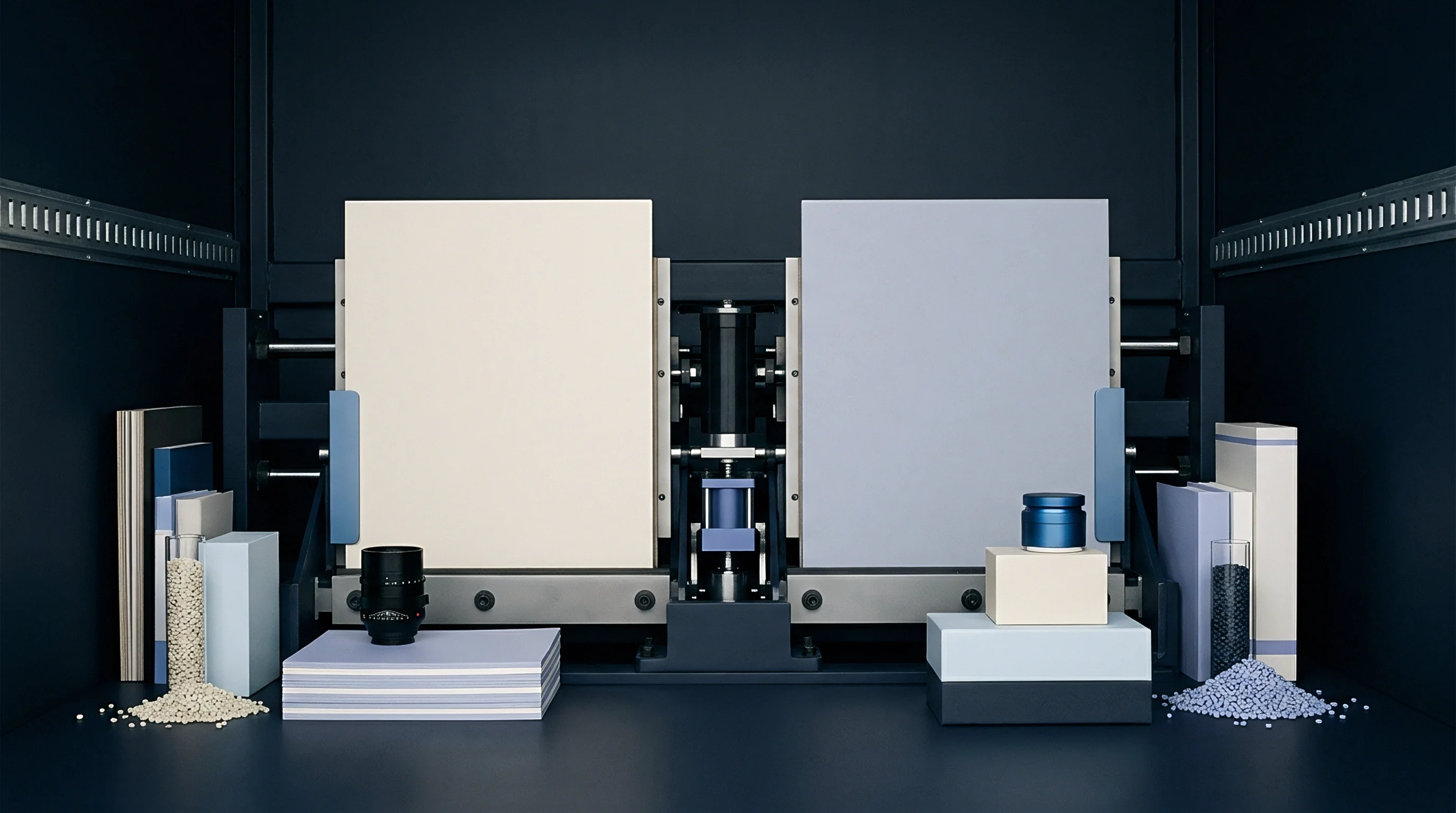

Tooling
Precision mechanical setup establishes the physical boundary conditions for web compression. Machinery operators adjust rule depth, channel matrix clearance, and anvil pressure to establish controlled score impression profiles. In rotary scoring operations, cylinder concentricity and bearing rigidity govern impression depth stability.
Variations in cylinder runout exceeding 0.01 mm cause cyclic fluctuations in strain kinetics, inducing periodic pinhole clusters across converted stock.

Rotary and Flatbed Die Parameters
Converting machinery operating with counter-rotating scoring cylinders presents continuous contact dynamics distinct from reciprocating flatbed presses. Rotary dies engage the sheet along a moving line contact, creating complex combined shear and extrusion kinetics. Flatbed presses apply tool force simultaneously across the entire blank area, generating uniform vertical displacement profiles.
Penetration depth dictates inner ply fracture. Flatbed systems permit longer dwell times at peak impression, allowing stress relaxation in the polymer coating before sheet stripping occurs.
Scoring rule profile radius selection directly influences outer film strain. A 0.71 mm rule tip creates narrow, intense deformation paths, suitable for thin folding boxboard below 250 micrometers. Thicker paperboard grades require 1.05 mm or 1.42 mm rule tip radii to spread tensile deformation across larger areas.
Tool clearance controls local shear failure. Match rule radius to total substrate caliper to protect polymer barrier integrity.

Groove Dimensions and Crease Depth Tolerances
Female matrix channels machined into steel plates or formed from vulcanized counter-tapes determine the ultimate bead shape. Channel depth must accommodate displaced paperboard volume without compressing the folded bead into a solid, rigid structure. Standard rule calculations define channel width as double the sheet caliper plus the scoring rule width.
Polymer-coated stocks require an additional allowance of 0.05 to 0.10 mm to account for synthetic coating volume and reduced compressibility.
- Measure substrate sheet caliper at five points across the web width using an ISO 534 compliant micrometer.
- Select male rule thickness and tip radius based on board caliper and polymer coating density.
- Calculate target matrix channel width by adding double the board thickness to the rule width.
- Mount counter-matrix material on the anvil plate and adjust penetration depth in increments of ten micrometers.
- Verify crease folding resistance using an ISO 2493 stiffness tester across ninety-degree fold angles.
Crease recovery forces decay rapidly within twenty milliseconds following mechanical tool withdrawal from the polymer substrate.
Crease depth dictates final angle tension. Tool wear alters matrix channel geometry over long production runs. Steel rules experience tip flattening while vulcanized matrix channels suffer edge rounding from abrasive fiber contact.
Tool degradation broadens the deformation zone, shifting strain locations and causing micro-cracks along outer coating surfaces. Routine tooling audits prevent unexpected barrier failures.
Incorporating ISO 2493 bending resistance limits into substrate purchase agreements shifts financial responsibility to the paper mill when delivered stock fails fold force thresholds.


Tonnage
Material volume calculations translate microscopic crease integrity into commercial yield performance. Paperboard purchases move by net weight, yet converting revenue relies on delivered box unit counts. Uncontrolled strain kinetics during high-speed scoring generate invisible micro-fractures in barrier coatings, resulting in expensive pack rejections after filling operations.
Selecting high-grade virgin fiber board increases initial raw material expenditure while substantially reducing scrap costs on fast automated lines.

Commercial Waste Metrics and Converting Yields
High-speed packaging lines operating at eight hundred cartons per minute amplify minor scoring defects into substantial scrap volumes. Barrier integrity failures discovered during liquid filling stop production lines, forcing converters to discard complete production batches. Outer ply surface cracking degrades visual aesthetics, prompting brand owners to reject entire delivery pallets.
Scrap rates rising from one percent to three percent destroy operational margins on high-volume consumer packaging contracts.
Extrusion density affects pinhole formation rates. Lower yield from cracked, defective blanks increases landed sheet costs. Downgauging substrate caliper without adjusting scoring matrix geometry increases scrap generation, offsetting initial raw material savings.
Precise mechanical setup protects capital investment.
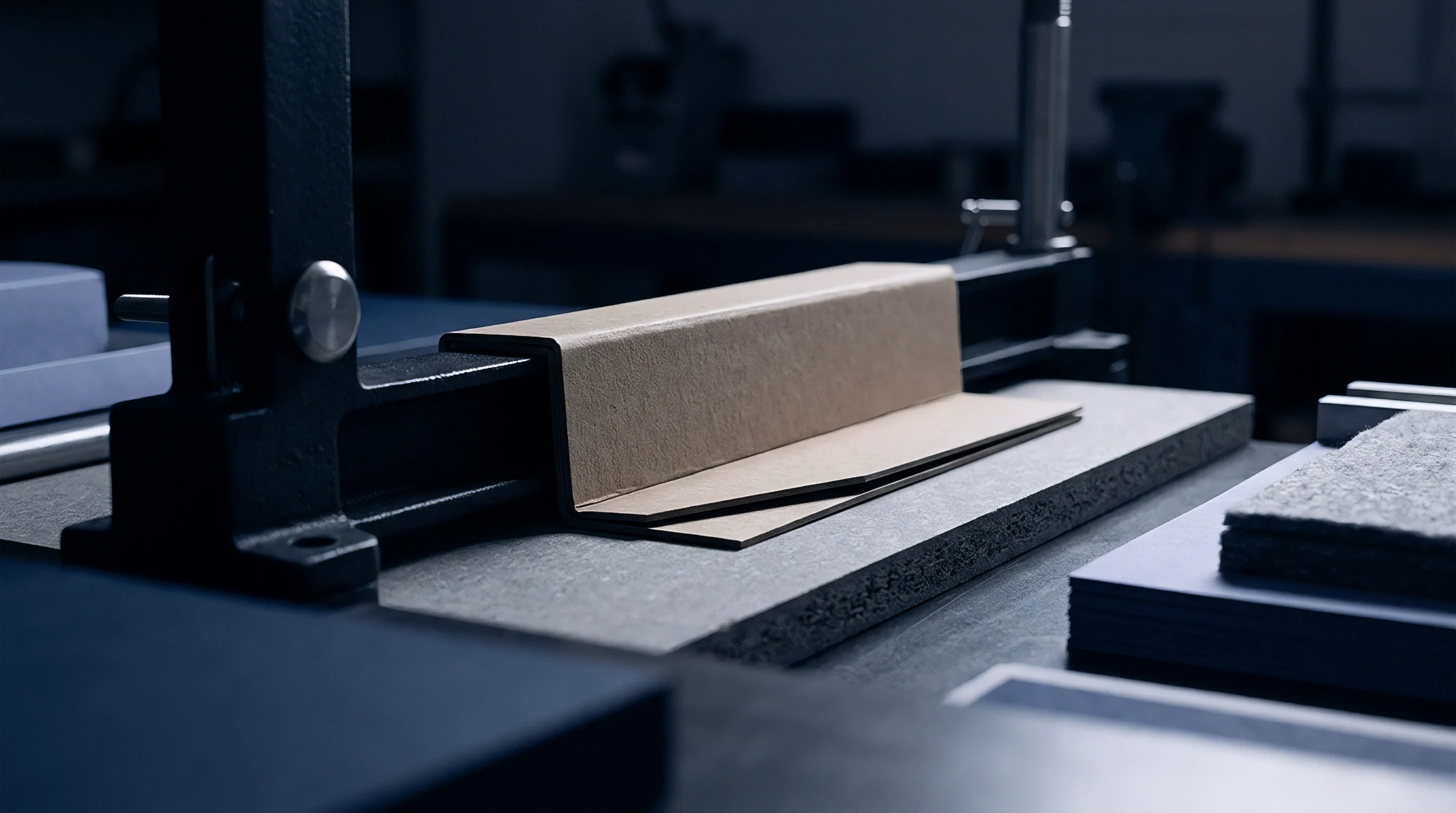
Economic Impact of Barrier Micro-Fractures
Microscopic breaches in protective barrier films compromise shelf life compliance for liquid and dry food packaging. Moisture ingress degrades product quality, triggering warranty claims against packaging converters. Extended producer responsibility schemes impose punitive fees when damaged packaging fails recyclability or barrier retention standards.
Converting performance directly impacts net contract profitability.
| Board Grade & Weight | Scoring Speed (m/s) | Baseline Ton Price ($) | Scrap Rate (%) | Net Sheet Yield per Ton | Landed Cost per 1,000 Sheets ($) |
|---|---|---|---|---|---|
| 280 g/m² Premium SBB / PE | 4.0 | 1,450 | 0.8 | 11,805 | 123.80 |
| 280 g/m² Premium SBB / PE | 7.5 | 1,450 | 1.2 | 11,757 | 124.30 |
| 300 g/m² Standard FBB / PE | 4.0 | 1,220 | 1.5 | 10,944 | 112.90 |
| 300 g/m² Standard FBB / PE | 7.5 | 1,220 | 4.8 | 10,577 | 116.80 |
| 320 g/m² Recycled CRB / PE | 4.0 | 980 | 3.2 | 10,091 | 99.20 |
| 320 g/m² Recycled CRB / PE | 7.5 | 980 | 9.6 | 9,425 | 107.10 |
Selecting paperboard with higher internal ply bond strength consistently yields lower scrap costs than attempting to optimize tool geometries on low-grade recycled stocks.