Physical Stiffness
Measured resistance to deformation perpendicular to the machine direction determines how paperboard behaves during conversion on high-speed packaging lines. Cross direction bending stiffness controls whether cartons maintain structural integrity under compressive loads and how smoothly blanks feed through creasing stations. Cellulose fibers align predominantly along the manufacturing flow, leaving the perpendicular axis dependent on refining intensity and wet-press configuration.
Low values in this property cause panel bulging on folding carton side walls and lead to jamming in automatic erecting machinery.
Stiffness Ratio
Achieving optimal box performance requires balancing machine direction rigidity against cross direction bending forces to prevent asymmetric curling during moisture uptake. Converters specify targeted limits for this ratio when running folding boxboard grades on rotary die-cutters and gluing equipment. High grammage substrates demand precise control over secondary fiber content and starch pickup to avoid excessive resistance that cracks the outer liner during scoring.
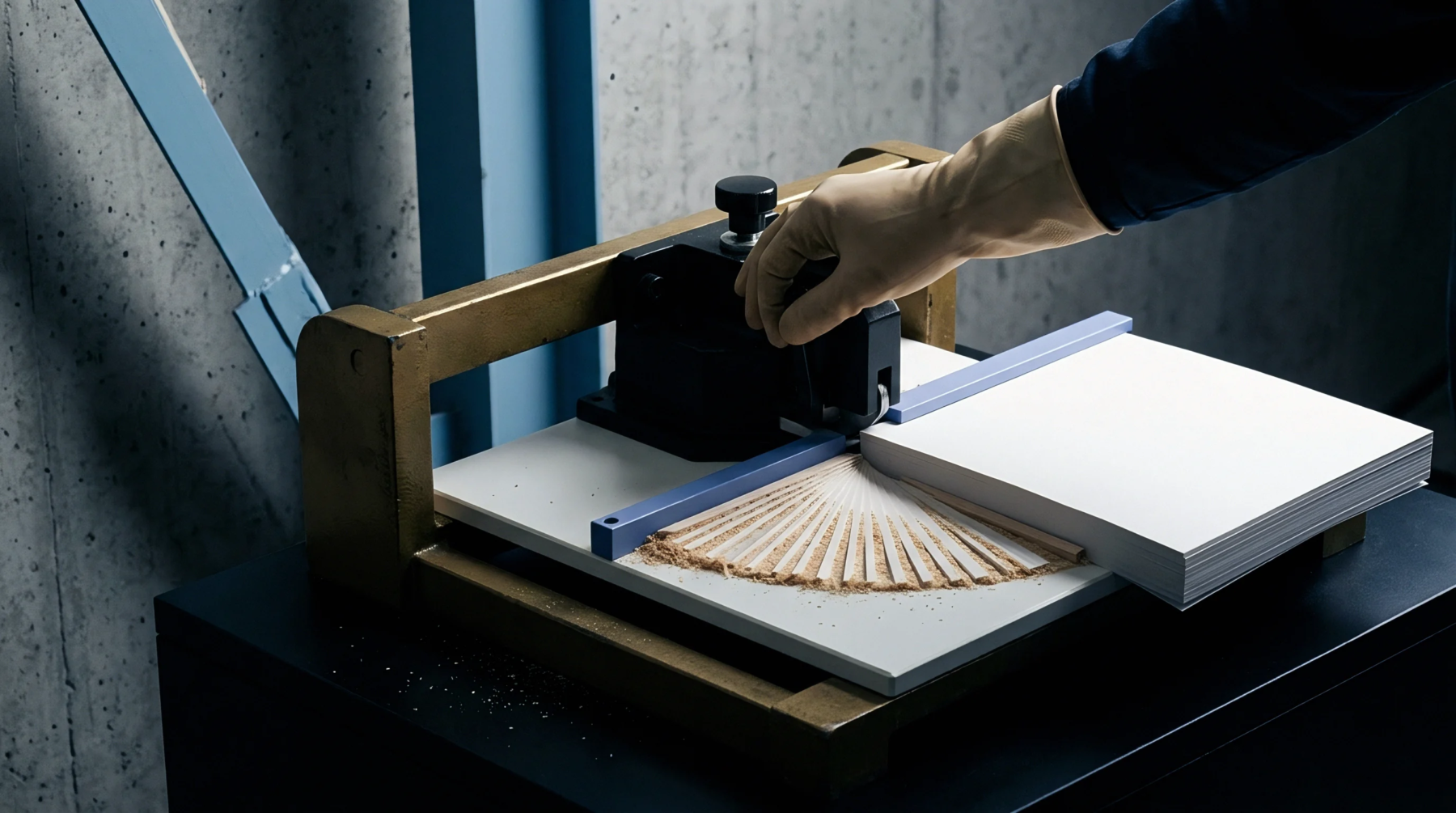
Laboratory testers apply a bending moment across a clamped sample strip to record the force required for a specific angular deflection.
Caliper Dependency
Thickness exerts a cubic influence on cross direction bending strength because the distance from the neutral axis dictates internal stress distribution during deformation. Calendering pressure reduces bulk while increasing tensile strength, forcing a compromise between surface smoothness for printing and stiffness retention for packaging functionality. Excessive moisture in the ambient converting environment softens the hemicellulose matrix and degrades cross direction bending performance regardless of initial grammage specifications.