Dynamic Cross Direction Caliper Profile Correction Mechanics on Paperboard Machines
Dynamic cross direction caliper profiling uses induction heating to thermally expand calender rolls, flattening peaks without crushing uncalendered core bulk.
Nip
Cross-machine thickness variation causes reject rolls at the winder and forces packaging line shutdowns in folding carton plants. When a four-hundred-gram folding boxboard web leaves the drying cylinders, moisture imbalances and uneven mass distribution create a caliper profile across the machine direction that finishing equipment struggles to flatten without compromises. Calender stack nips serve as the main mechanism for evening out these profile variations before the sheet hits the reel.
Heavy pressure in the nip directly reduces sheet bulk.
Viscoelastic Compression in Multilayer Paperboard
Cellulose matrices compress in two distinct phases under load: an immediate elastic displacement followed by time-dependent plastic flow. In multi-ply solid bleached sulphate and folding boxboard, chemical pulp outer layers sandwich mechanical or recycled fibre inner plies. Bleached kraft on the surfaces gives the board its tensile strength and smooth finish, while thermo-mechanical or chemi-thermo-mechanical cores supply bending resistance by keeping the outer skins apart.
If an uneven cross-direction profile enters a rigid calender gap, local high points face peak compressive stresses above forty megapascals.
Under twenty-three degrees Celsius and fifty percent relative humidity, chemi-thermo-mechanical pulp cores lose eight percent of their bulk when local peak linear nip loads exceed sixty kilonewtons per meter.
High localized nip loads crush interior mechanical fibres permanently. Lignin-rich middle plies deform beyond their yield threshold, permanently compacting the porous core. While this evens out web caliper, it creates uneven density across the machine width.
The board may measure flat on a micrometer, yet suffer wide swings in bending stiffness, ink absorption, and creasing behavior.
- Core cell lumen collapse occurs wherever linear loads run too high, flattening bulky mechanical fibres and permanently cutting internal sheet volume.
- Z-direction density banding forms when surface pressure consolidates the outer plies without compacting the core, leaving the board vulnerable to shear during converting.
- Localized moisture displacement pushes trapped moisture out of high-pressure zones into adjacent low-pressure areas, triggering cross-direction cockle and warping later on.
- Surface gloss mottle develops when uneven nip pressure forces coating binders deeper into the sheet base along high-load lanes.
Calender Mechanics across Multi-Ply Furnishes
Finishing stacks use either hard-nip rolls of chilled alloy cast iron or soft-nip rolls covered in polyurethane or composite polymers. Hard-nip calendering focuses force into a narrow contact zone twelve to eighteen millimeters wide in the machine direction, depending on roll diameter and hydraulic pressure. That narrow band delivers a sharp pressure pulse that shears off surface peaks and quickly levels high spots across the web profile.
| Actuator Type | Spatial Zone Width (mm) | Thermal Response Time (min) | Correction Amplitude Range (µm) | Primary Energy Source |
|---|---|---|---|---|
| Induction Heating Coils | 60 to 75 | 1.5 to 3.0 | ±6.0 to ±12.0 | High-frequency alternating magnetic flux |
| Cold Air Showers | 75 to 100 | 8.0 to 15.0 | ±2.5 to ±5.0 | Chilled pneumatic impingement |
| Hot Air Showers | 75 to 100 | 10.0 to 18.0 | ±3.0 to ±6.0 | Heated convective pneumatic flow |
| Internal Crown Control Shoes | 150 to 250 | 0.5 to 1.0 | ±15.0 to ±35.0 | Zoned hydrostatic oil lubrication pads |
Soft-nip calenders widen the contact area to forty or sixty millimeters as the elastic cover deflects. This lowers peak compressive stress while keeping the sheet in the nip longer. The extended dwell time increases heat transfer from heated cast iron rolls into the top coating, letting starch and latex binders soften past their glass transition temperature.
The surface then takes on the polished finish of the roll under lower mechanical pressure, protecting the middle plies from structural damage.
Bending stiffness drops rapidly as board caliper decreases.
If caliper profiling actuators push nip variations too hard to compensate for incoming basis weight streaks, the board leaves the stack with compromised structural properties that fail on downstream carton lines.


Induction
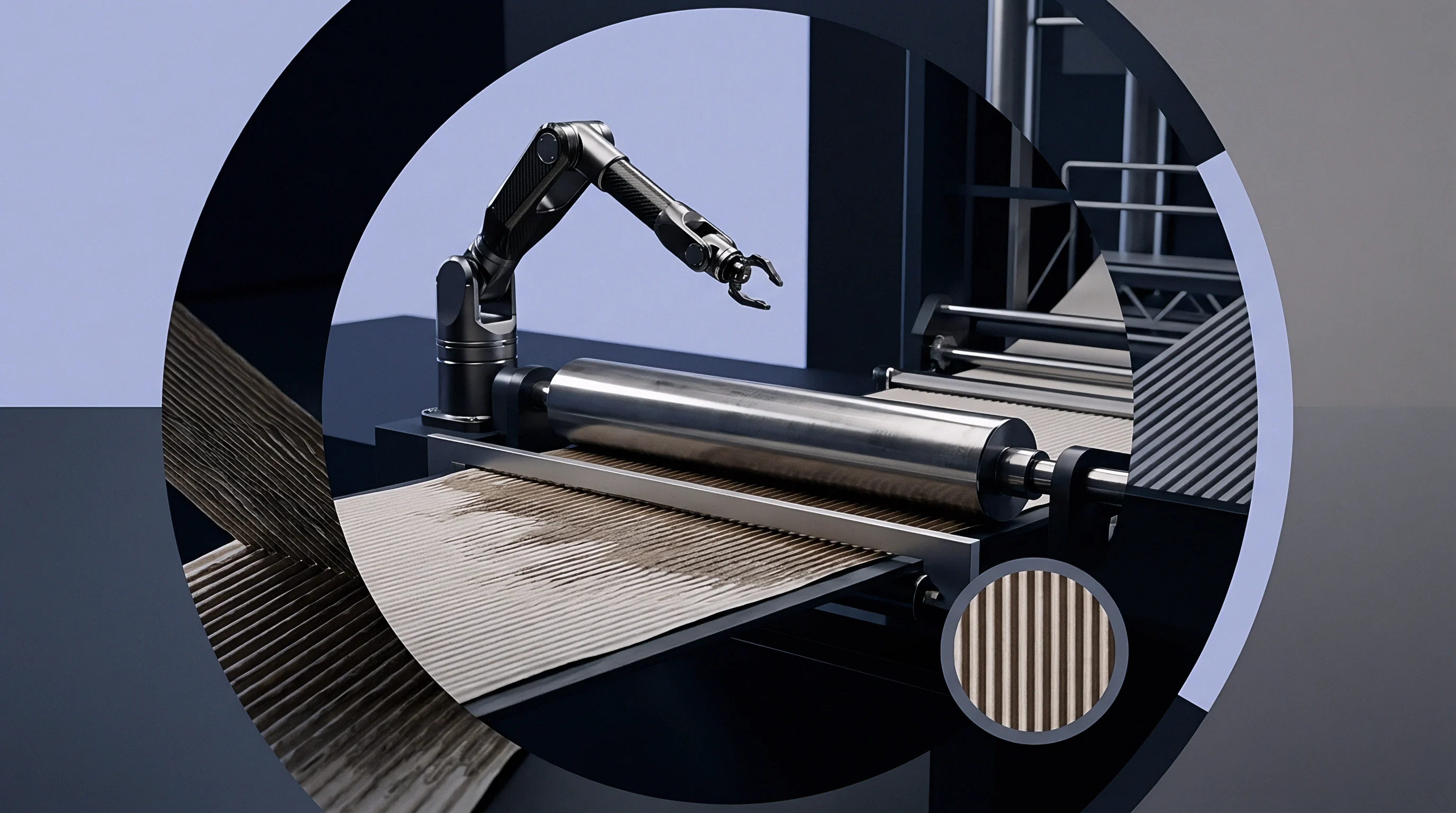
Finishing lines position electromagnetic heating modules across the chilled iron calender roll to make fast, narrow-band caliper corrections. The coils produce high-frequency magnetic fields that penetrate the roll surface and excite eddy currents inside the outer metal shell. Conductive heat raises local surface temperatures, expanding the roll diameter at specific points across the machine.
Thermal expansion changes local roll radius.

Does Calender Induction Heating Preserve Folding Stiffness?
Operators use heat to alter calender roll geometry instead of relying entirely on heavy hydraulic loading. Chilled cast iron expands linearly at about eleven millionths of a meter per meter per degree Celsius. Raising local roll surface temperature by twenty degrees Celsius across an eight-hundred-millimeter diameter roll produces roughly nine micrometers of outward radial growth.
The outer shell expands locally at that position.
Eddy currents concentrate heat in the outer roll skin.
That expansion increases linear nip pressure across one specific slice of the web. The higher pressure trims sheet caliper in that zone without changing total hydraulic load on the stack. Because induction acts on targeted lanes, it avoids the widespread loss of bulk caused by tightening calender loading across the full width of the machine.
At fifteen kilohertz, induction systems generate eddy currents confined to the outer two millimeters of the calender roll shell.
Selective thermal adjustment avoids crushing adjacent low-thickness areas. It preserves bulk across most of the web, protecting the stiffness-to-thickness ratio critical for carton strength. On virgin folding boxboard, preserving core bulk in low-grammage streaks maintains structural integrity through rotary die-cutting and rapid box erection.
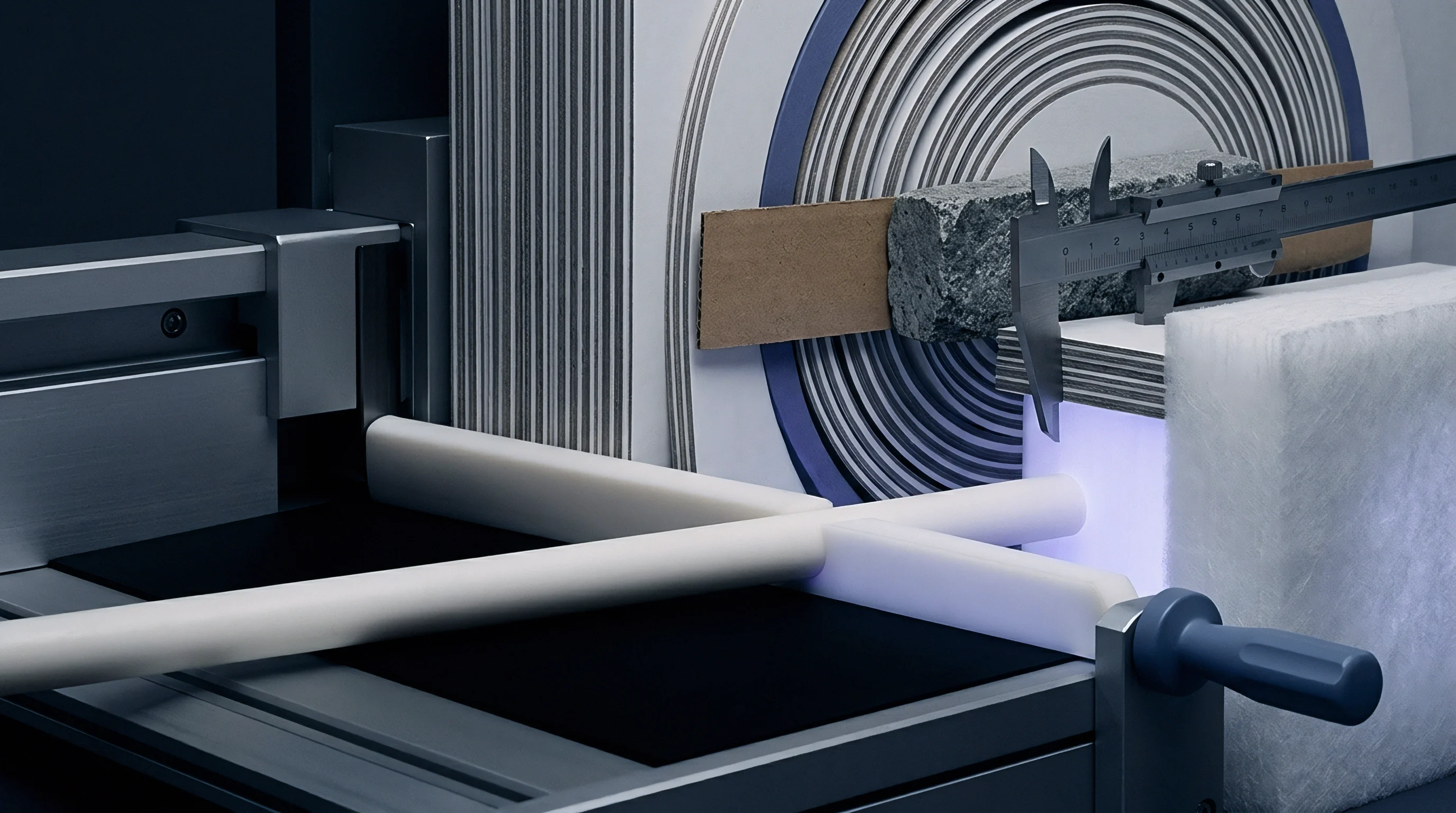
Thermal Roll Deformation and Local Nip Pressure
Thermal energy must remain tightly focused so heat conduction does not bleed into neighboring zones. Systems operating between ten and thirty kilohertz take advantage of the electromagnetic skin effect, concentrating current near the surface and keeping heat from penetrating deep into the roll core. This shallow heating zone cools quickly when actuator power drops, speeding up control response during grade changes.
Local diameter changes create internal stresses within the roll. Temperature differences across tight spacing generate hoop stresses and axial shear inside the shell. Chilled iron rolls rely on thick walls or solid castings to withstand these thermal gradients.
Running induction coils at continuous high power on narrow zones can drive surface temperatures past one hundred twenty degrees Celsius, threatening structural damage or premature bearing failure.
Thermal induction actuators are sometimes treated as a replacement for upstream basis weight control, though attempting to flatten severe web caliper defects at the calender inevitably compromises board stiffness.
Resolution
Spatial profiling precision depends on coil pitch, thermal conduction in the roll steel, and measurement delay at the scanner. With seventy-five-millimeter coil spacing, heat on the roll surface does not stop neatly at the zone boundary; metal conduction spreads thermal energy sideways, producing a bell-shaped temperature curve across neighboring zones.
Actuator spacing dictates achievable spatial resolution.

Will Actuator Spacing Determine Attainable Profile Resolution?
Narrow coils create sharp local temperature spikes, but radial expansion spreads across a wider footprint. The roll steel essentially acts as a spatial low-pass filter on power inputs. Caliper variations occurring across spans shorter than fifty millimeters cannot be corrected individually, because heat diffusion blends adjacent adjustments into one broad profile change.
Narrower actuator zones improve profile resolution.
Control software maps thickness readings to coil power setpoints through a decoupling matrix. By accounting for lateral heat flow between adjacent zones, the matrix keeps neighboring coils from cycling between full power and zero. Without decoupling, adjacent actuators can fall into unstable feedback loops that produce distinct caliper banding across the web.
A seventy-five-millimeter induction coil array yields an effective expansion width of one hundred twenty millimeters at half-maximum amplitude.
Operators confirm actuator mapping through routine step-response tests. By boosting power on a single coil by thirty percent and waiting for temperatures to stabilize, they can measure the resulting caliper dip on the downstream scanner. The shape of that depression verifies the coupling coefficients used in the control algorithms.
Control Matrix Decoupling and Scanner Delay
Closed-loop caliper control must deal with lag between the calender stack and the quality scanner. Scanners read the moving sheet downstream near the reel, often up to eighty meters away from the calenders. At line speeds of four hundred meters per minute, it takes twelve seconds for paperboard to travel from nip to sensor.
Physical transport delays can easily destabilize control loops.
A complete scanner traverse typically takes sixty seconds.
Scanning frames need forty-five to seventy-five seconds for a single cross-machine pass. Between web transit and sensor sweeps, total delay from coil adjustment to confirmed feedback often exceeds two minutes. Control systems rely on predictive models like Smith predictors or internal model controllers to regulate output without chasing temporary process swings.
- Raw profile filtering uses exponential smoothing across scanner sweeps to separate random process noise from actual cross-direction streaks.
- Decoupling matrix inversion translates caliper errors into thermal power setpoints while compensating for heat transfer between neighboring coils.
- Gain scheduling adjustment scales control outputs based on machine speed, basis weight, furnish recipe, and baseline hydraulic calender pressure.
- Actuator output clipping sets upper thermal limits on individual coils so surface temperatures stay within safe metallurgical bounds.
Engineers face a persistent trade-off: localized caliper control inevitably creates cross-machine variations in internal bond strength and directional stiffness.

Score
Converting plants feel the impact of calender profiling directly at the die-cutter and folder-gluer. High-speed platens running at eight to twelve thousand sheets per hour need uniform board thickness to form clean, uncracked scorelines. When a sheet carries density variations from calender profiling, creasing rules deform the paperboard layers unpredictably.
Crushed mechanical plies do not recover their original bulk.
Bending Resistance Loss under Excessive Profiling
Structural strength in packaging depends on bending stiffness, which drops with the cube of sheet thickness. A three percent reduction in local caliper cuts bending resistance by roughly nine percent assuming constant modulus. Compressing a heavy basis-weight lane down to target caliper raises local density and elastic modulus slightly, but nowhere near enough to counter the cubic loss from reduced thickness.
| Nominal Grammage (g/m²) | Target Caliper (µm) | Local Caliper Deviation (µm) | MD Taber Stiffness Deviation (%) | Converting Scoreline Integrity |
|---|---|---|---|---|
| 250 (SBS) | 350 | -15 | -11.8 | Liner split during ninety-degree fold |
| 250 (SBS) | 350 | 0 | 0.0 | Clean crease with intact surface plies |
| 300 (FBB) | 460 | -20 | -12.4 | Delamination along score bead shoulder |
| 300 (FBB) | 460 | 0 | 0.0 | Uniform bead formation without fracturing |
| 350 (WLC) | 510 | -30 | -16.5 | Severe liner rupture and score cracking |
This leaves carton blanks with inconsistent folding resistance across panels. In folder-gluers operating at five hundred meters per minute, blanks cut from over-calendered sections resist folding differently than adjacent pieces. That difference twists blanks on the belts, causing squareness defects, line jams, and scanner registration failures.
Caliper variations disrupt score depth during die-cutting.
High-Speed Die-Cutting and Crease Cracking
Creasing rules press board into a female channel to force controlled internal delamination between plies. This internal shear lets the sheet fold cleanly without tearing the outer liner. Where calenders heavily compacted a thick lane, the dense middle ply resists delamination and transfers folding strain straight to the surface coating.
Surface liners crack under the strain, exposing underlying fibers and ruining printed coatings. On white lined chipboard and recycled boxboard, over-calendered lanes rupture in humid plant conditions, weakening moisture barriers on extrusion-coated stock. Inspection systems on food and pharmaceutical packaging lines immediately reject these cracked cartons.
Under ISO 2493 conditions (twenty-three degrees Celsius and fifty percent relative humidity), bending resistance in mechanical pulp cores drops roughly three times faster than caliper.
High-speed carton erection requires consistent, uniform scorelines.
Converters reject board that splits along scorelines.
Large profile adjustments across adjacent calender zones almost guaranteed folding twist on the box line.
Allowance
Purchase contracts set thickness limits through technical spec sheets that define acceptable cross-machine variation. Converters running high-speed packaging lines usually require virgin board caliper to stay within plus or minus three percent of target across the full deckle. Recycled white lined chipboard agreements allow broader ranges, often up to plus or minus five or six percent.
Mill test certificates often average measurements across the reel width.
Contractual Tolerances and Caliper Verification Methods
Reel documentation often masks narrow caliper defects by averaging test data. Standard ISO 534 lab reports measure single-point thickness under a static load of one hundred kilopascals across a two-hundred-square-millimeter anvil, with sheets conditioned to ISO 187. However, technicians commonly average readings across twenty points across the web, washing out sharp caliper streaks that cause setup problems at the die-cutter.
| Board Grade Designation | Caliper Tolerance Window (%) | Bending Stiffness Margin (%) | Yield Variance (Sheets/Tonne) | Typical Converting Duty |
|---|---|---|---|---|
| Solid Bleached Sulphate (SBS) | ±3.0 | ±5.0 | ±30 | High-speed cosmetics and pharmaceutical packs |
| Folding Boxboard (FBB) | ±4.0 | ±7.0 | ±42 | Confectionery cartons and frozen food containers |
| White Lined Chipboard (WLC) | ±6.0 | ±12.0 | ±65 | Secondary retail packaging and household goods |
Buying paperboard by weight creates financial loss if mills raise target basis weight to cover low-caliper spots. When wet-end weight varies across the sheet, operators increase overall fiber flow so low valleys still clear minimum caliper specs. The finished reel weighs more per square meter, cutting the number of sheets produced per metric tonne purchased.
Off-spec board profiles trigger frequent jams on converting lines.
Commercial Penalties of Basis Weight Compensation
This weight adjustment shows up directly in converting yield. A box plant buying three hundred metric tonnes of three-hundred-gram folding boxboard a month expects a specific total sheet area. If the mill runs two percent heavy to offset caliper valleys caused by calender limits, the buyer loses two percent of their yield ~ paying for six tonnes of extra weight that yields no usable cartons.
Buyers prevent these losses by writing stiffness-to-thickness ratios directly into supply contracts. These agreements require the mill to meet minimum Taber stiffness under TAPPI T 489 or ISO 2493 while holding caliper tolerances and limiting basis weight overrun to no more than one percent. Mills that fail to hit both targets face invoice debits covering lost yield.
Delivery contracts referencing DIN 19303 standards allow buyers to reject reels when cross-direction thickness strays outside agreed grade limits, shifting sorting costs and machine downtime back to the mill.