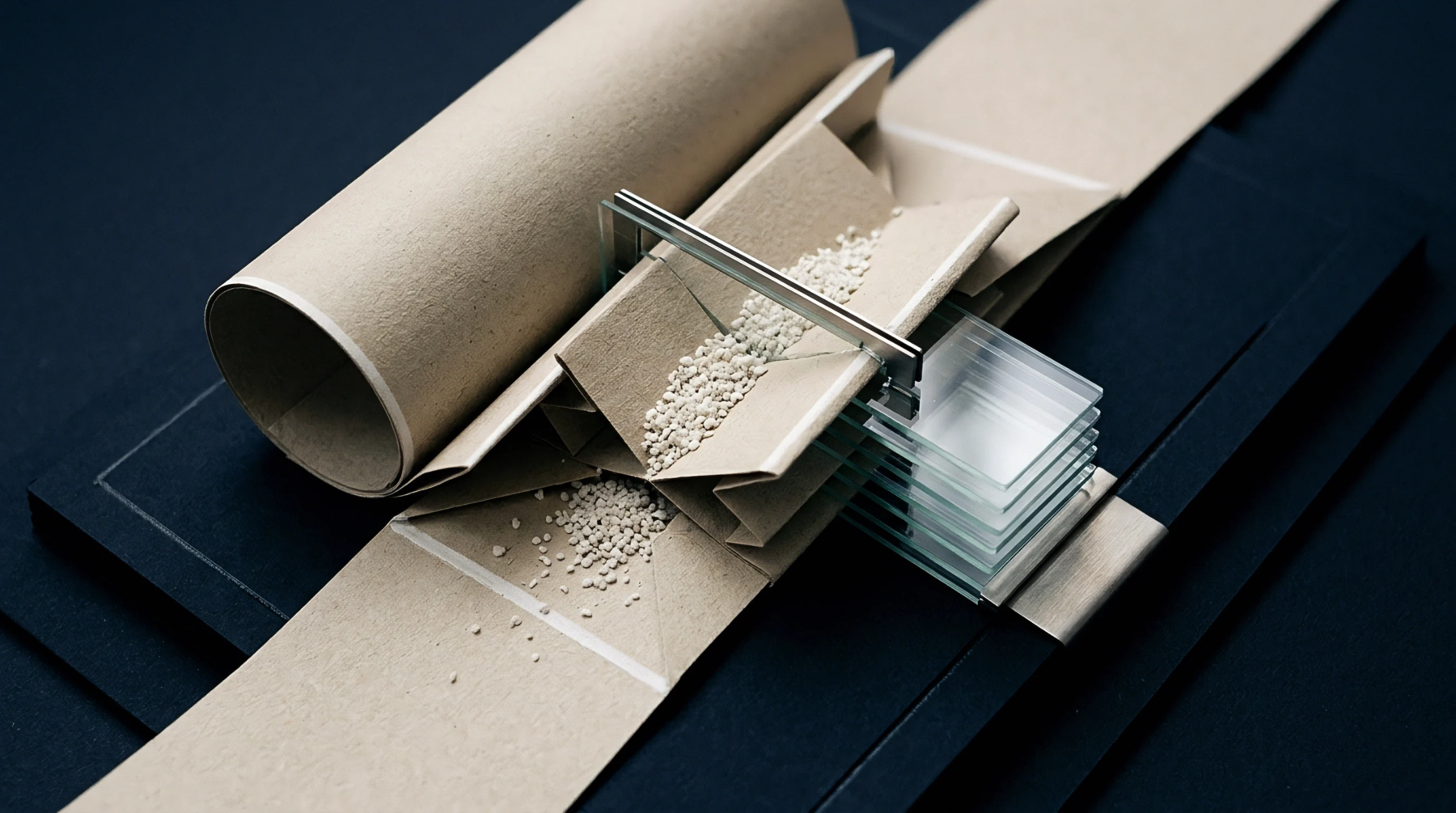
Coating Fracture
Visible breaks in the ink or mineral coating layer of a paperboard sheet occur when the material is folded or stressed beyond its elastic limit. This surface cracking appears as small white lines or jagged edges along the spine of a book or the corner of a carton. It exposes the underlying fibers and detracts from the visual quality of the printed piece.
The defect is most prominent on dark or solid printed areas.
Tensile Strain
Brittleness of the coating formulation is often the primary cause of these structural failures. When surface cracking occurs, it suggests that the ratio of binder to pigment is not optimized for the flexibility required by the converting process. High ink coverage can further reduce the pliability of the surface.
Stretching the board over a sharp radius forces the outer layers to expand until they snap.
Environmental Influence
Moisture levels within the substrate act as a critical control variable for preventing this damage. Low humidity makes the fibers and the coating more brittle, which increases the likelihood of surface cracking during the winter months. Proper conditioning of the board before printing helps the material retain its natural flexibility.
Creasing the board before folding provides a controlled path for the stress to dissipate. High quality latices in the coating color can also improve the elongation properties of the film.