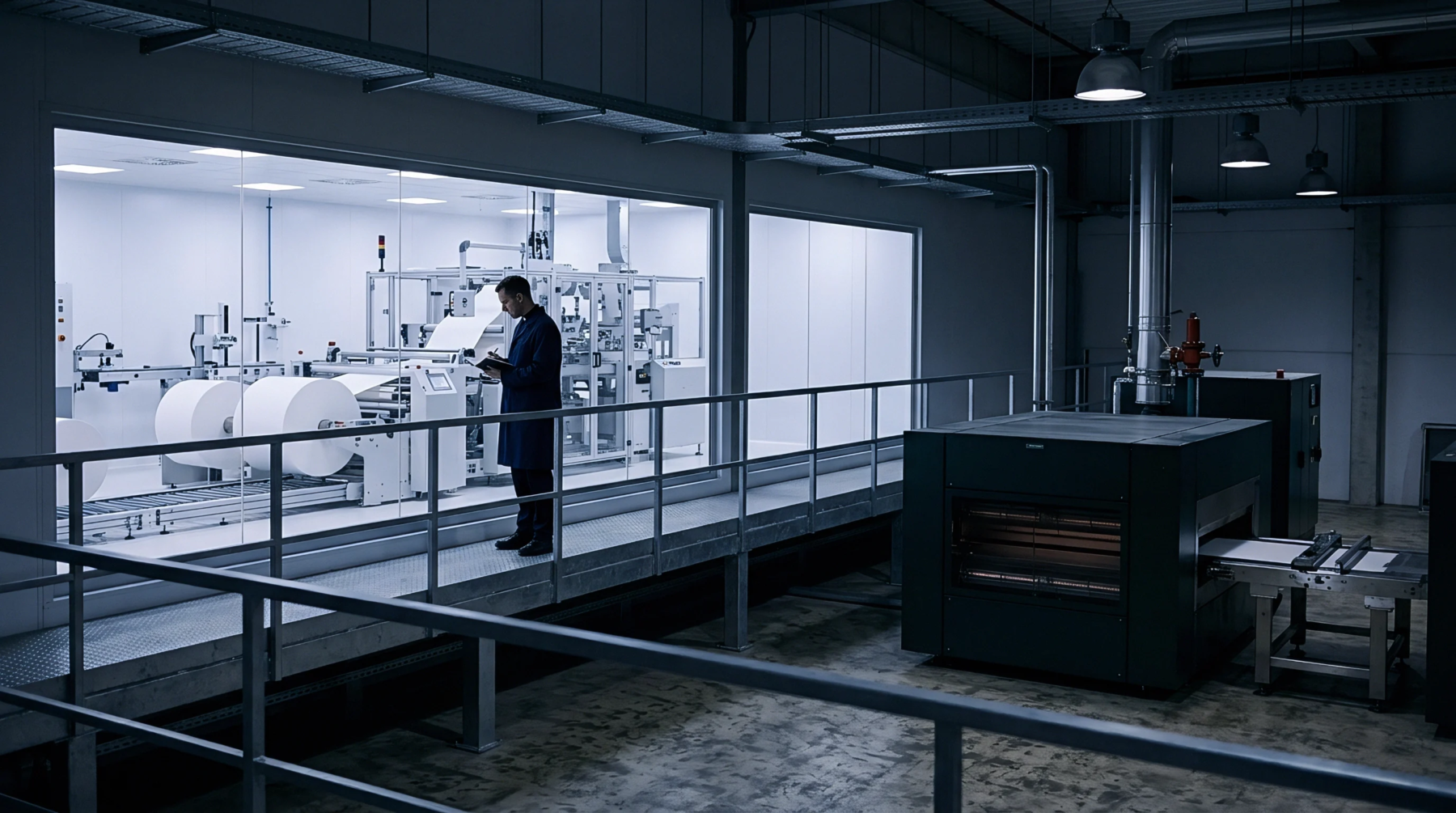
Web Separation
The mechanical process of dividing a wide moving web of paper or paperboard into narrower rolls using pair-mounted, rotating circular knives operates on the principle of continuous localized shearing. This technique, known as rotary shear slitting, represents the most common method of edge trim and web dividing in modern paper mills and high-speed converting facilities.
Blade Configuration
Two overlapping steel blades are mounted on parallel shafts so that their edges meet at a specific nip point to act like a pair of continuous household scissors. The top knife, or male blade, is often spring-loaded to maintain a consistent lateral force against the bottom knife, or female anvil. As the paperboard web is drawn through this point of contact, the localized shear stress exceeds the ultimate tensile strength of the paper fibers, resulting in a clean and instantaneous separation of the sheet.
Process Advantage
High-speed operation demands minimal vibration and precise blade alignment to prevent the formation of ragged margins and airborne dust. The process accommodates a wide range of basis weights and densities, making it suitable for everything from thin tissue to heavy multi-ply board. Proper tension control during this step ensures that the slit rolls do not interweave or wind with uneven density across the spool.