Interfacial Shear Strength Measurement in Coated Paperboard Packaging
Interfacial shear strength measures coating-to-fibre bond limits under pure planar stress to prevent score flaking and glue-flap failure in paperboard cartons.

Boundary

Yielding under Pure in Plane Stress
Delamination in coated paperboard packaging initiates within the boundary layer separating the mineral pigment coating or polymeric barrier from the fibrous baseboard. Standard tensile tests fail to isolate this zone because out-of-plane z-directional peel forces induce premature bending moments and fibre tear within the bulk core. Direct measurement of interfacial shear strength requires isolating the shear plane parallel to the web surface, capturing the load threshold where the functional surface layer separates from the substrate fibres under pure planar displacement.
Converting operations subject cartons to intense localized shear: high-speed rotary creasing heads generate severe tangential drag across outer coatings, and right-angle folder-gluers impose sharp differential strain rates across scored corners.
Physical measurement of this boundary relies on double-lap shear geometry or specialized short-span shearing fixtures adapted from ISO 11093-4. Test specimens undergo conditioning under ISO 187 parameters of 23 degrees Celsius and 50 percent relative humidity for a minimum of 48 hours prior to mechanical evaluation. The gauge length remains constrained below 1.0 millimetre to prevent out-of-plane buckling of the paperboard caliper during compression or tension loading.
Peak interfacial shear strength for a baseline 250 g/m² solid bleached sulphate board with a 20 g/m² double-blade kaolin and calcium carbonate coating typically registers between 1.8 MPa and 3.4 MPa, depending on the styrene-butadiene or styrene-acrylic latex binder volume fraction.
A 20 g/m² mineral coating applied to 250 g/m² solid bleached board yields an interfacial shear strength between 1.8 MPa and 3.4 MPa at standard conditioning.
When the latex binder volume fraction drops below 11 parts per hundred dry pigment, cohesive coating failure precedes true interfacial separation. The mineral pigment cakes pull apart internally, dusting the test platens with white chalk residue. Elevating binder levels above 18 parts per hundred shifts the failure plane entirely into the top fibre ply of the baseboard, tearing bleached chemical pulp fibres rather than releasing the coating boundary.
Accurate interfacial shear strength measurement therefore requires an optical verification step immediately post-test, checking the fractured interface through a 40x optical microscope to verify that failure occurred along the binder-fibre boundary zone rather than inside the furnish matrix.
A supplier often claims that total surface energy or high water contact angles guarantee converting runnability, deflecting attention away from low mechanical interface strength. Mechanical boundary strength depends strictly on interlocking depth and cross-linked binder cohesion rather than thermodynamic wetting alone.


Rupture
Cohesive and Adhesive Failure Transitions
Fracture mechanics across coated paperboard surfaces divide into three distinct physical modes. The first mode involves adhesive failure precisely at the coating-to-fibre boundary, an occurrence common when high-viscosity barrier emulsions freeze on the surface without adequate wet penetration time before passing into infrared drying tunnels. The second mode is cohesive failure within the coating layer itself, driven by low binder levels, excessive drying rates that cause binder migration toward the surface, or brittle pigment structures.
The third mode represents baseboard furnish rupture, where the internal fibre network splits apart beneath the interface, leaving intact coating attached to a thin veil of cellulosic material.
Differentiating these rupture modes requires systematic instrumentation. The following four failure modes dictate commercial carton converting performance during rapid mechanical manipulation:
- Interfacial delamination occurs when the pigment or polymer layer strips away cleanly from the unbleached or bleached base fibres under pure in-plane shearing loads without leaving residual cellulosic fragments on the detached coating film.
- Intra-coating shear breakdown develops when excessive thermal drying evaporates water too rapidly, drawing latex binders toward the top air interface and leaving a starved, mechanically fragile mineral layer directly against the base stock.
- Surface fibre picking pulls individual hardwood or softwood fibres out of the top ply because the wet-end starch distribution or surface sizing failed to bond the outer fibre network sufficiently against the coating shear loads.
- Sub-surface ply separation splits multi-ply folding boxboards along the boundary between the bleached chemical top ply and the mechanical groundwood or thermo-mechanical pulp middle plies during aggressive scoring operations.
The distinction between pure interfacial shear strength and internal z-directional bond strength remains critical for packaging engineers. The TAPPI T 541 standard measures the out-of-plane z-directional tensile strength of paperboard using double-sided adhesive tape clamped across metal blocks. While TAPPI T 541 provides reliable data on internal furnish cohesion, it registers zero usable data regarding how a coated surface resists tangential scraping, wipe-die abrasion, or horizontal slippage under compressive creasing bars.
| Failure Category | Predominant Stress Vector | Typical Stress Range (MPa) | Dominant Substrate Factor | Standard Testing Method |
|---|---|---|---|---|
| Interfacial Delamination | Pure Planar Shear | 1.5 to 3.8 | Binder Penetration Depth | Modified Short-Span Shear |
| Intra-Coating Breakdown | Planar and Tangential Shear | 0.8 to 2.1 | Latex Distribution Profile | IGT Surface Strength (ISO 3783) |
| Surface Fibre Picking | Perpendicular Tensile Pull | 1.2 to 2.6 | Surface Size Penetration | Dennison Wax Pick (TAPPI T 459) |
| Sub-Surface Ply Cleavage | Z-Directional Tension | 0.3 to 0.9 | Inter-Ply Starch Starch Spray | Internal Bond Test (TAPPI T 541) |
Converting lines running heavy coated folding boxboard at 400 metres per minute expose surfaces to rapid cyclic shear pulses. When interfacial shear strength falls below 1.5 MPa, scoring knives peel the mineral coating back in long ribbons, exposing raw unbleached fibres along the exterior carton edges and causing glue-flap failures during final carton erection.
Rig

Mechanical Fixturing and Displacement Rates
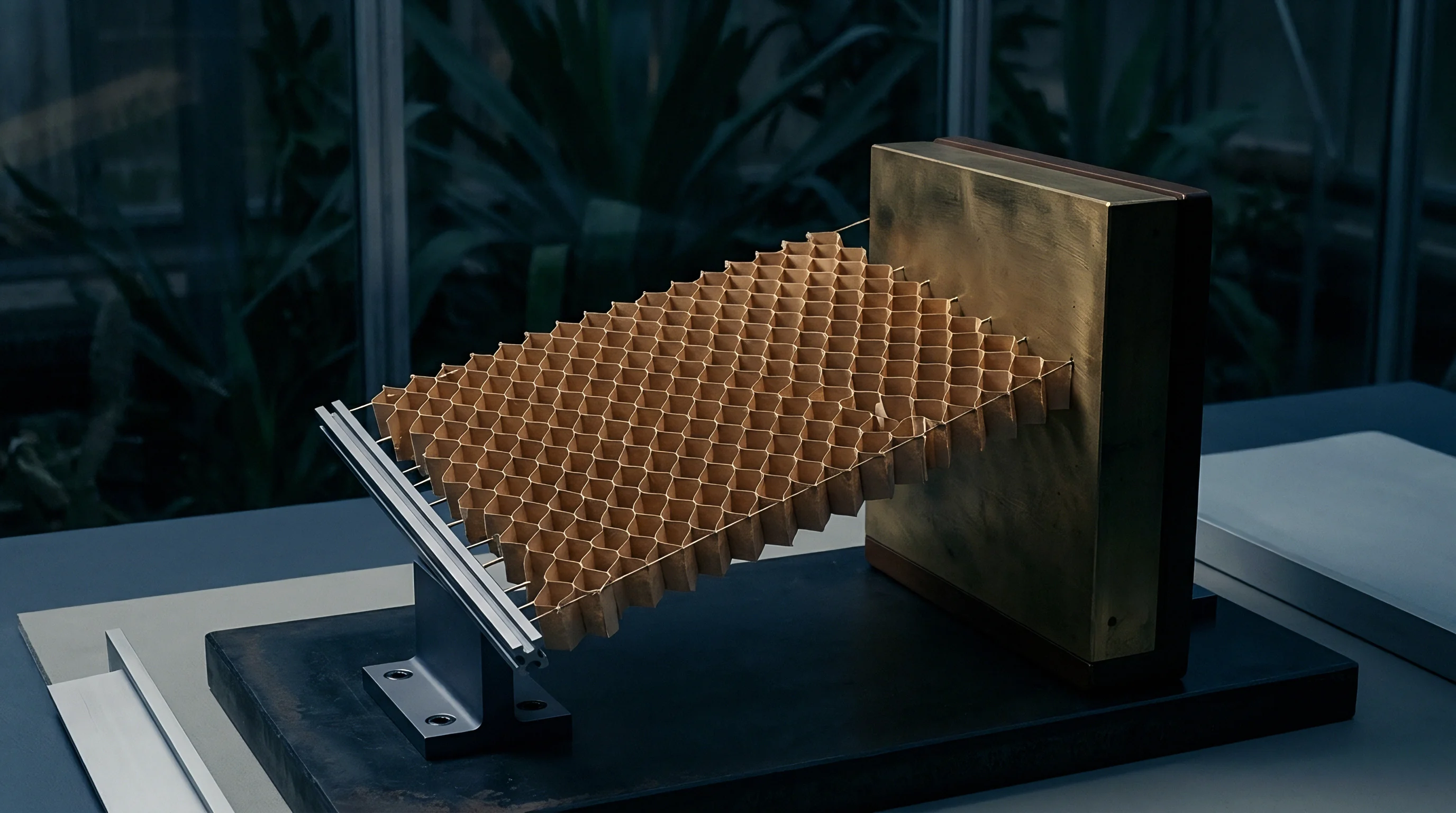
Standard universal tensile testing frames require specific gripping modifications to eliminate bending artifacts when measuring in-plane shear parameters. A customized dual-actuator lap-shear assembly grips the coated surface using high-shear cyanoacrylate or structural polyurethane adhesives bonded to ground tool-steel specimen blocks. The fixture maintains strict parallel alignment, ensuring the displacement vector remains within 0.5 degrees of the horizontal board plane.
Any angular deflection introduces normal tensile vectors that skew the recorded force downward by initiating peel cleavages at specimen corners.
Crosshead displacement speeds alter the observed shear response because of the viscoelastic properties inherent to paperboard fibres and synthetic latex binders. Standardized evaluations run at an elongation rate of 0.5 millimetres per minute. Increasing crosshead speeds to 10 millimetres per minute elevates recorded shear values by 15 to 30 percent, reflecting the strain-rate sensitivity of styrene-butadiene copolymer chains.
Laboratory qualification records must explicitly state crosshead displacement rates alongside the load cell capacity, which typically operates within a calibrated 0 to 5 kN range to maintain high signal resolution.
Testing fixtures require mechanical alignment within 0.5 degrees of the web plane to prevent catastrophic peel vectors from corrupting pure shear data.
The specimen preparation sequence demands rigorous physical execution to isolate the targeted boundary layer:
- The operator cuts paperboard specimens to exactly 25.0 millimetres width using a precision guillotine blade, maintaining parallel edges within 0.05 millimetres tolerance.
- The coated top side bonds to a rigid steel shear coupon using a calibrated 50-micrometre wet layer of room-temperature curing acrylic adhesive applied under a 5.0 kg deadweight load for 120 seconds.
- A micrometer-guided diamond blade scores through the back plies of the board, stopping precisely at the internal coating boundary to leave only the interface intact over a 5.0 millimetre test length.
- The back ply of the specimen anchors to the opposing steel coupon, creating a constrained double-shear test block with an effective test area of 125 square millimetres.
- The assembled test rig mounts into self-aligning universal joints within the universal tester grips to prevent lateral bending moments during axial movement.
Variations in ambient relative humidity rapidly degrade test accuracy. Cellulosic fibres absorb moisture from humid air, softening the hydrogen bonding network around the embedded latex polymer particles. When relative humidity rises from 50 percent to 65 percent during unconditioned bench work, the measured interfacial shear resistance drops by up to 22 percent.
If an unconditioned freight terminal allows moisture gain, the board entering the converting facility risks shear failure despite flawless mill test certificates.

Furnish

Pulp Selection and Binder Mechanics
Virgin chemical pulp fibres furnish superior anchorage points for aqueous mineral coatings compared to recycled secondary fibres. Bleached kraft softwood fibres provide an open surface network with micro-fibrillated structures that permit liquid coatings to penetrate between five and twelve micrometres into the web structure. This mechanical interlocking acts as an anchor array, locking the consolidated latex-pigment matrix directly to cellulosic fibrils.
When recycled deinked pulp or unbleached secondary fiber constitutes the base ply, surface hornification reduces fibre conformability, limiting the micro-porosity required for deep binder anchoring.
Binder chemistry governs the cohesion of the interface under load. Carboxylated styrene-butadiene latexes yield high shear resistance because carboxylic acid groups bond chemically to cellulose hydroxyls. Replacing styrene-butadiene with bio-based starch binders reduces raw material costs but lowers interfacial shear resilience.
Starch films exhibit high brittle moduli and low plastic elongation under rapid mechanical shear. Cartons coated with all-starch binder systems develop micro-cracking across fold lines during cold winter logistics when ambient moisture drops below 30 percent relative humidity.
| Substrate Base Type | Coating Chemistry | Latex Level (pph) | Roughness PPS-10 (µm) | Interfacial Shear (MPa) |
|---|---|---|---|---|
| Solid Bleached Sulphate (SBS) | Fine Clay / Carbonate / SB Latex | 14.0 | 1.15 | 3.15 |
| Solid Bleached Sulphate (SBS) | Clay / Carbonate / Starch Blend | 8.0 Latex / 6.0 Starch | 1.45 | 2.10 |
| Folding Boxboard (FBB) | Kaolin / GCC / Styrene-Acrylic | 12.5 | 1.30 | 2.45 |
| Coated Recycled Board (CRB) | Coarse Carbonate / SB Latex | 13.0 | 1.95 | 1.65 |
| Coated Recycled Board (CRB) | High Talc / Starch-Rich Formulation | 6.0 Latex / 9.0 Starch | 2.40 | 1.10 |
Coating pigment morphology directly affects shear transmission through the consolidated layer. Platy kaolin clay platelets orient parallel to the board surface under doctor blade pressure, creating a laminar structure that handles planar shear stress effectively. Ground calcium carbonate consists of nodular, rhombohedral crystals that pack loosely, forming a porous network.
Formulations dominated by ground calcium carbonate require higher binder loadings to achieve shear parity with clay-rich formulations. Sourcing engineers must review pigment ratios on mill specification sheets to avoid paying for excess latex added solely to compensate for high carbonate fractions.
The standard contract delivery clause allows a ten percent variance in binder ratio before mill compensation triggers.
When mills substitute recycled furnish into the top liner of folding boxboards to satisfy recycled content quotas, interfacial shear strength routinely declines by 0.5 MPa to 0.8 MPa. The shorter fibres provide fewer contact points per unit area, reducing the force needed to peel the pigmented coating away under tangential stress.


Crease
Converting Stresses and Die Performance
Die-cutting and scoring subject coated folding cartons to severe local deformation. During the scoring cycle, a steel creasing rule forces the paperboard into a matching female creasing matrix, inducing a controlled internal delamination across the middle plies while stretching the outer coated surface around the rule radius. Tensile strain across the outer coating reaches six to nine percent during female die penetration.
Simultaneously, tangential friction between the descending steel rule and the coating surface introduces intense shear stress across the coating-to-fibre interface.
If the board possesses inadequate interfacial shear resistance, the horizontal scraping force applied by the rule tears the mineral coating away from the base fibres before the internal plies can roll into a proper hinge bead. This defect appears on finished folding cartons as flaking, chalking, or delamination along score shoulders. Automated carton erecting equipment running at 60,000 units per hour jams instantly when loose coating flakes contaminate vacuum pickup cups or obscure optical registration eyes.
Inadequate interfacial shear resistance causes coating to peel away during scoring, generating loose debris that halts high-speed carton erectors.
Proper matrix sizing directly mitigates interfacial shear loading. Sizing the creasing channel width to the standard formula of 1.5 times the board caliper plus the rule thickness reduces the peak lateral squeeze applied to the coating boundary. A buyer purchasing 450-micrometre folding boxboard requires a creasing channel width of at least 1.38 millimetres when utilizing a 0.71-millimetre creasing rule.
Contracting the channel width below 1.25 millimetres to achieve a tighter outer carton fold elevates tangential shear stresses beyond 4.0 MPa, shearing off the coating regardless of baseline furnish quality.
Glue flap performance during final carton sealing introduces another operational vulnerability. Side-seam gluers apply hot-melt or cold-set aqueous emulsion adhesives directly onto coated flaps. When automated packer lines erect cartons and apply outward tension to verify seal closure, the joint fails if the interfacial shear strength is lower than the cohesive strength of the adhesive.
High-performance packaging operations conduct regular destructive shear tests on cured glue bonds to confirm that mechanical pull pulls base fibres rather than clean coating flakes.

Settlement
Yield Deficits and Economic Rejection
Procuring paperboard based strictly on basis weight and brightness targets without defining interfacial shear parameters generates substantial financial risk. Carton converters operate on thin conversion margins, where an unpredicted two percent increase in make-ready waste or a five percent reduction in press line speed erodes operating profit across a volume contract. Interfacial delamination discovered halfway through a production run forces press operators to lower line speeds, adjust die pressures, and vacuum away loose pigment dust, directly increasing machine hour costs.
A typical operational comparison illustrates the financial penalty of low interface integrity across a volume folding carton job. Take a production run of 2,000,000 retail cartons specified in 350 g/m² coated board, using parent sheets measuring 1,020 by 1,420 millimetres with 16 carton blanks per sheet. This job requires 125,000 gross sheets, translating to 63.3 metric tonnes of paperboard.
Sourcing board from a budget supplier offering standard coated recycled board at 980 dollars per metric tonne yields an initial material expenditure of 62,034 dollars. However, the budget board exhibits an interfacial shear strength of only 1.2 MPa because of high starch substitution and poor top-liner fibre length.
When the budget board reaches the high-speed die-cutter, low shear strength causes extensive coating flaking along scores. Converting line scrap jumps from an anticipated baseline of 1.5 percent up to 4.8 percent to weed out cracked packaging blanks. To deliver the contracted 2,000,000 good units, the plant must order an additional 4,200 sheets, adding 2.13 metric tonnes of material costing 2,087 dollars.
Press operating speed drops from 8,000 sheets per hour down to 5,500 sheets per hour to minimize mechanical drag across the creasing rules, adding 7.1 machine hours at an operating rate of 350 dollars per hour, creating 2,485 dollars in labor and overhead overruns.
Alternatively, specifying a certified high-shear solid bleached sulphate or premium folding boxboard with a guaranteed interfacial shear strength exceeding 2.5 MPa commands a market price of 1,180 dollars per metric tonne, totaling 74,694 dollars for the required tonnage. This certified stock maintains a 1.2 percent total scrap rate and runs at full rated machine speeds of 8,500 sheets per hour without tooling adjustments or unpredicted downtime. Factoring in scrap containment, downtime, sorting labor, and die wear, the net cost difference per thousand finished cartons narrows from an apparent initial gap of 6.33 dollars down to less than 1.45 dollars per thousand units.
A packaging brand buyer who evaluates only initial reel invoice prices absorbs hidden conversion waste on every production shift.
A supplier who delivers board with inadequate interface bonding will often argue that press room relative humidity drifted out of specification or that die matrices were set too tight for the caliper. Inserting a verifiable interfacial shear strength clause directly into the raw material purchase order protects the buyer, defining a minimum threshold of 2.2 MPa measured under ISO 187 conditioning as a non-negotiable acceptance gate.