Calculating Deckle Trim Loss Ratios for Folding Carton Manufacturing
Deckle trim loss ratios measure web waste by comparing master machine width against usable sheet imposition width plus slit margins.
Deckle
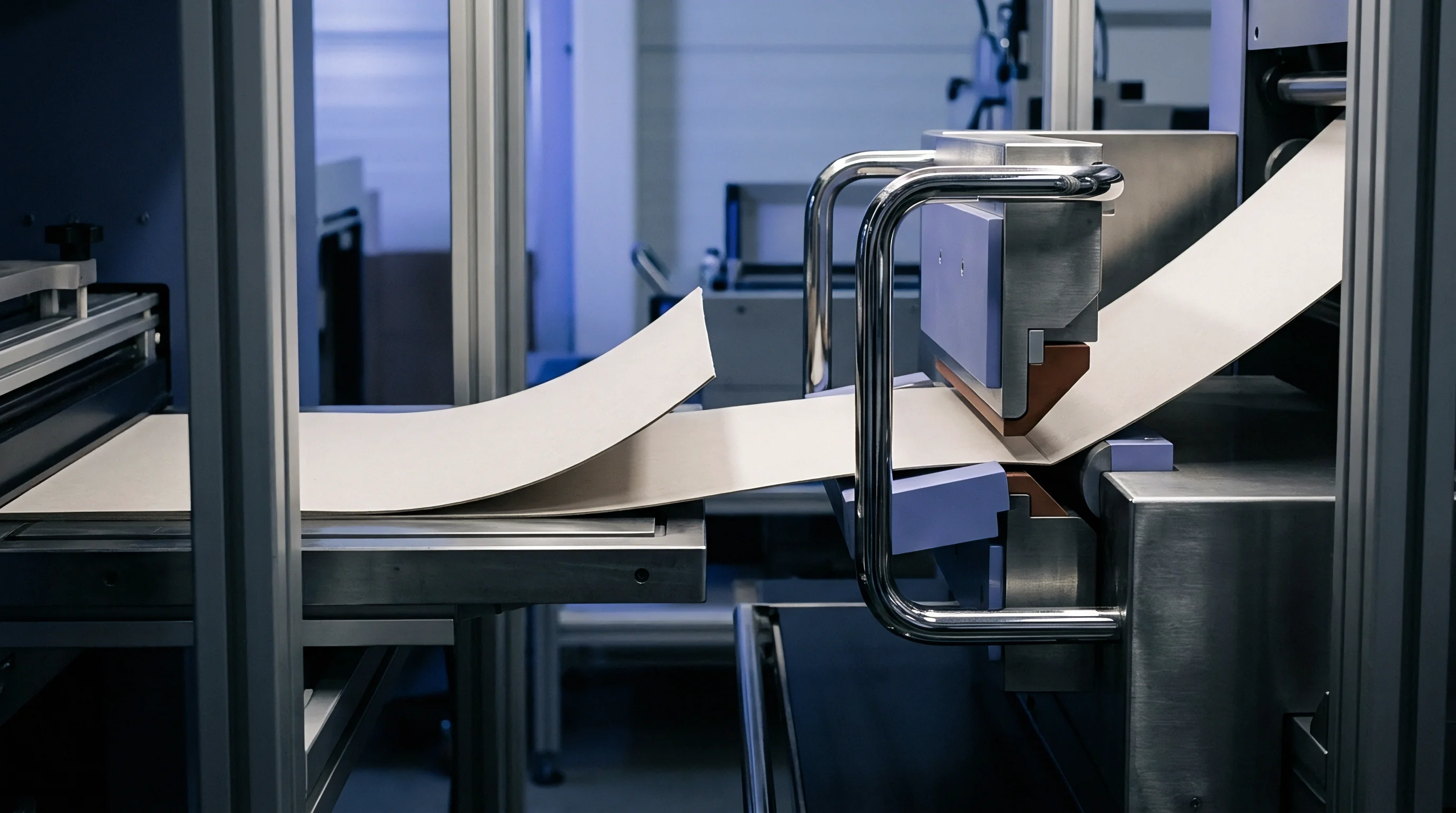
Master roll production on Fourdrinier or multi-ply cylinder board machines forms a continuous fibrous web bounded by wet-end deckle boards and water-jet edge cutters. Wet-end trim removal consumes between 25 mm and 40 mm per edge under standard ISO 187 atmospheric conditioning. This unformed edge zone displays lower basis weight, erratic caliper, and inconsistent fibre orientation compared to the central web area.
Paper machines slit this continuous web into standard parent reels using slitter knives positioned downstream of the drying cylinder bank, leaving a usable web width for carton sheet layouts equal to the net paper machine width minus primary edge trim scrap.
Paperboard web geometry dictates baseline material utilization in converting facilities. When a board machine with a 4,400 mm net web width produces rolls for a carton layout requiring 1,020 mm press sheet widths, four sheet lanes consume 4,080 mm of width. The remaining 320 mm becomes raw trim loss unless secondary sheet sizes absorb the residual width.
Trim waste equals unassigned web width divided by total machine deckle, expressed as a percentage ~ yielding 7.27 percent raw deckle waste in this layout before accounting for converting-floor slitting margins.
Paper machine wet-end trim removal consumes between 25 mm and 40 mm per edge under standard ISO 187 atmospheric conditioning.

Paperboard Web Geometry and Edge Losses
Primary roll slitting at the paper mill introduces secondary trim requirements, as slitter blades require a minimum edge trim allowance to prevent web tearing during high-speed rewinding operations. Standard mill slitting practices allocate 10 mm to 15 mm of edge scrap on outer reel positions, while high-grammage folding boxboard above 350 g/m² requires wider knife clearances to avoid edge micro-cracking and dusting. These physical slitting constraints reduce the effective reel width shipped to sheet converting plants.
Web width variance under 15 millimeters falls within standard paper machine operational drift and remains uncompensated.


Arrangement
Positioning folding carton blanks onto parent rolls requires rigid adherence to structural sheet direction. Aligning fibre orientation parallel to the primary carton crease prevents cracking on high-speed gluer lines. Because cross-direction creases undergo higher tensile stress during scoring, they require higher moisture content or wider creasing matrices.
Press sheet layout ultimately balances die imposition geometry against the fixed reel widths available from board mills.
Sheet Imposition and Grain Direction Requirements
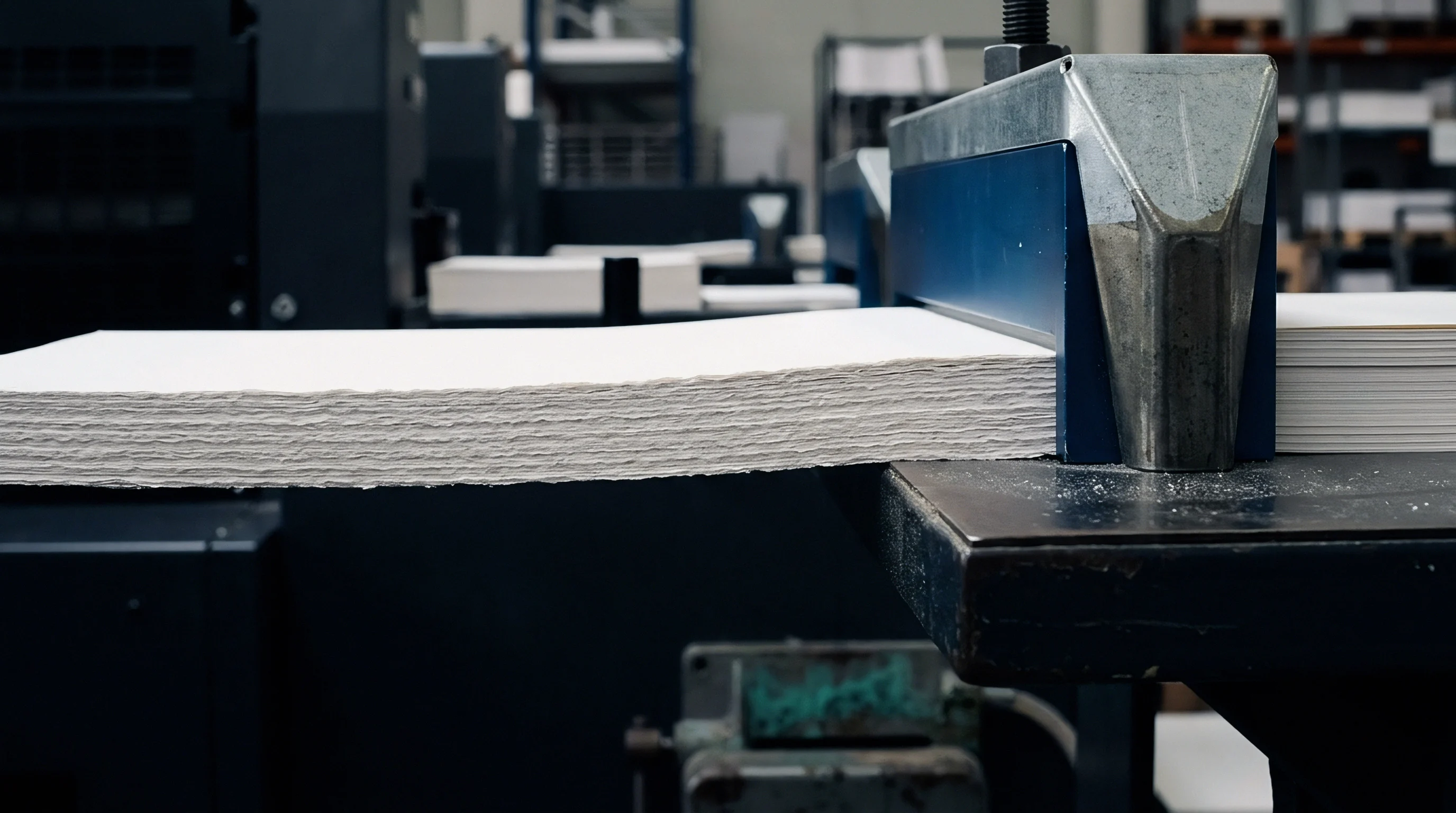
Carton dimensions establish fundamental press sheet geometry. For a folding carton with a flat die size of 310 mm by 480 mm, standard printing presses mandate a minimum 10 mm gripper margin along the leading edge and a 5 mm side-lay margin. Arranging six blanks per sheet yields a press sheet size of 640 mm by 1,000 mm, with the 1,000 mm dimension running parallel to the paperboard grain direction.
Matching this sheet layout to a paper machine web involves precise yield calculations. Assuming a virgin fibre folding boxboard mill operates a web width of 3,600 mm, planning evaluates potential roll width combinations to minimize side-trim waste.

Worked Calculation of Deckle Trim Efficiency
Evaluating parent roll options requires calculating total deckle fill across available sheet combinations. For a production order of 500,000 packaging units produced on 300 g/m² coated kraft back board, the primary press sheet measures 640 mm in the cross direction and 1,000 mm in the machine direction, with custom roll slitting supplied across the mill’s 3,600 mm paper machine deckle.
Option A evaluates running five identical 640 mm sheet lanes across the web. Multiplying 640 mm by five lanes yields 3,200 mm of usable web width. Subtracting 3,200 mm from the 3,600 mm deckle leaves 400 mm of unassigned trim scrap; dividing 400 mm by 3,600 mm gives a deckle trim loss ratio of 11.11 percent.
Option B introduces a secondary press sheet size of 380 mm in the cross direction from an existing inventory order. Combining five primary lanes at 640 mm with one secondary lane at 380 mm brings total web utilization to 3,580 mm. The remaining side trim scrap measures 20 mm, representing an edge slit allowance of 10 mm per side.
Subtracting 3,580 mm from 3,600 mm leaves 20 mm of net waste, which divided by 3,600 mm yields a deckle trim loss ratio of 0.56 percent.
Option B saves 380 mm of paperboard web width per revolution across the entire order volume. On a 40-tonne order of 300 g/m² board, this reduction in trim loss saves 4.22 tonnes of raw paperboard material. Aligning main carton creases parallel to the machine direction, however, takes precedence over minor geometric trim savings.


Combination
Linear cutting stock algorithms solve multi-order roll slitting configurations across fixed paper machine web widths. Sourcing desks enter multiple press sheet dimensions into dynamic deckle-matching software to identify optimal web combinations, reducing unassigned web waste below two percent across full production campaigns.

Linear Cutting Stock Algorithms for Web Combination
Planning multi-job layouts introduces strict operational constraints. Combining different sheet lengths on the same web roll width requires identical tonnage volumes or balanced sheet counts. When job volumes diverge, the shorter run finishes while the remaining web width continues running, creating off-cut sheet inventory.
Converting plants manage this limitation by establishing standard parent sheet sizes across major carton categories.
- Minimum reel width threshold sets the floor for custom mill slitting options without trigger sittings or off-deckle surcharges.
- Grammage matching constraint prevents combining orders manufactured from different board calipers or surface coating grades on one machine deckle.
- Delivery schedule alignment restricts combining urgent carton production runs with long lead time stock inventory sheets.
- Fibre orientation verification ensures every combined sheet position maintains correct stiffness across automated carton packaging lines.

How Does Web Width Selection Shift Unit Surcharges?
Paperboard mills establish pricing structures based on machine deckle fill efficiency. When customer orders fail to utilize ninety-five percent of the net web width, mills apply off-deckle surcharges to recover lost papermaking capacity. Ordering custom reel widths that leave unassigned scrap forces converters to pay for wasted trim tonnage at full paperboard market rates.
| Web Combination Strategy | Usable Width (mm) | Trim Waste Width (mm) | Deckle Loss Ratio (%) | Mill Surcharge ($/Tonne) |
|---|---|---|---|---|
| Single Sheet Layout (4 x 820 mm) | 3,280 | 320 | 8.89 | 65.00 |
| Single Sheet Layout (5 x 680 mm) | 3,400 | 200 | 5.56 | 25.00 |
| Combined Dual Layout (3 x 820 mm + 2 x 540 mm) | 3,540 | 60 | 1.67 | 0.00 |
| Optimized Multi Layout (4 x 680 mm + 2 x 435 mm) | 3,590 | 10 | 0.28 | 0.00 |
Standard packaging procurement contracts stipulate a five percent volume surcharge when ordered sheet combinations force web utilization below ninety-four percent.
Clause 8.4 in European board trade customs shifts all off-deckle trim charges directly to the buyer when custom reel widths deviate from standard machine program matrices.


Shrinkage
Dynamic dimensional changes in the paperboard web modify physical trim calculations during sheeting and converting operations. Paperboard absorbs and releases moisture in response to ambient press room relative humidity, altering sheet dimensions in both machine and cross directions. Standard conditioning under ISO 187 specifies 23 degrees Celsius and 50 percent relative humidity; deviations alter physical sheet margins during precision edge slitting.

Hygral Expansion and Web Width Drift
Cross-direction hygral expansion in paperboard exceeds machine-direction movement by four to one. Recycled board grades containing short hardwood and secondary fibres show greater moisture sensitivity than virgin softwood bleached board grades. A 1.2-meter wide roll of 400 µm recycled chipboard expands by up to 4.8 mm across the web when exposed to 68 percent ambient relative humidity.
- Cross-direction profile drift causes variable edge slitting positions across the web span during continuous web sheeting runs.
- Moisture absorption under storage expands sheet width by up to 0.4 percent prior to precision die-cutting operations.
- Slitter blade dulling creates micro-cracks that force wider trim margins on high-caliper coated recycled board grades.
- Web tension variations stretch the paperboard longitudinally while contracting cross-machine width during high-speed web rewinding.

Converting Sheeter Trim Allowances
Sheeting parent rolls into press-ready flat sheets introduces an additional layer of process trim loss. High-speed rotary sheeters edge-trim both sides of the web to guarantee sheet squareness and clean edges for offset press grippers.
- Measure incoming reel width at three points along the outer wrapper before web loading.
- Record relative humidity levels inside the press room prior to sheeting operations.
- Adjust outer knife positions to maintain a minimum 8 mm trim strip on both web edges.
- Weigh collected trim waste separately from die-cutting matrix scrap to isolate sheeting losses.
Maintaining consistent warehouse relative humidity prevents edge expansion that distorts calculated trim ratios.
Whether dynamic moisture pick-up during high-speed roll sheeting can be compensated through automated knife alignment remains an open question on modern converting lines.

Yield
Calculating the true commercial cost of deckle trim loss requires tracking raw material costs, scrap resales, and press efficiency metrics. Paperboard purchased by the metric tonne transforms into folding cartons sold by the thousand units, meaning financial ledgers must balance raw reel input tonnage against finished output tonnage while accounting for web, sheeting, and die-cutting trim scrap losses.

Financial Metrics for Trim Waste Allocation
Direct paperboard purchasing costs reflect both raw sheet area and unassigned deckle scrap. When converting plants purchase custom reel widths from mills, unassigned web waste represents direct material failure unless repulped or resold to recycling networks. Because re-pulping yields minimal returns per kilogram, calculating net landed sheet cost requires integrating raw reel purchase prices, freight fees, and trim scrap credits.
| Cost Component | Option A: Custom Reel (8.89% Trim Loss) | Option B: Optimized Reel (0.28% Trim Loss) | Option C: Mill-Cut Sheet Delivery |
|---|---|---|---|
| Base Tonnage Ordered (Tonnes) | 45.20 | 41.30 | 41.18 |
| Raw Material Price ($/Tonne) | 1,200.00 | 1,200.00 | 1,340.00 |
| Mill Off-Deckle Surcharge ($) | 2,938.00 | 0.00 | 0.00 |
| Gross Material Purchase Cost ($) | 57,178.00 | 49,560.00 | 55,181.20 |
| In-House Sheeting Cost ($) | 1,356.00 | 1,239.00 | 0.00 |
| Trim Scrap Credit Realized ($) | -1,084.80 | -37.17 | 0.00 |
| Net Landed Order Cost ($) | 57,449.20 | 50,761.83 | 55,181.20 |
| Net Cost per 1,000 Cartons ($) | 114.90 | 101.52 | 110.36 |

Re-Pulping Credit Mechanics and Net Landed Cost
Baled edge-trim waste generates secondary revenue that partially offsets initial raw material expenditure. Converting plants bundle clean, unprinted edge-trim scrap from rotary sheeters into high-density bales for resale to paper mills. Unprinted solid bleached board trim commands higher repulped fibre value than clay-coated recycled chipboard scrap.
Baled board trim waste returns under thirty percent of its original purchase price when resold to recycled paper mills.
Failing to account for cumulative deckle trim loss across production runs inflates raw material expenditure and erodes projected gross margins on folding carton contracts.