Compensating Foil Stamping Tooling Files for Board Moisture Loss
Pre-press vector files for hot foil stamping require non-proportional scaling to offset paperboard moisture loss and thermal die growth.


Swell

Cellulose Fiber Hygroexpansivity Mechanics
Bound moisture within paperboard resides inside the amorphous regions of wood fibers and within the inter-fiber hydrogen bond network. When ambient relative humidity alters or when elevated thermal energy contacts the sheet during converting operations, this moisture content shifts. This moisture content shifts.
Wood pulp fibers exhibit anisotropic dimensional behavior. Individual fibers expand and shrink significantly more in diameter than in length. In a manufactured sheet of paperboard, the majority of fibers align along the machine direction during wet-end formation on the Fourdrinier or multi-ply former wire.
Dimensional instability concentrates across the width of the web. Cross-direction movement exceeds machine-direction movement by factors ranging from two to four. When a paperboard sheet heats during stamping, water molecules escape from the fiber matrix.
The loss of bound water shrinks the individual fiber diameters, pulling the entire sheet inward across its dimensions. Uncoated solid bleached sulfate demonstrates different hygroexpansive strain coefficients than multi-ply folding boxboard, where mechanical pulp layers maintain alternative moisture retention profiles.
Sheet movement in the cross-direction across heated platens routinely doubles the dimensional contraction observed along the machine-direction.
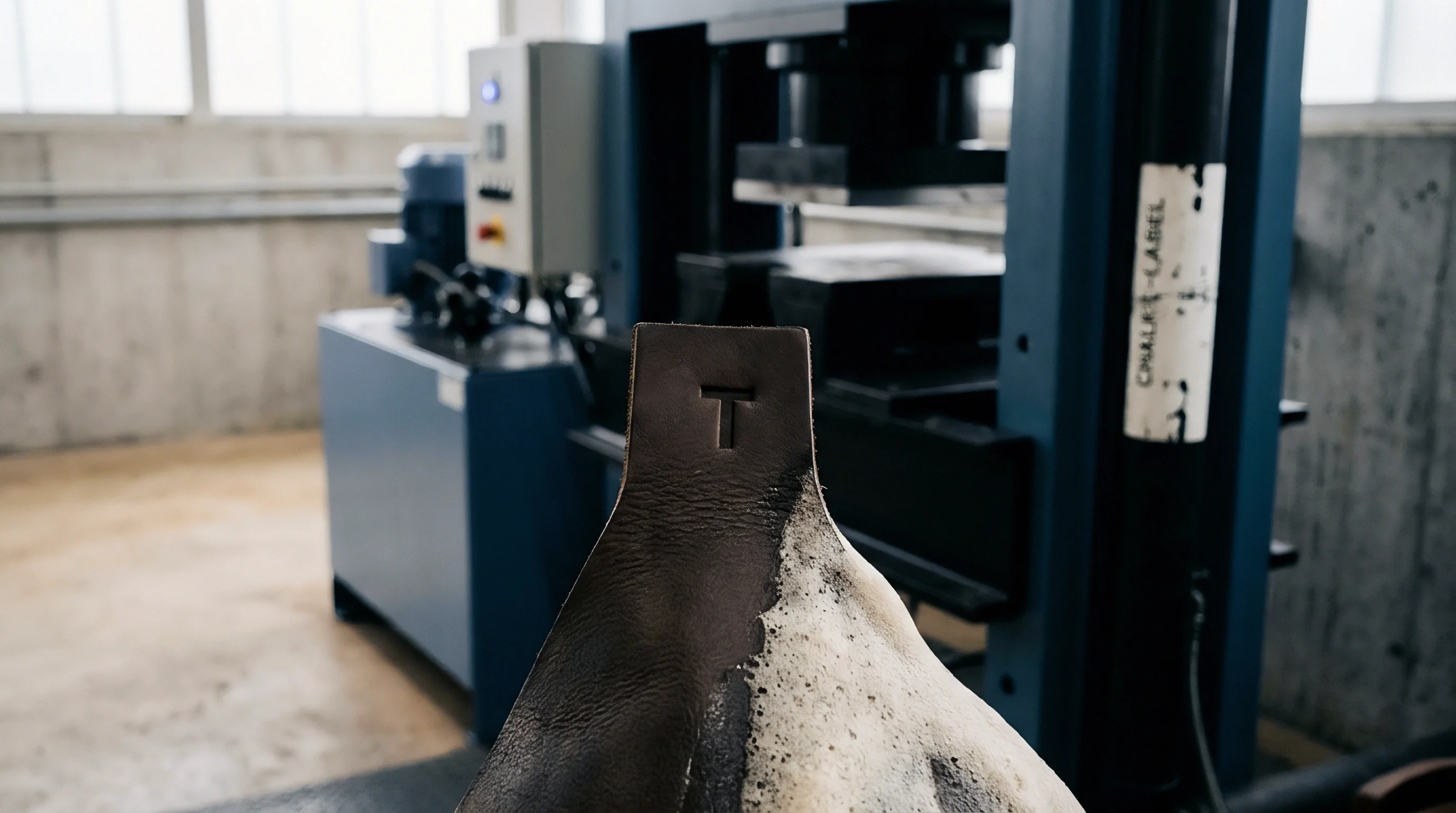
Anisotropic Shrinkage Ratios across Grain Directions
Internal strain built into the board web during drying on the paper machine releases when thermal energy breaks hydrogen bonds. Machine-direction orientation resists contraction because fiber length remains largely stable during moisture desorption. Grain direction locks vertical length.
Cross-direction orientation lacks this structural lock. Diameter reduction across millions of aligned fibers compounds across a one-thousand-millimeter sheet width, creating measurable misregistration on large-format die presses.
Equilibrium moisture content determines the initial dimensions of the raw stock. Standard converting environments maintain relative humidity between forty-five and fifty-five percent, yielding a sheet moisture content of six to seven percent by weight. Moisture loss alters sheet boundaries.
Stamping presses running at high temperatures drive surface moisture below three percent within milliseconds of impression dwell. The resulting physical shrink creates a geometric mismatch between the cold pre-press vector layout and the hot sheet surface. Grain direction alignment remains the primary defense against non-linear cross-sheet registration drift.

Contraction

Moisture Vaporization under Heated Dwell
Thermal contact between a heated metal die and paperboard vaporizes free and bound water within the contact zone. Heat transfers instantly through the clay coating into the cellulose core during a stamp cycle lasting eighty to one hundred fifty milliseconds. Surface temperatures at the platen reach one hundred ten to one hundred thirty-five degrees Celsius.
Water turns to steam, escaping through the edges of the sheet and through the porous unprinted back side.
Rapid desorption causes immediate structural shrinkage. Dwell times dictate shrinkage depth. The loss of one percentage point of moisture content in solid bleached board generates dimensional contraction ranging from zero point zero five percent to zero point fifteen percent along the cross-direction.
On a seven-hundred-by-one-thousand-millimeter sheet, this dimensional shift equates to more than one millimeter of cumulative movement at the outer perimeter blanks. Laser displacement sensors positioned along press feed beds reveal that contraction occurs non-linearly, accelerating as sheet temperature climbs past eighty degrees Celsius.
A one percent drop in paperboard moisture content at one hundred twenty degrees Celsius produces up to zero point four millimeters of cross-direction dimensional shrinkage across a one-thousand-millimeter sheet.
Gravimetric testing per ISO 287 confirms the rapid moisture gradient drop between untouched raw stock and stamped sheets taken directly from the press delivery pile. Substrates containing high proportions of recycled fiber exhibit elevated hygroexpansive strain due to damaged, short-fiber networks that hold water loosely. Folding boxboard with thermo-mechanical pulp centers retains moisture longer, delaying contraction until the second or third pass through heated tooling.

Optical Measurement of Sheet Distortion
High-resolution non-contact video gauge systems record dimensional shifts across printed registration marks before and after heated passes. Paperboard contracts non-linearly across platens. The measured movement yields specific contraction coefficients for individual board grades under fixed press parameters.
These empirical figures replace theoretical estimates when preparing complex multi-up packaging dies.
| Substrate Grade | Standard Moisture Range (%) | CD Shrinkage per 1% Moisture Loss (%) | MD Shrinkage per 1% Moisture Loss (%) | Net CD Offset over 1000mm (mm) |
|---|---|---|---|---|
| Solid Bleached Sulfate (SBS) | 6.0 – 6.5 | 0.08 – 0.12 | 0.02 – 0.04 | 0.80 – 1.20 |
| Folding Boxboard (FBB) | 6.5 – 7.5 | 0.10 – 0.15 | 0.03 – 0.05 | 1.00 – 1.50 |
| Coated Recycled Board (CRB) | 5.5 – 6.5 | 0.14 – 0.18 | 0.04 – 0.07 | 1.40 – 1.80 |
| Uncoated Kraftboard (SUB) | 7.0 – 8.0 | 0.06 – 0.10 | 0.01 – 0.03 | 0.60 – 1.00 |
Die engravers frequently attribute multi-pass register errors to ambient pressroom humidity rather than uncompensated vector artwork files.


Allowance

Tooling Vector Scaling Formulas
Pre-press file preparation requires mathematically scaling vector graphic elements prior to sending artwork to die engravers. The vector compensation calculation combines board hygroexpansive contraction with the thermal expansion of the metal tooling. Metal stamping dies expand when heated to operating temperatures, expanding outward from the die center point.
Brass dies expand at nineteen parts per million per degree Celsius. Copper expands slower.
Calculating net vector compensation demands balancing board shrinkage against metal die growth. Tooling growth offsets board contraction. Matrix scaling requires precise measurements.
When board contracts by zero point twelve percent across the cross-direction and a brass die expands by zero point two zero percent at one hundred thirty degrees Celsius, the two physical movements partially offset each other along specific axes. The mathematical net scaling factor applies non-proportionally to the x-axis and y-axis within CAD prepress applications.
ISO 12647 compliant proofing requires vector compensation files to reflect heat-induced substrate shrinkage prior to hard tooling fabrication.

Which Vector Scaling Algorithm Prevents Multi-Pass Foil Misregistration?
Linear differential axis scaling modifies vector artwork through dedicated transformation matrix equations. The scaling algorithm anchors the artwork at the optical center of the sheet imposition grid, calculating radial displacement vectors for every package blank across the gang layout. Outer positions receive maximum geometric distortion corrections, while central positions undergo minimal displacement.
| Die Tooling Alloy | Thermal Expansion Coefficient (1/K) | Die Expansion over 700mm at 130°C (mm) | Board Shrinkage over 700mm at 0.12% (mm) | Net Required Vector Compensation (mm) |
|---|---|---|---|---|
| Engravers Brass | 19.0 x 10^-6 | +1.396 | -0.840 | +0.556 |
| Deoxidized Copper | 16.5 x 10^-6 | +1.212 | -0.840 | +0.372 |
| Magnesium Alloy | 26.0 x 10^-6 | +1.911 | -0.840 | +1.071 |
| Tool Steel Base | 11.5 x 10^-6 | +0.845 | -0.840 | +0.005 |
| Calculations assume baseline ambient tooling temperature of 25°C and uniform board moisture loss of 1.0% across CD dimension. | ||||
Establishing accurate artwork scaling values requires an execution sequence before finalizing tooling files:
- Substrate Baseline Measurement determine raw sheet moisture content using gravimetric drying or calibrated RF probes under climate-controlled storage conditions.
- Thermal Expansion Calculation compute anticipated die growth using the thermal expansion coefficient of the selected alloy at target press temperature.
- Pilot Press Pass Execution run un-foiled sheets through a heated press pass to measure physical cross-direction and machine-direction sheet contraction under actual dwell conditions.
- Matrix Scale Derivative Computation subtract measured board contraction from calculated die thermal growth to isolate net directional offset percentages.
- Vector Transformation Application apply discrete x-axis and y-axis scaling percentages to vector artwork in CAD software using sheet center origin constraints.
Applying uniform scale factors across both axes distorts square carton geometry into non-orthogonal shapes. Differential scaling accounts for the aspect ratio of board movement, preserving right-angle scores and precise bleed alignments on multi-pack carton layouts across entire sheet formats.

Presswork
Platen Temperature and Moisture Release Rates
Operating hot stamping equipment demands rigorous thermal management across the plate surface. Platen heaters transfer heat through honeycomb chasing systems to the die bases. Uneven heat distribution across the die plate creates localized moisture loss spikes on the paperboard sheet, causing localized register drift across specific packaging blanks.
Temperature variations across large-format platens often exceed ten degrees Celsius, driving uneven dimensional contraction.
Dwell time adjustments alter moisture release curves significantly. High-speed automatic platens operating at six thousand sheets per hour yield contact dwell times below one hundred milliseconds. Short contact limits moisture vaporization.
Surface heat drives water off. Slow cylinder presses operating at fifteen hundred sheets per hour expose sheets to heat for several hundred milliseconds, driving moisture out of the inner core plies and maximizing dimensional shrinkage across both sheet axes.
Platen heat penetrates the board matrix unevenly during short dwell cycles, concentrating moisture loss on the top surface.
Make-Ready Temperature Stabilization Routines
Uncompensated file geometry creates severe visual defects when run on high-speed foil stamping machinery:
- Foil Trap Misalignment stamped foil images shift off target ink traps, exposing raw board borders along fine lines and detailed typography.
- Embossing Crest Shearing secondary register embossing passes strike off-center from foil elements, tearing the foil film structure and crushing board fibers.
- Crease Score Distortion packaging blank boundaries drift relative to die-cutting rules, causing folding carton panels to assemble out of square.
- Multi-Pass Accumulation Error consecutive stamping passes compound positional offset, rendering outer layout positions completely unusable during final converting steps.
Controlling make-ready conditions minimizes unpredicted dimensional variance during long production runs:
- Pre-condition sheet pallets in the pressroom environment for forty-eight hours to stabilize core board moisture content.
- Thermalize the press chase and die plate at target operating temperature for sixty minutes prior to finalizing sheet registration.
- Measure sheet contraction on initial make-ready pulls using digital calipers across outer target marks.
- Adjust platen heat zones independently to equalize surface thermal delivery across machine-direction channels.
- Maintain consistent running speed without frequent press stops to prevent thermal soaking of sheets held in the impression zone.
Whether real-time inline optical measuring systems can adjust platen heat dynamically to offset real-time board moisture loss remains an open question on modern converting lines.
Ledger

Financial Impact of Uncompensated Vector Artwork
Tooling investments represent substantial upfront expenditure on high-end printed packaging runs. A complex multi-up brass CNC engraving set for a seven-hundred-by-one-thousand-millimeter sheet format costs several thousand dollars. When vector files ignore substrate shrinkage and die expansion, misregistration invalidates the tooling.
Scrapping an incorrect die set incurs direct replacement expense while delaying press schedules and losing machine availability.
Production spoilage adds continuous operational cost across the run length. Running uncompensated tooling on board with heavy moisture shrinkage forces press operators to split registration errors, centering the drift to make middle blanks acceptable while spoiling outer blanks. Scrap rates rise from a baseline of one point five percent up to eight percent or higher on multi-pass packaging jobs.
On a fifty-thousand-sheet production run of folding cartons, elevated scrap destroys job profitability.
| Cost Parameter | Uncompensated Vector Artwork Run | Compensated Vector Tooling File Run | Net Commercial Variance |
|---|---|---|---|
| Initial Die Fabrication Cost | $3,800 | $4,100 | +$300 (Prepress File Setup) |
| Make-Ready Sheet Spoilage | 1,200 sheets | 350 sheets | -850 sheets saved |
| Running Production Scrap Rate | 5.2% | 1.1% | -4.1% net scrap reduction |
| Die Remake Risk Expense | $3,800 (100% replacement cost) | $0 (First-pass fit verified) | -$3,800 avoided loss |
| Net Unit Cost per 1,000 Cartons | $142.50 | $118.20 | -$24.30 savings per 1k units |
Tooling Procurement Terms and Registration Guarantees
Procurement contracts assign explicit technical responsibilities between brand buyers, packaging converters, and die engravers. Standard purchase orders that specify graphic dimensions without defining compensation factors leave converters vulnerable to remaking dies at their own expense. Modern tooling agreements include clear technical metrics governing dimensional accuracy.
Verifying pre-press file scaling requires structured sign-off protocols prior to metal cutting:
- Substrate Data Sheet Approval confirm certified board moisture ranges and thermal expansion factors with the supplying paper mill.
- Pre-Press Compensation Dossier archive vector modification formulas, axis scale factors, and press temperature assumptions in job tickets.
- First-Off Sheet Verification inspect initial stamped press sheets under optical grid comparators before releasing full production runs.
- Tooling Warranty Conditions stipulate die remake obligations when tooling dimensions deviate from approved compensated CAD geometry.
Ignoring substrate dimensional physics when authoring tooling files guarantees permanent registration failure across large sheet formats, driving up unit costs and destroying job margins through unnecessary material waste.