Recycled Containerboard Compression Failure under Ambient Moisture Cycling
Recycled containerboard loses up to sixty percent of compression strength under moisture cycling due to mechanosorptive creep in shortened secondary fibers.
Fiber
Recycled containerboard relies on secondary pulp streams that undergo physical degradation during successive repulping cycles. Processing old corrugated containers introduces a distribution of shortened wood elements, residual contaminants, and damaged lumen structures into the paper machine headbox. Basis weight uniformity, expressed in grams per square meter via ISO 536 testing, masks microstructural variations across the sheet web.
Virgin kraftliner features intact softwood tracheids measuring 2.5 to 3.5 millimeters in length. Recycled furnish exhibits average fiber lengths below 1.5 millimeters due to mechanical shearing in hydrapulpers and refiners.
Fibre shortening alters the load-bearing capacity of linerboard and fluting mediums under static compression. Short elements offer fewer inter-fiber hydrogen bonding sites per unit mass. Bonding density drops across the sheet volume.
Initial short span compression test values, measured according to ISO 9895 at 23 degrees Celsius and 50 percent relative humidity, drop by 15 to 25 percent when shifting from unbleached kraftliner to 100 percent recycled testliner of identical grammage.
Recycled Furnish Architecture and Mechanical Properties
Paper machine drainage and press section operations dictate structural formation in secondary board production. Multi-ply web formers deposit separate furnish layers to place cleaner, longer fibers on outer surfaces while concentrating low-cost recycled screenings in internal core zones. Internal bond strength, evaluated using TAPPI T 569 energy-to-rupture methods, reveals weakness within these inner plies.
Short fibers slip during swell. Lower z-direction strength permits micro-delamination when vertical compression forces push against the container wall.
Cellulose polymers within recycled stock hold higher crystalline fractions than virgin pulp. Mechanical refining opens fiber walls, increasing specific surface area from 1.5 square meters per gram to over 4.0 square meters per gram. Excessive refining damages structural walls, creating fine particles that block drainage on the wire.
Paper machine wet ends require retention aids to trap these fines within the sheet matrix. Trapped fines increase sheet density but fail to add continuous tensile network capacity.
Repeated repulping strips natural hemicellulose fractions from the cell wall while shortening the average length of secondary furnish streams.
Fibrillar Hornification during Repeated Drying Cycles
Drying paper under tension forces cellulosic pores to collapse permanently as internal water evaporates. Hornification seals microscopic voids within the cell wall matrix during the initial papermaking run. Microfibrils pull together, forming irreversible hydrogen bonds that restrict swelling during subsequent wet processing.
Recycled pulp lose flexural elasticity, turning brittle under structural strain.
Unbleached kraft fibers absorb up to 1.2 grams of water per gram of dry pulp at saturation. Hornified recycled fibers retain less than 0.7 grams of water per gram of dry pulp under identical immersion protocols. Restricted water intake alters hygroexpansivity across machine and cross directions.
Cross-direction expansion coefficient for recycled containerboard reaches 0.025 percent per percent change in moisture content. High dimensional movement under changing humidity accelerates stress accumulation at the corrugated flute tips.
Mills attribute compression losses during high-humidity transit to unconditioned warehouse storage at destination ports rather than structural degradation of secondary furnish.
Sorption
Water molecules enter the cellulosic matrix by breaking hydrogen bonds between neighboring polymer chains. Amorphous cellulose regions contain free hydroxyl groups that attract ambient moisture vapor. Ingress rates depend on atmospheric relative humidity, temperature gradients, and internal sizing efficiency.
ISO 535 Cobb tests quantify liquid water absorption over 60 seconds, yet vapor diffusion operates through separate sorption mechanisms independent of surface liquid repellency.
Cellulose equilibrium moisture content tracks ambient relative humidity along a non-linear sigmoidal isotherm. At 50 percent relative humidity, containerboard holds 6 to 8 percent moisture by mass. Raising relative humidity to 90 percent increases sheet moisture to 14 or 16 percent.
Moisture weakens internal bonds. Absorbed water acts as a plasticizer, lowering the glass transition temperature of amorphous hemicellulose components from 80 degrees Celsius down to ambient room temperatures.
Hygral Expansion and Matrix Degradation
Dimensional swelling occurs unequally along sheet structural axes. Thickness expands by 10 to 18 percent during moisture sorption from 50 to 90 percent relative humidity. Machine direction expansion remains under 0.5 percent due to fiber alignment along the web direction.
Cross-direction movement reaches 2 to 3 percent, generating differential shear stresses between facing liners and the corrugated fluting medium. Sheet density alters water transport.
Sorption hysteresis causes containerboard to retain higher moisture levels during desorption phases than during adsorption phases at identical relative humidity values. Board desorbing from 90 percent relative humidity back to 70 percent holds 1.5 percent more water than board adsorbing upward to 70 percent. Higher moisture retention depresses elastic modulus values during environmental drying cycles.
Structural recovery remains incomplete when ambient humidity returns to baseline states.
| Grade Designation | Furnish Composition | Grammage (g/m²) | Cobb60 Water Absorption (g/m²) | SCT Retained at 50% RH (kN/m) | SCT Retained at 90% RH (kN/m) |
|---|---|---|---|---|---|
| Kraftliner K175 | 100% Unbleached Virgin Kraft | 175 | 28 | 3.85 | 2.10 |
| Testliner T175 | 100% Recycled Secondary Fiber | 175 | 35 | 3.10 | 1.25 |
| Semi-Chem Medium S127 | 80% Virgin Hardwood / 20% Recycled | 127 | 42 | 2.45 | 1.30 |
| Recycled Medium R127 | 100% Recycled Mixed Paper | 127 | 48 | 1.95 | 0.85 |
| Data measured under ISO 187 conditioning protocols; SCT values conducted per ISO 9895. | |||||

Mechanosorptive Creep Dynamics in Recycled Linerboard
Transient moisture cycles accelerate mechanical deformation beyond static high-humidity creep rates. Mechanosorptive creep occurs exclusively while water molecules move through the fiber network under active load. Static loading at 90 percent relative humidity produces predictable viscoelastic deformation over time.
Cycling humidity between 50 percent and 90 percent under identical static loads causes rapid cumulative strain expansion, leading to early structural collapse.
Molecular slippage explains mechanosorptive strain accumulation. As moisture enters the sheet, transient breaking and reforming of hydrogen bonds allows cellulose microfibrils to shift position under applied compressive loads. Moisture swings drive load loss.
When humidity drops, new hydrogen bonds lock the shifted microfibrils into strained positions. Repeated cycling accumulates permanent plastic deformation until the structural wall buckles.
Microstructural degradation pathways operate simultaneously during transient humidity events across supply chain routes:
- Hydrogen Bond Hydrolysis weakens cell-wall contact area as absorbed moisture breaks intermolecular links.
- Intra-Fiber Lamellar Shearing slides internal cell wall layers against each other under applied compressive forces.
- Cross-Direction Differential Swelling distorts corrugated flute geometry and strains starch adhesive lines.
- Hemicellulose Plasticization lowers matrix yield stress, permitting permanent structural deformation at low loads.
Whether chemical cross-linking agents can arrest hydrogen bond slipping during rapid humidity shifts without destroying sheet recyclability remains an open technical challenge.

Rupture
Compression collapse in corrugated shipping containers occurs when structural fluting fails under continuous vertical loading. Palletized boxes experience continuous dead-weight loads from upper tiers throughout shipping cycles. Static strength calculations based on box compression test (BCT) formulas like McKee’s equation overestimate field performance under ambient humidity fluctuations.
McKee calculations rely on edge crush test (ECT) values and bending stiffness measured under static laboratory atmospheres.
Edge crush test values drop rapidly when moisture cycles across containerboard profiles. ISO 3037 ECT evaluations show that a 100 percent recycled flute structure loses 45 percent of its initial compressive strength after three relative humidity cycles between 50 and 85 percent. Virgin kraft combinations retain 68 percent under matching cycling regimes.
Shortened secondary fibers accelerate localized wall buckling under load.
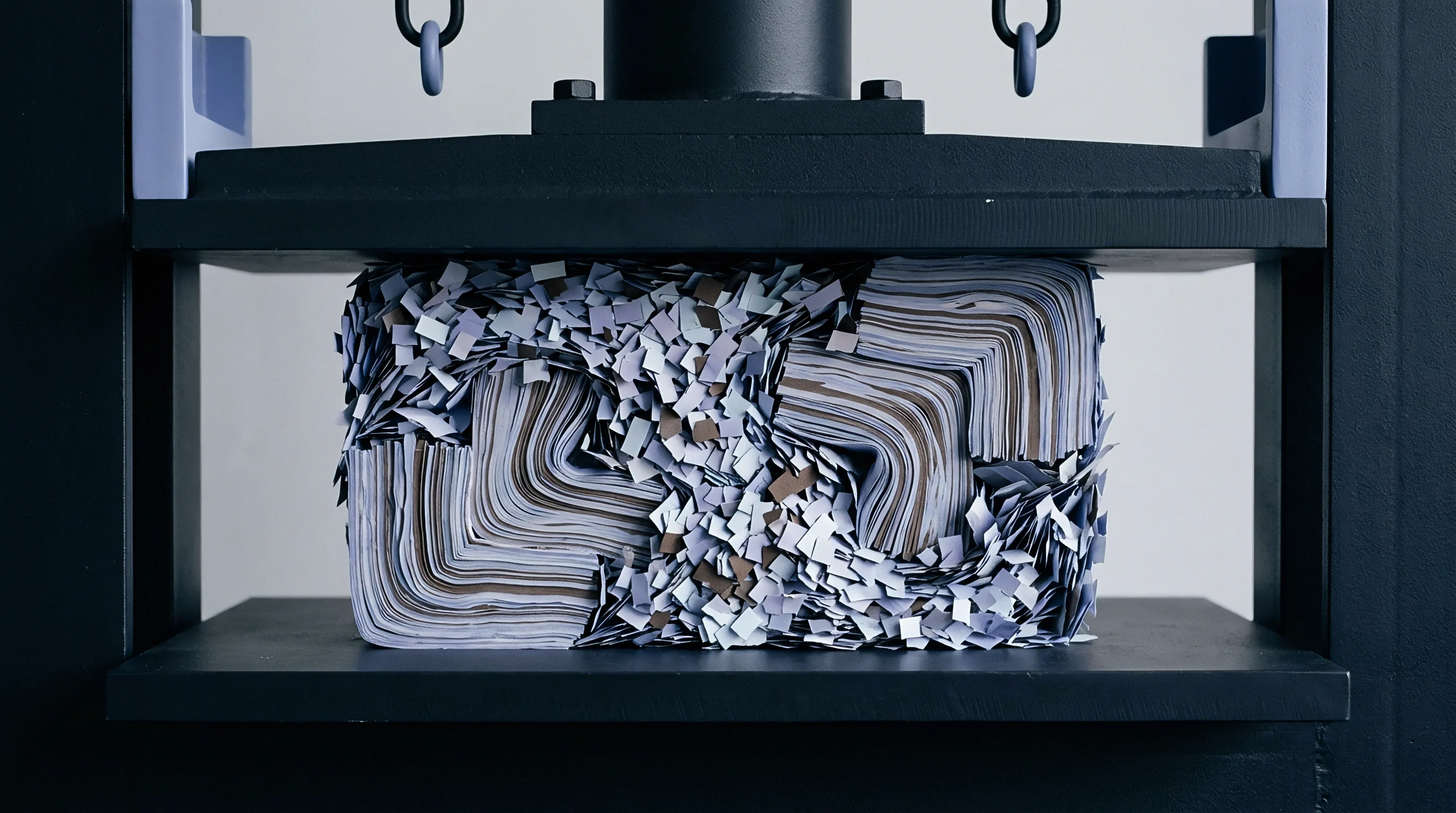
Flute Buckling under Transient Moisture Gradients
Flute profile geometry dictates vertical load distribution across corrugated board thicknesses. C-flute configurations feature flute heights of 3.6 millimeters, whereas B-flute structures hold 2.5 millimeters. Under moisture sorption, outer facing liners expand faster than internal fluting mediums.
This differential movement forces the flute tips to rotate against the liner surface, introducing eccentric loading into vertical flute walls.
Eccentric loads induce localized shear failure along the glue line. Starch adhesive bonds soften when local moisture content exceeds 15 percent by weight. Softened adhesive permits the fluting medium to tip laterally under vertical load, triggering catastrophic structural collapse of the package wall long before reaching maximum material tensile strength limits.
| RH Cycling Frequency (50% to 85% RH) | Testliner / Recycled Medium BCT Retention (% Initial) | Kraftliner / Semi-Chem Medium BCT Retention (% Initial) | Creep Accumulation Rate (microstrain/cycle) |
|---|---|---|---|
| Static 50% RH (Baseline) | 100 | 100 | 12 |
| Static 85% RH (Baseline) | 62 | 74 | 85 |
| 24-Hour Cycle (12h High / 12h Low) | 41 | 58 | 340 |
| 12-Hour Cycle (6h High / 6h Low) | 35 | 52 | 510 |
| 6-Hour Cycle (3h High / 3h Low) | 28 | 46 | 780 |
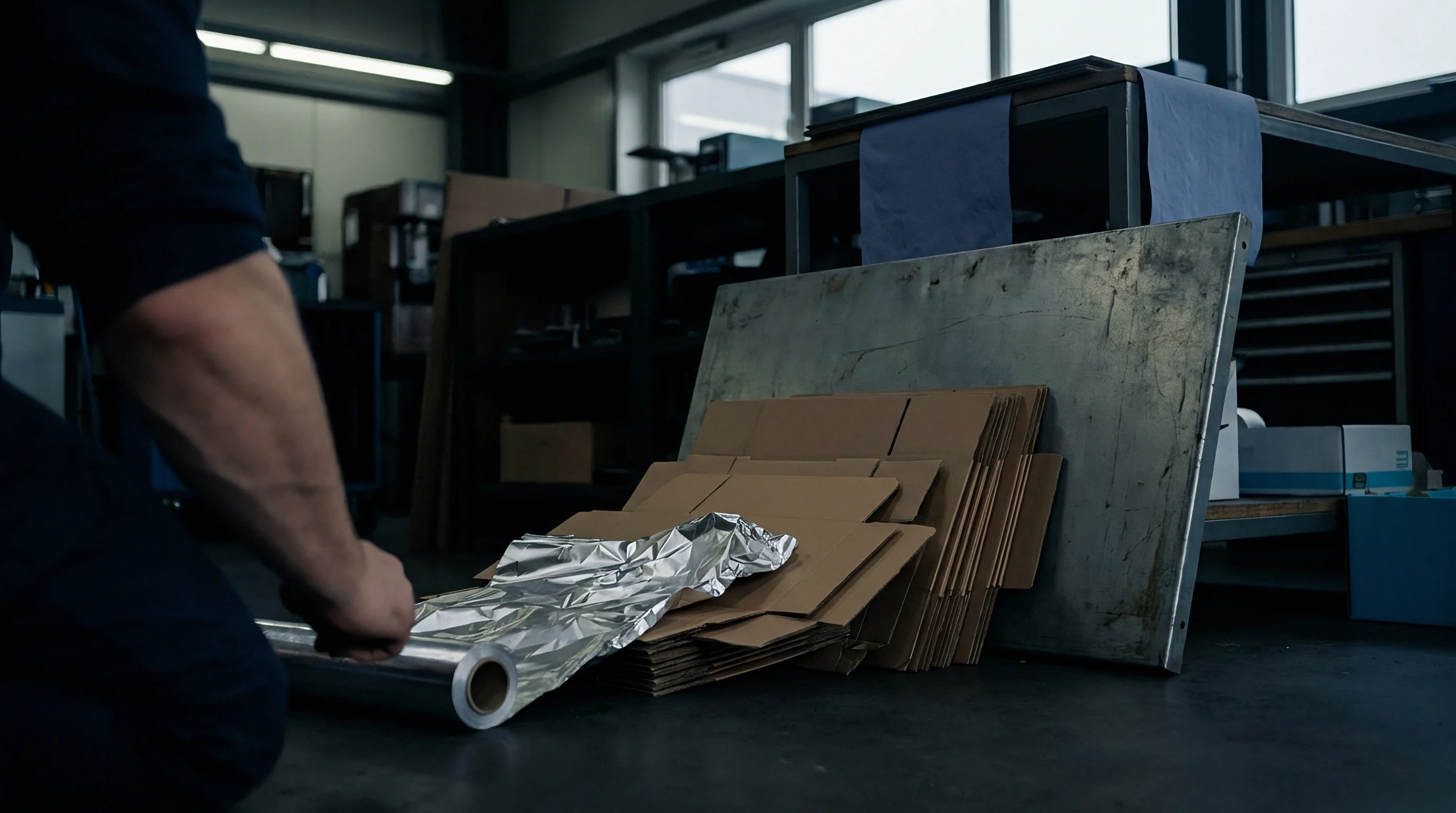
Creep Accumulation Rate across Humidity Frequencies
Short humidity cycles inflict greater mechanosorptive damage per unit time than long cycles. Rapid atmospheric transitions create steep internal moisture gradients across sheet thicknesses. Outer surfaces absorb vapor while inner cores remain dry.
Tensile and compressive stress states flip continuously between inner and outer fiber plies, driving rapid strain accumulation.
Recycled furnish degrades faster. Creep rates multiply under cycle. Accumulated strain weakens container walls, reducing top-to-bottom load resistance.
Box walls strain outwards, bulging by 5 to 12 millimeters per side before vertical crease lines crease and fail completely.
Thicker facings delay moisture penetration to the inner fluting but cannot prevent mechanosorptive structural decay during multi-day transit loops.
Converting practices and corrugator settings alter containerboard performance under active moisture cycling:
- Excessive Caliper Crushing during flexographic printing crushes flute tips, accelerating mechanosorptive creep under vertical loads.
- Sub-Optimal Starch Gelatinization leaves un-gelatinized starch solids that dissolve rapidly under high ambient relative humidity exposure.
- Deep Scoreline Fracturing ruptures outer liner fibers, allowing ambient moisture vapor direct entry into internal flute structures.
- Non-Uniform Web Tensioning creates latent internal stresses that warp panels as board moisture equilibrates during transit.
Underestimating cyclic moisture degradation leads directly to catastrophic stack collapse in refrigerated logistics, generating full shipment rejections and freight liability claims.

Bench
Laboratory evaluation of containerboard strength traditionally uses static conditioning protocols defined under ISO 187 standard atmospheres. Standard protocol holds paper samples at 23 degrees Celsius and 50 percent relative humidity for a minimum of 24 hours prior to testing. Static conditioning provides reproducible benchmark values for quality control audits but fails to replicate distribution environments where ambient humidity cycles between cold storage and tropical road transit.
Static short span compression tests (SCT) measure ultimate force per unit width required to crush a 0.7-millimeter long paper strip. ISO 9895 specifies a clamp gap of 0.7 millimeters to prevent sample buckling during compression loading. Short-gap testing isolates material compressive strength from geometric instability.
Standard static tests hide decay. Testing paper under static relative humidity masks the mechanosorptive softening that occurs while moisture moves actively through the fiber matrix.
Limitations of Static Short Span Compression Testing
Ring crush testing (RCT) per TAPPI T 822 and corrugated medium testing (CMT) per ISO 7263 provide secondary metrics for raw stock evaluation. RCT uses a 152-millimeter by 12.7-millimeter strip formed into a ring within a steel slot. Sample edge damage during cutting distorts RCT results, creating standard deviations exceeding 10 percent on recycled grades.
SCT replaced RCT across most commercial specifications due to lower testing variance and direct correlation with sheet compressive yield stress.
Neither static SCT nor static RCT predicts cyclic moisture resistance. Stock exhibiting identical 3.2 kN/m static SCT values at 50 percent relative humidity often diverges by more than 30 percent in compression retention after exposure to ambient moisture cycling. Measuring stock solely under static conditioning leads buyers to select substrates that fail during dynamic freight operations.
Recycled testliner exhibits a forty-two percent reduction in short span compression strength when cycled between fifty and ninety percent relative humidity at twenty-three degrees Celsius over twenty-four hours.
What Acceleration Factor Governs Cyclic Relative Humidity Compression Loss?
Quantifying mechanosorptive damage requires dynamic environmental chambers equipped with rapid relative humidity control systems. Dynamic testing protocols cycle ambient relative humidity between lower setpoints of 50 percent and upper setpoints of 90 percent while maintaining a continuous vertical load on the specimen. Test cycles typically run on 6-hour, 12-hour, or 24-hour schedules to model diurnal temperature and humidity swings.
Laboratory qualification protocols for moisture-resistant containerboard require a standardized execution sequence:
- Condition specimen sheets at 23 degrees Celsius and 50 percent relative humidity for 24 hours to establish initial mass baseline.
- Mount test specimens into short-span compression fixtures equipped with continuous load cells inside an environmental control chamber.
- Apply a constant compressive load equal to 40 percent of the material’s static short-span compression ultimate yield limit.
- Ramp ambient relative humidity from 50 percent to 90 percent over 60 minutes, holding at 90 percent for 180 minutes.
- Decrease relative humidity from 90 percent down to 50 percent over 60 minutes, holding at 50 percent for 180 minutes to complete one full cycle.
- Repeat the humidity ramp cycle six times while recording strain rate, cumulative displacement, and elapsed time to structural failure.
Inserting a mandatory ISO 187 cyclic relative humidity modification clause into supply contracts shifts acceptance parameters from static short span compression values to minimum retained load thresholds under dynamic humidity exposure.

Deck
Corrugator operation establishes the bond integrity between facing liners and the internal wave structure. Single-facer machines combine the corrugating medium with the inner liner under high temperature and mechanical pressure. Fingerless single-facers use vacuum suction to hold the fluted medium against corrugating rolls while applying starch adhesive to flute peaks.
Wet-end corrugator parameters directly dictate box survival under cyclic ambient moisture.
Starch formulation determines glue line resistance to water vapor Ingress. Standard corrugating adhesives rely on native corn or wheat starch gelled with sodium hydroxide and borax. Native starch bonds hydrolyze easily when localized board moisture exceeds 14 percent by weight.
Cross-linking resins added to the starch matrix create water-resistant adhesive bonds. Ketone-formaldehyde or urea-formaldehyde resins cross-link starch polymers, rendering the dry glue line insoluble during humidity cycling.
Starch Adhesive Hydrophobization and Delamination Prevention
Adhesive application rates affect both board flat crush strength and raw material costs. Insufficient starch application creates dry bonds that fail during paper hygral expansion. Excessive starch application introduces surplus water into the flute tips, causing washboarding along the facing liners.
Washboarding reduces liner section modulus, weakening box vertical compression capacity by 10 to 15 percent.
Water-resistant starch additives require precise temperature control along the corrugator double-facer heating plates. Starch gelatinization temperatures range from 57 to 64 degrees Celsius. Insufficient heat input leaves un-gelatinized resin particles within the glue line.
Un-gelatinized resin provides zero cross-linking capability, causing edge delamination when containers absorb atmospheric moisture in transit.
Specifying wet-strength resin additions of one percent by weight guarantees baseline compression recovery after moisture cycles but elevates pulp repulpability fees during mill recycling audits.
Grammage Substitution versus Chemical Fortification
Converters offset recycled furnish strength loss by increasing sheet basis weight or applying chemical strength resins at the paper machine wet end. Adding mass increases total cellulose volume, spreading compressive loads across a broader cross-sectional area. Heavy liners add dead weight.
Increasing basis weight raises transport costs and increases raw material consumption per package unit.
Polyacrylamide (PAM) and glyoxalated polyacrylamide (GPAM) dry-strength resins enhance inter-fiber bonding without increasing sheet weight. Wet-strength resins, including polyamide-epichlorohydrin (PAE), impart permanent wet strength by forming a water-insoluble network around fiber-to-fiber joints. PAE resin additions of 0.5 to 1.5 percent dry weight maintain 25 to 30 percent of initial dry tensile strength even under full water immersion.
Wood polymers yield under tension.
Evaluation of containerboard specifications for ambient moisture cycling requires auditing converting-line parameters:
- Adhesive Resin Cross-Linking Efficiency verified through wet pin adhesion testing per ISO 3036 following 24-hour water immersion.
- Corrugator Roll Profile Wear monitored to prevent localized flute height variations that induce uneven compressive stress distributions.
- Double-Facer Heat Profile Settings calibrated to complete starch gelatinization across maximum web running speeds.
- Hydrophobized Surface Sizing Application measured via Cobb180 testing to slow vapor migration rates into internal medium plies.
Increasing liner basis weight buys temporary structural time in high-humidity transit, whereas improving adhesive cross-linking prevents edge delamination entirely.

Outlay
Financial risk mitigation in paperboard procurement balances furnish cost against field failure liability. Sourcing 100 percent recycled testliner offers a 15 to 25 percent raw material cost discount compared to unbleached virgin kraftliner on a per-tonne basis. Tonnage pricing models obscure functional cost per unit package performance when operating under moisture cycling exposure.
Lower initial substrate costs dissolve when structural failure rates trigger goods-in rejections or product damage claims.
Yield calculations convert mass-based paper purchases into finished container unit volumes. A 175 g/m² testliner provides 5,714 square meters of board per metric tonne. Upgrading to a 200 g/m² testliner to offset moisture cycling degradation reduces yield to 5,000 square meters per tonne.
The 14.3 percent reduction in square meter yield raises substrate cost per box unit, eroding the price advantage of recycled furnish over lighter virgin grades.
Commercial Yield Mechanics for Moisture Resistant Grades
Pulp index movements shift the relative economics between virgin and secondary containerboard grades. World Containerboard Index benchmarks track recycled fluting and testliner spot pricing against virgin kraftliner index values. When virgin pulp price spreads narrow below 120 Euros per tonne, switching from heavy recycled substrates to light high-density virgin kraftliner improves unit profitability.
Light virgin sheets deliver equivalent cyclic compression resistance at lower overall pack weights.
Extended producer responsibility schemes impose financial surcharges on packaging materials based on end-of-life recyclability classifications. Highly cross-linked wet-strength resins and heavy fluorinated surface coatings complicate pulp re-slurring during repulping operations. Non-recyclable packaging classifications trigger fee penalties reaching 150 to 300 Euros per tonne in European Union jurisdictions.
Sourcing decisions balance wet-strength resin additions against end-of-life recycling fee structures.
| Substrate Strategy | Base Material Cost (€/Tonne) | Chemical Additive Cost (€/Tonne) | Effective Yield (Boxes/Tonne) | BCT Retention at 6 Cycles (%) | Landed Packaging Cost (€/1000 Boxes) |
|---|---|---|---|---|---|
| Standard Recycled (175 Testliner / 127 Medium) | 580 | 0 | 3,120 | 38 | 185.90 |
| Heavy Recycled (200 Testliner / 150 Medium) | 570 | 0 | 2,680 | 48 | 212.69 |
| Fortified Recycled (175 Testliner + 1% PAE / 127 Medium) | 580 | 42 | 3,120 | 62 | 199.36 |
| Virgin Kraftliner (150 Kraftliner / 127 Semi-Chem) | 740 | 0 | 3,450 | 68 | 214.49 |

Cost Modeling for Over-Specification versus Failure Risk
Optimization of containerboard specifications requires calculating total failure risk exposure. Structural collapse during transport involves freight replacement costs, administrative audit expenses, and product loss liabilities. A supply chain operating with a 2 percent field failure rate under ambient moisture cycling incurs financial penalties exceeding the total cost savings achieved by purchasing un-fortified recycled medium.
Procurement specifications demand explicit performance limits linked to dynamic humidity cycling rather than static basis weight parameters. Procurement contracts defining minimum retained SCT values under dynamic ISO 187 humidity modifications protect buyers against substrate substitution by mills. Verification testing on delivered packaging lots transfers failure risk back to the paper mill or converter.
Wet strength resin adds cost. Balanced specifications maximize recycled fiber utilization while maintaining structural integrity across dynamic supply chain environments.