Establishing Physical Yield Loss Baselines in Paperboard Converting Operations
Establishing accurate paperboard converting yield baselines separates transit tare, hygroscopic mass drift, and tool skeleton waste from raw material invoices.


Tare
Gross incoming tonnage on a bill of lading masks the actual surface area available for carton conversion. Mill rolls arrive at the plant gate wrapped in heavy kraft outer wrappers, strapped with steel banding, and mounted on solid composite or wooden cores. A 1,200-kilogram roll of folding boxboard often carries 35 to 50 kilograms of non-convertible packaging materials before the web threads into an unwinder.
Sourcing contracts that treat gross scale receipts as convertible stock inflate baseline consumption figures by three to four percent before the first knife cut occurs.
Inbound mass accounting tracks three separate physical layers: the external protective packaging, the internal winding core, and the damaged outer plies stripped during staging. Caliper variations across the reel introduce another discrepancy between weight and yield. Paperboard purchased by mass but converted by area penalizes the converter when the mill runs on the heavy side of ISO 536 grammage tolerances.
A plus-four percent grammage variance on a 300 gram per square meter solid bleached sulfate board produces four percent fewer carton blanks per delivered metric ton.
Paperboard purchased at 300 grams per square meter under ISO 536 allows a five percent mass deviation that strips 160 square meters of convertible surface per 40-tonne delivery.
Converting agreements frequently omit strict core-tare deduct formulas, allowing mills to invoice gross roll weight while crediting only nominal core allowances. Steel strapping adds dead freight mass. When receiving docks log gross mass straight into the enterprise resource ledger, inventory valuations immediately distort.
The converting floor inherits an artificial yield deficit that operators cannot recover through mechanical efficiency.
Plant auditors classify non-convertible inbound mass into defined physical categories to separate transport waste from true process scrap:
- Gross vehicle tare establishes the verified empty mass of the delivery vehicle on calibrated weighbridges prior to unloading.
- External protective packaging accounts for moisture-barrier stretch wrap, edge protectors, and corrugated roll headers removed at raw material intake.
- Core mass variance isolates the deviation between theoretical core mass and the actual weighed mass of fiberboard, steel, or composite winding tubes.
- Roll slab offal measures the outer paperboard laps stripped away due to transit chafing, gouges, or clamp-truck barrel distortion.
Failure to reconcile these physical intake deducts against mill delivery notes results in immediate ledger distortion. The manufacturing floor absorbs unrecorded transport mass as converting loss, diluting downstream operational accountability and producing perpetual inventory shrinkage during monthly financial reconciliations.

Trim
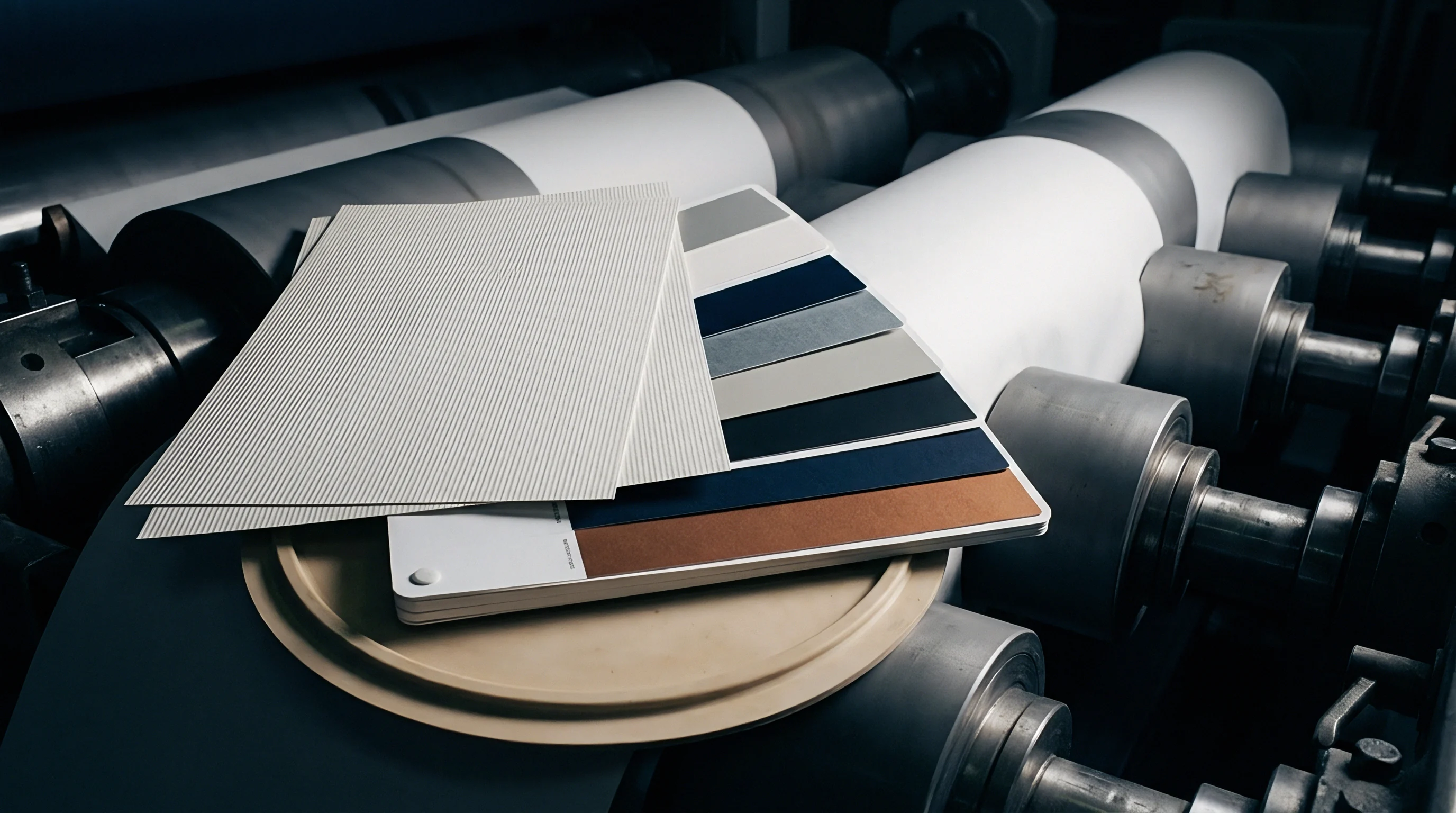
Mechanical converting operations transform continuous paperboard webs or rectangular sheets into finished carton blanks through successive material reduction steps. Each machine center generates dedicated waste streams dictated by mechanical tolerances, printing clamp geography, and cutting die layouts. Rotary sheeting of master rolls produces side-trim ribbons to square the web edges, while chop knives generate pitch-length square-cut flakes.
High-speed sheet-fed offset presses require minimum eight-millimeter gripper margins along the leading sheet edge, creating unusable border strips that never enter the carton die.
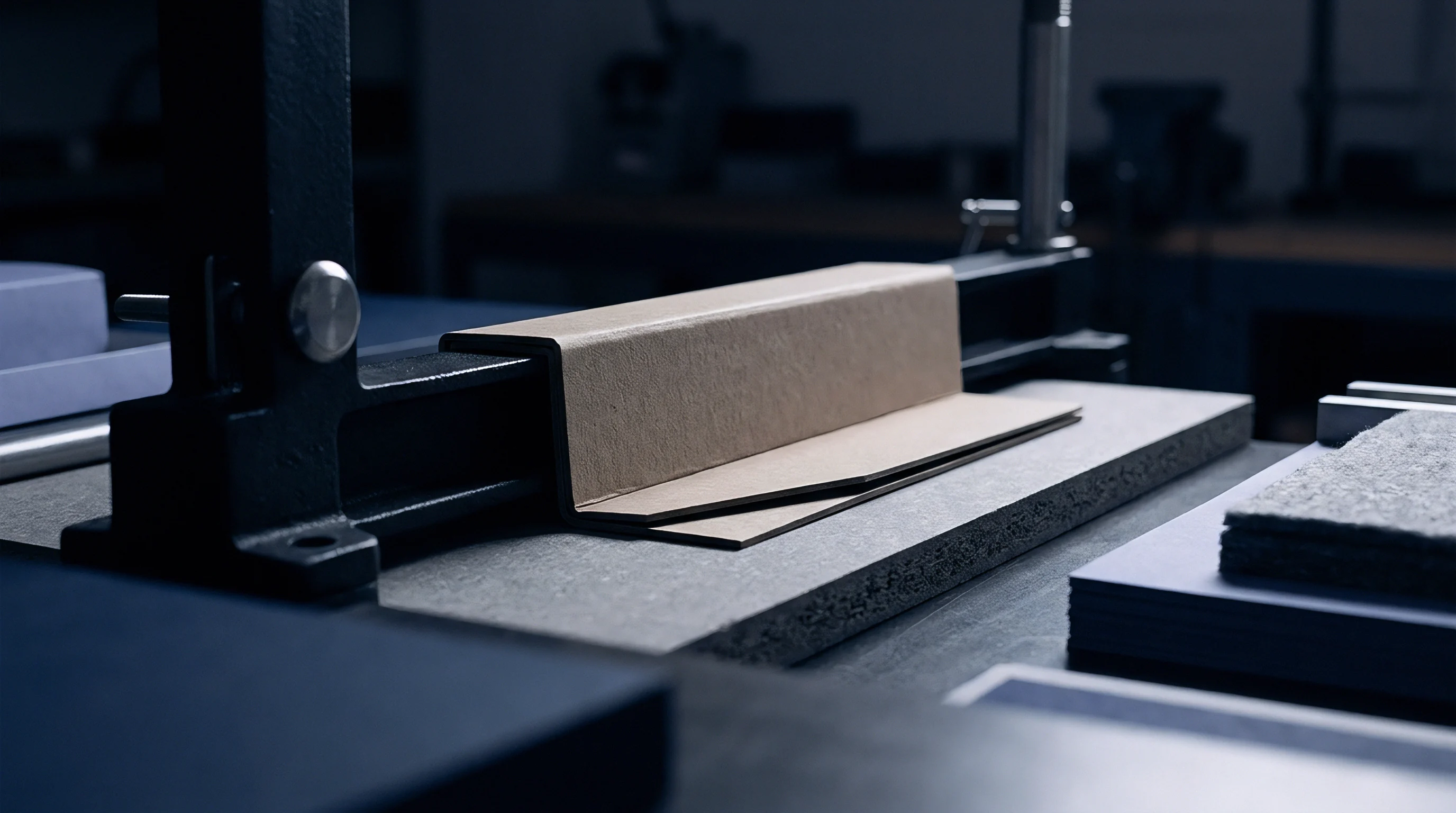
Die-cutting operations account for the largest physical fraction of total converting loss. Blanking tools require internal skeleton bridges, outer edge trim, and stripping punch fallout to preserve sheet integrity through the platen section before automatic blank separation. Intricate carton profiles with auto-lock bottoms, tear strips, or curved tuck flaps widen the necessary skeleton width, raising skeleton loss from a baseline of twelve percent up to twenty-four percent of total sheet surface area.
Can Tool Geometry Suppress Blanking Skein Waste?
CAD nesting configurations govern the border perimeter and inter-blank bridge dimensions on a die platen. Nested layouts with shared knife cuts eliminate intermediate internal skeleton ribbons, though they require precise counter-plate registration and dynamic stripping fingers. When nested designs run on multi-ply coated recycled board, cross-directional fiber stiffness variations can cause blank corners to hook or snag during high-speed blanking separation at 8,000 sheets per hour.
Tight interlocking carton arrangements reduce skeleton area but elevate blank stripping jam frequencies on recycled grades.
Tooling engineers set inter-pack spacing based on caliper and fiber orientation. A 450-micrometer folding boxboard demands at least 3.5 millimeters of rule separation to prevent delamination along the cut edges. Gripper margins yield zero carton area.
The press gripper bar carries the leading sheet margin through every impression cylinder, depositing an unprinted edge strip directly into the waste baler. Window patching and folding-gluing operations contribute additional process shrinkage through mechanical misfeeds, adhesive squeeze-out rejections, and barcode scanner ejects.
| Process Operation | Solid Bleached Board (SBB) | Folding Boxboard (FBB) | Coated Recycled Board (CRB) | Typical Baseline Allowance |
|---|---|---|---|---|
| Roll Sheeting Side Trim | 1.5 to 2.2% | 1.8 to 2.5% | 2.0 to 3.0% | 2.0% |
| Press Gripper and Color Bar | 2.0 to 3.2% | 2.2 to 3.5% | 2.5 to 3.8% | 2.8% |
| Die Platen Skeleton and Stripping | 11.0 to 16.5% | 12.5 to 18.0% | 14.0 to 22.0% | 15.0% |
| Make-Ready Setups (Per Pass) | 350 to 500 sheets | 400 to 650 sheets | 500 to 850 sheets | 500 sheets |
| Folding-Gluing Sorting Ejects | 0.5 to 1.2% | 0.8 to 1.5% | 1.2 to 2.2% | 1.0% |
Machine setup sheets consume substantial board tonnage before production hits target color density and register precision. Multi-color packaging requiring four-color process work plus two spot barrier coatings burns 300 to 600 full-size sheets per press run merely to balance ink keys and achieve Delta E color tolerances below 1.5. In short production runs below 10,000 cartons, setup waste exceeds total production run skeleton scrap as a proportion of consumed tonnage.
Mechanical failure modes during cutting and gluing compound base skeleton losses:
- Nicking rule fracture causes cut blanks to detach prematurely inside the cutting platen, jamming stripping stations and spoiling entire subsequent sheets.
- Blunt matrix creasing cracks outer board liners along machine-direction fold lines, generating cartons that burst open on high-speed consumer filling lines.
- Rotary knife bevel wear produces fibrous angel hair and particulate dusting that clogs glue nozzles and triggers optic sensor line halts.
- Ejection rubber fatigue permits uneven sheet release from the cutting die, resulting in warped blanks that jam downstream folder-gluer belts.
A plant manager will routinely argue that higher skeleton allowances are mandatory to protect machine speeds across unpredictable recycled fiber lots.

Stock
Moisture content governs the true bone-dry mass of paperboard throughout storage, sheeting, and printing. Cellulose fibers continuously exchange water vapor with surrounding ambient air until reaching chemical equilibrium. Under TAPPI T 402 and ISO 187 standard conditioning environments (23 degrees Celsius and 50 percent relative humidity), folding boxboard balances between 6.5 and 8.0 percent moisture content.
Paperboard delivered from high-humidity sea containers or cold winter transport undergoes significant hygroscopic shifts when unwrapped in dry plant environments.
Paperboard shrinks under low ambient humidity. A drop from eight percent reel moisture down to 4.5 percent moisture inside an unconditioned winter pressroom reduces overall web width by 0.4 percent while shedding 35 kilograms of water mass per metric ton of board. The converter registers a physical mass loss on paper that reflects water desorption rather than lost cellulose fiber.
Die knives crush dry flutes. Furthermore, low moisture content severely degrades crease folding resistance, causing the outer ply of virgin solid bleached board to crack across the scorelines during ninety-degree folding trials.
| Ambient Relative Humidity (at 23°C) | Equilibrium Moisture Content | Mass Deviation Against ISO 187 Baseline | Cross-Direction Dimensional Shift |
|---|---|---|---|
| 30% RH (Dry Winter Storage) | 4.8% | -2.4% Mass Deficit | -0.35% Shrinkage |
| 50% RH (Standard ISO 187) | 7.2% | 0.0% Baseline Reference | 0.00% Baseline Datum |
| 70% RH (Humid Maritime Port) | 9.8% | +2.6% Mass Gain | +0.42% Expansion |
| 85% RH (Unconditioned Monsoon) | 12.4% | +5.2% Mass Gain | +0.85% Expansion |
Water absorption alters final sheet yardage. When paperboard absorbs ambient humidity during maritime shipping, the gross mass rises while square meter coverage remains static. Ink mass adds billable weight.
A heavy solid offset print application deposits 2.5 to 3.5 grams of dry ink and overprint varnish per square meter, altering finished blank mass relative to blank board inputs. Sourcing specialists separate fiber mass losses from hygroscopic fluctuations through a standard four-step plant floor moisture reconciliation procedure:
- Cut representative 100-square-centimeter swatches from freshly unwrapped roll cores and finished die-cut blanks immediately upon process completion.
- Record initial wet mass on a calibrated analytical balance reading to three decimal places inside the press room environment.
- Subject swatches to infrared drying ovens at 105 degrees Celsius until reaching absolute mass equilibrium per ISO 287 protocols.
- Calculate actual bone-dry cellulose fiber mass to strip environmental water gain or desorption out of the operational waste ledger.
Does seasonal relative humidity drift obscure internal operator pilferage or unrecorded machine jam waste?

Balance
Chain of custody rules enforce strict physical and volumetric balance accounting on certified paperboard grades. Under FSC-STD-40-004 and PEFC ST 2002 standards, converting facilities must maintain documented conversion factors that link incoming certified stock to outgoing certified finished packaging. A conversion factor represents the ratio between the mass of certified input material and the mass of certified output product.
If a facility claims a uniform eighty-five percent yield across all carton designs, an auditor will cross-examine skeleton waste baling logs and scrap weigh tickets to verify that fifteen percent process loss genuinely matches physical offal discharge.
Credit account systems permit converters to bank certified volumes and assign claims to non-certified product runs under rigid accounting constraints. Yield loss inflation distorts these credit balances. When a converter overestimates physical waste at twenty percent rather than an empirical fourteen percent, the credit ledger deducts excessive input mass, bleeding certified credits out of the plant account prematurely.
Unsold blanks become pulping furnish. Offal retains measurable commercial recovery value. Baled white skeleton waste from virgin solid bleached sulfate paperboard commands high market prices from specialty tissue mills, whereas poly-coated or printed board scrap drops into lower-value mixed recovered paper grades under EN 643 scrap categories.
Under PEFC ST 2002 clause 6.2, conversion factors must derive from verified manufacturing records rather than theoretical production allowances.
Reconciling volumetric credit statements with certified invoice declarations prevents commercial non-compliance at import customs. European Union deforestation regulation requirements demand geographic traceability for timber plot origins tied to specific harvest dates. Virgin fiber commands higher scrap rebates.
If scrap balers mix offal from verified low-risk forests with scrap derived from non-traceable third-party board, the chain of custody breaks entirely at the baling station, contaminating material destined for repulping streams.

Whose Account Carries Uncertified Offal Downgrades?
Printers frequently run combination layouts where certified retail cartons share the same sheet with uncertified commercial products. In multi-up combination forms, physical yield loss must allocate proportionally across every individual SKU based on die platen area occupation rather than gross sheet count. An auditor scrutinizes these area calculations during annual surveillance cycles to verify that virgin fiber credits are not siphoned off to cover offal generated by heavy ink coverage or complex folding configurations on adjacent uncertified items.
Documentary reconciliation across certified converting lots tracks four explicit data streams:
- Delivery note claim statements specify exact percentage or credit scheme credentials tied to incoming mill roll identification numbers.
- Batch job allocation manifests define the calculated square meters and theoretical mass committed to each printed production run.
- Weighbridge offal receipts authenticate physical bale weights leaving the plant gate categorized by EN 643 recovered paper classifications.
- Finished inventory transfer tallies record final saleable carton counts multiplied by individual unit weight specifications.
Under FSC-STD-40-004 clause 2.1, conversion factors that are not empirically calculated from verified physical production data invalidate outgoing chain of custody claims on the invoice, leaving the buyer exposed to immediate claim cancellation during retailer audits.

Margin
Converting contracts settle financial accounts by comparing actual production yields against contracted baseline loss allowances. Procurement agreements specify baseline thresholds that assign material risk between buyer and manufacturing partner. A commercial contract establishing a baseline scrap rate of twelve percent holds the converter liable for material consumption exceeding that threshold.
Conversely, if optimal tooling, sharp knives, and stable board permit the converter to run at a nine percent scrap rate, the resulting three percent material savings represents either pure margin retention for the plant or a contractual rebate pool shared with the brand buyer.
High bulk lowers sheet count per pallet. Converters credit scrap at pulping prices. Scrap credit reconciliation formulas define the monetary value returned to the customer for recovered fiber offal.
When paperboard pricing sits at 1,400 euros per metric ton and clean unprinted SBS scrap sells back to tissue mills at 240 euros per metric ton, the converting waste stream recovers roughly seventeen percent of raw board acquisition costs. Contracts that assign scrap value entirely to the converter remove operational incentives to optimize layout nesting or suppress make-ready counts.
| Performance Metric | Tight Baseline (10.0%) | Standard Baseline (14.0%) | Inefficient Baseline (18.5%) |
|---|---|---|---|
| Gross Board Input Required | 111.1 Metric Tonnes | 116.3 Metric Tonnes | 122.7 Metric Tonnes |
| Total Scrap Generated | 11.1 Metric Tonnes | 16.3 Metric Tonnes | 22.7 Metric Tonnes |
| Substrate Cost at €1,350/Tonne | €149,985 | €157,005 | €165,645 |
| Scrap Recovery Value at €220/Tonne | -€2,442 | -€3,586 | -€4,994 |
| Net Board Material Expenditure | €147,543 | €153,419 | €160,651 |
| Net Variance Against Best Yield | €0 (Datum) | +€5,876 Deficit | +€13,108 Deficit |
Financial exposure escalates when high-value barriers, such as water-based dispersion barriers or metalized PET laminates, enter the structure. Heavy calipers worsen make-ready sheet counts. Offal generated from barrier-coated paperboard rarely earns standard EN 643 recovered fiber market rates because poly-extruded layers or dispersion chemistry require specialized repulping screening.
Scrap recyclers impose severe processing price penalties or reject the bales outright, turning an expected scrap recovery rebate into a hazardous waste disposal fee.
Barrier coatings turn profitable offal sales into net industrial disposal liabilities.
Commercial packaging buyers fix contract baselines through empirical process audits rather than vendor quotations. Unannounced weighbridge audits on baled waste streams expose whether a converter is generating excessive make-ready scrap through poor machine maintenance or sub-par roll storage. Tare weights include solid wooden cores.
Sourcing desks achieve long-term material efficiency by tying converter margin bonuses to verified multi-year yield reductions.
A loose baseline scrap allowance always rewards an inefficient converting plant at the direct expense of the brand procurement budget.