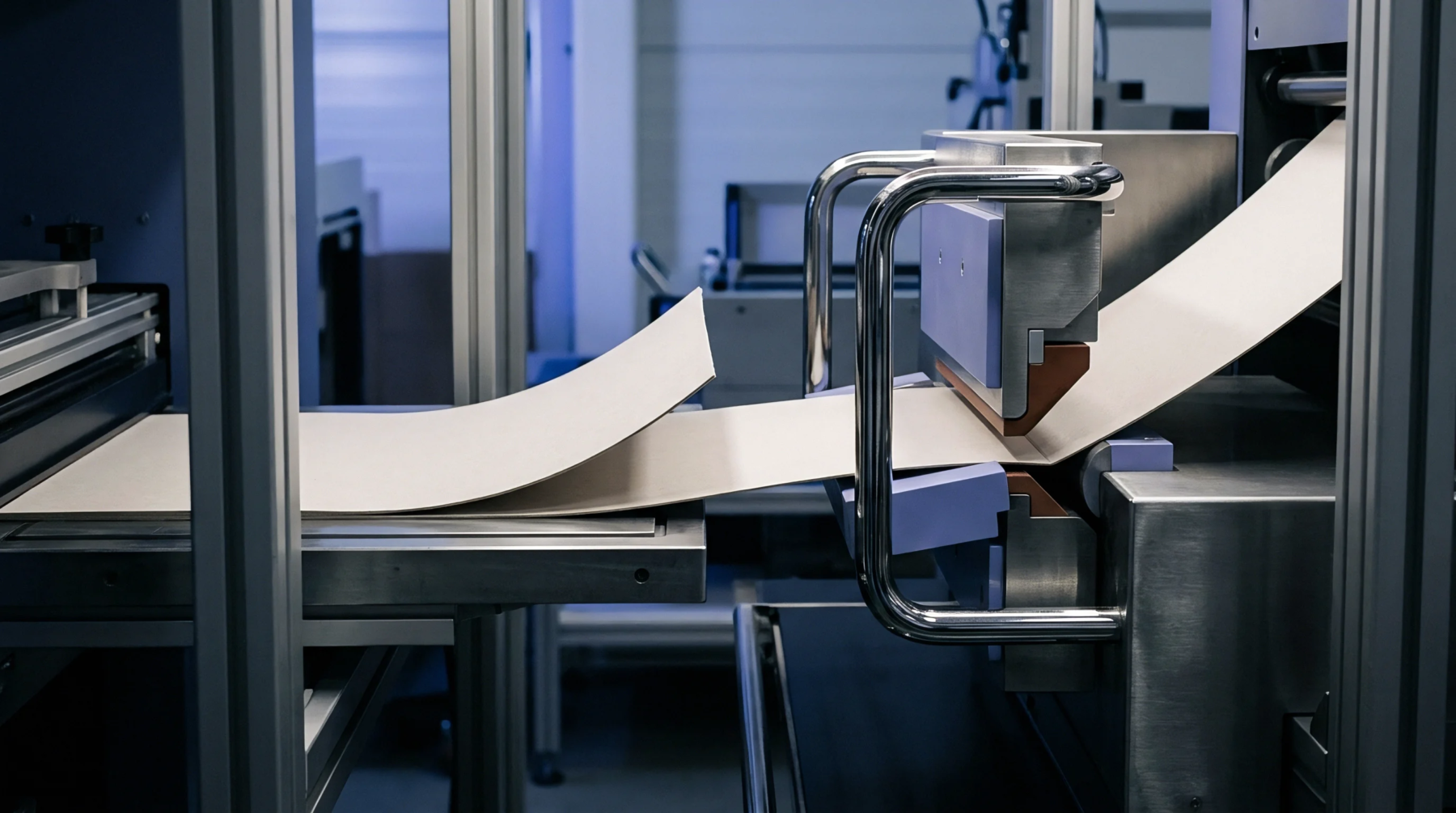
Thermal Dimension
Dimensional variation occurring when oriented polypropylene substrate undergoes exposure to elevated temperatures during converting operations determines the physical stability required for high speed packaging lines. Biaxially oriented polypropylene film shrinkage measures the permanent reduction in web surface area resulting from residual stress relaxation locked inside the material during extrusion and stretching phases. Production plants maintain strict dimensional tolerances because excessive heat sensitivity creates register distortion during rotogravure printing and edge curl during solventless lamination runs.
Converters evaluate this reaction by heating test specimens inside a standard convection oven for a specific duration, followed by precise measurement of linear change against initial dimensions. Web tension settings during slitting must accommodate these thermal reactions to prevent premature web breakage on automated pouch making machinery. Extrusion parameters determine the initial orientation state, and subsequent annealing stages control the ultimate thermal history of the polymer.
Substrates destined for hot fill pouch applications require extremely low dimensional alteration rates to prevent package distortion during pasteurization cycles.
Thermal Threshold
Manufacturing limits dictate maximum operating temperatures before structural relaxation exceeds acceptable commercial tolerances for laminated flexible packaging structures. Film shrinkage behavior follows specific kinetic pathways once the temperature surpasses the softening point established during the tentering frame process. Extrusion temperatures and line speeds directly influence the amount of locked in molecular orientation present within the supply roll.
Higher orientation levels yield greater dimensional mobility when finished packages encounter thermal processing units in food filling facilities. Machine direction values typically exceed transverse direction percentages due to the primary stretching forces applied during the manufacturing sequence. Operators monitor these parameters continuously to guarantee that barrier coatings deposited onto the polymer surface remain crack free during conversion.
Conversion Variance
Pouch fabrication tolerances depend heavily upon consistent thermal stability across every master roll supplied to the converting floor. Uncontrolled directional movement destroys graphical alignment between consecutive printing stations and ruins barrier integrity along side seal areas. Extruders apply cooling rolls rapidly after stretching to freeze polymer chains in position, yet internal stresses inevitably remain trapped within the matrix.
Converters compensate for these predictable shifts by adjusting web path temperatures and cooling drum differentials prior to adhesive application. Downstream sealing jaws apply localized thermal energy rapidly, and machine speed must match the relaxation rate of the specific polymer grade to avoid puckering. Final packaging performance relies upon predictable dimensional behavior throughout the entire supply chain.